India’s Basmati Rice Cultivation Dispute and the Direct Seeded Rice - UPSC Agriculture Allied Sector
What is India’s Basmati Rice Cultivation Dispute and the Direct Seeded Rice in UPSC Agriculture Allied Sector?
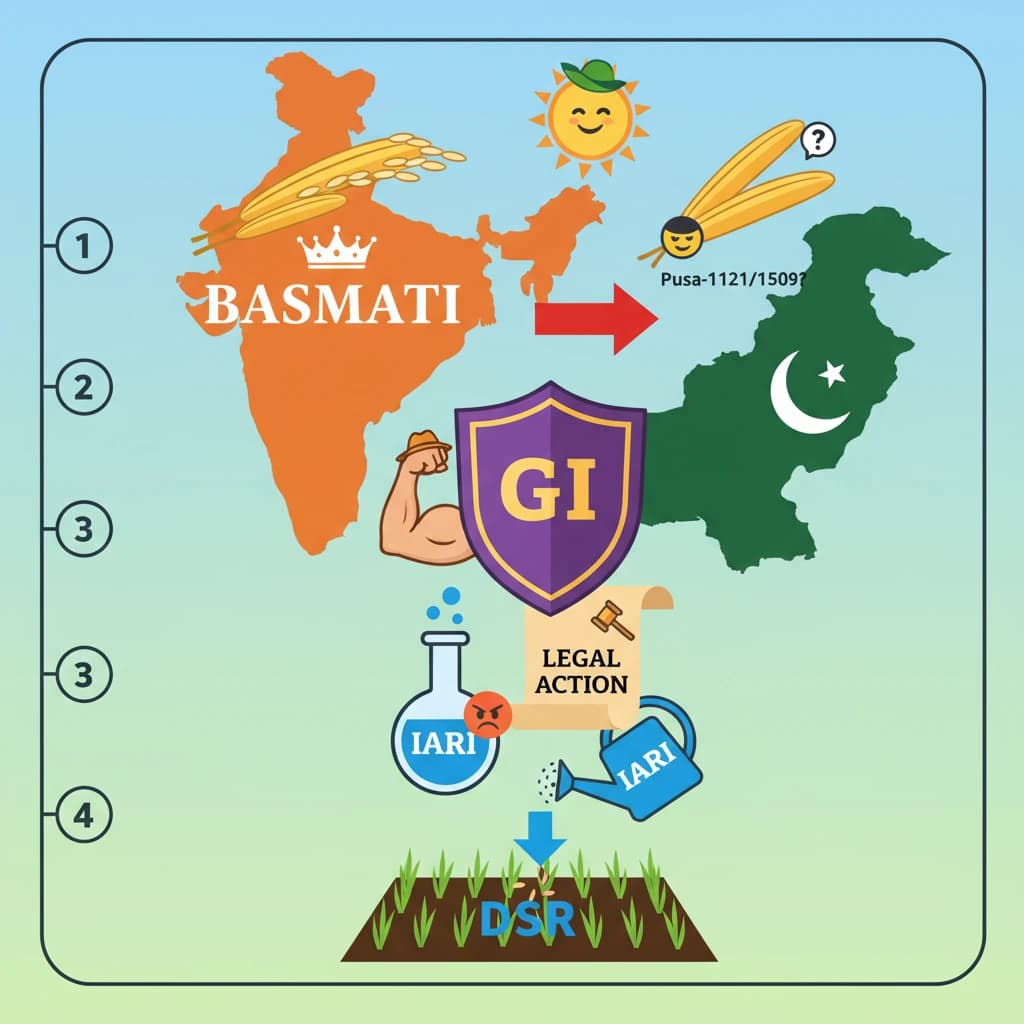
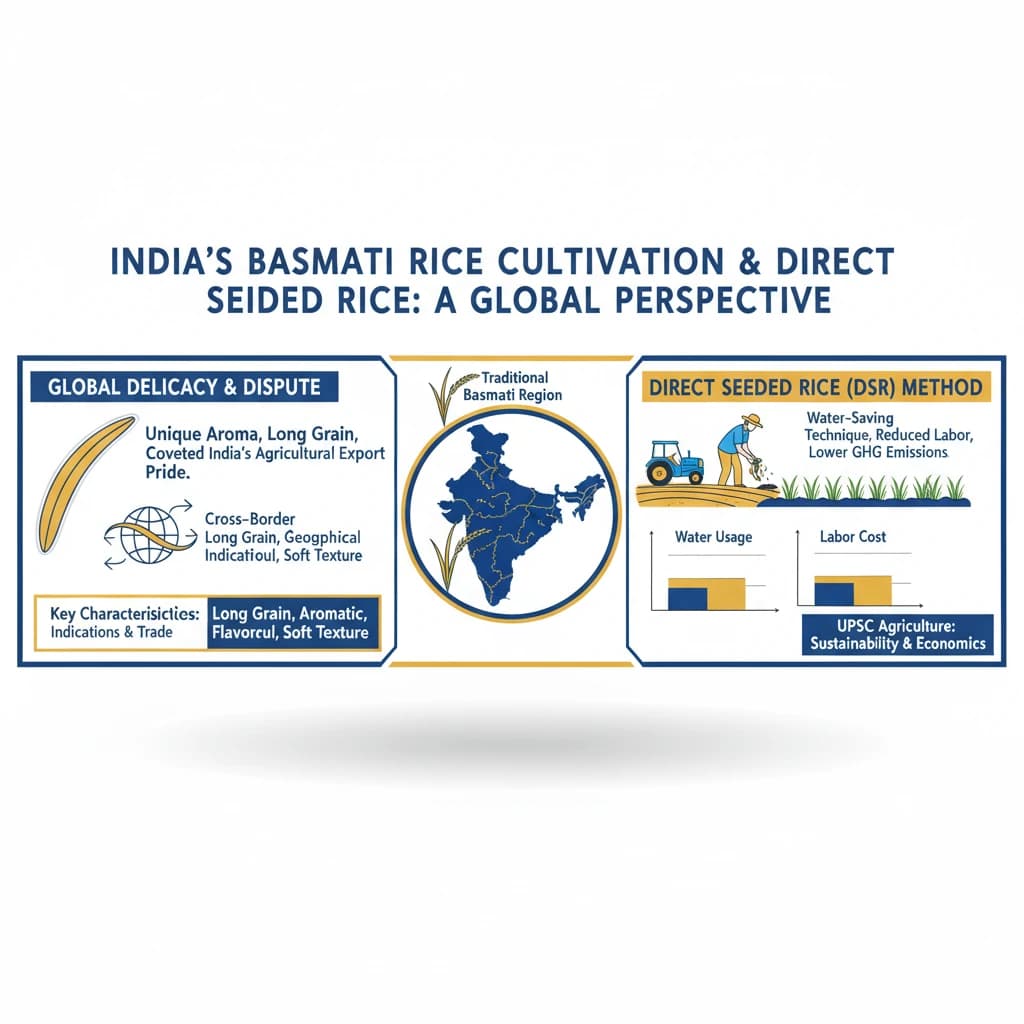
India’s Basmati Rice Cultivation Dispute and the Direct Seeded Rice is a key topic under Agriculture Allied Sector for UPSC Civil Services Examination. Key points include: India's prized Basmati rice varieties, like Pusa-1121 and 1509, are reportedly being cultivated in Pakistan under new names.. This situation raises significant concerns among Indian agricultural scientists, particularly from the Indian Agricultural Research Institute (IARI).. Legal action is being urged to safeguard the interests of Indian farmers and exporters.. Understanding this topic is essential for both UPSC Prelims and Mains preparation.
Why is India’s Basmati Rice Cultivation Dispute and the Direct Seeded Rice important for UPSC exam?
India’s Basmati Rice Cultivation Dispute and the Direct Seeded Rice is a Medium-level topic in UPSC Agriculture Allied Sector. It is tested in both Prelims (factual MCQs) and Mains (analytical answer writing). Previous year UPSC questions have frequently covered aspects of India’s Basmati Rice Cultivation Dispute and the Direct Seeded Rice, making it essential for comprehensive IAS preparation.
How to prepare India’s Basmati Rice Cultivation Dispute and the Direct Seeded Rice for UPSC?
To prepare India’s Basmati Rice Cultivation Dispute and the Direct Seeded Rice for UPSC: (1) Study the comprehensive notes covering all key concepts on Vaidra. (2) Practice previous year questions on this topic. (3) Connect it with current affairs using daily updates. (4) Revise using key takeaways and mind maps available for Agriculture Allied Sector. (5) Write practice answers linking India’s Basmati Rice Cultivation Dispute and the Direct Seeded Rice to related GS Paper topics.
Key takeaways of India’s Basmati Rice Cultivation Dispute and the Direct Seeded Rice for UPSC
- India's prized Basmati rice varieties, like Pusa-1121 and 1509, are reportedly being cultivated in Pakistan under new names.
- This situation raises significant concerns among Indian agricultural scientists, particularly from the Indian Agricultural Research Institute (IARI).
- Legal action is being urged to safeguard the interests of Indian farmers and exporters.
- The dispute underscores the critical importance of Geographical Indication (GI) tags for protecting unique agricultural products.
- It impacts India's agricultural exports, brand value, and the livelihoods of millions of Basmati farmers.
- Robust Intellectual Property Rights (IPR) protection is essential for safeguarding India's agricultural heritage and economic interests in the global market.
India’s Basmati Rice Cultivation Dispute and the Direct Seeded Rice
📖 Introduction
💡 Key Takeaways
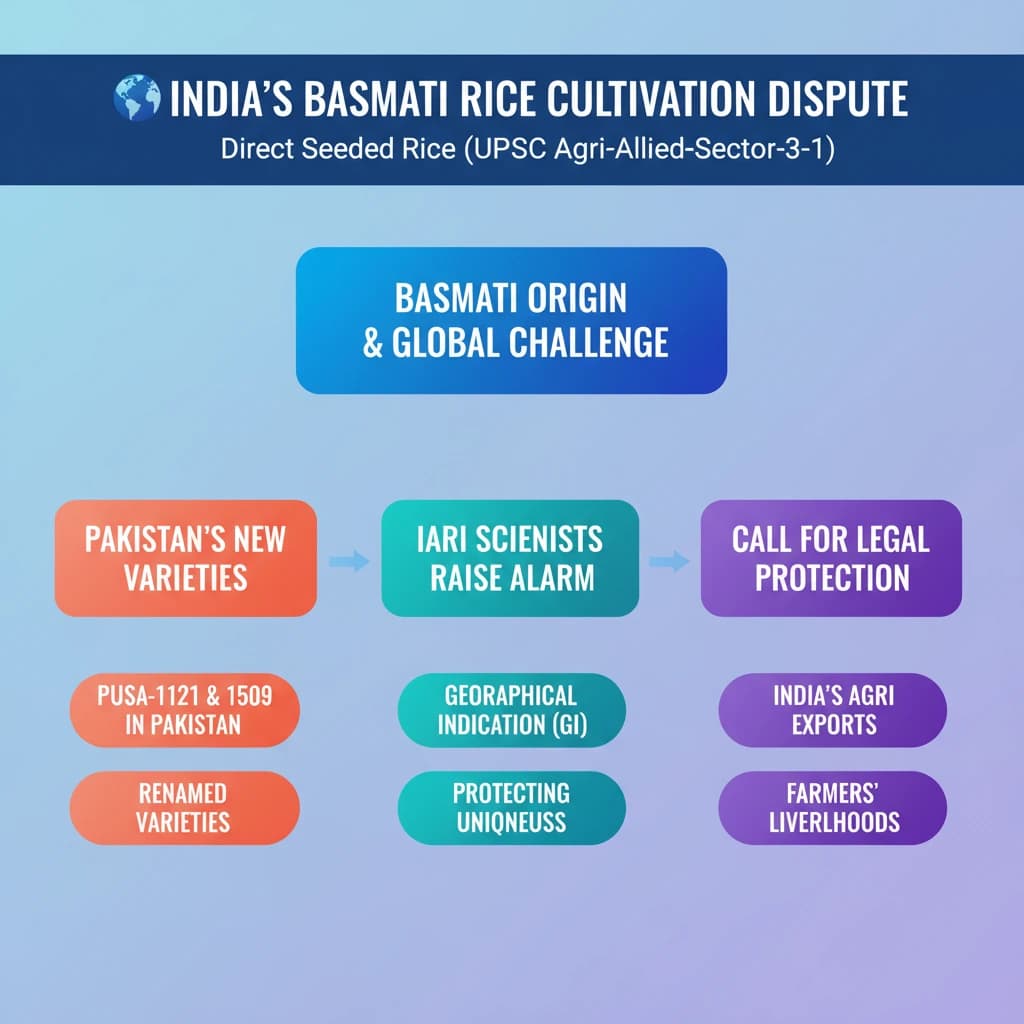
- •India's prized Basmati rice varieties, like Pusa-1121 and 1509, are reportedly being cultivated in Pakistan under new names.
- •This situation raises significant concerns among Indian agricultural scientists, particularly from the Indian Agricultural Research Institute (IARI).
- •Legal action is being urged to safeguard the interests of Indian farmers and exporters.
- •The dispute underscores the critical importance of Geographical Indication (GI) tags for protecting unique agricultural products.
- •It impacts India's agricultural exports, brand value, and the livelihoods of millions of Basmati farmers.
- •Robust Intellectual Property Rights (IPR) protection is essential for safeguarding India's agricultural heritage and economic interests in the global market.
🧠 Memory Techniques