Loading page, please wait…
Vaidra Logo
Vaidra

Top 4 items + smart groups

UPSC GPT
New
Current Affairs
Daily Solutions
Daily Puzzle
Mains Evaluator

Version 2.0.0 • Built with ❤️ for UPSC aspirants

Loading...
Loading...
Loading...
Loading...
Loading...
Loading...
Loading...
Loading...
Loading...
Loading...
Loading...
Loading...
Loading...
Back
All Subjects

Topics

0 topics • 0 completed

Loading topics...
Loading...
Loading...
Loading...
Loading...
Loading...
Overall Progress0%

South Asian Free Trade Area (SAFTA) - UPSC Agriculture Allied Sector

What is South Asian Free Trade Area (SAFTA) in UPSC Agriculture Allied Sector?

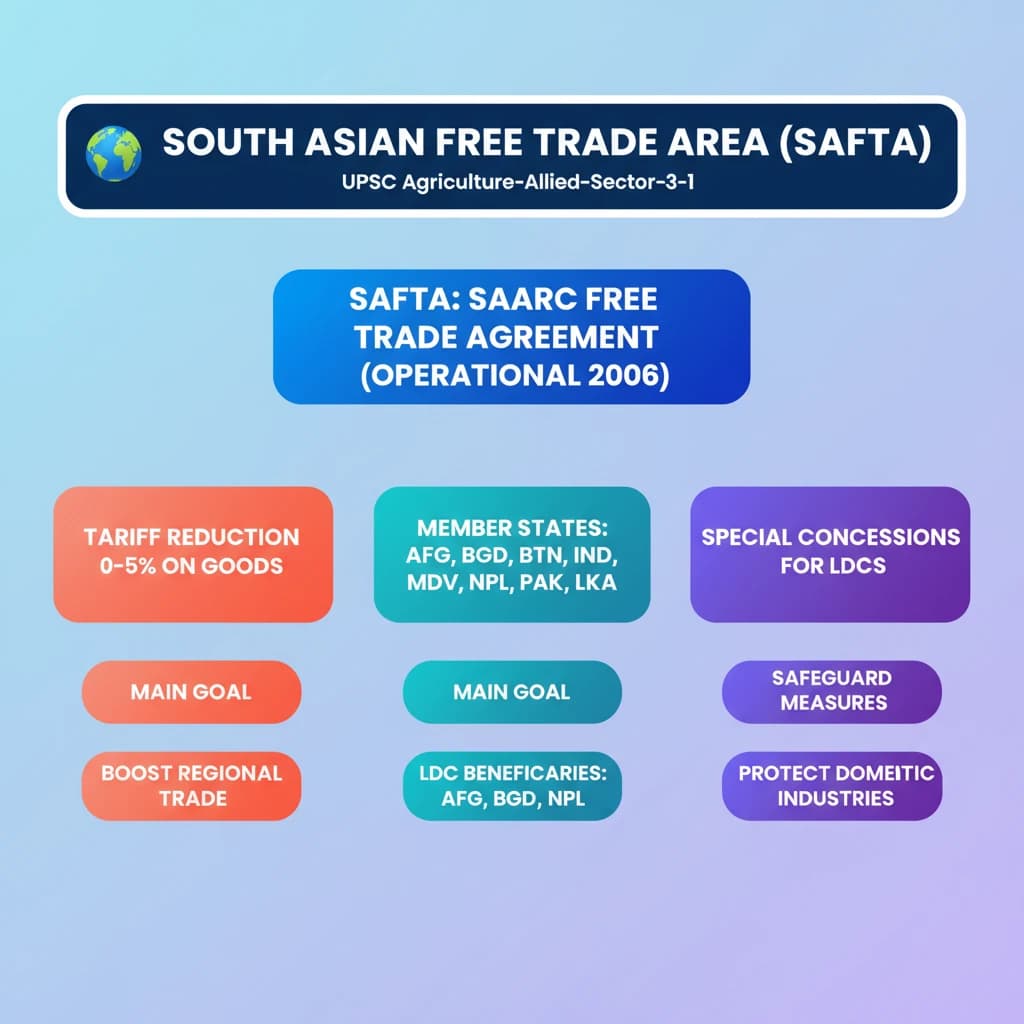
South Asian Free Trade Area (SAFTA) is a key topic under Agriculture Allied Sector for UPSC Civil Services Examination. Key points include: SAFTA is the free trade agreement of SAARC, operational since 2006.. Its main goal is to reduce tariffs to 0-5% on traded goods among member states.. Member countries include Afghanistan, Bangladesh, Bhutan, India, Maldives, Nepal, Pakistan, and Sri Lanka.. Understanding this topic is essential for both UPSC Prelims and Mains preparation.

Why is South Asian Free Trade Area (SAFTA) important for UPSC exam?

South Asian Free Trade Area (SAFTA) is a Medium-level topic in UPSC Agriculture Allied Sector. It is tested in both Prelims (factual MCQs) and Mains (analytical answer writing). Previous year UPSC questions have frequently covered aspects of South Asian Free Trade Area (SAFTA), making it essential for comprehensive IAS preparation.

How to prepare South Asian Free Trade Area (SAFTA) for UPSC?

To prepare South Asian Free Trade Area (SAFTA) for UPSC: (1) Study the comprehensive notes covering all key concepts on Vaidra. (2) Practice previous year questions on this topic. (3) Connect it with current affairs using daily updates. (4) Revise using key takeaways and mind maps available for Agriculture Allied Sector. (5) Write practice answers linking South Asian Free Trade Area (SAFTA) to related GS Paper topics.

Key takeaways of South Asian Free Trade Area (SAFTA) for UPSC

  • SAFTA is the free trade agreement of SAARC, operational since 2006.
  • Its main goal is to reduce tariffs to 0-5% on traded goods among member states.
  • Member countries include Afghanistan, Bangladesh, Bhutan, India, Maldives, Nepal, Pakistan, and Sri Lanka.
  • Least Developed Countries (LDCs) like Afghanistan, Bangladesh, and Nepal receive special concessions.
  • Safeguard measures allow temporary suspension of trade concessions to protect domestic industries.
  • SAFTA succeeded the earlier SAARC Preferential Trading Arrangement (SAPTA) from 1993.
  • Despite challenges, SAFTA aims to enhance regional economic integration and trade.
South Asian Free Trade Area (SAFTA)

South Asian Free Trade Area (SAFTA)

Medium⏱️ 7 min read✓ 98% Verified
agriculture allied sector

📖 Introduction

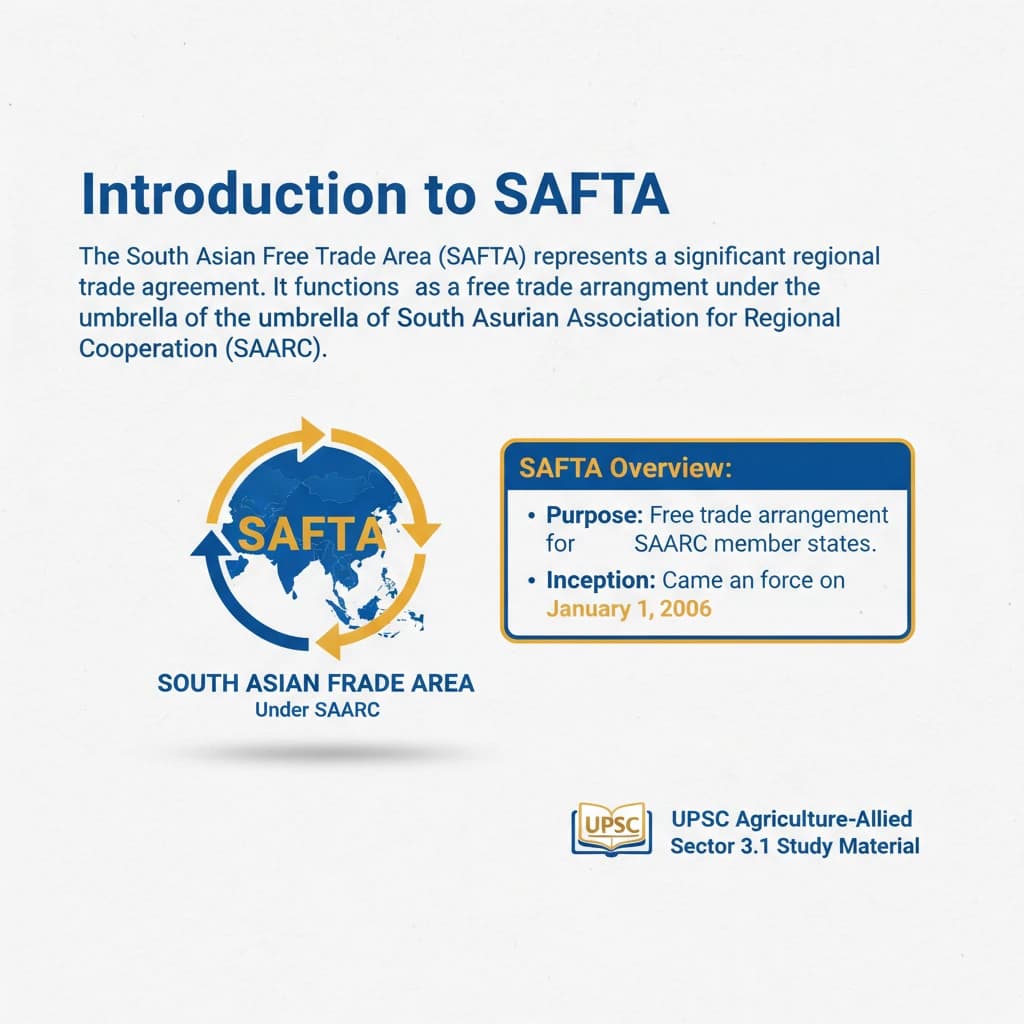
<h4>Introduction to SAFTA</h4><p>The <strong>South Asian Free Trade Area (SAFTA)</strong> represents a significant regional trade agreement. It functions as the free trade arrangement under the umbrella of the <strong>South Asian Association for Regional Cooperation (SAARC)</strong>.</p><div class="info-box"><strong>SAFTA Overview:</strong><ul><li><strong>Purpose:</strong> Free trade arrangement for SAARC member states.</li><li><strong>Inception:</strong> Came into force on <strong>January 1, 2006</strong>.</li><li><strong>Predecessor:</strong> Succeeded the <strong>1993 SAARC Preferential Trading Arrangement (SAPTA)</strong>.</li></ul></div><h4>Membership of SAFTA</h4><p>SAFTA encompasses all member states of SAARC. This broad membership aims to foster greater economic integration across the South Asian region.</p><div class="info-box"><strong>SAFTA Member Countries:</strong><ul><li><strong>Afghanistan</strong></li><li><strong>Bangladesh</strong></li><li><strong>Bhutan</strong></li><li><strong>India</strong></li><li><strong>Maldives</strong></li><li><strong>Nepal</strong></li><li><strong>Pakistan</strong></li><li><strong>Sri Lanka</strong></li></ul></div><h4>Key Provisions of SAFTA</h4><p>SAFTA's primary objective is to liberalize trade among its members. This is achieved through a structured approach to tariff reduction on traded goods.</p><div class="key-point-box"><strong>Trade Liberalization Policy:</strong><p>SAFTA's policy ensures a <strong>gradual reduction of tariffs</strong> on traded goods. The target range for these tariffs is between <strong>0% and 5%</strong>, significantly lowering trade barriers.</p></div><h4>Special Treatment for LDCs</h4><p>Recognizing the varying economic capacities of its members, SAFTA incorporates provisions for special and differential treatment. This is particularly crucial for the <strong>Least Developed Countries (LDCs)</strong> within the bloc.</p><div class="info-box"><strong>LDC Members in SAFTA:</strong><ul><li><strong>Afghanistan</strong></li><li><strong>Bangladesh</strong></li><li><strong>Nepal</strong></li></ul></div><p>These LDCs receive several benefits to support their economic development and integration into the free trade area.</p><div class="key-point-box"><strong>Benefits for LDCs:</strong><ul><li><strong>Longer implementation period</strong> for tariff reductions.</li><li><strong>Greater exemptions</strong> from various trade restrictions.</li></ul></div><h4>Safeguard Measures</h4><p>To protect domestic industries from sudden surges in imports or other adverse impacts of trade liberalization, SAFTA includes provisions for safeguard measures.</p><div class="info-box"><strong>Safeguard Measures:</strong><p>These measures allow for the <strong>temporary suspension</strong> of trade concessions. This mechanism helps member states protect their local industries from potential harm caused by increased imports under SAFTA.</p></div><h4>Major Export Destinations (Contextual)</h4><p>While SAFTA focuses on intra-regional trade, understanding the broader export landscape for South Asian countries provides context. Many regional economies also engage significantly with markets beyond South Asia.</p><div class="info-box"><strong>Common Export Destinations (Non-SAFTA focused, as per source):</strong><ul><li><strong>Indonesia</strong></li><li><strong>Vietnam</strong></li><li><strong>Philippines</strong></li><li><strong>Malaysia</strong></li><li><strong>Thailand</strong></li><li><strong>UAE</strong></li></ul><p><strong>Within SAARC:</strong> <ul><li><strong>Bangladesh</strong> is also a major destination.</li></ul></div>
Concept Diagram

💡 Key Takeaways

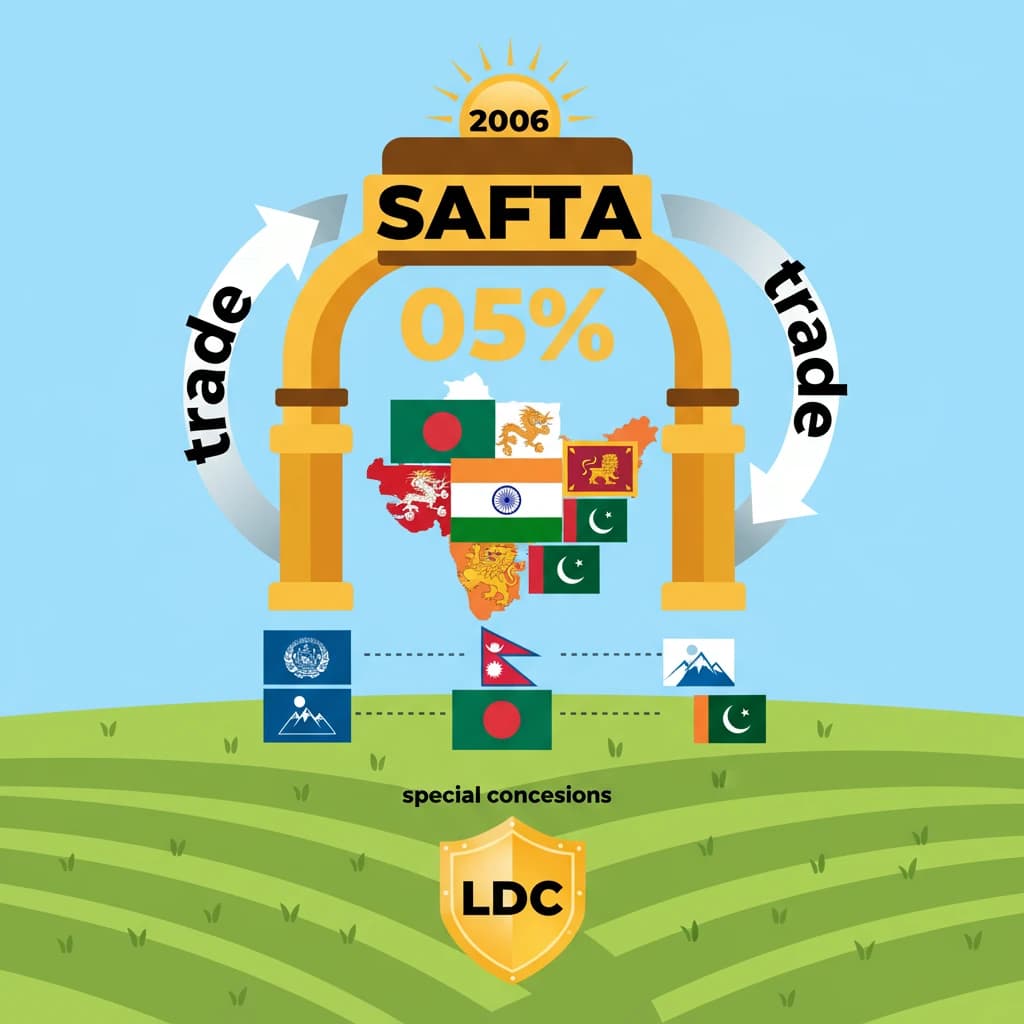
  • •SAFTA is the free trade agreement of SAARC, operational since 2006.
  • •Its main goal is to reduce tariffs to 0-5% on traded goods among member states.
  • •Member countries include Afghanistan, Bangladesh, Bhutan, India, Maldives, Nepal, Pakistan, and Sri Lanka.
  • •Least Developed Countries (LDCs) like Afghanistan, Bangladesh, and Nepal receive special concessions.
  • •Safeguard measures allow temporary suspension of trade concessions to protect domestic industries.
  • •SAFTA succeeded the earlier SAARC Preferential Trading Arrangement (SAPTA) from 1993.
  • •Despite challenges, SAFTA aims to enhance regional economic integration and trade.

🧠 Memory Techniques
Memory Aid
98% Verified Content

📚 Reference Sources

•SAARC Secretariat official website (for SAFTA agreement details and membership)
•World Trade Organization (WTO) definitions of Free Trade Area and LDCs

Related Topics

Loading related topics...
Explore:Agriculture Allied Sector Topics·All Subjects·Daily Current Affairs·Editorial Analysis·Previous Year Questions·UPSC GPT
South Asian Free Trade Area (SAFTA) - UPSC Agriculture Allied Sector