Loading page, please wait…
8th Edition of the National Programme for Organic Production - UPSC Agriculture Allied Sector
What is 8th Edition of the National Programme for Organic Production in UPSC Agriculture Allied Sector?
8th Edition of the National Programme for Organic Production is a key topic under Agriculture Allied Sector for UPSC Civil Services Examination. Key points include: The 8th Edition NPOP was launched to boost India's organic production potential.. NPOP, launched in 2001, is implemented by APEDA under the Ministry of Commerce & Industries.. It focuses on organic production standards accreditation and promoting organic farming.. Understanding this topic is essential for both UPSC Prelims and Mains preparation.
Why is 8th Edition of the National Programme for Organic Production important for UPSC exam?
8th Edition of the National Programme for Organic Production is a Medium-level topic in UPSC Agriculture Allied Sector. It is tested in both Prelims (factual MCQs) and Mains (analytical answer writing). Previous year UPSC questions have frequently covered aspects of 8th Edition of the National Programme for Organic Production, making it essential for comprehensive IAS preparation.
How to prepare 8th Edition of the National Programme for Organic Production for UPSC?
To prepare 8th Edition of the National Programme for Organic Production for UPSC: (1) Study the comprehensive notes covering all key concepts on Vaidra. (2) Practice previous year questions on this topic. (3) Connect it with current affairs using daily updates. (4) Revise using key takeaways and mind maps available for Agriculture Allied Sector. (5) Write practice answers linking 8th Edition of the National Programme for Organic Production to related GS Paper topics.
Key takeaways of 8th Edition of the National Programme for Organic Production for UPSC
- The 8th Edition NPOP was launched to boost India's organic production potential.
- NPOP, launched in 2001, is implemented by APEDA under the Ministry of Commerce & Industries.
- It focuses on organic production standards accreditation and promoting organic farming.
- NPOP standards are recognized by the European Commission and Switzerland, aiding exports.
- Key highlights include simplified certification for Organic Grower Groups and new technological advancements.
- Technological tools like NPOP Portal, Organic Promotion Portal, and TraceNet 2.0 enhance transparency and market access.
- FAO is a UN agency leading international efforts against hunger, with India as a member.
8th Edition of the National Programme for Organic Production
Medium⏱️ 7 min read
agriculture allied sector
📖 Introduction
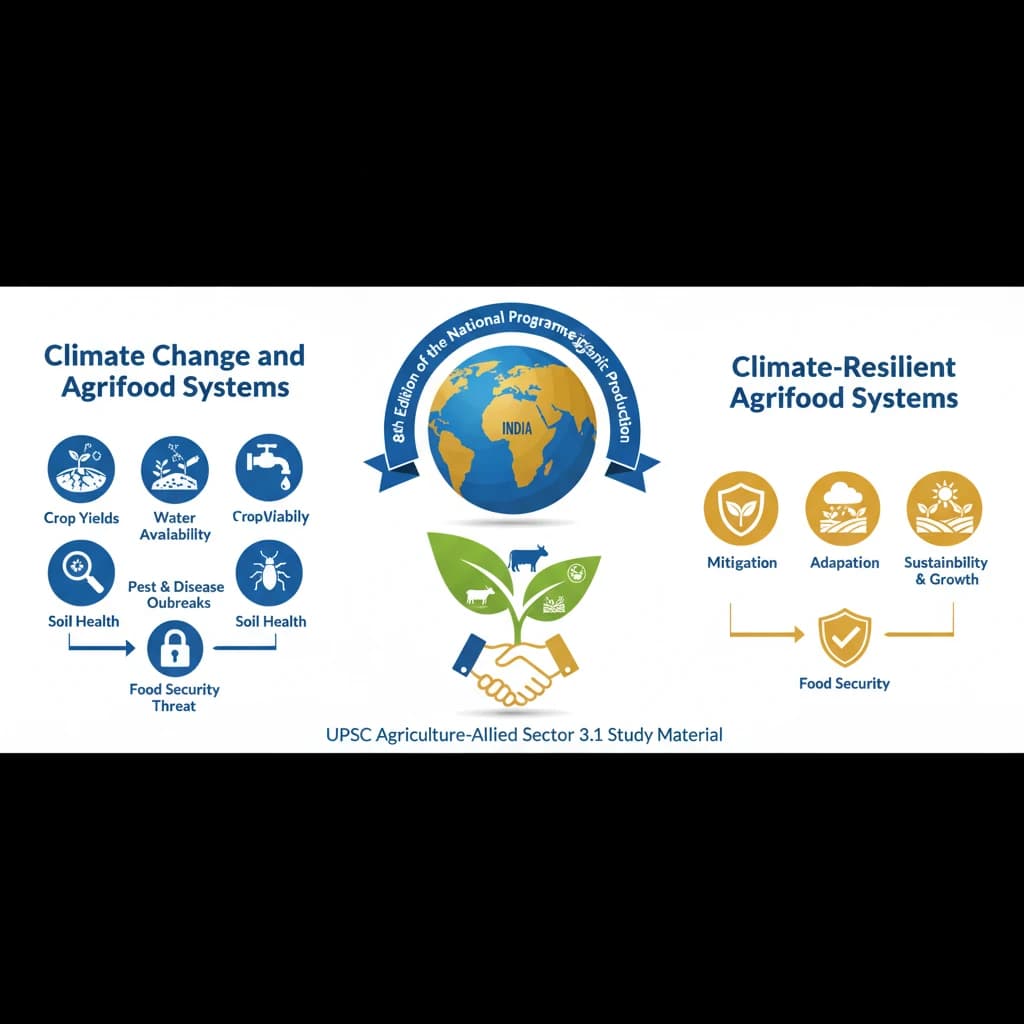
Climate Change and Agrifood Systems
Climate change significantly impacts agricultural productivity, affecting crop yields, water availability, and soil health. It also leads to increased pest and disease outbreaks, posing a direct threat to food security globally.
Developing climate-resilient agrifood systems is crucial. These systems help in both mitigating and adapting to climate change, simultaneously enhancing food production, reducing poverty, and improving livelihoods for farming communities.
Climate mainstreaming into agrifood systems requires substantial investments. This includes larger contributions from global climate finance, increased domestic budgets, and significant participation from the private sector.
Food and Agriculture Organization (FAO)
The Food and Agriculture Organization (FAO) is a specialized agency of the United Nations. Its primary mission is to lead international efforts aimed at defeating hunger and ensuring global food security.
FAO's goal is to achieve food security for all. This means ensuring that people worldwide have regular access to sufficient, high-quality food necessary for active, healthy lives.
Membership: 194 member countries (including India) and the European Union.
Operations: Works in over 130 countries worldwide.
Headquarters: 📍 Rome, Italy.
Sister Organizations: World Food Programme (WFP) and International Fund for Agricultural Development (IFAD).
Operations: Works in over 130 countries worldwide.
Headquarters: 📍 Rome, Italy.
Sister Organizations: World Food Programme (WFP) and International Fund for Agricultural Development (IFAD).
The FAO publishes several flagship reports that provide critical insights into global food and agriculture trends. These publications are vital for policy-making and research.
Flagship Publications:
- The State of World Fisheries and Aquaculture (SOFIA)
- The State of the World’s Forests (SOFO)
- The State of Food Security and Nutrition in the World (SOFI)
- The State of Food and Agriculture (SOFA)
- The State of Agricultural Commodity Markets (SOCO)
Overview of the National Programme for Organic Production (NPOP)
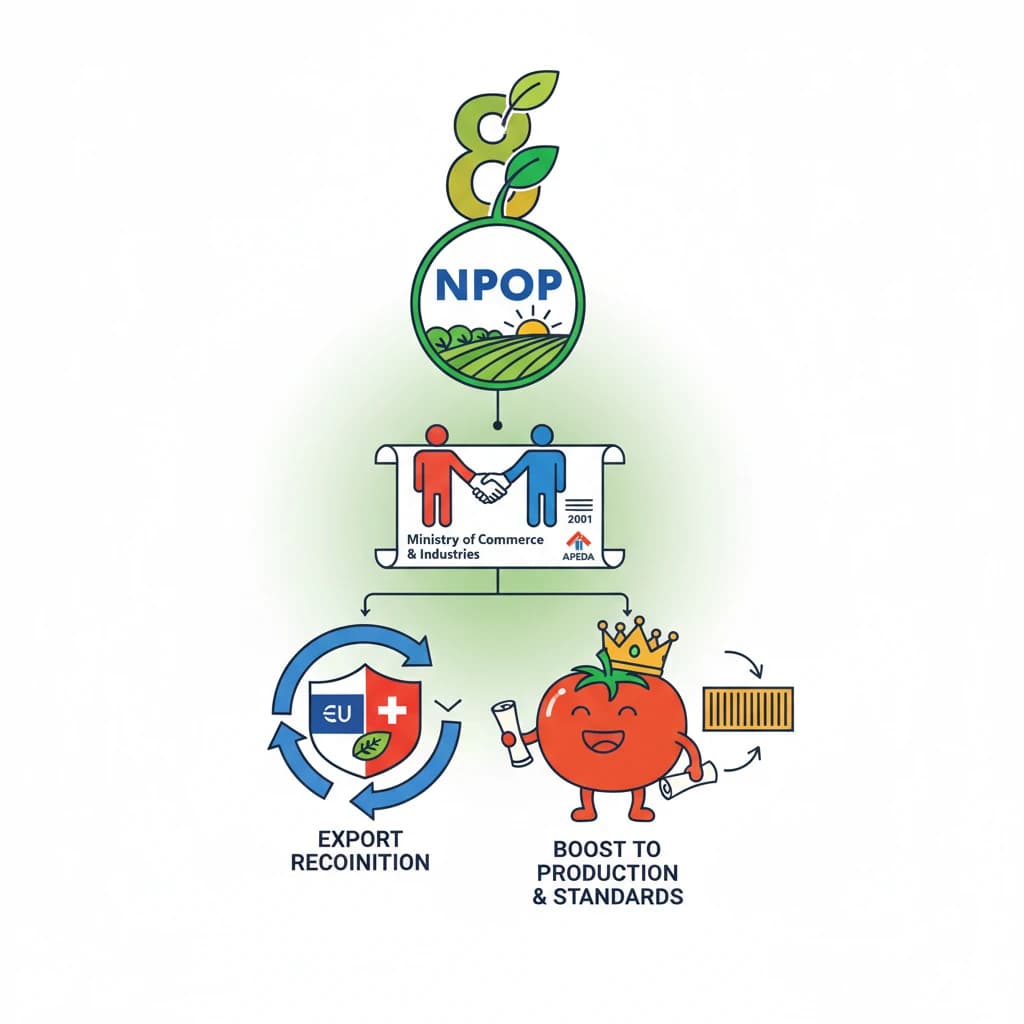
The National Programme for Organic Production (NPOP) was initially launched in 2001. It is implemented by the Agricultural and Processed Food Products Export Development Authority (APEDA), operating under the Ministry of Commerce & Industries.
The core focus of NPOP is on the accreditation of organic production standards and the active promotion of organic farming practices across India. This program is instrumental in formalizing and standardizing organic agriculture.
NPOP significantly enhances India’s global competitiveness in the organic farming sector. Its standards for production and accreditation are officially recognized by the European Commission and Switzerland.
This international recognition allows Indian organic products to be accepted seamlessly in key global markets, facilitating exports and boosting the domestic organic industry.
8th Edition of the National Programme for Organic Production
The 8th edition of the National Programme for Organic Production (NPOP) was recently launched in New Delhi. This event underscored India’s substantial potential in the growing global organic production market.
The launch highlighted various new initiatives and technological advancements. These are specifically designed to further boost organic farming, streamline operational processes, and solidify India's position in the international organic market.
Key Highlights: Recognition for Organic Grower Groups
A significant highlight of the 8th Edition NPOP is the enhanced recognition for Organic Grower Groups. This includes simplified certification requirements, making it easier for groups of farmers to participate.
The program now grants legal status to these grower groups. This crucial change replaces the previous Internal Control System (ICS), which was a quality assurance system primarily used for group certification.
UPSC Insight: Understanding the shift from ICS to granting legal status to grower groups is important. It signifies a move towards formal recognition and empowerment of collective organic farming efforts, which can be a point for Mains questions on agricultural policy.
Technological Advancements under 8th Edition NPOP
The 8th Edition NPOP introduces several technological advancements aimed at improving transparency and efficiency in the organic sector.
- NPOP Portal: This dedicated portal provides enhanced visibility and ease of operations for all organic stakeholders, including farmers, certifiers, and buyers.
- Organic Promotion Portal: This platform actively connects farmers, Farmer Producer Organizations (FPOs), and exporters with global buyers. It offers valuable trade leads, training opportunities, and information on relevant events.
- TraceNet 2.0: An upgraded system designed for superior transparency, traceability, and compliance. TraceNet 2.0 ensures farm-to-market compliance, streamlining operations to meet stringent global standards for organic products.
- AgriExchange Portal: This portal plays a crucial role in facilitating data analysis within the agricultural sector. It also serves as a direct connection point for international buyers and sellers, fostering global trade.
💡 Key Takeaways
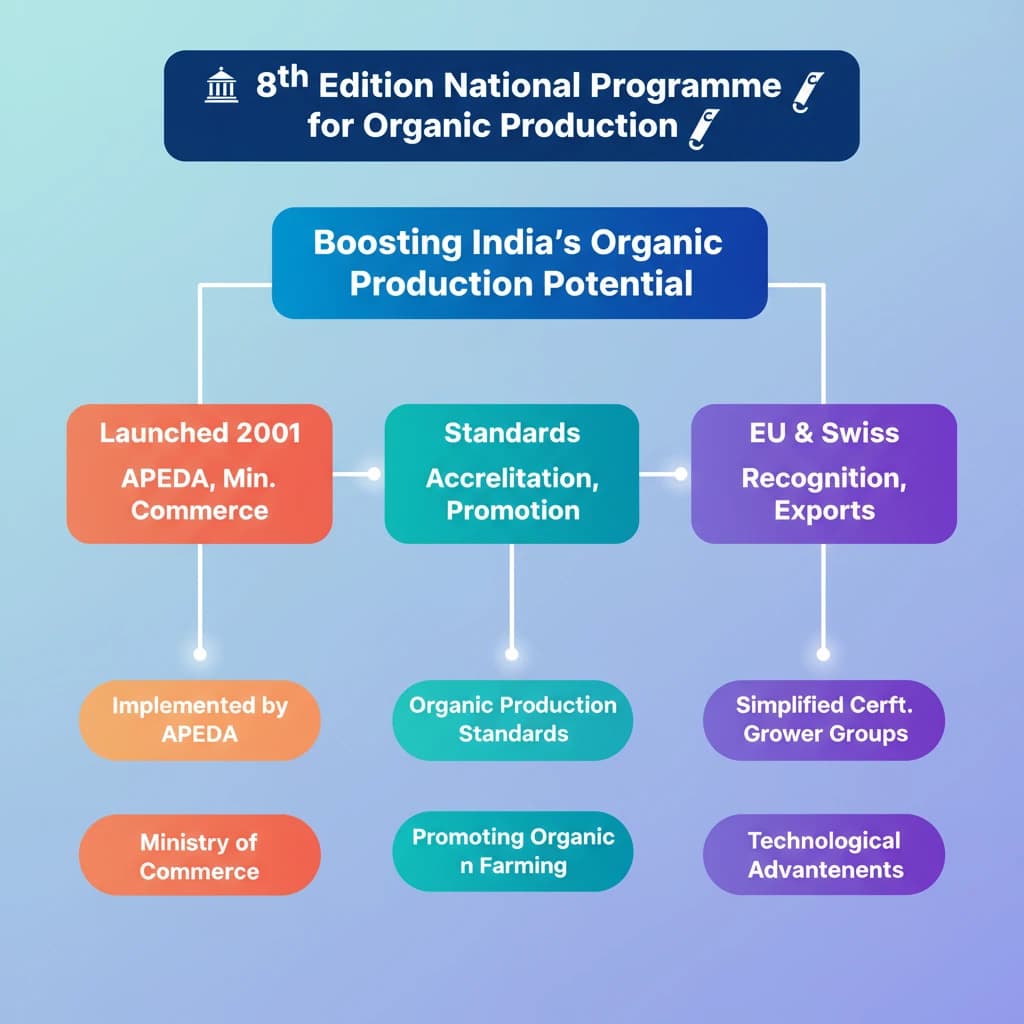
- •The 8th Edition NPOP was launched to boost India's organic production potential.
- •NPOP, launched in 2001, is implemented by APEDA under the Ministry of Commerce & Industries.
- •It focuses on organic production standards accreditation and promoting organic farming.
- •NPOP standards are recognized by the European Commission and Switzerland, aiding exports.
- •Key highlights include simplified certification for Organic Grower Groups and new technological advancements.
- •Technological tools like NPOP Portal, Organic Promotion Portal, and TraceNet 2.0 enhance transparency and market access.
- •FAO is a UN agency leading international efforts against hunger, with India as a member.
🧠 Memory Techniques
98% Verified Content
📚 Reference Sources
•National Programme for Organic Production (NPOP) website (APEDA)
•Food and Agriculture Organization (FAO) official website