Loading page, please wait…
Vaidra Logo
Vaidra

Top 4 items + smart groups

UPSC GPT
New
Current Affairs
Daily Solutions
Daily Puzzle
Mains Evaluator

Version 2.0.0 • Built with ❤️ for UPSC aspirants

Loading...
Loading...
Loading...
Loading...
Loading...
Loading...
Loading...
Loading...
Loading...
Loading...
Loading...
Loading...
Loading...
PACS, Constitutional Framework & Cooperative Expansion Target - UPSC Agriculture Allied Sector
Back
All Subjects

Topics

0 topics • 0 completed

Loading topics...
Loading...
Loading...
Loading...
Loading...
Loading...
Overall Progress0%

PACS, Constitutional Framework & Cooperative Expansion Target - UPSC Agriculture Allied Sector

What is PACS, Constitutional Framework & Cooperative Expansion Target in UPSC Agriculture Allied Sector?

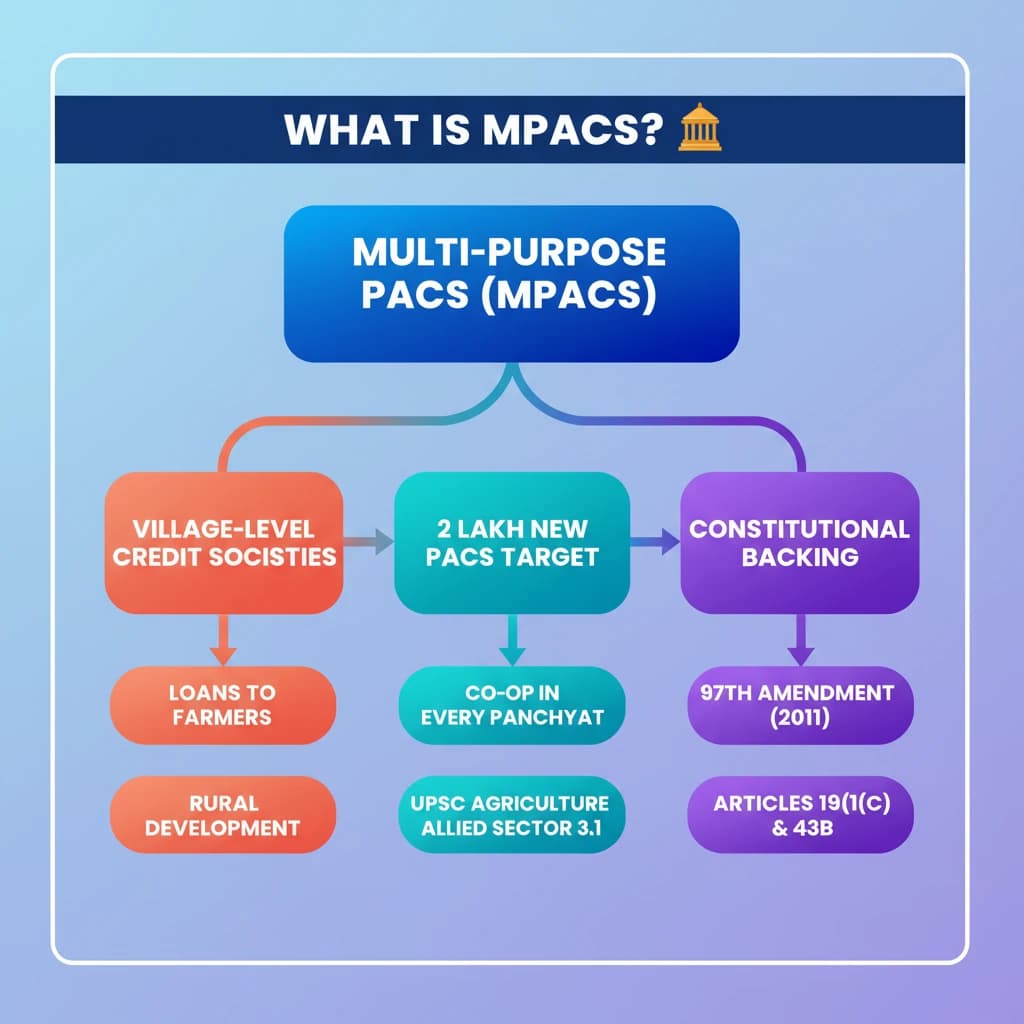
PACS, Constitutional Framework & Cooperative Expansion Target is a key topic under Agriculture Allied Sector for UPSC Civil Services Examination. Key points include: PACS are village-level cooperative credit societies providing loans to rural farmers.. India aims to establish 2 lakh PACS to ensure cooperative presence in every panchayat.. The 97th Amendment Act, 2011, gave constitutional backing to cooperatives.. Understanding this topic is essential for both UPSC Prelims and Mains preparation.

Why is PACS, Constitutional Framework & Cooperative Expansion Target important for UPSC exam?

PACS, Constitutional Framework & Cooperative Expansion Target is a Medium-level topic in UPSC Agriculture Allied Sector. It is tested in both Prelims (factual MCQs) and Mains (analytical answer writing). Previous year UPSC questions have frequently covered aspects of PACS, Constitutional Framework & Cooperative Expansion Target, making it essential for comprehensive IAS preparation.

How to prepare PACS, Constitutional Framework & Cooperative Expansion Target for UPSC?

To prepare PACS, Constitutional Framework & Cooperative Expansion Target for UPSC: (1) Study the comprehensive notes covering all key concepts on Vaidra. (2) Practice previous year questions on this topic. (3) Connect it with current affairs using daily updates. (4) Revise using key takeaways and mind maps available for Agriculture Allied Sector. (5) Write practice answers linking PACS, Constitutional Framework & Cooperative Expansion Target to related GS Paper topics.

Key takeaways of PACS, Constitutional Framework & Cooperative Expansion Target for UPSC

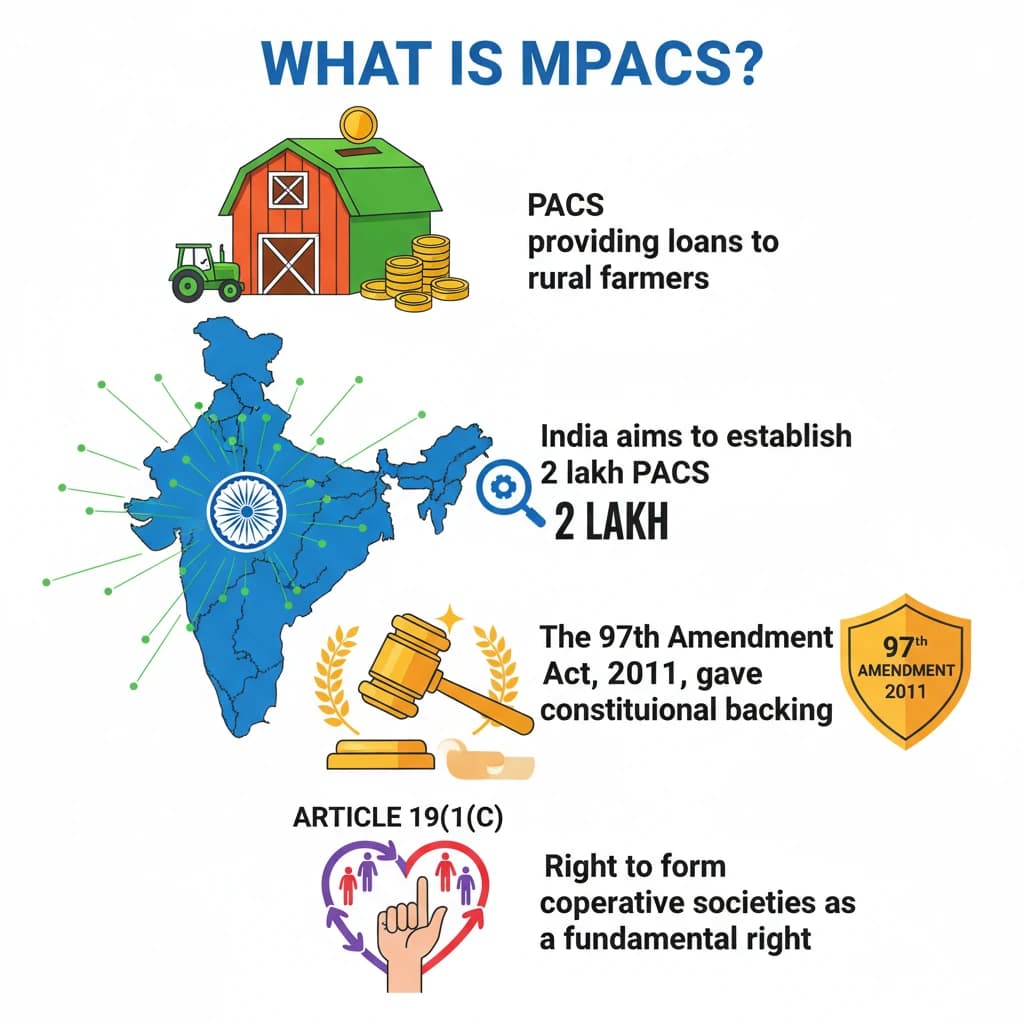
  • PACS are village-level cooperative credit societies providing loans to rural farmers.
  • India aims to establish 2 lakh PACS to ensure cooperative presence in every panchayat.
  • The 97th Amendment Act, 2011, gave constitutional backing to cooperatives.
  • Article 19(1)(c) now includes the right to form cooperative societies as a fundamental right.
  • Article 43B promotes the autonomous functioning and democratic control of cooperatives.
  • MPACS are an evolved form of PACS, offering a wide range of 32 services beyond credit.
  • MPACS integrate services like input distribution, storage, and support for dairy and fisheries.
PACS, Constitutional Framework & Cooperative Expansion Target

PACS, Constitutional Framework & Cooperative Expansion Target

Medium⏱️ 7 min read✓ 100% Verified
agriculture allied sector

📖 Introduction

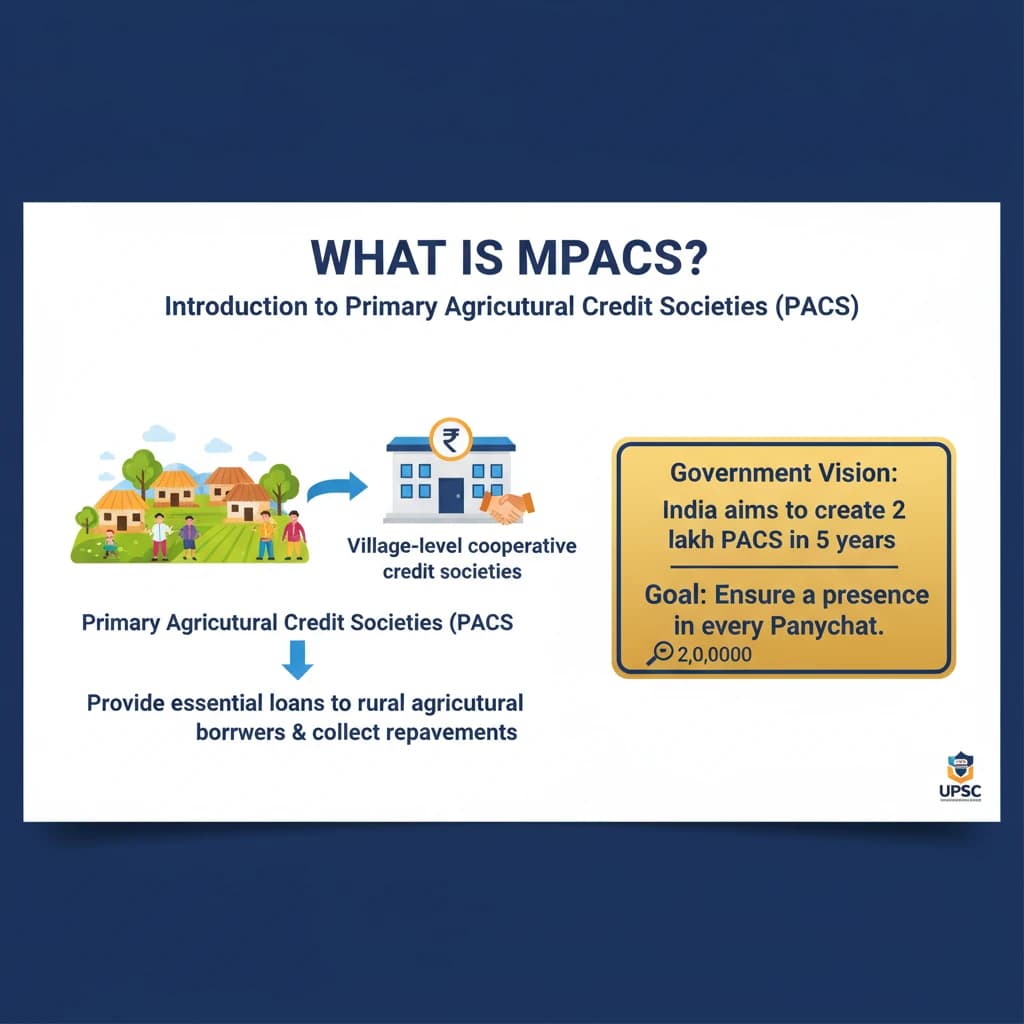
<h4>Introduction to Primary Agricultural Credit Societies (PACS)</h4><p><strong>Primary Agricultural Credit Societies (PACS)</strong> are vital <strong>village-level cooperative credit societies</strong> in India. Their primary role is to provide essential <strong>loans</strong> to rural agricultural borrowers and collect repayments.</p><div class="info-box"><strong>Government Vision:</strong> India aims to create <strong>2 lakh PACS</strong> in 5 years.<br><strong>Goal:</strong> Ensure a presence of cooperatives in <strong>every panchayat</strong> across the country.</div><h4>Administration and Registration of PACS</h4><p>PACS are registered under the specific <strong>State Cooperative Societies Act</strong> of the state in which they operate. This legal framework governs their establishment and functioning.</p><p>They are administered by the <strong>State Registrar of Cooperative Societies (RCS)</strong>. The RCS plays a crucial role in overseeing their compliance and operations.</p><h4>Constitutional Framework for Cooperatives</h4><p>The cooperative movement in India received significant constitutional backing through the <strong>97th Amendment Act, 2011</strong>. This amendment strengthened the legal and policy framework for cooperatives.</p><div class="key-point-box"><strong>Key Constitutional Changes:</strong><ul><li>The word <strong>"cooperatives"</strong> was added in <strong>Article 19(1)(c)</strong> under <strong>Part III</strong> (Fundamental Rights) of the Constitution. This ensures the right to form cooperative societies.</li><li>A new <strong>Article 43B</strong> was inserted in the <strong>Directive Principles of State Policy (Part IV)</strong>. This article mandates the state to endeavor to promote voluntary formation, autonomous functioning, democratic control, and professional management of cooperative societies.</li></ul></div><h4>What are Multi-Purpose Primary Agricultural Credit Societies (MPACS)?</h4><p><strong>Multi-Purpose Primary Agricultural Credit Societies (MPACS)</strong> represent an evolution of the traditional PACS model. They are designed to offer a broader spectrum of services to rural communities.</p><div class="info-box"><strong>Beyond Credit:</strong> MPACS provide a wide range of services <strong>beyond agricultural credit</strong>, addressing multiple needs of rural communities.</div><h4>Diverse Activities of MPACS</h4><p>MPACS encompass not only credit societies but also other vital rural cooperatives, such as <strong>dairy and fisheries cooperatives</strong>. This integrated approach enhances their utility.</p><p>They are engaged in a diverse set of <strong>32 activities</strong>. This versatility makes them more effective in serving the holistic needs of rural populations.</p><div class="key-point-box"><strong>Examples of MPACS Activities:</strong><ul><li><strong>Storage and distribution</strong> of agricultural produce.</li><li>Distribution of essential inputs like <strong>gas, fertilisers, and water</strong>.</li><li>Providing credit for various agricultural and allied activities.</li></ul></div><div class="exam-tip-box"><strong>UPSC Insight:</strong> Understanding the distinction between <strong>PACS</strong> and <strong>MPACS</strong>, along with their constitutional backing, is crucial for questions on rural development, cooperative federalism, and agricultural reforms in <strong>GS Paper III</strong> and <strong>GS Paper II</strong>.</div>
Concept Diagram

💡 Key Takeaways

  • •PACS are village-level cooperative credit societies providing loans to rural farmers.
  • •India aims to establish 2 lakh PACS to ensure cooperative presence in every panchayat.
  • •The 97th Amendment Act, 2011, gave constitutional backing to cooperatives.
  • •Article 19(1)(c) now includes the right to form cooperative societies as a fundamental right.
  • •Article 43B promotes the autonomous functioning and democratic control of cooperatives.
  • •MPACS are an evolved form of PACS, offering a wide range of 32 services beyond credit.
  • •MPACS integrate services like input distribution, storage, and support for dairy and fisheries.

🧠 Memory Techniques
Memory Aid
100% Verified Content

Related Topics

Loading related topics...
Explore:Agriculture Allied Sector Topics·All Subjects·Daily Current Affairs·Editorial Analysis·Previous Year Questions·UPSC GPT