Loading page, please wait…
Cotton Cultivation in North India - UPSC Agriculture Allied Sector
What is Cotton Cultivation in North India in UPSC Agriculture Allied Sector?
Cotton Cultivation in North India is a key topic under Agriculture Allied Sector for UPSC Civil Services Examination. Key points include: North India anticipates a potential decline in cotton acreage for the 2024-25 kharif season.. Key factors driving this dip include severe Pink Bollworm (PBW) infestation, weak market prices, and rising labor costs.. Pink Bollworm (Pectinophora gossypiella) is a major pest that damages cotton flower buds and bolls.. Understanding this topic is essential for both UPSC Prelims and Mains preparation.
Why is Cotton Cultivation in North India important for UPSC exam?
Cotton Cultivation in North India is a Medium-level topic in UPSC Agriculture Allied Sector. It is tested in both Prelims (factual MCQs) and Mains (analytical answer writing). Previous year UPSC questions have frequently covered aspects of Cotton Cultivation in North India, making it essential for comprehensive IAS preparation.
How to prepare Cotton Cultivation in North India for UPSC?
To prepare Cotton Cultivation in North India for UPSC: (1) Study the comprehensive notes covering all key concepts on Vaidra. (2) Practice previous year questions on this topic. (3) Connect it with current affairs using daily updates. (4) Revise using key takeaways and mind maps available for Agriculture Allied Sector. (5) Write practice answers linking Cotton Cultivation in North India to related GS Paper topics.
Key takeaways of Cotton Cultivation in North India for UPSC
- North India anticipates a potential decline in cotton acreage for the 2024-25 kharif season.
- Key factors driving this dip include severe Pink Bollworm (PBW) infestation, weak market prices, and rising labor costs.
- Pink Bollworm (Pectinophora gossypiella) is a major pest that damages cotton flower buds and bolls.
- Bt Cotton was introduced to combat pests like PBW, but resistance has emerged over time, reducing its efficacy.
- Integrated Pest Management (IPM) and crop diversification are crucial strategies for sustainable cotton cultivation.
- The economic viability of cotton farming is under pressure due to pest challenges and market fluctuations.
Cotton Cultivation in North India
Medium⏱️ 7 min read
agriculture allied sector
📖 Introduction
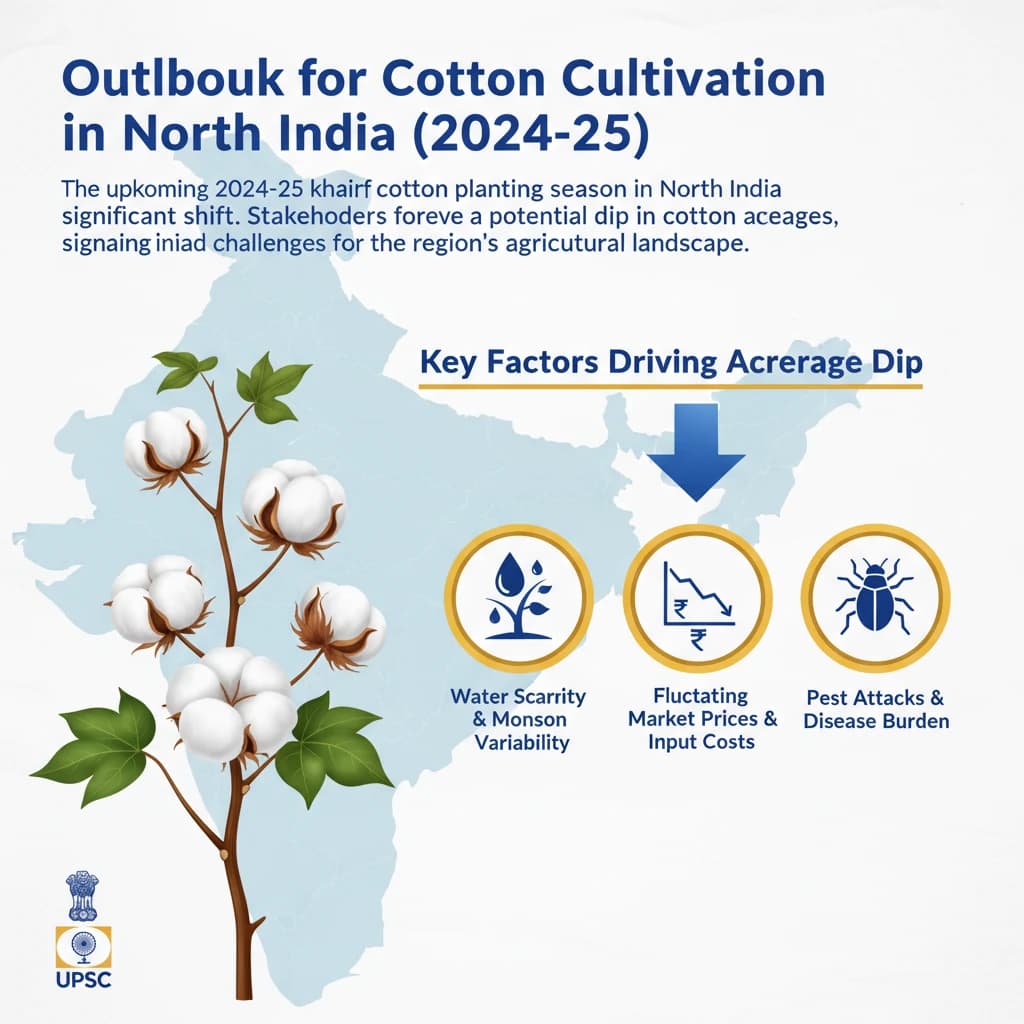
Outlook for Cotton Cultivation in North India (2024-25)
The upcoming 2024-25 kharif cotton planting season in North India anticipates a significant shift. Stakeholders foresee a potential dip in cotton acreages, signaling challenges for the region's agricultural landscape.
Key Factors Driving Acreage Dip
Several critical factors are converging to influence this projected decline in cotton cultivation:
- Severe Pink Bollworm (PBW) infestation: A persistent and damaging pest affecting cotton crops.
- Weak prices for the fibre crop: Low market prices reduce profitability for farmers.
- Rising labour costs: Increasing operational expenses make cotton cultivation less viable.
📍 UPSC Relevance: This scenario highlights the multifaceted challenges faced by the agricultural sector, often asked in GS-III (Agriculture), linking pest management, market dynamics, and input costs.
Understanding Pink Bollworm (PBW) Infestation
The Pink Bollworm (PBW), scientifically known as Pectinophora gossypiella, is a notorious pest. It is a major component of the American bollworm complex, specifically targeting cotton crops.
PBW Identification: Also referred to as Saunders. This pest primarily damages the developing fruits of the cotton plant.
The damage caused by PBW is critical as it affects the plant's reproductive parts. It targets the flower bud (square) and the seed-containing boll, which are essential for cotton fibre production.
Historical Context: Bt Cotton and Pest Management
Historically, the introduction of Bt Cotton was a significant step in pest management. This genetically modified crop was engineered specifically to resist pests like the Pink Bollworm, aiming to mitigate infestation risks and improve yields.
Bt Cotton's Role: While initially effective, the emergence of resistance in pests like PBW has necessitated continuous research and integrated pest management strategies.
💡 Key Takeaways
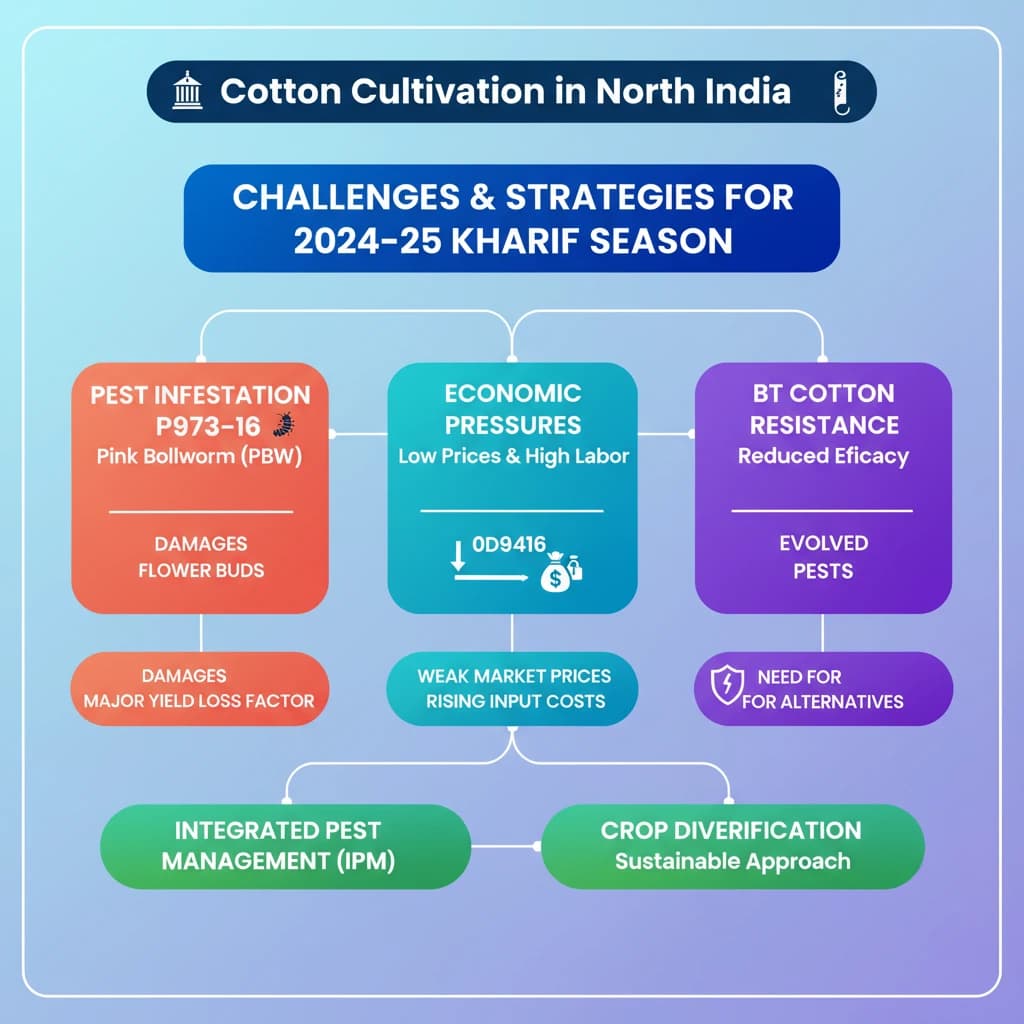
- •North India anticipates a potential decline in cotton acreage for the 2024-25 kharif season.
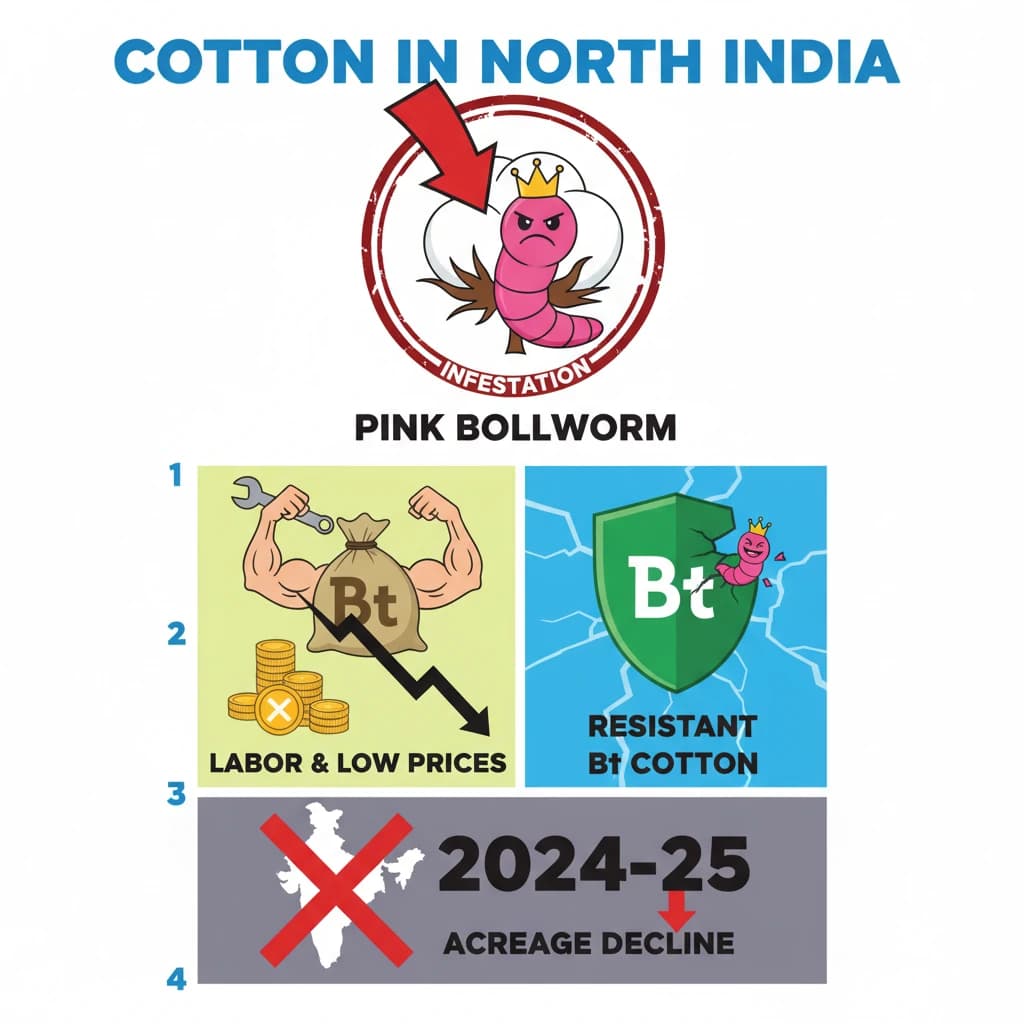
- •Key factors driving this dip include severe Pink Bollworm (PBW) infestation, weak market prices, and rising labor costs.
- •Pink Bollworm (Pectinophora gossypiella) is a major pest that damages cotton flower buds and bolls.
- •Bt Cotton was introduced to combat pests like PBW, but resistance has emerged over time, reducing its efficacy.
- •Integrated Pest Management (IPM) and crop diversification are crucial strategies for sustainable cotton cultivation.
- •The economic viability of cotton farming is under pressure due to pest challenges and market fluctuations.
🧠 Memory Techniques
95% Verified Content