Loading page, please wait…
Cropping Patterns and Irrigation - UPSC Agriculture Allied Sector
What is Cropping Patterns and Irrigation in UPSC Agriculture Allied Sector?
Cropping Patterns and Irrigation is a key topic under Agriculture Allied Sector for UPSC Civil Services Examination. Key points include: India is poised to become the world's largest lentil producer in 2023-24 due to increased acreage.. Lentils are a nutritious rabi crop requiring cold for growth and warmth for maturity.. The Bundelkhand region is a major contributor to India's lentil production.. Understanding this topic is essential for both UPSC Prelims and Mains preparation.
Why is Cropping Patterns and Irrigation important for UPSC exam?
Cropping Patterns and Irrigation is a Medium-level topic in UPSC Agriculture Allied Sector. It is tested in both Prelims (factual MCQs) and Mains (analytical answer writing). Previous year UPSC questions have frequently covered aspects of Cropping Patterns and Irrigation, making it essential for comprehensive IAS preparation.
How to prepare Cropping Patterns and Irrigation for UPSC?
To prepare Cropping Patterns and Irrigation for UPSC: (1) Study the comprehensive notes covering all key concepts on Vaidra. (2) Practice previous year questions on this topic. (3) Connect it with current affairs using daily updates. (4) Revise using key takeaways and mind maps available for Agriculture Allied Sector. (5) Write practice answers linking Cropping Patterns and Irrigation to related GS Paper topics.
Key takeaways of Cropping Patterns and Irrigation for UPSC
- India is poised to become the world's largest lentil producer in 2023-24 due to increased acreage.
- Lentils are a nutritious rabi crop requiring cold for growth and warmth for maturity.
- The Bundelkhand region is a major contributor to India's lentil production.
- India is the world's largest producer, consumer, and importer of pulses, with Gram being the dominant pulse.
- A joint forum by NITI Aayog, MoA&FW, and FAO aims to foster climate-resilient agrifood systems in India.
- Indian agriculture is highly vulnerable to climate change impacts and contributes to greenhouse gas emissions.
- Investing in climate-resilient agriculture is crucial for protecting vulnerable rural populations and ensuring food security.
Cropping Patterns and Irrigation
Medium⏱️ 8 min read
agriculture allied sector
📖 Introduction
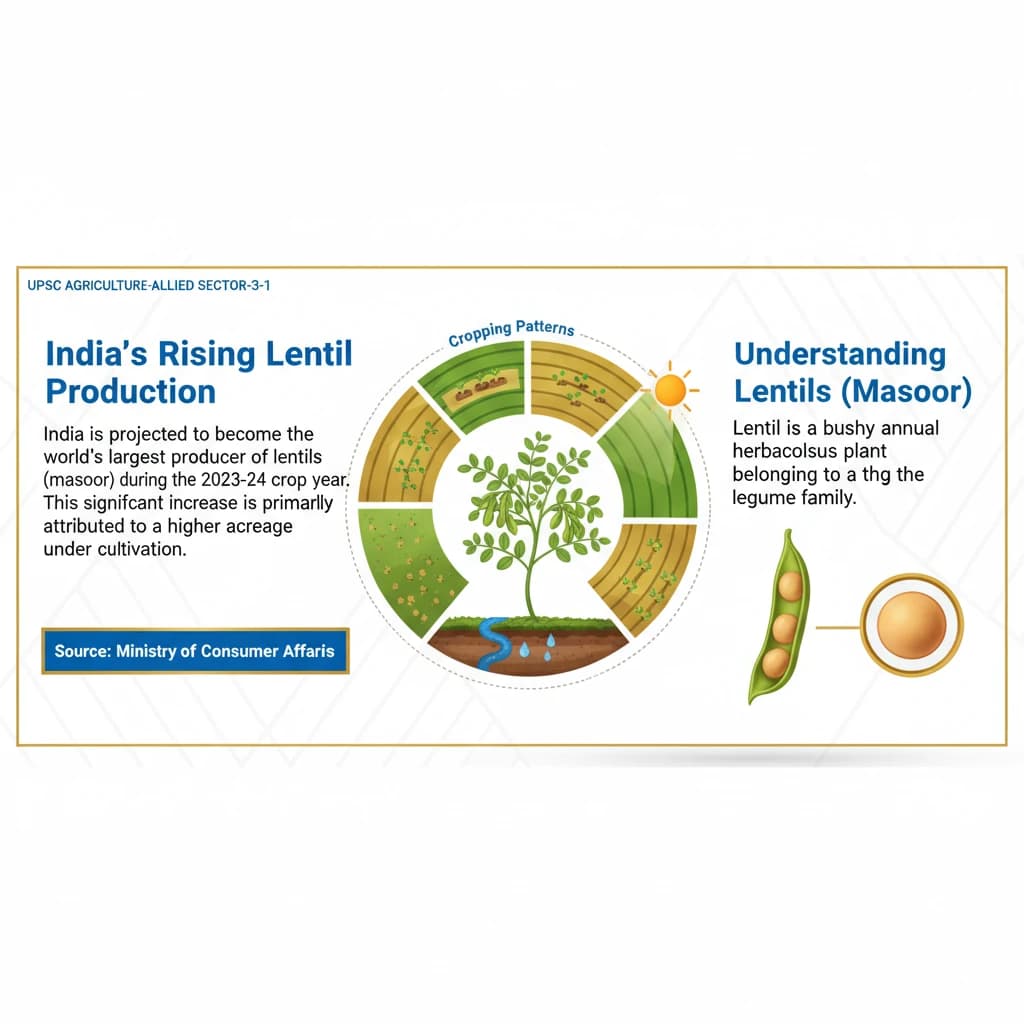
India's Rising Lentil Production
India is projected to become the world's largest producer of lentils (masoor) during the 2023-24 crop year. This significant increase is primarily attributed to a higher acreage under cultivation.
Source: Ministry of Consumer Affairs
Understanding Lentils (Masoor)
Lentil is a bushy annual herbaceous plant belonging to the legume family. Its flowers are typically short and self-pollinated, contributing to efficient cultivation.
Lentils are highly nutritious, serving as excellent sources of energy, carbohydrates, and protein. They also provide essential fats, fiber, phosphorus, iron, zinc, carotene, various vitamins, and antioxidants, making them a vital part of a balanced diet.
Nutritional Profile: Energy, Carbohydrates, Protein, Fat, Fiber, Phosphorus, Iron, Zinc, Carotene, Vitamins, Antioxidants
Climatic Conditions and Growing Regions for Lentils
Lentils are classified as a rabi crop, primarily grown as a rain-fed crop in India. They require specific climatic conditions for optimal growth.
- Vegetative Growth: Needs cold temperatures during its initial growth phase.
- Maturity: Requires warm temperatures as the crop approaches maturity.
Major lentil-growing regions in India include Uttar Pradesh, Madhya Pradesh, Bihar, West Bengal, Chhattisgarh, and Jharkhand. The Bundelkhand region, spanning parts of Uttar Pradesh and Madhya Pradesh, is particularly significant, contributing nearly 25% to India's total lentil production, earning it the moniker 'lentil bowl'.
Global Lentil Production Landscape
According to the Food and Agriculture Organization (FAO), the top lentil growers globally in 2022 were:
- Canada
- India
- Australia
- Turkey
- Russia
Status of Pulse Production in India
India holds a dominant position in the global pulse market. It is the largest producer, consumer, and importer of pulses worldwide.
- Global Production Share: 25%
- Global Consumption Share: 27%
- Global Import Share: 14%
Pulses collectively account for approximately 20% of the total area under food grains in India. They contribute around 7-10% to the country's total foodgrain production, highlighting their importance in agricultural output and food security.
Among various pulses, Gram is the most dominant, contributing about 40% to the total pulse production. It is followed by Tur/Arhar (15-20%) and then Urad/Black Matpe and Moong, each contributing around 8-10%.
Key Pulses in India: Gram (most dominant), Tur/Arhar, Urad/Black Matpe, Moong.
Investment Forum for Climate Resilient Agrifood Systems: An Overview
An important initiative, the 'Investment Forum for Advancing Climate Resilient Agrifood Systems in India', was jointly launched in New Delhi. This forum represents a collaborative effort to address pressing agricultural challenges.
Key Collaborators:
- NITI Aayog (National Institution for Transforming India)
- Ministry of Agriculture and Farmers’ Welfare (MoA&FW), Government of India
- Food and Agriculture Organization (FAO) of the United Nations
The primary aim of this forum is to develop an investment and partnership strategy. This strategy focuses on fostering climate-resilient agrifood systems among various stakeholders across India, promoting sustainable agricultural practices.
Key Discussion Areas of the Forum
The forum facilitated extensive discussions and deliberations across six crucial areas, designed to cover a holistic approach to climate resilience in agriculture:
- Climate resilient agriculture: Sharing experiences and outlining future pathways.
- Digital infrastructure and solutions: Leveraging technology for agricultural resilience.
- Financing climate resilient agrifood systems: Exploring both domestic and global funding mechanisms.
- Climate resilient value chains: Ensuring resilience throughout the agricultural supply chain.
- Production practices and inputs: Identifying and promoting climate-resilient farming methods.
- Gender mainstreaming and social inclusion: Ensuring equitable participation and benefits in climate adaptation efforts.
Importance of Investing in Climate-Resilient Agrifood Systems
Climate change poses profound implications for India, significantly impacting its economically vulnerable rural population. A large segment of this population relies heavily on climate-sensitive agricultural livelihoods.
Agriculture itself contributes approximately 13% of India's total greenhouse gas emissions. Simultaneously, it is highly vulnerable to the adverse effects of climate change, creating a complex challenge.
UPSC Relevance: Understanding the dual role of agriculture as both a contributor to and victim of climate change is crucial for answers on environmental issues and agricultural policy.
Indian agriculture is particularly susceptible to a range of climate-related hazards. These include extreme temperatures, droughts, floods, cyclones, and increasing soil salinity, all of which threaten food security and farmer livelihoods.
💡 Key Takeaways
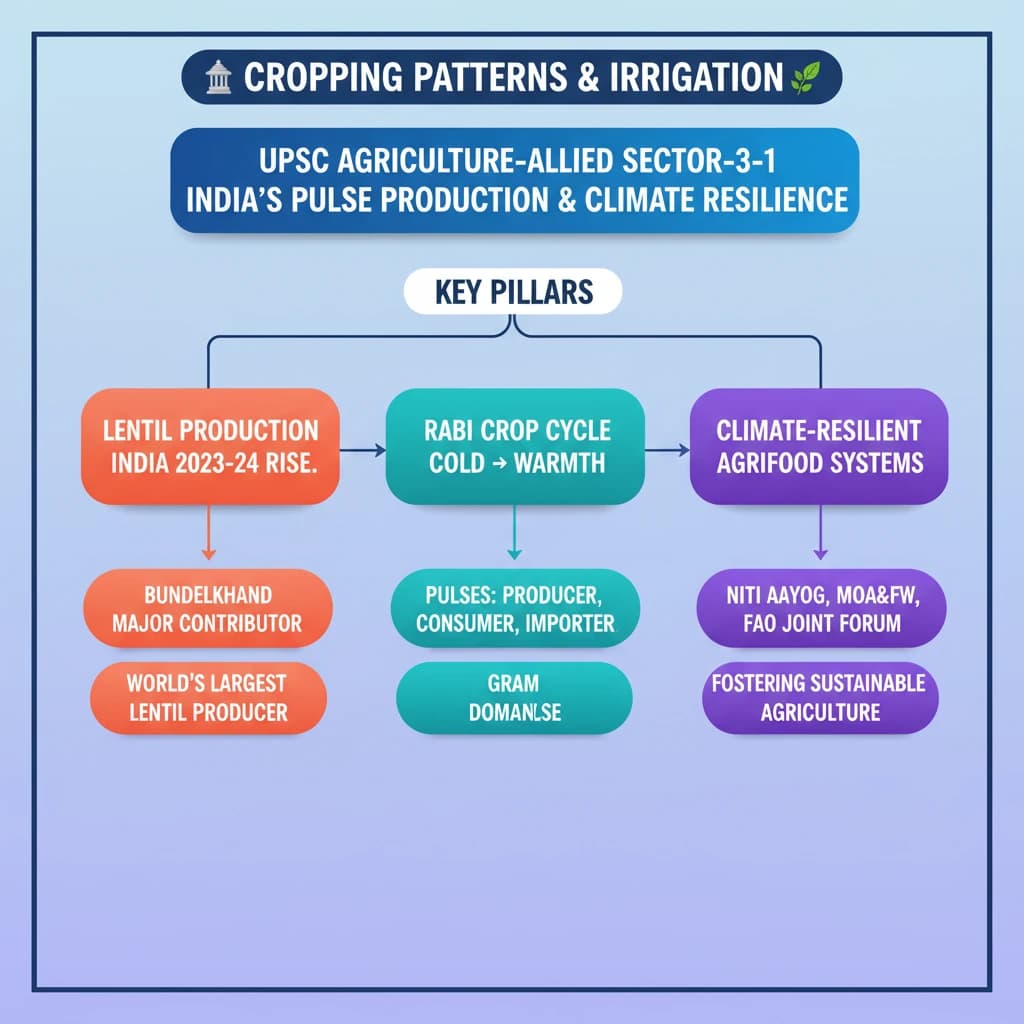
- •India is poised to become the world's largest lentil producer in 2023-24 due to increased acreage.
- •Lentils are a nutritious rabi crop requiring cold for growth and warmth for maturity.
- •The Bundelkhand region is a major contributor to India's lentil production.
- •India is the world's largest producer, consumer, and importer of pulses, with Gram being the dominant pulse.
- •A joint forum by NITI Aayog, MoA&FW, and FAO aims to foster climate-resilient agrifood systems in India.
- •Indian agriculture is highly vulnerable to climate change impacts and contributes to greenhouse gas emissions.
- •Investing in climate-resilient agriculture is crucial for protecting vulnerable rural populations and ensuring food security.
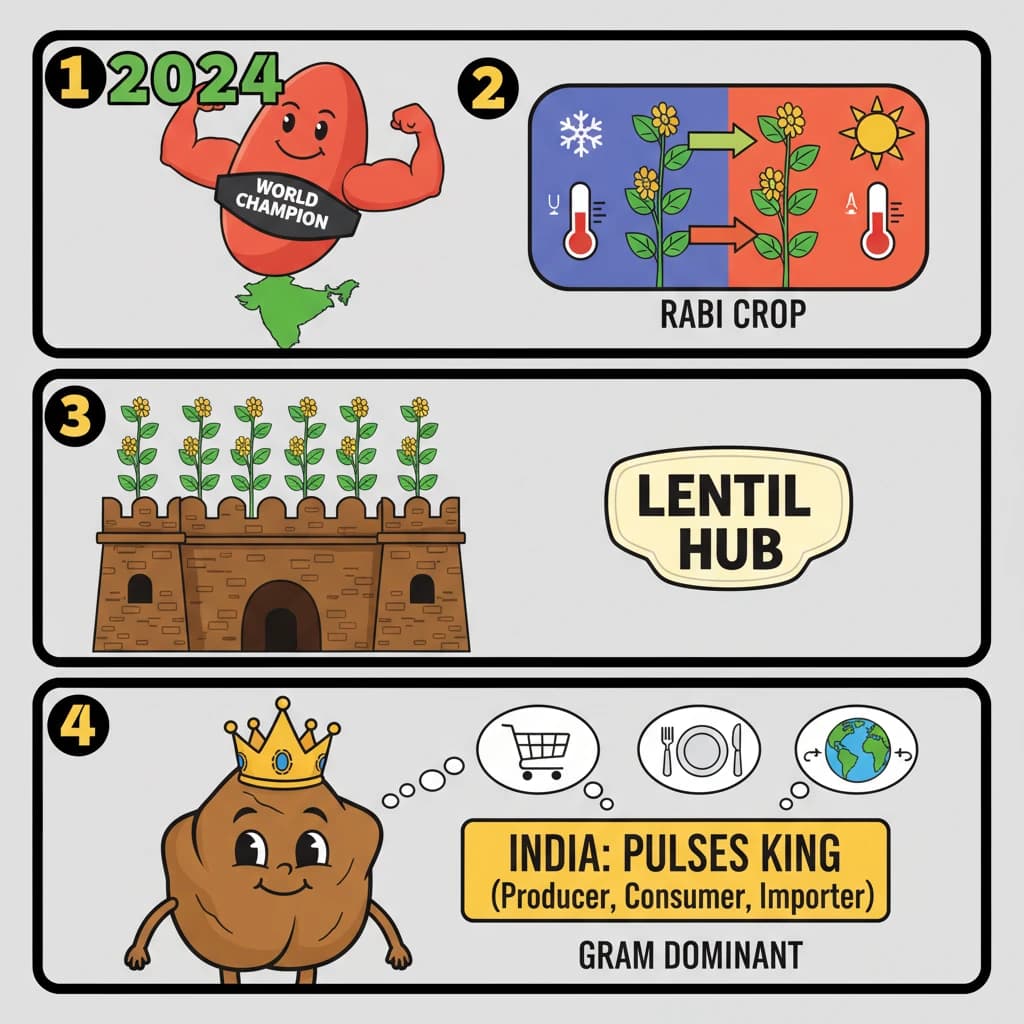
🧠 Memory Techniques
98% Verified Content
📚 Reference Sources
•Food and Agriculture Organization (FAO) of the United Nations
•NITI Aayog, Government of India
•Ministry of Agriculture and Farmers’ Welfare (MoA&FW), Government of India