Loading page, please wait…
Vaidra Logo
Vaidra

Top 4 items + smart groups

UPSC GPT
New
Current Affairs
Daily Solutions
Daily Puzzle
Mains Evaluator

Version 2.0.0 • Built with ❤️ for UPSC aspirants

Loading...
Loading...
Loading...
Loading...
Loading...
Loading...
Loading...
Loading...
Loading...
Loading...
Loading...
Loading...
Loading...
Back
All Subjects

Topics

0 topics • 0 completed

Loading topics...
Loading...
Loading...
Loading...
Loading...
Loading...
Overall Progress0%
Basic Animal Husbandry Statistics 2024 - UPSC Agriculture Allied Sector

Basic Animal Husbandry Statistics 2024 - UPSC Agriculture Allied Sector

What is Basic Animal Husbandry Statistics 2024 in UPSC Agriculture Allied Sector?

Basic Animal Husbandry Statistics 2024 is a key topic under Agriculture Allied Sector for UPSC Civil Services Examination. Key points include: Basic Animal Husbandry Statistics 2024 (BAHS) was released by the Ministry of Fisheries, Animal Husbandry & Dairying.. The report was launched on National Milk Day, November 26th.. It is based on the Integrated Sample Survey (ISS) conducted from March 2023 to February 2024.. Understanding this topic is essential for both UPSC Prelims and Mains preparation.

Why is Basic Animal Husbandry Statistics 2024 important for UPSC exam?

Basic Animal Husbandry Statistics 2024 is a Easy-level topic in UPSC Agriculture Allied Sector. It is tested in both Prelims (factual MCQs) and Mains (analytical answer writing). Previous year UPSC questions have frequently covered aspects of Basic Animal Husbandry Statistics 2024, making it essential for comprehensive IAS preparation.

How to prepare Basic Animal Husbandry Statistics 2024 for UPSC?

To prepare Basic Animal Husbandry Statistics 2024 for UPSC: (1) Study the comprehensive notes covering all key concepts on Vaidra. (2) Practice previous year questions on this topic. (3) Connect it with current affairs using daily updates. (4) Revise using key takeaways and mind maps available for Agriculture Allied Sector. (5) Write practice answers linking Basic Animal Husbandry Statistics 2024 to related GS Paper topics.

Key takeaways of Basic Animal Husbandry Statistics 2024 for UPSC

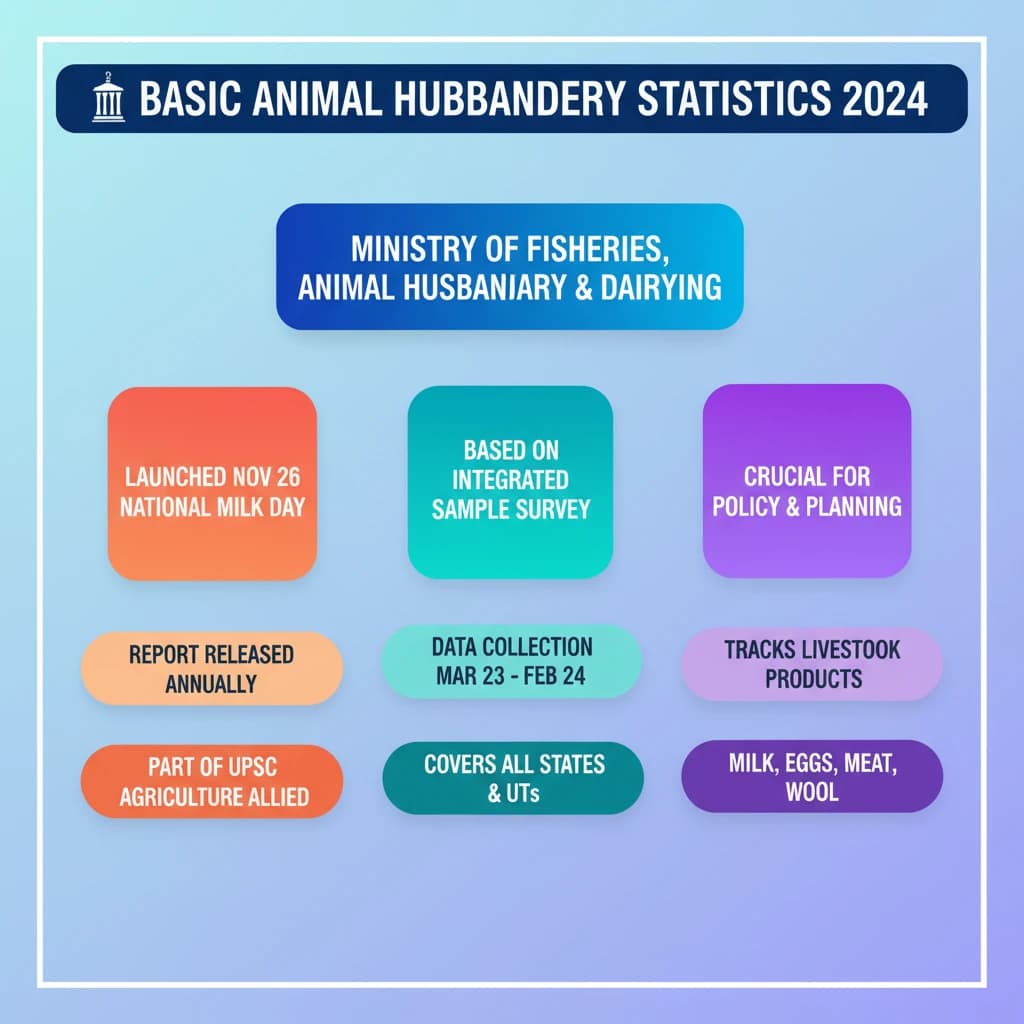
  • Basic Animal Husbandry Statistics 2024 (BAHS) was released by the Ministry of Fisheries, Animal Husbandry & Dairying.
  • The report was launched on National Milk Day, November 26th.
  • It is based on the Integrated Sample Survey (ISS) conducted from March 2023 to February 2024.
  • BAHS tracks trends in major livestock products: milk, eggs, meat, and wool.
  • These statistics are crucial for informed policy-making and economic planning in the allied sector.
  • The report provides a vital annual overview of India's animal husbandry and dairying performance.
Basic Animal Husbandry Statistics 2024

Basic Animal Husbandry Statistics 2024

Easy⏱️ 7 min read✓ 98% Verified
agriculture allied sector

📖 Introduction

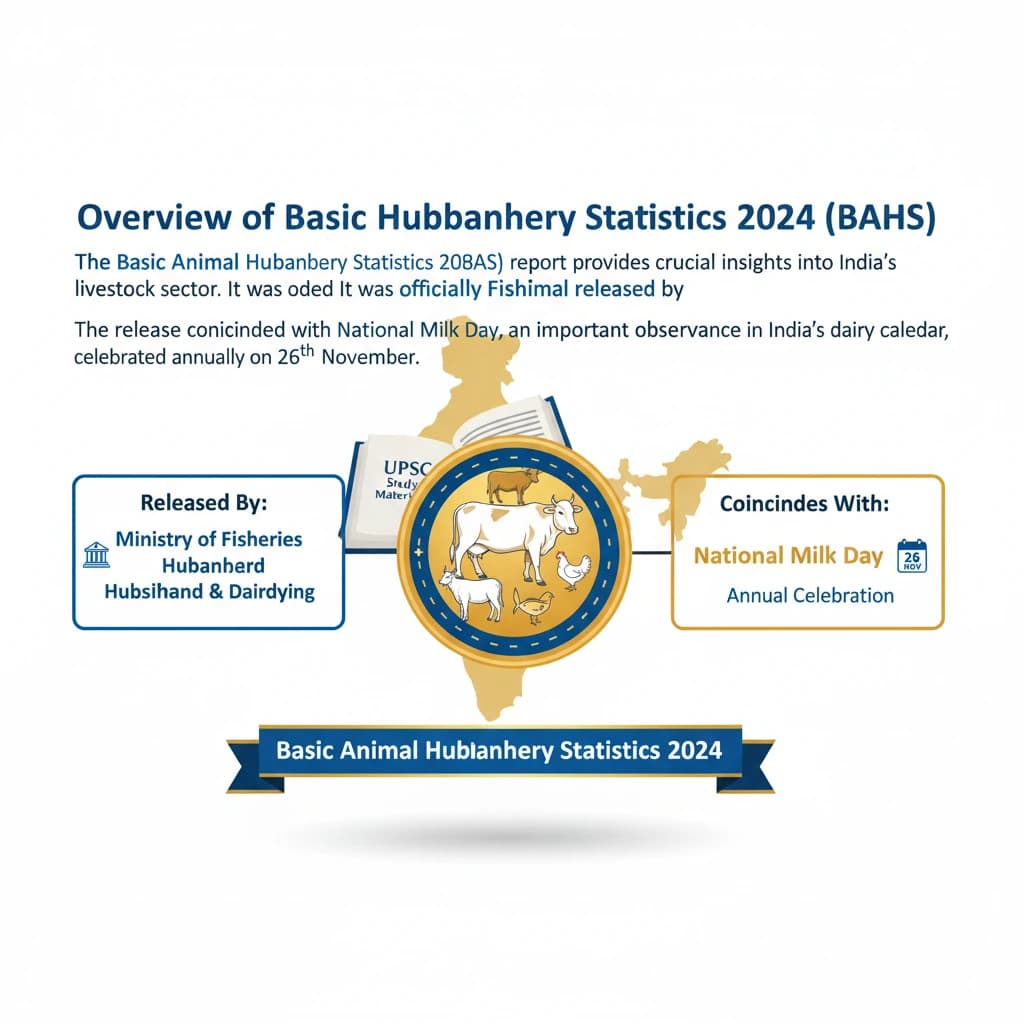
<h4>Overview of Basic Animal Husbandry Statistics 2024 (BAHS)</h4><p>The <strong>Basic Animal Husbandry Statistics 2024 (BAHS)</strong> report provides crucial insights into India's livestock sector. It was officially released by the <strong>Ministry of Fisheries, Animal Husbandry & Dairying</strong>.</p><p>The release coincided with <strong>National Milk Day</strong>, an important observance in India's dairy calendar, celebrated annually on <strong>26th November</strong>.</p><div class="info-box"><strong>Release Date:</strong> 26th November (National Milk Day)<br><strong>Releasing Authority:</strong> Ministry of Fisheries, Animal Husbandry & Dairying<br><strong>Basis of Report:</strong> Outcomes of the Integrated Sample Survey (ISS)</div><h4>Integrated Sample Survey (ISS)</h4><p>The <strong>BAHS 2024</strong> is compiled based on data collected through the <strong>Integrated Sample Survey (ISS)</strong>. This survey is a comprehensive exercise designed to gather data from the ground level.</p><p>The specific period covered by the <strong>ISS</strong> for this report was from <strong>March 2023 to February 2024</strong>. This annual survey ensures up-to-date information on the sector.</p><div class="key-point-box">The <strong>ISS</strong> tracks trends in major <strong>livestock products</strong>, which are vital for understanding the economic health and production capabilities of the animal husbandry sector.</div><h4>Key Livestock Products Tracked</h4><p>The statistics in the <strong>BAHS 2024</strong> highlight trends across several critical livestock products. These products form the backbone of the allied agricultural economy and contribute significantly to rural livelihoods and national food security.</p><ul><li><strong>Milk:</strong> Crucial for the dairy industry and nutritional security.</li><li><strong>Eggs:</strong> Important source of protein, especially for poultry farmers.</li><li><strong>Meat:</strong> A significant component of the food industry and export market.</li><li><strong>Wool:</strong> Essential for the textile industry, particularly in colder regions.</li></ul><div class="exam-tip-box">For <strong>UPSC Mains (GS-III Economy)</strong>, understanding the sources and types of agricultural statistics like <strong>BAHS</strong> is vital. It helps in analyzing government policies related to agriculture and allied sectors.</div>
Concept Diagram

💡 Key Takeaways

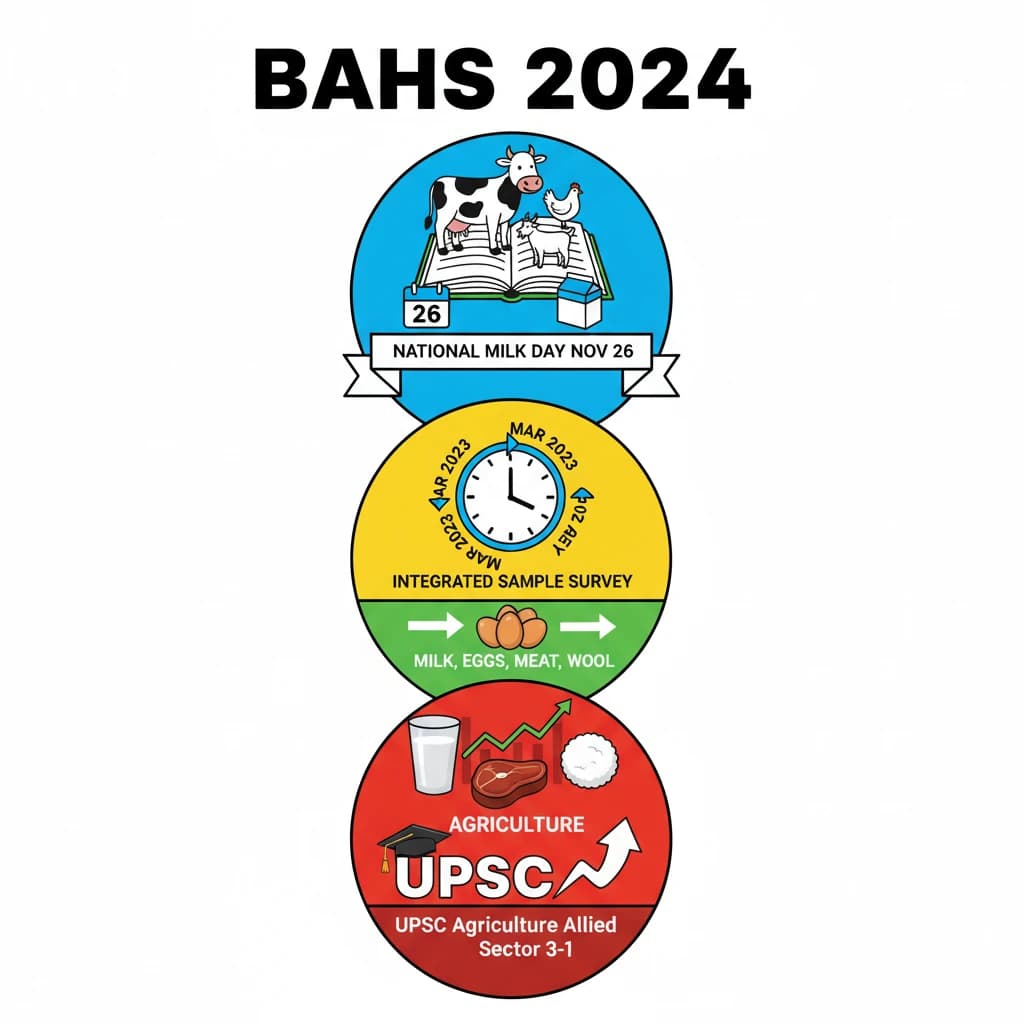
  • •Basic Animal Husbandry Statistics 2024 (BAHS) was released by the Ministry of Fisheries, Animal Husbandry & Dairying.
  • •The report was launched on National Milk Day, November 26th.
  • •It is based on the Integrated Sample Survey (ISS) conducted from March 2023 to February 2024.
  • •BAHS tracks trends in major livestock products: milk, eggs, meat, and wool.
  • •These statistics are crucial for informed policy-making and economic planning in the allied sector.
  • •The report provides a vital annual overview of India's animal husbandry and dairying performance.

🧠 Memory Techniques
Memory Aid
98% Verified Content

Related Topics

Loading related topics...
Explore:Agriculture Allied Sector Topics·All Subjects·Daily Current Affairs·Editorial Analysis·Previous Year Questions·UPSC GPT