Loading page, please wait…
Vaidra Logo
Vaidra

Top 4 items + smart groups

UPSC GPT
New
Current Affairs
Daily Solutions
Daily Puzzle
Mains Evaluator

Version 2.0.0 • Built with ❤️ for UPSC aspirants

Loading...
Loading...
Loading...
Loading...
Loading...
Loading...
Loading...
Loading...
Loading...
Loading...
Loading...
Loading...
Loading...
Back
All Subjects

Topics

0 topics • 0 completed

Loading topics...
Loading...
Loading...
Loading...
Loading...
Loading...
Overall Progress0%

International Models Addressing Food Waste - UPSC Agriculture Allied Sector

What is International Models Addressing Food Waste in UPSC Agriculture Allied Sector?

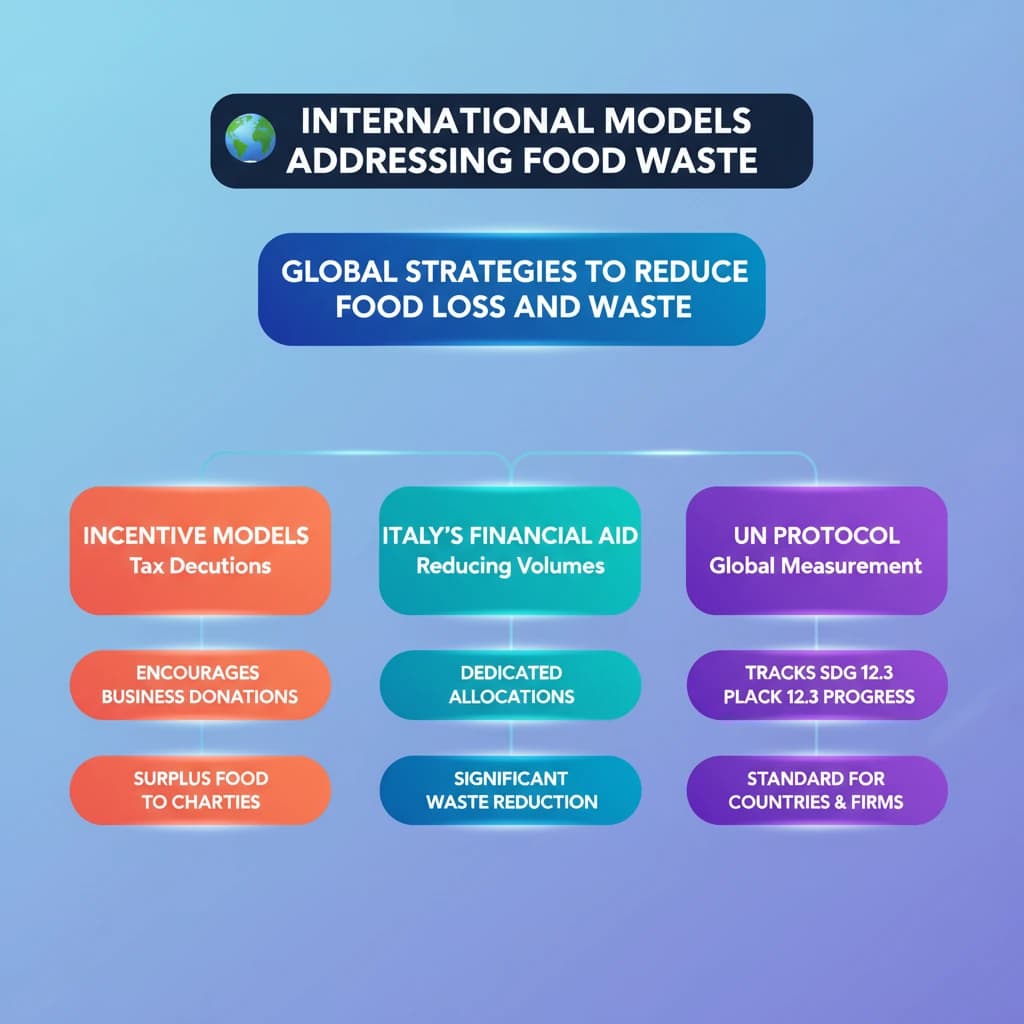
International Models Addressing Food Waste is a key topic under Agriculture Allied Sector for UPSC Civil Services Examination. Key points include: Incentive models, such as tax deductions, effectively encourage businesses to donate surplus food.. Italy's model demonstrates that dedicated financial allocations can significantly reduce food waste volumes.. The UN Global Food Loss and Waste Protocol provides a crucial global standard for measuring food loss and waste.. Understanding this topic is essential for both UPSC Prelims and Mains preparation.

Why is International Models Addressing Food Waste important for UPSC exam?

International Models Addressing Food Waste is a Medium-level topic in UPSC Agriculture Allied Sector. It is tested in both Prelims (factual MCQs) and Mains (analytical answer writing). Previous year UPSC questions have frequently covered aspects of International Models Addressing Food Waste, making it essential for comprehensive IAS preparation.

How to prepare International Models Addressing Food Waste for UPSC?

To prepare International Models Addressing Food Waste for UPSC: (1) Study the comprehensive notes covering all key concepts on Vaidra. (2) Practice previous year questions on this topic. (3) Connect it with current affairs using daily updates. (4) Revise using key takeaways and mind maps available for Agriculture Allied Sector. (5) Write practice answers linking International Models Addressing Food Waste to related GS Paper topics.

Key takeaways of International Models Addressing Food Waste for UPSC

  • Incentive models, such as tax deductions, effectively encourage businesses to donate surplus food.
  • Italy's model demonstrates that dedicated financial allocations can significantly reduce food waste volumes.
  • The UN Global Food Loss and Waste Protocol provides a crucial global standard for measuring food loss and waste.
  • Standardized measurement is vital for tracking progress on SDG target 12.3.
  • Both countries and companies can use the UN Protocol to measure FLW within their borders and supply chains.
  • Reducing food waste contributes significantly to global food security and environmental sustainability.
  • These international models offer valuable lessons for India in developing its own food waste reduction policies.
International Models Addressing Food Waste

International Models Addressing Food Waste

Medium⏱️ 8 min read✓ 95% Verified
agriculture allied sector

📖 Introduction

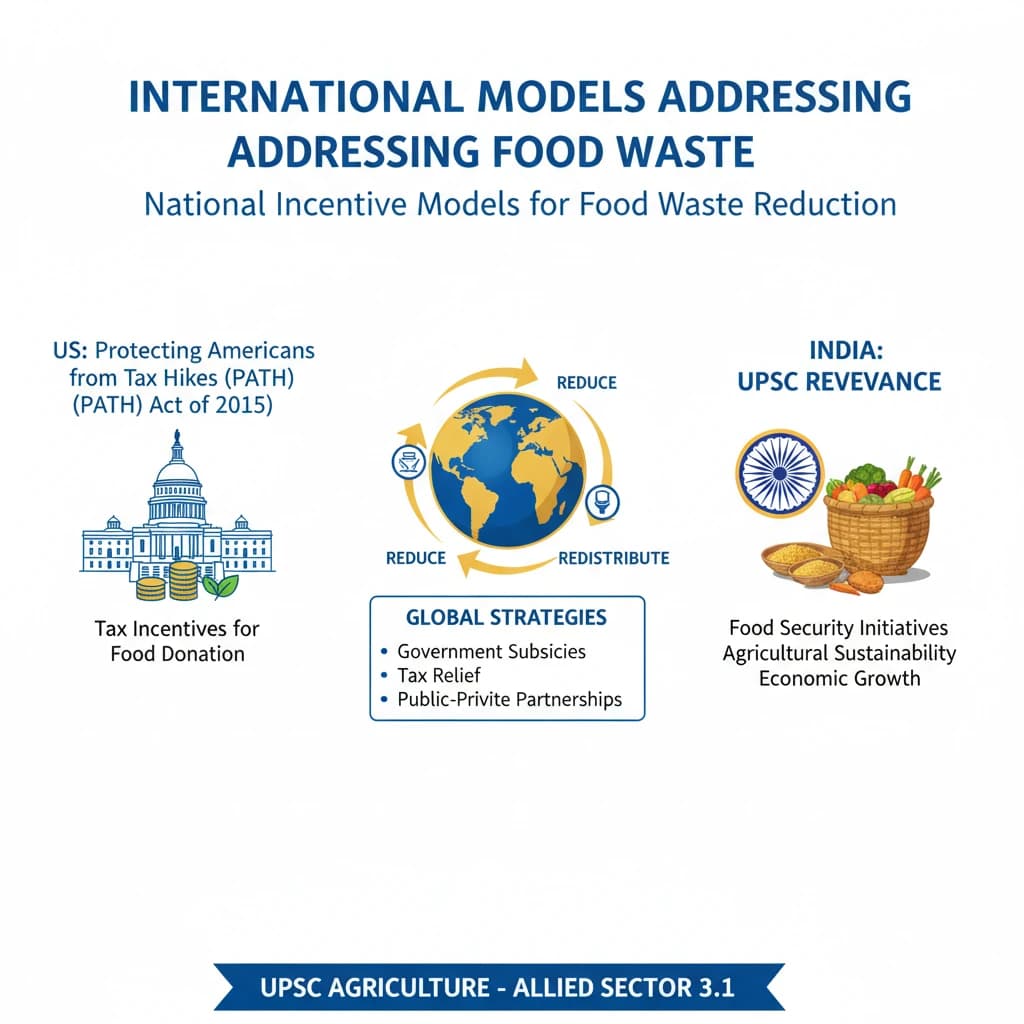
<h4>National Incentive Models for Food Waste Reduction</h4><p>Governments worldwide are implementing various strategies to combat <strong>food waste</strong>, often through incentive-based models. These models aim to encourage businesses and individuals to reduce, reuse, and redistribute excess food.</p><h4>US: Protecting Americans from Tax Hikes (PATH) Act of 2015</h4><p>The <strong>United States</strong> introduced significant incentives through the <strong>Protecting Americans from Tax Hikes (PATH) Act of 2015</strong>. This landmark legislation aimed to encourage businesses to donate their excess food rather than discarding it.</p><div class="info-box"><strong>Key Provision:</strong> Enhanced tax deductions for food donations.</div><p>This act made it more financially attractive for companies to divert edible surplus food to charities, thereby reducing landfill waste and supporting food security initiatives.</p><h4>Italy's Incentive Model</h4><p><strong>Italy</strong> has also adopted a proactive approach to food waste reduction, demonstrating a strong commitment through financial incentives and streamlined donation processes.</p><div class="info-box"><strong>Annual Allocation:</strong> Approximately <strong>USD 10 million</strong>.<br><strong>Target:</strong> Reduce <strong>one million tonnes</strong> of food waste annually.<br><strong>Mechanism:</strong> Offering businesses incentives to donate food to charities.</div><p>Italy's model simplifies the donation process for businesses, removing bureaucratic hurdles and providing financial encouragement, leading to substantial reductions in food waste.</p><h4>UN Global Food Loss and Waste Protocol</h4><p>Beyond national incentives, international standards play a crucial role in harmonizing efforts to measure and address food loss and waste globally. Consistent measurement is fundamental for effective policy-making.</p><div class="key-point-box">The <strong>UN Global Food Loss and Waste Protocol</strong> is a universal standard designed for the consistent measurement of <strong>food loss and waste (FLW)</strong>. It provides a common language and methodology for reporting.</div><p>This protocol was proposed as a key indicator for <strong>Sustainable Development Goal (SDG) target 12.3</strong>. This target specifically addresses reducing food loss along production and supply chains, including post-harvest losses, and reducing food waste at the retail and consumer levels.</p><div class="info-box"><strong>Purpose:</strong> Provides a standardized methodology for measuring FLW.<br><strong>Applicability:</strong> Can be utilized by both <strong>countries</strong> and <strong>companies</strong>.<br><strong>Scope:</strong> Measures FLW within national borders and across complex supply chains.</div><p>By using a common protocol, global progress on food waste reduction can be accurately tracked, and best practices can be more easily identified and shared among nations and corporations.</p><div class="exam-tip-box">Understanding these international models is crucial for <strong>UPSC GS Paper III (Agriculture, Economy, Environment)</strong>. Be prepared to cite examples like the <strong>PATH Act</strong> or <strong>Italy's model</strong> when discussing policy solutions for food waste in India. The <strong>UN Global Food Loss and Waste Protocol</strong> is an excellent point to mention for international cooperation and standardization.</div>
Concept Diagram

💡 Key Takeaways

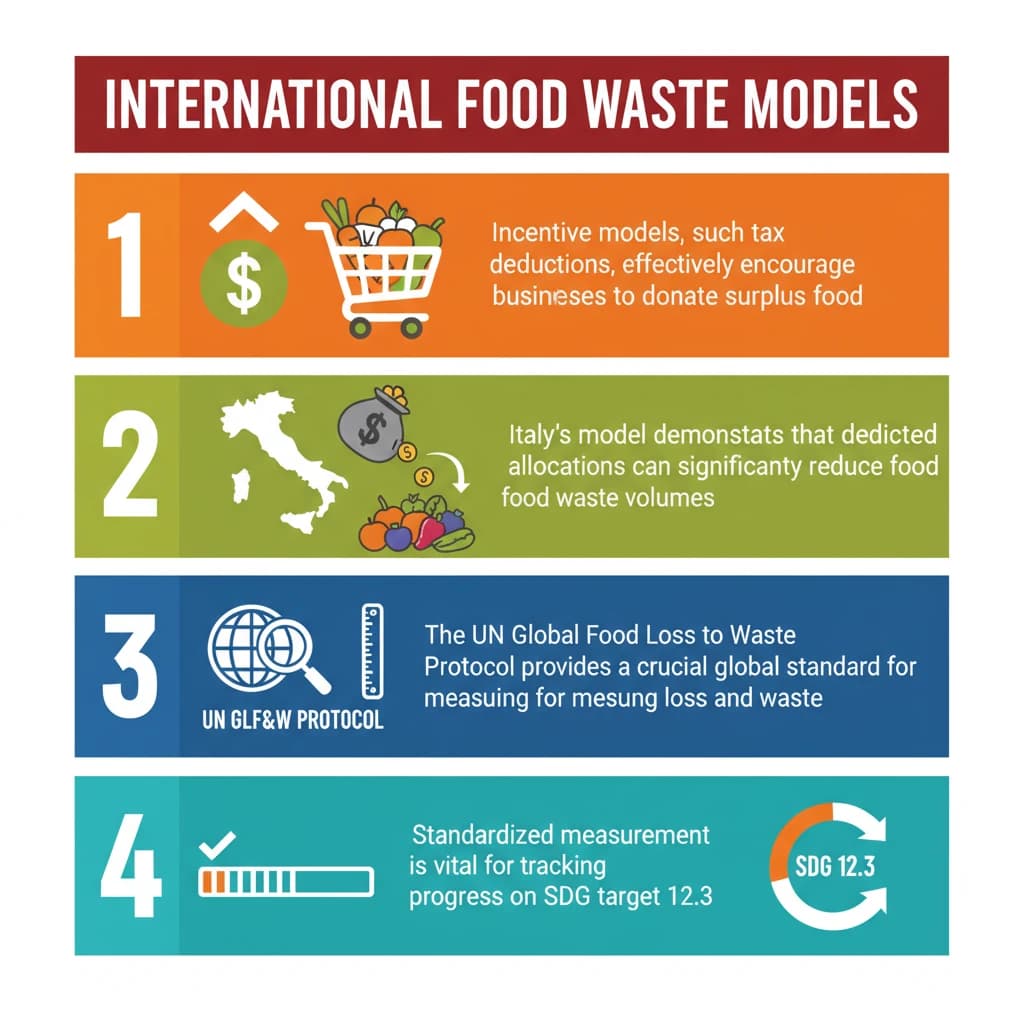
  • •Incentive models, such as tax deductions, effectively encourage businesses to donate surplus food.
  • •Italy's model demonstrates that dedicated financial allocations can significantly reduce food waste volumes.
  • •The UN Global Food Loss and Waste Protocol provides a crucial global standard for measuring food loss and waste.
  • •Standardized measurement is vital for tracking progress on SDG target 12.3.
  • •Both countries and companies can use the UN Protocol to measure FLW within their borders and supply chains.
  • •Reducing food waste contributes significantly to global food security and environmental sustainability.
  • •These international models offer valuable lessons for India in developing its own food waste reduction policies.

🧠 Memory Techniques
Memory Aid
95% Verified Content

Related Topics

Loading related topics...
Explore:Agriculture Allied Sector Topics·All Subjects·Daily Current Affairs·Editorial Analysis·Previous Year Questions·UPSC GPT
International Models Addressing Food Waste - UPSC Agriculture Allied Sector