Loading page, please wait…
Funding & Implementation: Agriculture Ministry Schemes - UPSC Agriculture Allied Sector
What is Funding & Implementation: Agriculture Ministry Schemes in UPSC Agriculture Allied Sector?
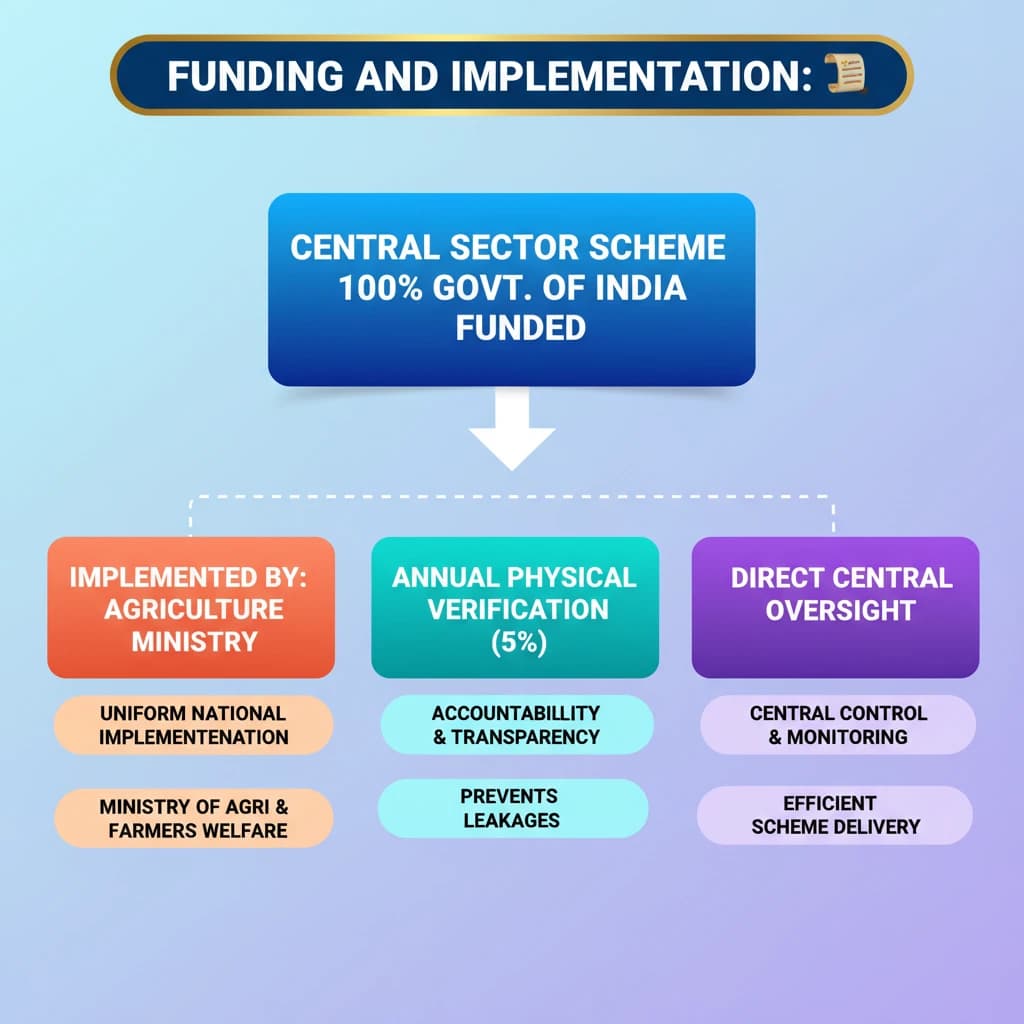
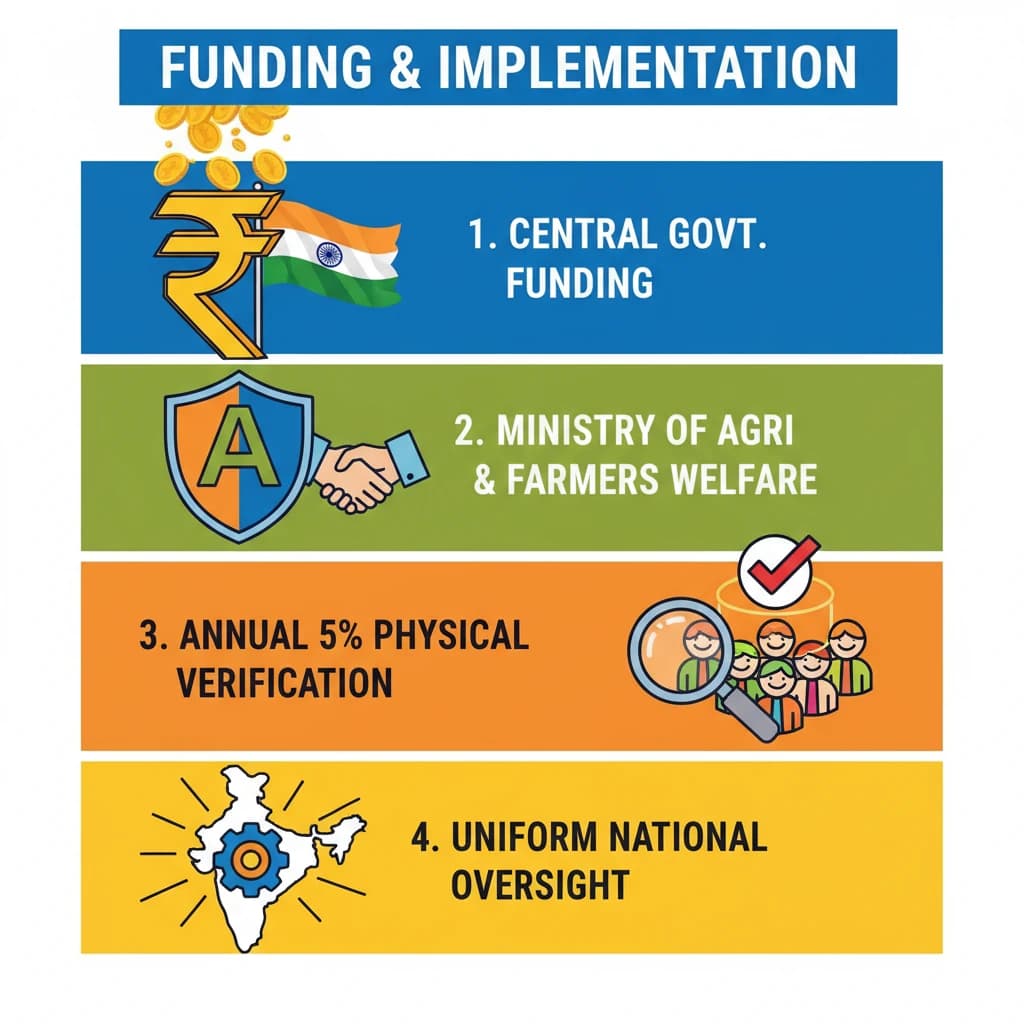
Funding & Implementation: Agriculture Ministry Schemes is a key topic under Agriculture Allied Sector for UPSC Civil Services Examination. Key points include: The scheme is a Central Sector Scheme, fully funded by the Government of India.. It is implemented by the Ministry of Agriculture and Farmers Welfare.. A mandatory annual physical verification of 5% of beneficiaries is conducted.. Understanding this topic is essential for both UPSC Prelims and Mains preparation.
Why is Funding & Implementation: Agriculture Ministry Schemes important for UPSC exam?
Funding & Implementation: Agriculture Ministry Schemes is a Medium-level topic in UPSC Agriculture Allied Sector. It is tested in both Prelims (factual MCQs) and Mains (analytical answer writing). Previous year UPSC questions have frequently covered aspects of Funding & Implementation: Agriculture Ministry Schemes, making it essential for comprehensive IAS preparation.
How to prepare Funding & Implementation: Agriculture Ministry Schemes for UPSC?
To prepare Funding & Implementation: Agriculture Ministry Schemes for UPSC: (1) Study the comprehensive notes covering all key concepts on Vaidra. (2) Practice previous year questions on this topic. (3) Connect it with current affairs using daily updates. (4) Revise using key takeaways and mind maps available for Agriculture Allied Sector. (5) Write practice answers linking Funding & Implementation: Agriculture Ministry Schemes to related GS Paper topics.
Key takeaways of Funding & Implementation: Agriculture Ministry Schemes for UPSC
- The scheme is a Central Sector Scheme, fully funded by the Government of India.
- It is implemented by the Ministry of Agriculture and Farmers Welfare.
- A mandatory annual physical verification of 5% of beneficiaries is conducted.
- Central Sector Schemes ensure uniform national implementation and direct central oversight.
- Physical verification is crucial for accountability, transparency, and preventing leakages.
- Understanding funding patterns is key to analyzing government schemes for UPSC.
Funding & Implementation: Agriculture Ministry Schemes
Medium⏱️ 6 min read
agriculture allied sector
📖 Introduction
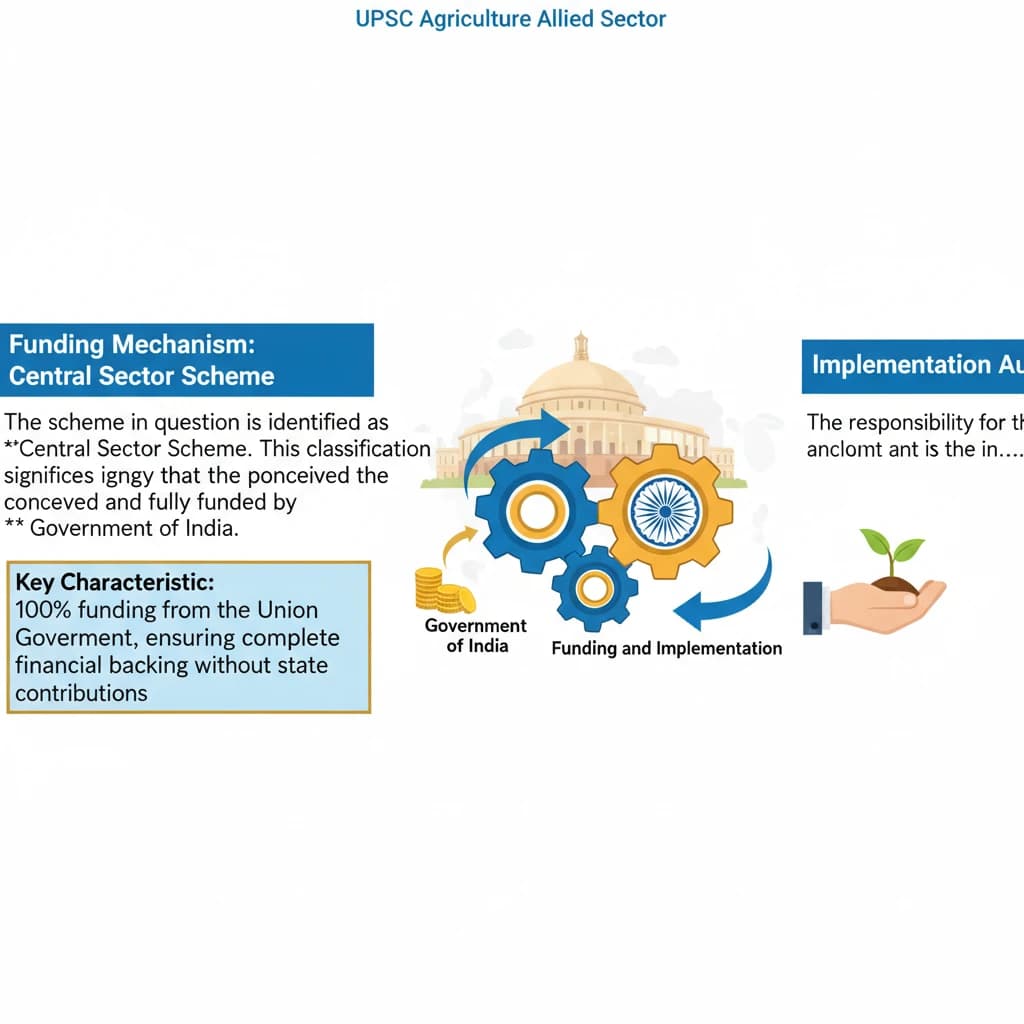
Funding Mechanism: Central Sector Scheme
The scheme in question is identified as a Central Sector Scheme. This classification signifies that the program is conceived, designed, and fully funded by the Government of India.
Key Characteristic: 100% funding from the Union Government, ensuring complete financial backing without state contributions.
Implementation Authority
The responsibility for the execution and oversight of this scheme lies with the Ministry of Agriculture and Farmers Welfare.
This central ministry ensures uniform implementation across the nation, aligning with national agricultural policies and priorities.
UPSC Insight: Understanding the difference between Central Sector (100% GoI funded) and Centrally Sponsored Schemes (GoI + State funding) is crucial for GS Paper 2 (Polity) and GS Paper 3 (Economy/Agriculture).
Physical Verification Module
A critical component of the scheme's implementation is its Physical Verification Module. This module mandates a rigorous process to ensure accountability and transparency.
Mandatory Requirement: A physical verification of 5% of beneficiaries is conducted every year.
This annual verification helps in checking the authenticity of beneficiaries, preventing leakages, and ensuring that the scheme's benefits reach the intended recipients effectively.
Importance: Physical verification is vital for good governance, reducing corruption, and enhancing the overall impact and credibility of government schemes.
💡 Key Takeaways
- •The scheme is a Central Sector Scheme, fully funded by the Government of India.
- •It is implemented by the Ministry of Agriculture and Farmers Welfare.
- •A mandatory annual physical verification of 5% of beneficiaries is conducted.
- •Central Sector Schemes ensure uniform national implementation and direct central oversight.
- •Physical verification is crucial for accountability, transparency, and preventing leakages.
- •Understanding funding patterns is key to analyzing government schemes for UPSC.
🧠 Memory Techniques
95% Verified Content
📚 Reference Sources
•Official website of Ministry of Agriculture & Farmers Welfare (e-NAM scheme details)
•NITI Aayog documents on scheme classification