Loading page, please wait…
Makhana (Fox Nut): Production, GI Tag (Mithila), and Market Overview - UPSC Agriculture Allied Sector
What is Makhana (Fox Nut): Production, GI Tag (Mithila), and Market Overview in UPSC Agriculture Allied Sector?
Makhana (Fox Nut): Production, GI Tag (Mithila), and Market Overview is a key topic under Agriculture Allied Sector for UPSC Civil Services Examination. Key points include: Makhana, or fox nut, is the dried seed of the prickly water lily (Euryale ferox).. It is valued as a nutrient-dense, low-fat healthy snack.. Bihar accounts for 90% of India's makhana production.. Understanding this topic is essential for both UPSC Prelims and Mains preparation.
Why is Makhana (Fox Nut): Production, GI Tag (Mithila), and Market Overview important for UPSC exam?
Makhana (Fox Nut): Production, GI Tag (Mithila), and Market Overview is a Easy-level topic in UPSC Agriculture Allied Sector. It is tested in both Prelims (factual MCQs) and Mains (analytical answer writing). Previous year UPSC questions have frequently covered aspects of Makhana (Fox Nut): Production, GI Tag (Mithila), and Market Overview, making it essential for comprehensive IAS preparation.
How to prepare Makhana (Fox Nut): Production, GI Tag (Mithila), and Market Overview for UPSC?
To prepare Makhana (Fox Nut): Production, GI Tag (Mithila), and Market Overview for UPSC: (1) Study the comprehensive notes covering all key concepts on Vaidra. (2) Practice previous year questions on this topic. (3) Connect it with current affairs using daily updates. (4) Revise using key takeaways and mind maps available for Agriculture Allied Sector. (5) Write practice answers linking Makhana (Fox Nut): Production, GI Tag (Mithila), and Market Overview to related GS Paper topics.
Key takeaways of Makhana (Fox Nut): Production, GI Tag (Mithila), and Market Overview for UPSC
- Makhana, or fox nut, is the dried seed of the prickly water lily (Euryale ferox).
- It is valued as a nutrient-dense, low-fat healthy snack.
- Bihar accounts for 90% of India's makhana production.
- In 2022, 'Mithila Makhana' received a Geographical Indication (GI) tag.
- The global makhana market was valued at USD 43.56 million in 2023.
- Makhana cultivation supports rural economies and promotes agricultural diversification.
Makhana (Fox Nut): Production, GI Tag (Mithila), and Market Overview
Easy⏱️ 4 min read
agriculture allied sector
📖 Introduction
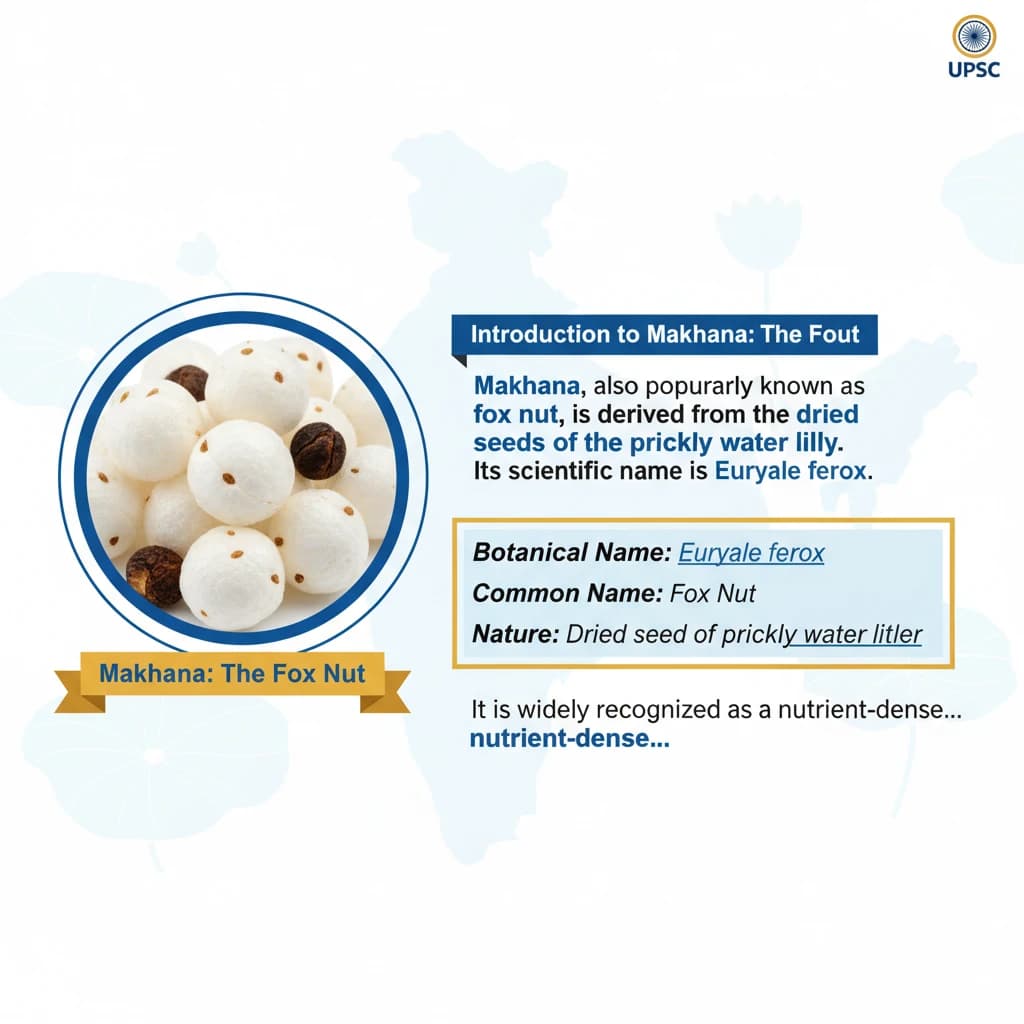
Introduction to Makhana: The Fox Nut
Makhana, also popularly known as fox nut, is derived from the dried seeds of the prickly water lily. Its scientific name is Euryale ferox.
Botanical Name: Euryale ferox
Common Name: Fox Nut
Nature: Dried seed of prickly water lily
Common Name: Fox Nut
Nature: Dried seed of prickly water lily
It is widely recognized as a nutrient-dense and low-fat healthy snack. This makes it a popular choice among health-conscious consumers and a valuable agricultural product.
Key Characteristics: Nutrient-dense, low-fat, healthy snack.
Production Hub and Geographical Indication
The state of Bihar plays a dominant role in India's makhana production. It accounts for an impressive 90% of the country's total output.
Production Share: Bihar contributes 90% of India's makhana production.
In 2022, a significant milestone was achieved when ‘Mithila Makhana’ received a Geographical Indication (GI) tag. This recognition highlights its unique origin and quality attributes.
UPSC Insight: GI tags are crucial for promoting local products, protecting traditional knowledge, and enhancing farmer income. Understand the implications of such tags for regional economies.
Global Market Value
The global market for makhana has shown robust growth. In 2023, the market was valued at approximately USD 43.56 million, indicating its increasing demand and economic potential worldwide.
💡 Key Takeaways
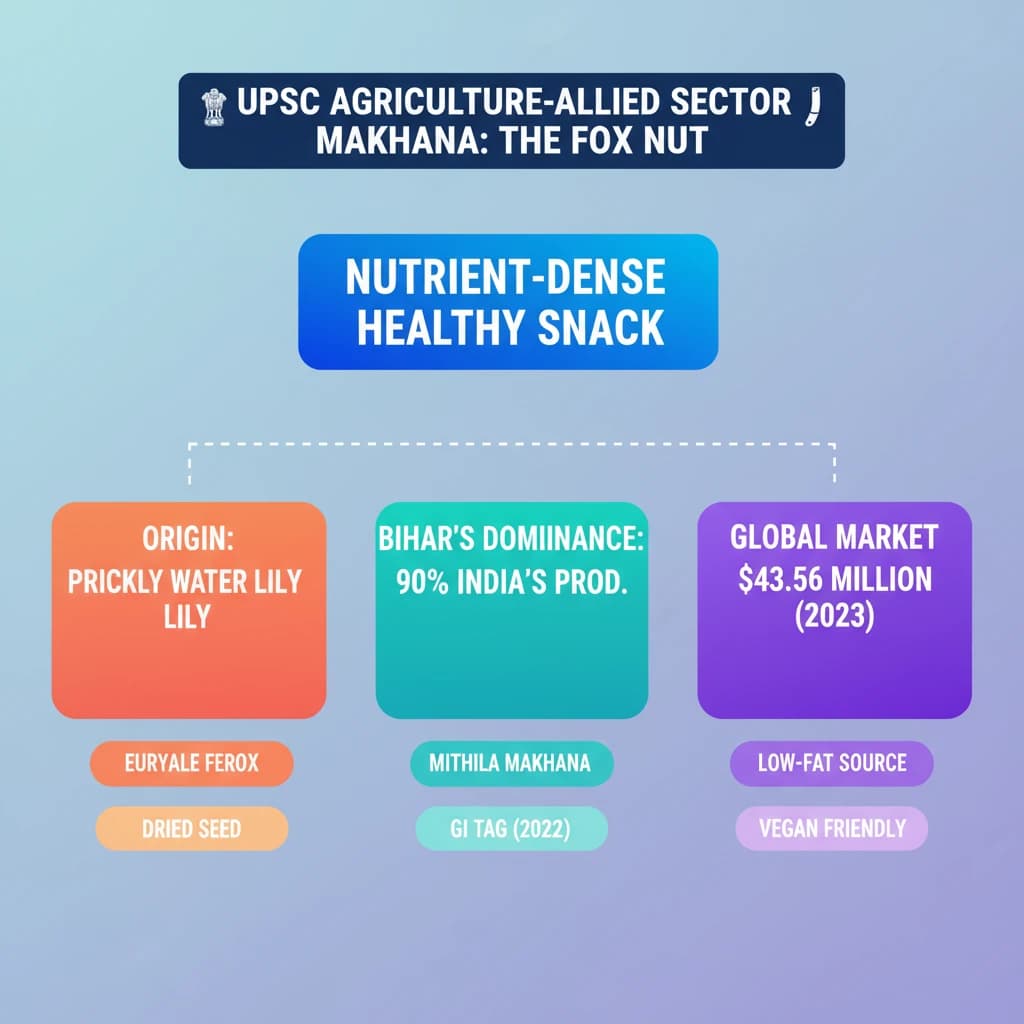
- •Makhana, or fox nut, is the dried seed of the prickly water lily (Euryale ferox).
- •It is valued as a nutrient-dense, low-fat healthy snack.
- •Bihar accounts for 90% of India's makhana production.
- •In 2022, 'Mithila Makhana' received a Geographical Indication (GI) tag.
- •The global makhana market was valued at USD 43.56 million in 2023.
- •Makhana cultivation supports rural economies and promotes agricultural diversification.
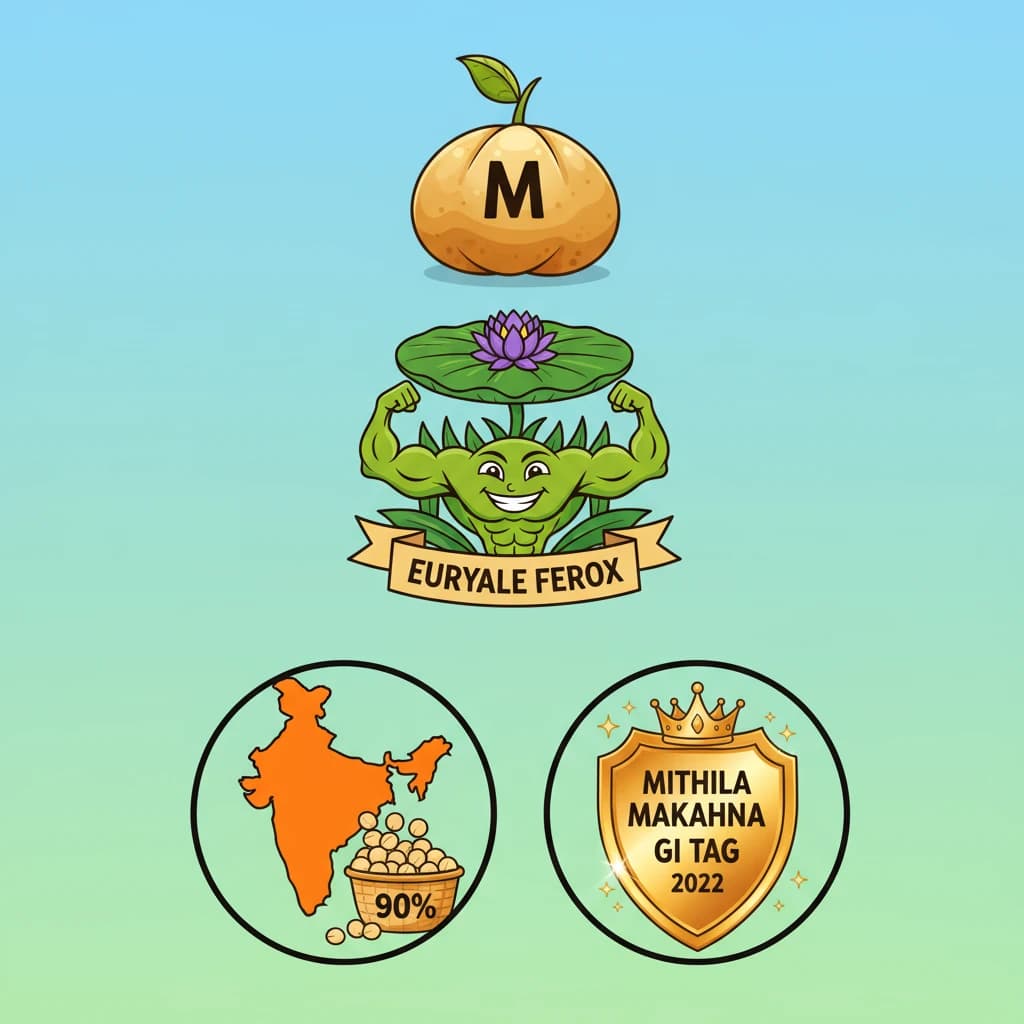
🧠 Memory Techniques
98% Verified Content