Loading page, please wait…
Nitrogen Fixation: Lightning, Biological Processes & Agricultural Significance - UPSC Agriculture Allied Sector
What is Nitrogen Fixation: Lightning, Biological Processes & Agricultural Significance in UPSC Agriculture Allied Sector?
Nitrogen Fixation: Lightning, Biological Processes & Agricultural Significance is a key topic under Agriculture Allied Sector for UPSC Civil Services Examination. Key points include: Nitrogen is vital for plant growth but atmospheric N2 is inert.. Lightning provides energy for atmospheric nitrogen fixation, forming reactive nitrogen.. Biological nitrogen fixation by bacteria (Rhizobia, Azotobacter) is a major natural source.. Understanding this topic is essential for both UPSC Prelims and Mains preparation.
Why is Nitrogen Fixation: Lightning, Biological Processes & Agricultural Significance important for UPSC exam?
Nitrogen Fixation: Lightning, Biological Processes & Agricultural Significance is a Medium-level topic in UPSC Agriculture Allied Sector. It is tested in both Prelims (factual MCQs) and Mains (analytical answer writing). Previous year UPSC questions have frequently covered aspects of Nitrogen Fixation: Lightning, Biological Processes & Agricultural Significance, making it essential for comprehensive IAS preparation.
How to prepare Nitrogen Fixation: Lightning, Biological Processes & Agricultural Significance for UPSC?
To prepare Nitrogen Fixation: Lightning, Biological Processes & Agricultural Significance for UPSC: (1) Study the comprehensive notes covering all key concepts on Vaidra. (2) Practice previous year questions on this topic. (3) Connect it with current affairs using daily updates. (4) Revise using key takeaways and mind maps available for Agriculture Allied Sector. (5) Write practice answers linking Nitrogen Fixation: Lightning, Biological Processes & Agricultural Significance to related GS Paper topics.
Key takeaways of Nitrogen Fixation: Lightning, Biological Processes & Agricultural Significance for UPSC
- Nitrogen is vital for plant growth but atmospheric N2 is inert.
- Lightning provides energy for atmospheric nitrogen fixation, forming reactive nitrogen.
- Biological nitrogen fixation by bacteria (Rhizobia, Azotobacter) is a major natural source.
- Rhizobia form symbiotic relationships with legumes, fixing nitrogen in root nodules.
- Azolla, an aquatic fern, also hosts nitrogen-fixing cyanobacteria.
- Natural nitrogen fixation reduces reliance on synthetic fertilizers and supports sustainable agriculture.
- Understanding these processes is crucial for soil health and environmental sustainability.
Nitrogen Fixation: Lightning, Biological Processes & Agricultural Significance
Medium⏱️ 7 min read
agriculture allied sector
📖 Introduction
Nitrogen Fixation by Lightning
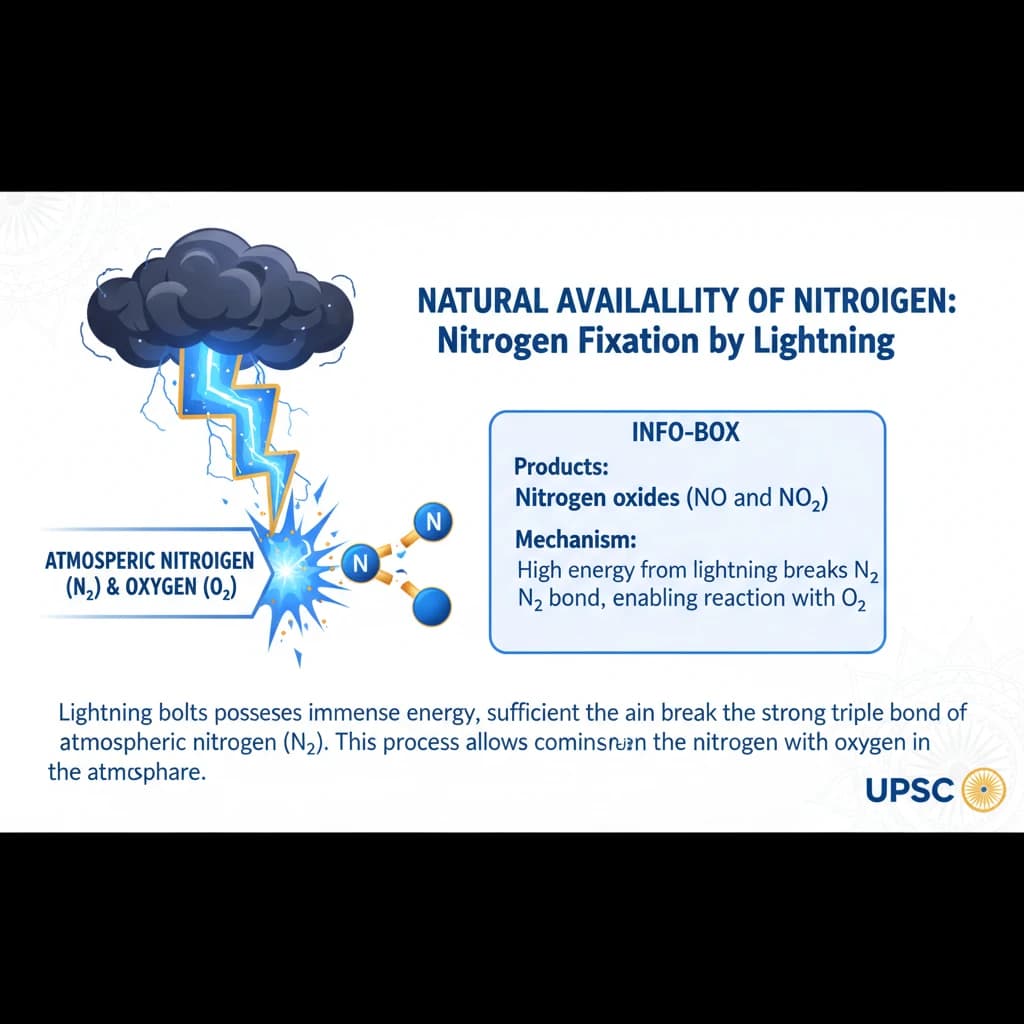
Lightning bolts possess immense energy, sufficient to break the strong triple bond of atmospheric nitrogen (N2). This process allows nitrogen to combine with oxygen in the atmosphere.
Products: Nitrogen oxides (NO and NO2)
Mechanism: High energy from lightning breaks N2 bond, enabling reaction with O2.
Mechanism: High energy from lightning breaks N2 bond, enabling reaction with O2.
These newly formed nitrogen oxides then mix with water vapour present in the atmosphere. This interaction leads to the formation of nitric acid and nitrous acid.
When these acids fall to the Earth's surface as acid rain, they deliver reactive nitrogen directly to the soil. This form of nitrogen is readily available for plant uptake and utilization.
Biological Nitrogen Fixation
A crucial natural process involves certain types of bacteria that can convert atmospheric nitrogen into a usable form for plants. This process is known as biological nitrogen fixation.
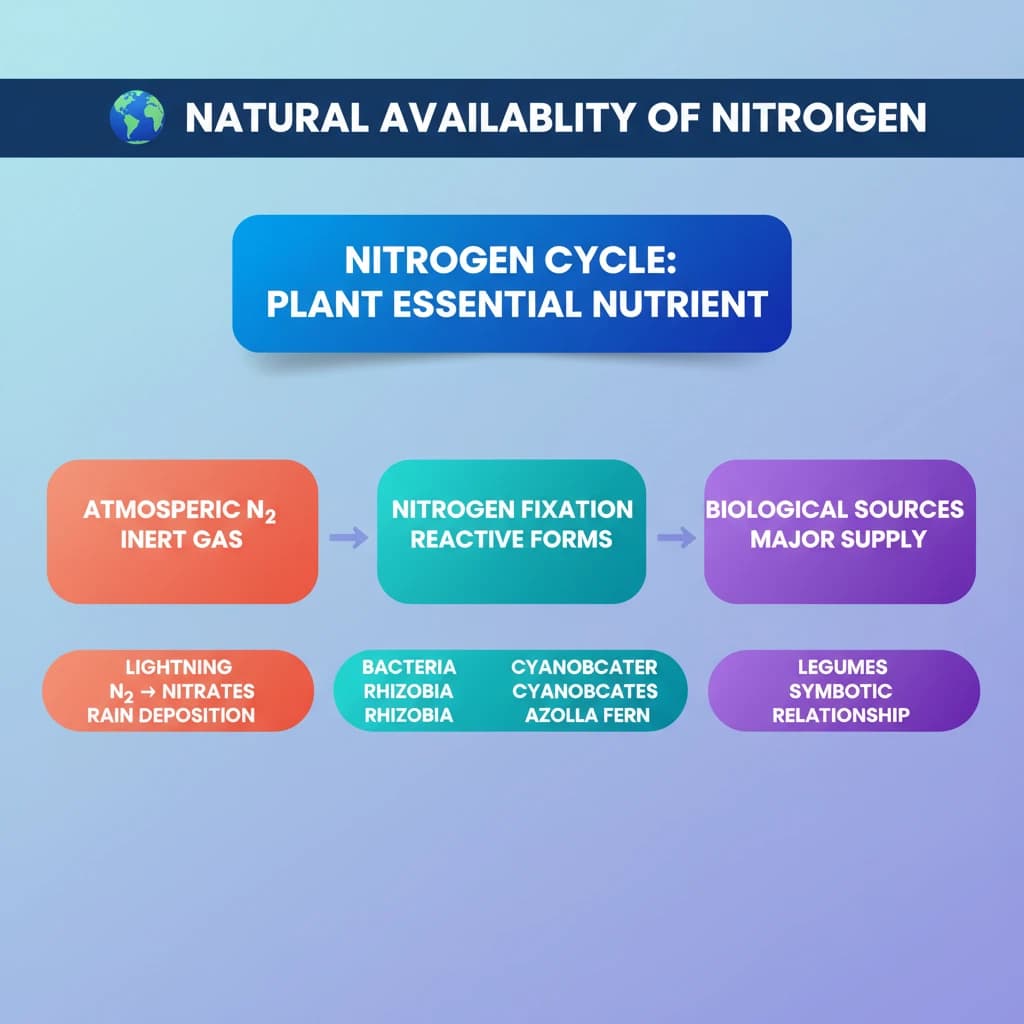
Key Microbes: Bacteria like Azotobacter (free-living) and Rhizobia (symbiotic).
Process: Convert inert atmospheric nitrogen (N2) into reactive nitrogen compounds (e.g., ammonia).
Process: Convert inert atmospheric nitrogen (N2) into reactive nitrogen compounds (e.g., ammonia).
These bacteria often form specialized symbiotic relationships with plants. A prime example is Rhizobia bacteria associating with legumes (e.g., peas, beans, clover).
Another important symbiotic relationship is seen with aquatic ferns like Azolla, which hosts nitrogen-fixing cyanobacteria. These relationships significantly enhance nitrogen availability in the soil.
The ability of these microorganisms to fix nitrogen makes them incredibly valuable for agriculture. They naturally enrich soil fertility, reducing the need for synthetic nitrogen fertilizers.
Understand the distinction between atmospheric (abiotic) and biological (biotic) nitrogen fixation. Both contribute significantly to the global nitrogen cycle, a recurring theme in UPSC GS Paper III (Agriculture & Environment).
💡 Key Takeaways
- •Nitrogen is vital for plant growth but atmospheric N2 is inert.
- •Lightning provides energy for atmospheric nitrogen fixation, forming reactive nitrogen.
- •Biological nitrogen fixation by bacteria (Rhizobia, Azotobacter) is a major natural source.
- •Rhizobia form symbiotic relationships with legumes, fixing nitrogen in root nodules.
- •Azolla, an aquatic fern, also hosts nitrogen-fixing cyanobacteria.
- •Natural nitrogen fixation reduces reliance on synthetic fertilizers and supports sustainable agriculture.
- •Understanding these processes is crucial for soil health and environmental sustainability.
🧠 Memory Techniques

95% Verified Content
📚 Reference Sources
•ICAR (Indian Council of Agricultural Research) publications on soil science and microbiology
•Standard environmental science textbooks
•FAO (Food and Agriculture Organization) reports on sustainable agriculture
•Reputable scientific journals on soil microbiology and plant nutrition