Loading page, please wait…
Rice Cultivation in India: Conditions, Production & Government Initiatives - UPSC Agriculture Allied Sector
What is Rice Cultivation in India: Conditions, Production & Government Initiatives in UPSC Agriculture Allied Sector?
Rice Cultivation in India: Conditions, Production & Government Initiatives is a key topic under Agriculture Allied Sector for UPSC Civil Services Examination. Key points include: Rice is the staple food for the majority of Indians, making it a critical crop.. India is the second largest rice producer globally, after China.. Ideal conditions for rice include high temperature (22-32°C), high rainfall (150-300 cm), and deep clayey-loamy soil.. Understanding this topic is essential for both UPSC Prelims and Mains preparation.
Why is Rice Cultivation in India: Conditions, Production & Government Initiatives important for UPSC exam?
Rice Cultivation in India: Conditions, Production & Government Initiatives is a Easy-level topic in UPSC Agriculture Allied Sector. It is tested in both Prelims (factual MCQs) and Mains (analytical answer writing). Previous year UPSC questions have frequently covered aspects of Rice Cultivation in India: Conditions, Production & Government Initiatives, making it essential for comprehensive IAS preparation.
How to prepare Rice Cultivation in India: Conditions, Production & Government Initiatives for UPSC?
To prepare Rice Cultivation in India: Conditions, Production & Government Initiatives for UPSC: (1) Study the comprehensive notes covering all key concepts on Vaidra. (2) Practice previous year questions on this topic. (3) Connect it with current affairs using daily updates. (4) Revise using key takeaways and mind maps available for Agriculture Allied Sector. (5) Write practice answers linking Rice Cultivation in India: Conditions, Production & Government Initiatives to related GS Paper topics.
Key takeaways of Rice Cultivation in India: Conditions, Production & Government Initiatives for UPSC
- Rice is the staple food for the majority of Indians, making it a critical crop.
- India is the second largest rice producer globally, after China.
- Ideal conditions for rice include high temperature (22-32°C), high rainfall (150-300 cm), and deep clayey-loamy soil.
- West Bengal, Punjab, Uttar Pradesh, Andhra Pradesh, and Bihar are among the top rice producing states.
- Eastern states like Assam, West Bengal, and Odisha grow three rice crops annually: Aus, Aman, and Boro.
- Government initiatives such as the National Food Security Mission and Rashtriya Krishi Vikas Yojana support rice cultivation.
Rice Cultivation in India: Conditions, Production & Government Initiatives
Easy⏱️ 5 min read
agriculture allied sector
📖 Introduction
Introduction to Rice Cultivation
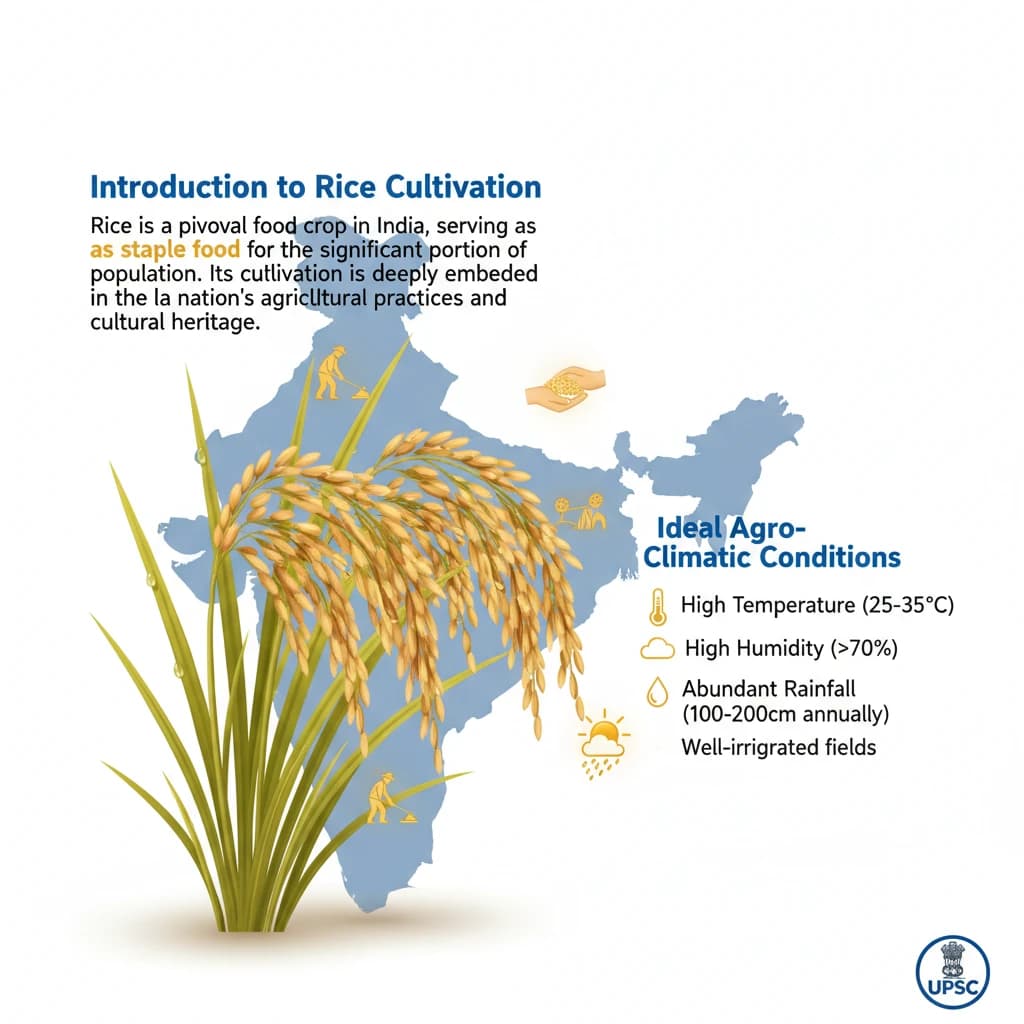
Rice is a pivotal food crop in India, serving as the staple food for a significant portion of the population. Its cultivation is deeply embedded in the nation's agricultural practices and cultural heritage.
Ideal Agro-Climatic Conditions
Successful rice cultivation requires specific environmental parameters to thrive. These conditions ensure optimal growth and yield for this vital crop.
- Temperature: Between 22-32 °C, requiring high humidity.
- Rainfall: Approximately 150-300 cm annually.
- Soil Type: Prefers deep clayey and loamy soil, which can retain water effectively.
Major Producing States in India
Several Indian states lead in rice production, contributing significantly to the nation's food basket. Their diverse agro-climatic zones support extensive cultivation.
Top Rice Producing States:
- West Bengal
- Punjab
- Uttar Pradesh
- Andhra Pradesh
- Bihar
India's Global Standing and Crop Cycles
India holds a prominent position in global rice production. Domestically, certain regions practice multiple cultivation cycles within a single year.
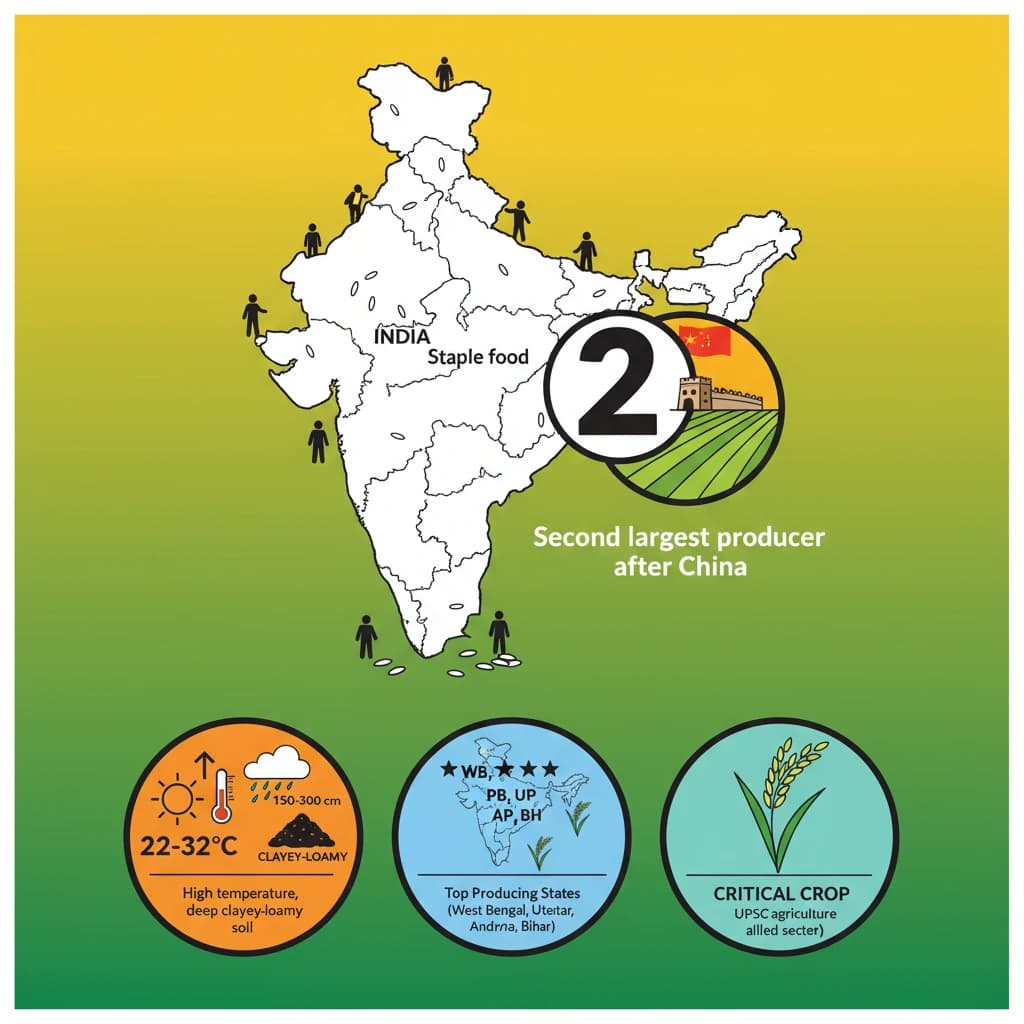
India is the second largest producer of rice in the world, following China.
In eastern states like Assam, West Bengal, and Odisha, farmers successfully cultivate three crops of paddy in a year. This practice maximizes land utility and food output.
The three distinct rice crops grown annually in these states are known as Aus, Aman, and Boro. Understanding these crop cycles is crucial for analyzing regional agricultural patterns and food security strategies.
💡 Key Takeaways
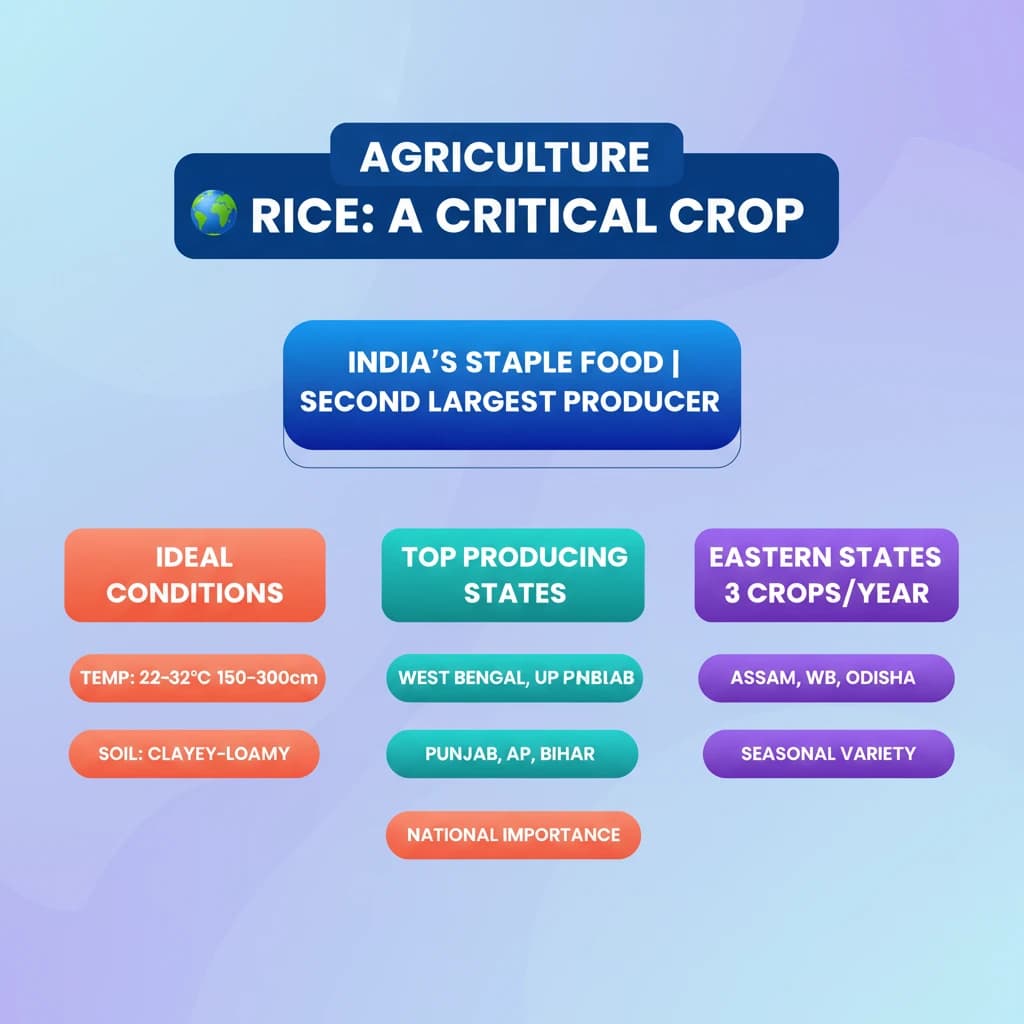
- •Rice is the staple food for the majority of Indians, making it a critical crop.
- •India is the second largest rice producer globally, after China.
- •Ideal conditions for rice include high temperature (22-32°C), high rainfall (150-300 cm), and deep clayey-loamy soil.
- •West Bengal, Punjab, Uttar Pradesh, Andhra Pradesh, and Bihar are among the top rice producing states.
- •Eastern states like Assam, West Bengal, and Odisha grow three rice crops annually: Aus, Aman, and Boro.
- •Government initiatives such as the National Food Security Mission and Rashtriya Krishi Vikas Yojana support rice cultivation.
🧠 Memory Techniques
95% Verified Content
📚 Reference Sources
•Ministry of Agriculture & Farmers Welfare, Government of India
•Food and Agriculture Organization of the United Nations (FAOSTAT)