What are the Key Facts Related to Majuli Island? - UPSC Art And Culture
What is What are the Key Facts Related to Majuli Island? in UPSC Art And Culture?
What are the Key Facts Related to Majuli Island? is a key topic under Art And Culture for UPSC Civil Services Examination. Key points include: Majuli is the world's largest river island, situated in the Brahmaputra River in Assam, India.. Its formation is a direct result of the dynamic and shifting courses of the Brahmaputra River system.. The island features diverse ecological elements, including wetlands (Beels) and temporary islets (Chaporis).. Understanding this topic is essential for both UPSC Prelims and Mains preparation.
Why is What are the Key Facts Related to Majuli Island? important for UPSC exam?
What are the Key Facts Related to Majuli Island? is a Easy-level topic in UPSC Art And Culture. It is tested in both Prelims (factual MCQs) and Mains (analytical answer writing). Previous year UPSC questions have frequently covered aspects of What are the Key Facts Related to Majuli Island?, making it essential for comprehensive IAS preparation.
How to prepare What are the Key Facts Related to Majuli Island? for UPSC?
To prepare What are the Key Facts Related to Majuli Island? for UPSC: (1) Study the comprehensive notes covering all key concepts on Vaidra. (2) Practice previous year questions on this topic. (3) Connect it with current affairs using daily updates. (4) Revise using key takeaways and mind maps available for Art And Culture. (5) Write practice answers linking What are the Key Facts Related to Majuli Island? to related GS Paper topics.
Key takeaways of What are the Key Facts Related to Majuli Island? for UPSC
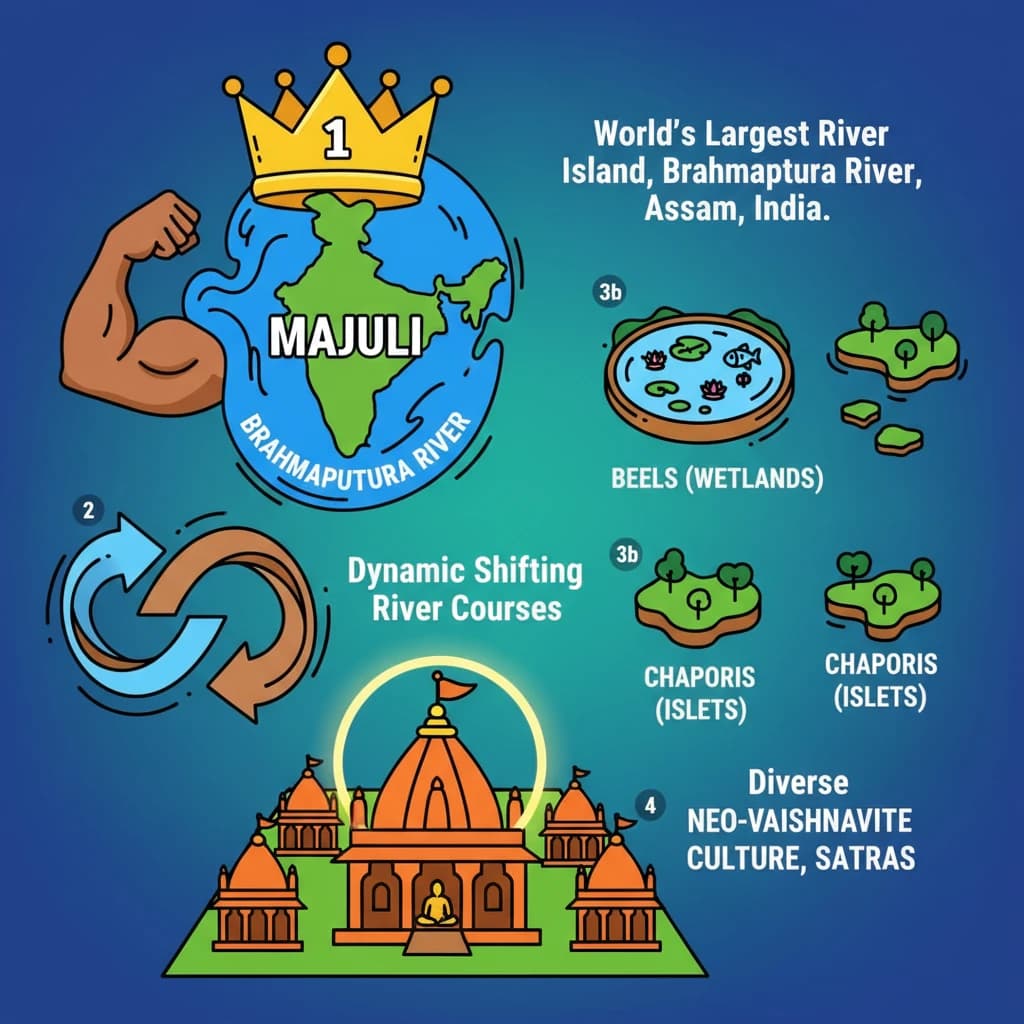
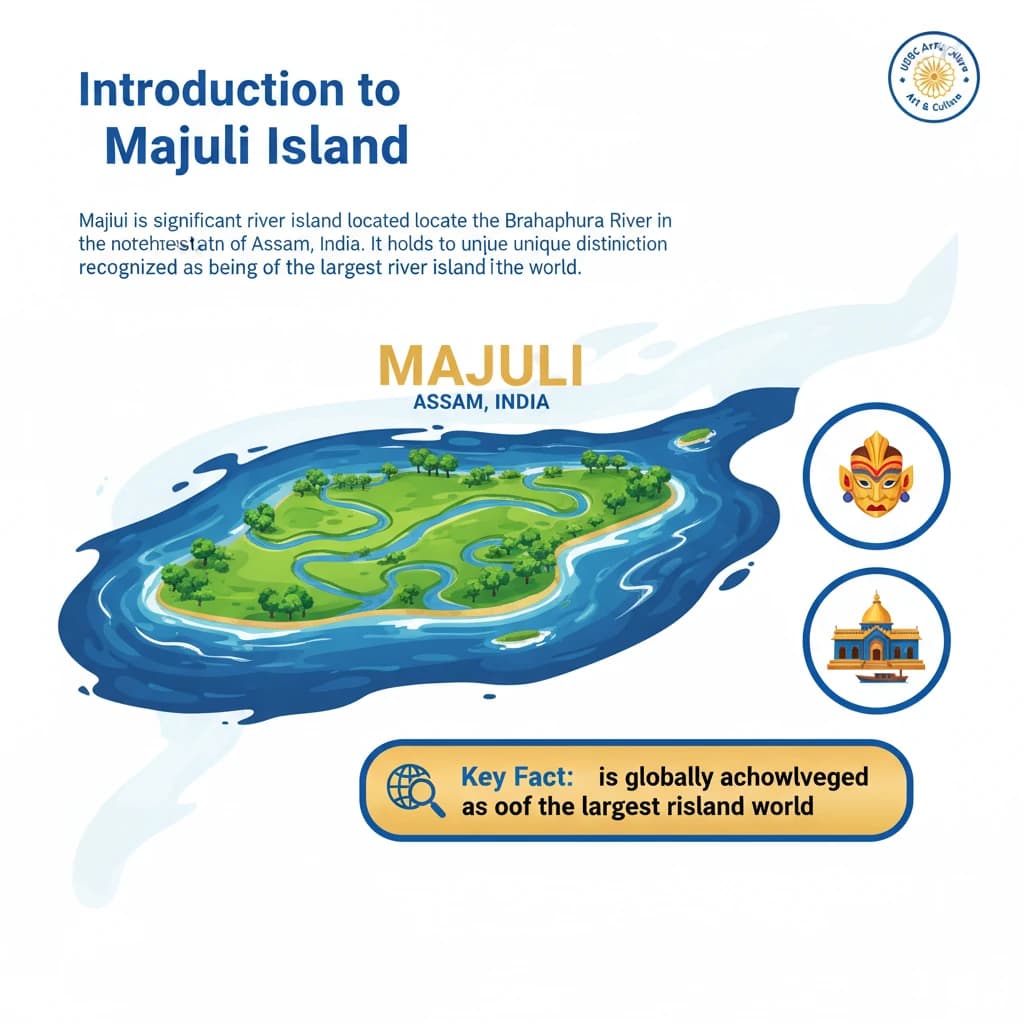
- Majuli is the world's largest river island, situated in the Brahmaputra River in Assam, India.
- Its formation is a direct result of the dynamic and shifting courses of the Brahmaputra River system.
- The island features diverse ecological elements, including wetlands (Beels) and temporary islets (Chaporis).
- Majuli is a vital center of Neo-Vaishnavite culture, home to numerous ancient Satras.
- The island faces severe threats from continuous river bank erosion, endangering its existence and heritage.
- Conservation efforts are underway to protect Majuli from environmental degradation and preserve its cultural significance.
What are the Key Facts Related to Majuli Island?
📖 Introduction
💡 Key Takeaways
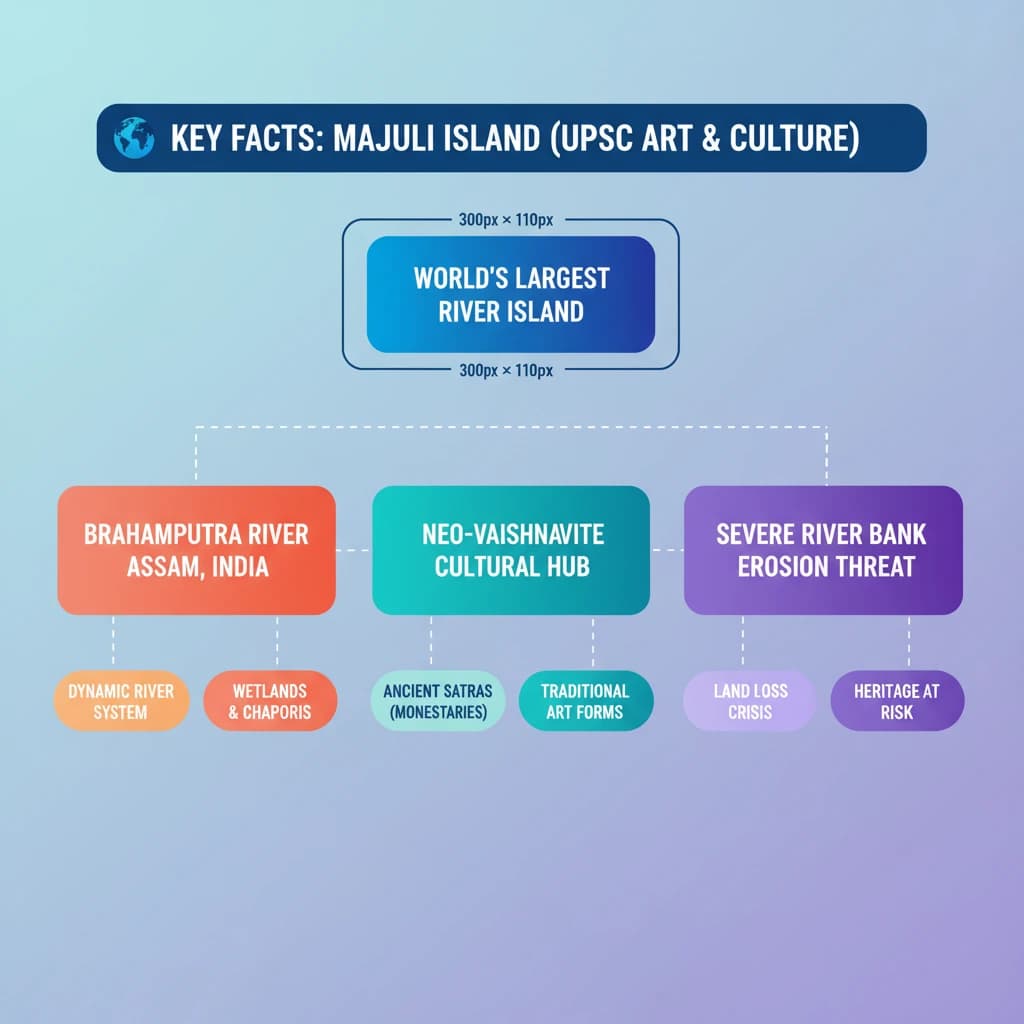
- •Majuli is the world's largest river island, situated in the Brahmaputra River in Assam, India.
- •Its formation is a direct result of the dynamic and shifting courses of the Brahmaputra River system.
- •The island features diverse ecological elements, including wetlands (Beels) and temporary islets (Chaporis).
- •Majuli is a vital center of Neo-Vaishnavite culture, home to numerous ancient Satras.
- •The island faces severe threats from continuous river bank erosion, endangering its existence and heritage.
- •Conservation efforts are underway to protect Majuli from environmental degradation and preserve its cultural significance.
🧠 Memory Techniques