Loading page, please wait…
Vaidra Logo
Vaidra

Top 4 items + smart groups

UPSC GPT
New
Current Affairs
Daily Solutions
Daily Puzzle
Mains Evaluator

Version 2.0.0 • Built with ❤️ for UPSC aspirants

Loading...
Loading...
Loading...
Loading...
Loading...
Loading...
Loading...
Loading...
Loading...
Loading...
Loading...
Loading...
Loading...
Back
All Subjects

Topics

0 topics • 0 completed

Loading topics...
Loading...
Loading...
Loading...
Loading...
Loading...
Overall Progress0%

Rituals and Activities - UPSC Art And Culture

What is Rituals and Activities in UPSC Art And Culture?

Rituals and Activities is a key topic under Art And Culture for UPSC Civil Services Examination. Key points include: Shahi Snan is a ceremonial bath by saints and Akharas, marking the start of the Kumbh Mela.. Akharas are ascetic organizations founded by Adi Guru Shankaracharya to unify renunciates.. The word 'akhara' means indivisible, reflecting their aim for unity and strength.. Understanding this topic is essential for both UPSC Prelims and Mains preparation.

Why is Rituals and Activities important for UPSC exam?

Rituals and Activities is a Medium-level topic in UPSC Art And Culture. It is tested in both Prelims (factual MCQs) and Mains (analytical answer writing). Previous year UPSC questions have frequently covered aspects of Rituals and Activities, making it essential for comprehensive IAS preparation.

How to prepare Rituals and Activities for UPSC?

To prepare Rituals and Activities for UPSC: (1) Study the comprehensive notes covering all key concepts on Vaidra. (2) Practice previous year questions on this topic. (3) Connect it with current affairs using daily updates. (4) Revise using key takeaways and mind maps available for Art And Culture. (5) Write practice answers linking Rituals and Activities to related GS Paper topics.

Key takeaways of Rituals and Activities for UPSC

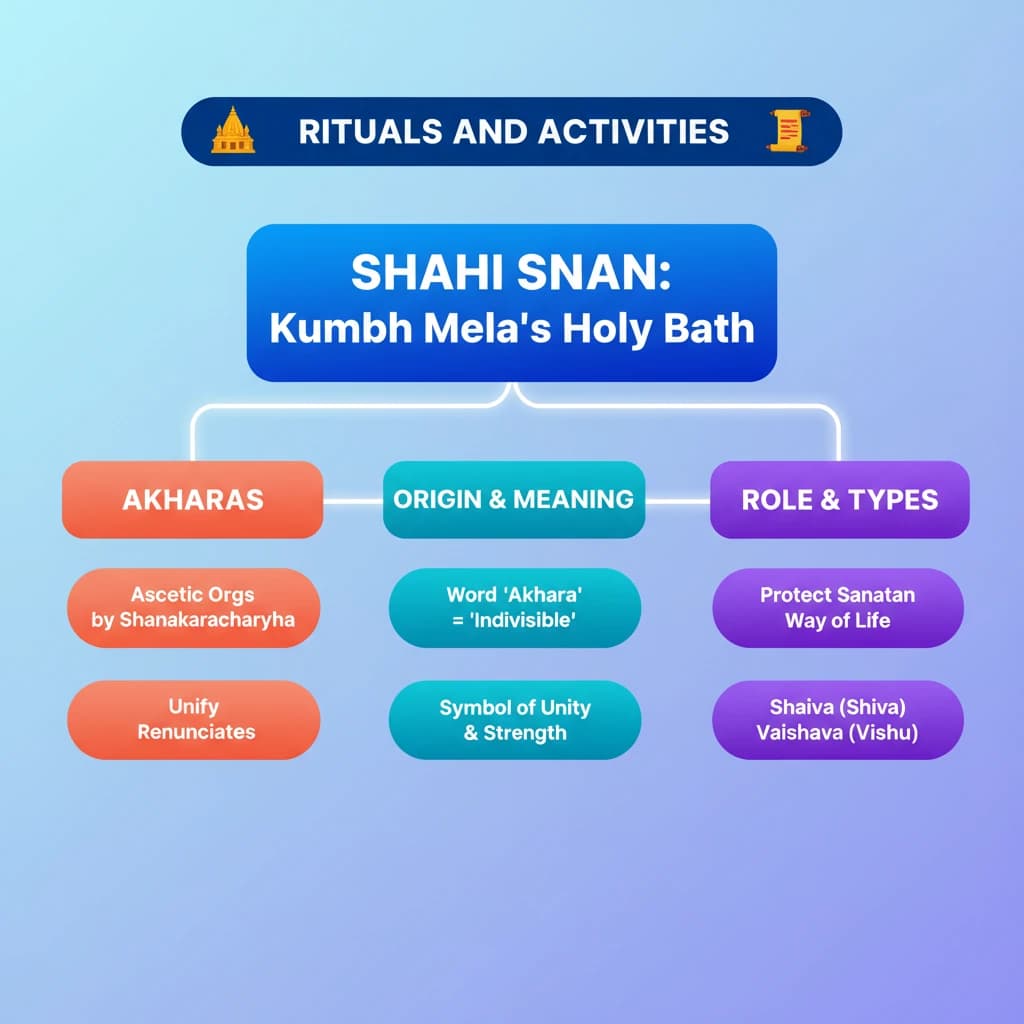
  • Shahi Snan is a ceremonial bath by saints and Akharas, marking the start of the Kumbh Mela.
  • Akharas are ascetic organizations founded by Adi Guru Shankaracharya to unify renunciates.
  • The word 'akhara' means indivisible, reflecting their aim for unity and strength.
  • Akharas protect the Sanatan way of life and uphold ethical and spiritual values.
  • They are categorized into Shaiva (worshipping Lord Shiva) and Vaishnava (worshipping Lord Vishnu) Akharas.
  • Akharas symbolize social order, unity, culture, and ethics, emphasizing virtue and self-restraint.
Rituals and Activities

Rituals and Activities

Medium⏱️ 6 min read✓ 95% Verified
art and culture

📖 Introduction

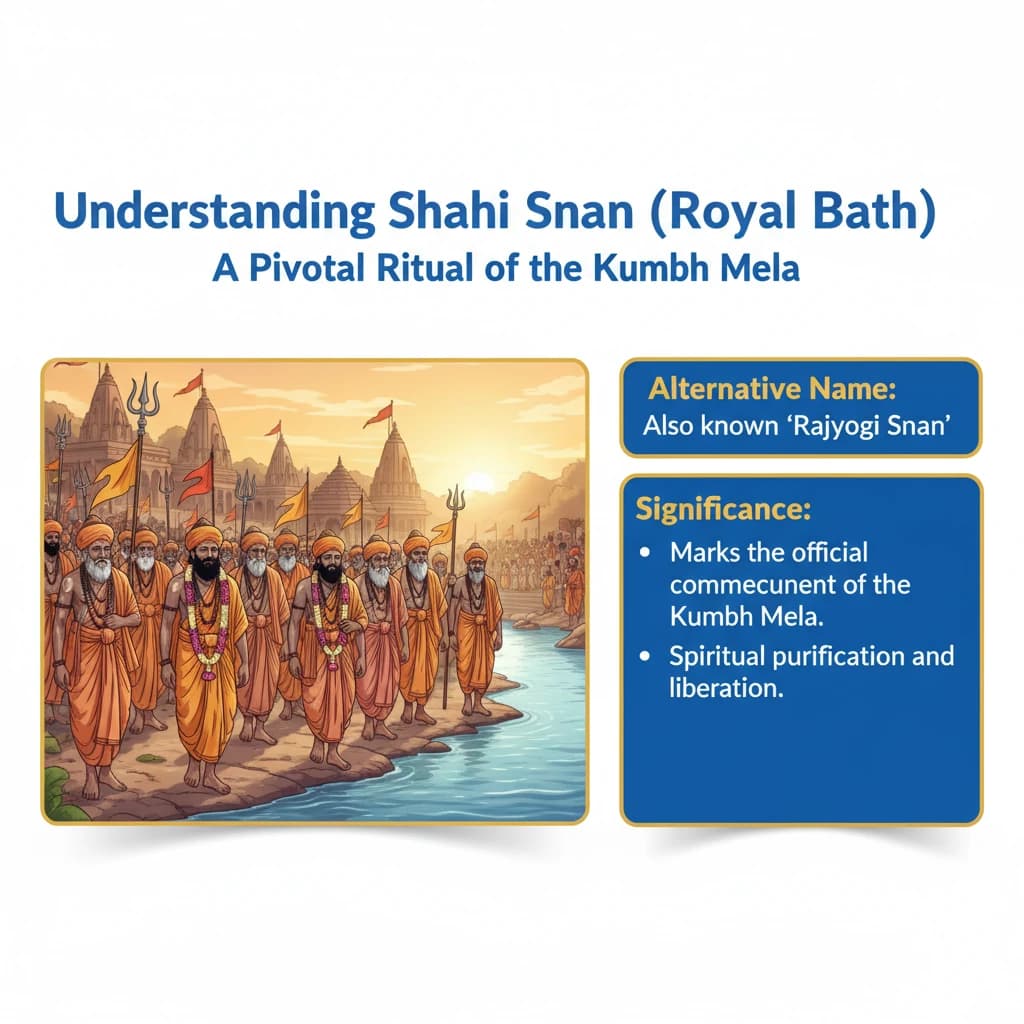
<h4>Understanding Shahi Snan (Royal Bath)</h4><p>The <strong>Shahi Snan</strong>, or <strong>Royal Bath</strong>, is a pivotal ritual observed during the <strong>Kumbh Mela</strong>. It involves a grand procession of saints and <strong>Akharas</strong> (spiritual orders) who perform ceremonial baths in sacred rivers.</p><div class="info-box"><strong>Alternative Name:</strong> Also known as ‘<strong>Rajyogi Snan</strong>’.<br><strong>Significance:</strong> It marks the official commencement of the <strong>Maha Kumbh Mela</strong>.</div><h4>Akharas: Origin and Core Significance</h4><p>The term ‘<strong>akhara</strong>’ is derived from ‘<strong>akhand</strong>,’ signifying indivisible. These organizations were established by <strong>Adi Guru Shankaracharya</strong> with the primary objective of unifying various ascetic groups.</p><p>His aim was to safeguard and preserve the <strong>Sanatan way of life</strong> during a period of cultural and religious challenges. <strong>Akharas</strong> thus emerged as protectors of spiritual traditions.</p><div class="key-point-box"><strong>Symbolism of Akharas:</strong> Akharas embody crucial aspects of social order, unity, culture, and ethics. They are deeply rooted in spiritual and ethical values.</div><p>They place strong emphasis on virtues such as morality, self-restraint, compassion, and religiosity. Fundamentally, <strong>Akharas</strong> serve as powerful symbols of unity in diversity within the ascetic tradition.</p><h4>Categorization of Akharas</h4><p><strong>Akharas</strong> are broadly categorized based on the specific deity they primarily worship. This distinction highlights the diverse theological streams within Hinduism.</p><ul><li><strong>Shaiva Akharas:</strong> These spiritual orders are devoted to the worship of <strong>Lord Shiva</strong>. They venerate him in his myriad forms and manifestations.</li><li><strong>Vaishnava Akharas:</strong> These groups are dedicated to the worship of <strong>Lord Vishnu</strong>. They follow various traditions associated with <strong>Lord Vishnu</strong> and his avatars.</li></ul>
Concept Diagram

💡 Key Takeaways

  • •Shahi Snan is a ceremonial bath by saints and Akharas, marking the start of the Kumbh Mela.
  • •Akharas are ascetic organizations founded by Adi Guru Shankaracharya to unify renunciates.
  • •The word 'akhara' means indivisible, reflecting their aim for unity and strength.
  • •Akharas protect the Sanatan way of life and uphold ethical and spiritual values.
  • •They are categorized into Shaiva (worshipping Lord Shiva) and Vaishnava (worshipping Lord Vishnu) Akharas.
  • •Akharas symbolize social order, unity, culture, and ethics, emphasizing virtue and self-restraint.

🧠 Memory Techniques
Memory Aid
95% Verified Content

📚 Reference Sources

•NCERTs for Indian History and Culture (Class XI and XII)
•Cultural Ministry of India official documents (general knowledge)
•Reputable academic texts on Indian religious traditions

Related Topics

Loading related topics...
Explore:Art And Culture Topics·All Subjects·Daily Current Affairs·Editorial Analysis·Previous Year Questions·UPSC GPT
Rituals and Activities - UPSC Art And Culture