Loading page, please wait…
Vaidra Logo
Vaidra

Top 4 items + smart groups

UPSC GPT
New
Current Affairs
Daily Solutions
Daily Puzzle
Mains Evaluator

Version 2.0.0 • Built with ❤️ for UPSC aspirants

Loading...
Loading...
Loading...
Loading...
Loading...
Loading...
Loading...
Loading...
Loading...
Loading...
Loading...
Loading...
Loading...
Back
All Subjects

Topics

0 topics • 0 completed

Loading topics...
Loading...
Loading...
Loading...
Loading...
Loading...
Overall Progress0%
What is the World Craft City? - UPSC Art And Culture

What is the World Craft City? - UPSC Art And Culture

What is What is the World Craft City? in UPSC Art And Culture?

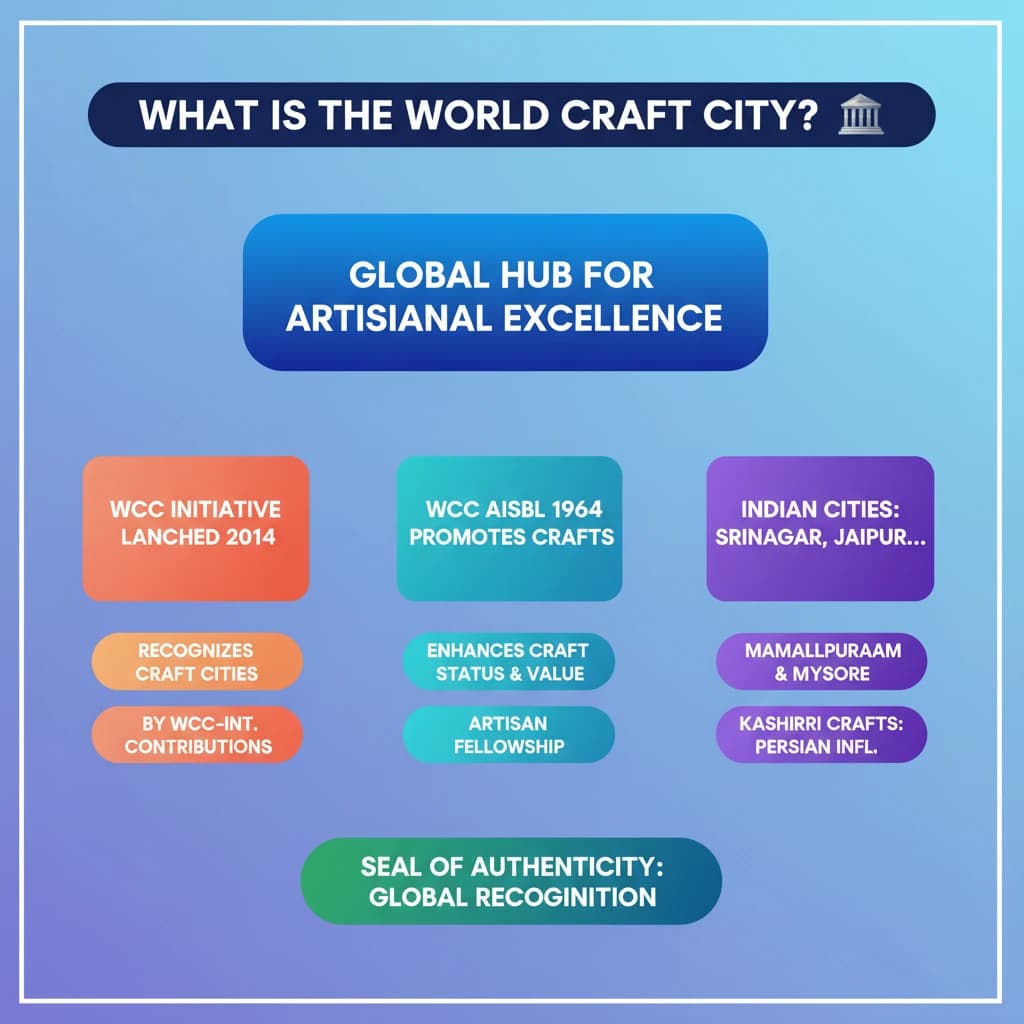
What is the World Craft City? is a key topic under Art And Culture for UPSC Civil Services Examination. Key points include: The World Craft City initiative, launched in 2014 by WCC-International, recognizes cities for their craft contributions.. WCC AISBL, established in 1964, aims to enhance craft status and promote artisan fellowship.. Srinagar, Jaipur, Mamallapuram, and Mysore are India's recognized World Craft Cities.. Understanding this topic is essential for both UPSC Prelims and Mains preparation.

Why is What is the World Craft City? important for UPSC exam?

What is the World Craft City? is a Medium-level topic in UPSC Art And Culture. It is tested in both Prelims (factual MCQs) and Mains (analytical answer writing). Previous year UPSC questions have frequently covered aspects of What is the World Craft City?, making it essential for comprehensive IAS preparation.

How to prepare What is the World Craft City? for UPSC?

To prepare What is the World Craft City? for UPSC: (1) Study the comprehensive notes covering all key concepts on Vaidra. (2) Practice previous year questions on this topic. (3) Connect it with current affairs using daily updates. (4) Revise using key takeaways and mind maps available for Art And Culture. (5) Write practice answers linking What is the World Craft City? to related GS Paper topics.

Key takeaways of What is the World Craft City? for UPSC

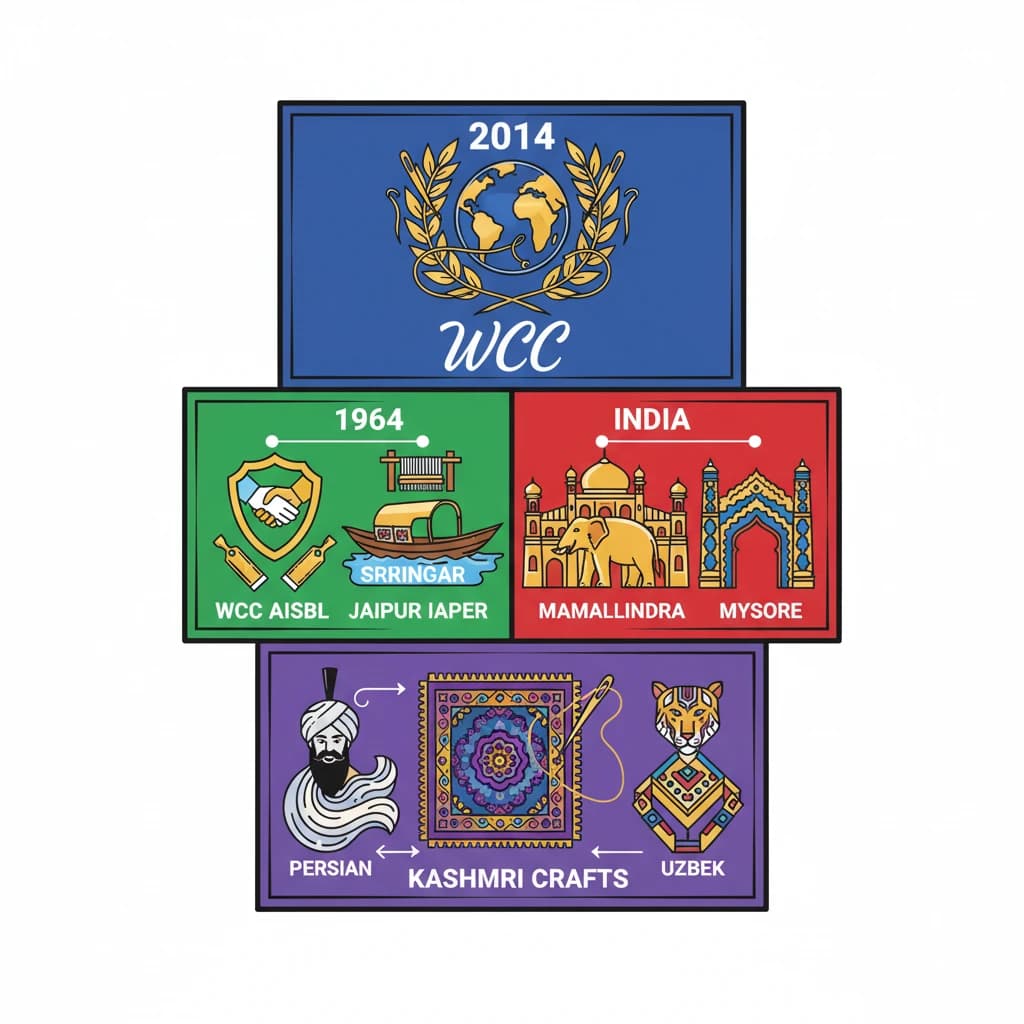
  • The World Craft City initiative, launched in 2014 by WCC-International, recognizes cities for their craft contributions.
  • WCC AISBL, established in 1964, aims to enhance craft status and promote artisan fellowship.
  • Srinagar, Jaipur, Mamallapuram, and Mysore are India's recognized World Craft Cities.
  • Kashmiri crafts like carpet weaving and sozni embroidery show strong Persian and Uzbek influences.
  • The 'Seal of Authenticity of the Craft' certifies handmade Kashmiri products, boosting global recognition and quality.
  • Pashmina shawls are a key craft of Srinagar, known for fine quality and intricate patterns.
  • This initiative promotes cultural preservation, economic empowerment, and social development through crafts.
What is the World Craft City?

What is the World Craft City?

Medium⏱️ 8 min read✓ 98% Verified
art and culture

📖 Introduction

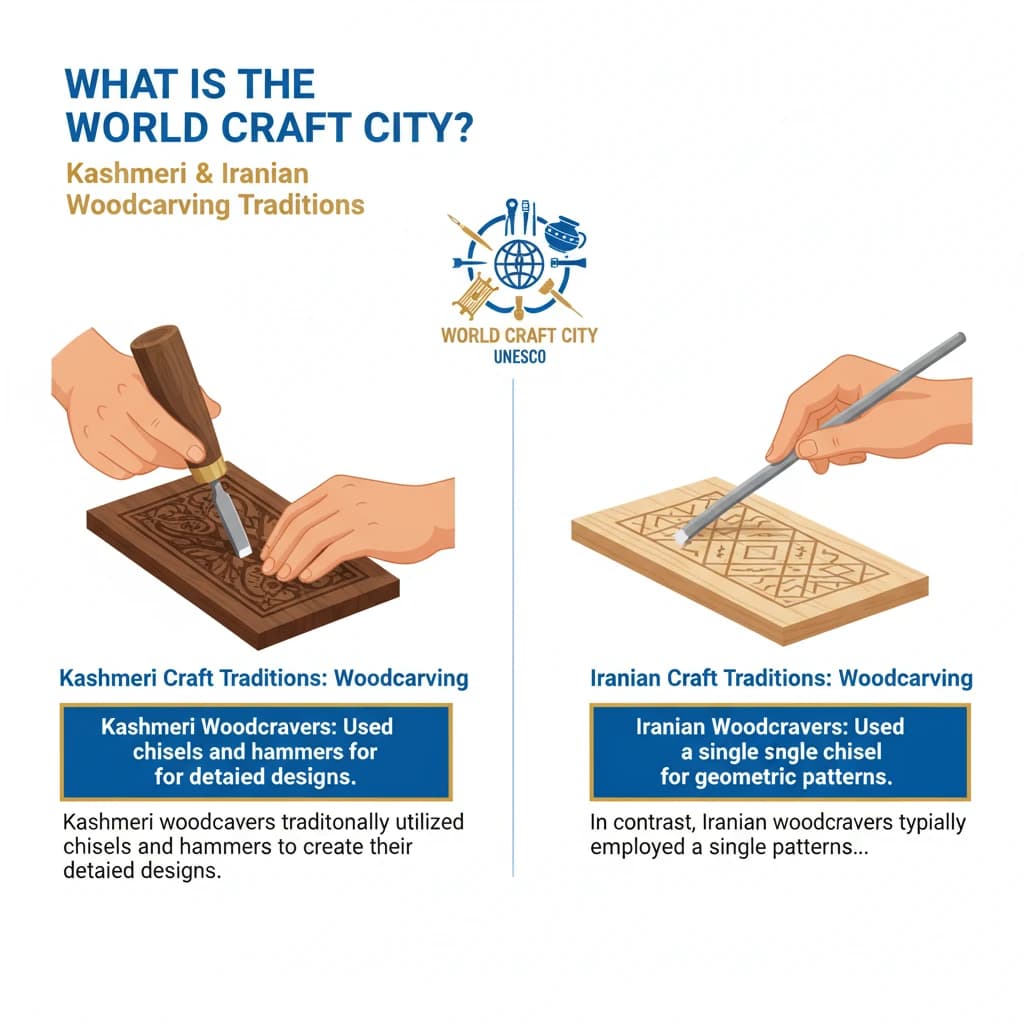
<h4>Kashmiri Craft Traditions: Woodcarving</h4><p><strong>Kashmiri woodcarvers</strong> traditionally utilized <strong>chisels</strong> and <strong>hammers</strong> to create their detailed designs. This approach allowed for intricate and varied patterns, showcasing a distinct local style.</p><div class="info-box"><strong>Kashmiri Woodcarvers:</strong> Used chisels and hammers for detailed designs.</div><p>In contrast, <strong>Iranian woodcarvers</strong> typically employed a <strong>single chisel</strong>. Their focus was often on producing elegant <strong>floral motifs</strong>, reflecting a different artistic tradition and technique.</p><div class="info-box"><strong>Iranian Woodcarvers:</strong> Used a single chisel, often for floral motifs.</div><h4>Kashmiri Craft Traditions: Carpet Weaving</h4><p>The art of <strong>carpet weaving</strong> in <strong>Kashmir</strong> was profoundly influenced by <strong>Persian techniques</strong>. This cultural exchange led to the adoption of sophisticated methods that enriched local craftsmanship.</p><p>Key <strong>Persian knotting methods</strong>, such as the <strong>Farsi baf</strong> and <strong>Sanna knots</strong>, were seamlessly incorporated into the production of <strong>Kashmiri carpets</strong>. These techniques contributed to the durability and intricate designs of the textiles.</p><div class="key-point-box"><strong>Persian Influences:</strong> Farsi baf and Sanna knots adopted in Kashmiri carpet weaving.</div><p>Furthermore, many <strong>Kashmir carpet patterns</strong> were named after prominent <strong>Iranian cities</strong> like <strong>Kashan</strong> and <strong>Tabriz</strong>. This naming convention highlights the deep cultural ties and mutual inspiration between the regions.</p><p><strong>Artisan exchanges</strong> played a crucial role, further enhancing skills and inspiring new forms of craftsmanship. This interaction fostered a rich blend of artistic traditions.</p><h4>Kashmiri Craft Traditions: Embroidery</h4><p><strong>Uzbekistan's suzani embroidery</strong> is recognized as a significant precursor to <strong>Kashmir's sozni work</strong>. This connection points to historical artistic pathways and shared textile heritage.</p><div class="info-box"><strong>Influence:</strong> Uzbek suzani embroidery influenced Kashmiri sozni work.</div><p>Similarities between <strong>suzani</strong> and <strong>sozni</strong> were observed in several aspects. These included the fundamental <strong>techniques</strong> used, the characteristic <strong>color palettes</strong> employed, and the prevalence of distinct <strong>floral motifs</strong>.</p><h4>The World Craft City Initiative: Overview</h4><p>The <strong>“World Craft City”</strong> initiative was launched in <strong>2014</strong> by the <strong>World Crafts Council AISBL (WCC-International)</strong>. It operates under the broader <strong>WCC-World Craft City Programme</strong>.</p><div class="info-box"><strong>Launch:</strong> 2014 by World Crafts Council AISBL (WCC-International).</div><p>This initiative recognizes cities for their significant contributions to <strong>cultural, economic, and social development</strong> through the promotion and preservation of crafts. It highlights the role of crafts in urban life.</p><h4>Role of World Crafts Council AISBL (WCC-International)</h4><p>The <strong>WCC AISBL</strong> was established in <strong>1964</strong> as a <strong>non-profit organization</strong>. Its foundational goal is to support and guide craftspersons globally.</p><p>The primary aims of <strong>WCC AISBL</strong> include enhancing the <strong>status of crafts</strong> in both cultural and economic life. It also strives to promote <strong>fellowship</strong> and collaboration among craftspersons worldwide.</p><div class="key-point-box"><strong>WCC AISBL Aims:</strong> Enhance craft status (cultural/economic), promote fellowship among craftspersons.</div><h4>Indian World Craft Cities</h4><p>Several Indian cities have received the prestigious recognition as <strong>World Craft Cities</strong> by the <strong>WCC</strong>. This acknowledgment underscores India's rich craft heritage.</p><ul><li><strong>Srinagar</strong> (Jammu and Kashmir)</li><li><strong>Jaipur</strong> (Rajasthan)</li><li><strong>Mamallapuram</strong> (Tamil Nadu)</li><li><strong>Mysore</strong> (Karnataka)</li></ul><div class="info-box"><strong>Indian World Craft Cities:</strong> Srinagar, Jaipur, Mamallapuram, Mysore.</div><h4>Srinagar's Craft Recognition</h4><p>The <strong>WCC</strong> specifically announced the <strong>‘Seal of Authenticity of the Craft’</strong> for <strong>Kashmir’s handicrafts</strong>. This seal serves as a crucial certification.</p><p>This certification specifically authenticates <strong>handmade products</strong> originating from <strong>Jammu and Kashmir</strong>. It provides a mark of quality and genuineness.</p><div class="exam-tip-box">This 'Seal of Authenticity' is vital for UPSC, highlighting efforts to preserve and market traditional crafts globally. It connects to topics like GI tags and cultural heritage.</div><p>The initiative aims to provide <strong>global recognition</strong> for these unique crafts and to enhance their overall <strong>quality</strong>, particularly within the <strong>textile industry</strong>. This boosts economic prospects for artisans.</p><h4>Key Crafts of Srinagar: Pashmina Shawls</h4><p><strong>Pashmina Shawls</strong> are among the most renowned crafts of <strong>Srinagar</strong>. They are celebrated globally for their exceptionally <strong>fine quality</strong> and <strong>intricate handwoven patterns</strong>.</p><div class="info-box"><strong>Pashmina Shawls:</strong> Known for fine quality and intricate handwoven patterns.</div><p>These exquisite shawls originate from <strong>Kashmir</strong>, where the delicate <strong>pashmina fabric</strong> is meticulously <strong>hand-spun</strong> and subsequently <strong>hand-woven</strong> by skilled artisans. This labor-intensive process contributes to their high value.</p>
Concept Diagram

💡 Key Takeaways

  • •The World Craft City initiative, launched in 2014 by WCC-International, recognizes cities for their craft contributions.
  • •WCC AISBL, established in 1964, aims to enhance craft status and promote artisan fellowship.
  • •Srinagar, Jaipur, Mamallapuram, and Mysore are India's recognized World Craft Cities.
  • •Kashmiri crafts like carpet weaving and sozni embroidery show strong Persian and Uzbek influences.
  • •The 'Seal of Authenticity of the Craft' certifies handmade Kashmiri products, boosting global recognition and quality.
  • •Pashmina shawls are a key craft of Srinagar, known for fine quality and intricate patterns.
  • •This initiative promotes cultural preservation, economic empowerment, and social development through crafts.

🧠 Memory Techniques
Memory Aid
98% Verified Content

Related Topics

Loading related topics...
Explore:Art And Culture Topics·All Subjects·Daily Current Affairs·Editorial Analysis·Previous Year Questions·UPSC GPT