Loading page, please wait…
Vaidra Logo
Vaidra

Top 4 items + smart groups

UPSC GPT
New
Current Affairs
Daily Solutions
Daily Puzzle
Mains Evaluator

Version 2.0.0 • Built with ❤️ for UPSC aspirants

Loading...
Loading...
Loading...
Loading...
Loading...
Loading...
Loading...
Loading...
Loading...
Loading...
Loading...
Loading...
Loading...
Back
All Subjects

Topics

0 topics • 0 completed

Loading topics...
Loading...
Loading...
Loading...
Loading...
Loading...
Overall Progress0%

India's World Heritage Sites: Recent Additions (Shantiniketan & Hoysalas) - UPSC Art And Culture

What is India's World Heritage Sites: Recent Additions (Shantiniketan & Hoysalas) in UPSC Art And Culture?

India's World Heritage Sites: Recent Additions (Shantiniketan & Hoysalas) is a key topic under Art And Culture for UPSC Civil Services Examination. Key points include: India currently has 42 UNESCO World Heritage Sites.. The 41st site is Shantiniketan in West Bengal, founded by Rabindranath Tagore.. The 42nd site is the Sacred Ensembles of the Hoysalas in Karnataka, known for intricate temples.. Understanding this topic is essential for both UPSC Prelims and Mains preparation.

Why is India's World Heritage Sites: Recent Additions (Shantiniketan & Hoysalas) important for UPSC exam?

India's World Heritage Sites: Recent Additions (Shantiniketan & Hoysalas) is a Medium-level topic in UPSC Art And Culture. It is tested in both Prelims (factual MCQs) and Mains (analytical answer writing). Previous year UPSC questions have frequently covered aspects of India's World Heritage Sites: Recent Additions (Shantiniketan & Hoysalas), making it essential for comprehensive IAS preparation.

How to prepare India's World Heritage Sites: Recent Additions (Shantiniketan & Hoysalas) for UPSC?

To prepare India's World Heritage Sites: Recent Additions (Shantiniketan & Hoysalas) for UPSC: (1) Study the comprehensive notes covering all key concepts on Vaidra. (2) Practice previous year questions on this topic. (3) Connect it with current affairs using daily updates. (4) Revise using key takeaways and mind maps available for Art And Culture. (5) Write practice answers linking India's World Heritage Sites: Recent Additions (Shantiniketan & Hoysalas) to related GS Paper topics.

Key takeaways of India's World Heritage Sites: Recent Additions (Shantiniketan & Hoysalas) for UPSC

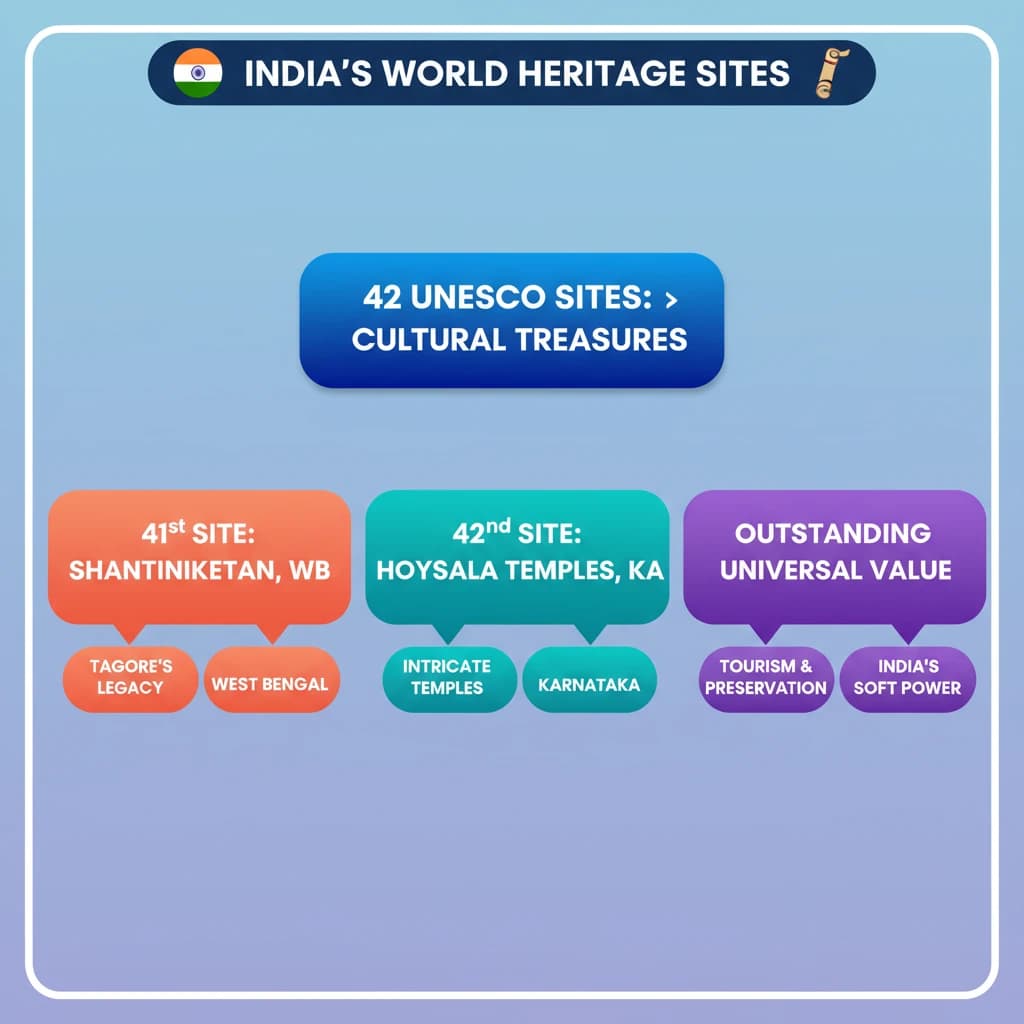
  • India currently has 42 UNESCO World Heritage Sites.
  • The 41st site is Shantiniketan in West Bengal, founded by Rabindranath Tagore.
  • The 42nd site is the Sacred Ensembles of the Hoysalas in Karnataka, known for intricate temples.
  • World Heritage Sites are recognized for their Outstanding Universal Value (OUV).
  • These sites contribute significantly to India's tourism, cultural preservation, and soft power.
  • Recent additions highlight both architectural grandeur and unique cultural-educational legacies.
  • Understanding these sites is crucial for UPSC Art and Culture, History, and current affairs.
India's World Heritage Sites: Recent Additions (Shantiniketan & Hoysalas)

India's World Heritage Sites: Recent Additions (Shantiniketan & Hoysalas)

Medium⏱️ 7 min read✓ 98% Verified
art and culture

📖 Introduction

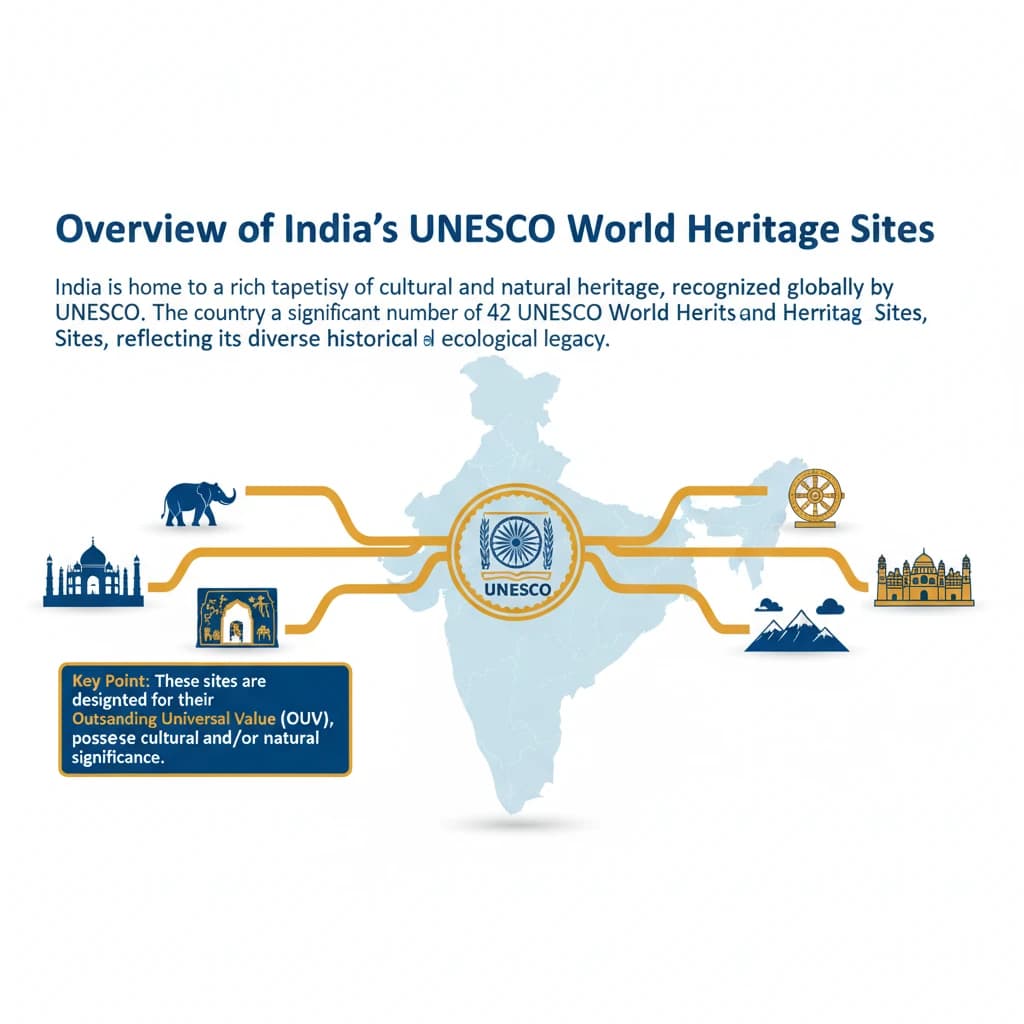
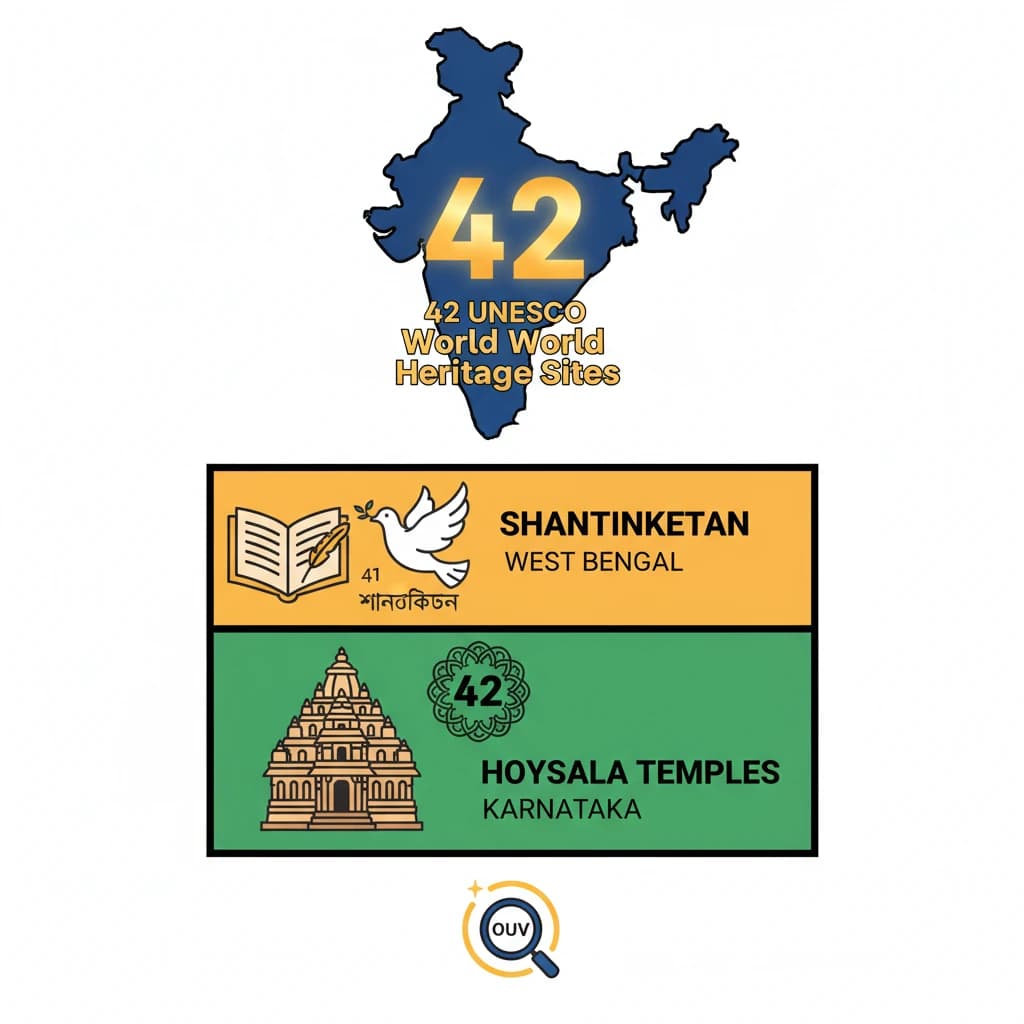
<h4>Overview of India's UNESCO World Heritage Sites</h4><p>India is home to a rich tapestry of cultural and natural heritage, recognized globally by <strong>UNESCO</strong>. The country currently boasts a significant number of <strong>42 UNESCO World Heritage Sites</strong>, reflecting its diverse historical and ecological legacy.</p><div class="key-point-box">These sites are designated for their <strong>Outstanding Universal Value (OUV)</strong>, meaning they possess cultural and/or natural significance that is so exceptional it transcends national boundaries and is of common importance for present and future generations of humanity.</div><h4>Recent Additions: The 41st Site - Shantiniketan</h4><p>The <strong>41st UNESCO World Heritage Site</strong> to be inscribed from India is <strong>Shantiniketan</strong>, located in <strong>West Bengal</strong>. This unique institution was established by the revered Nobel laureate <strong>Rabindranath Tagore</strong>.</p><div class="info-box"><strong>Site Number:</strong> 41st<br><strong>Location:</strong> Birbhum district, West Bengal<br><strong>Founder:</strong> Rabindranath Tagore<br><strong>Significance:</strong> A pioneering residential school and centre for art, culture, and humanistic education, embodying Tagore's vision of universal humanism.</div><p><strong>Shantiniketan</strong> represents a living heritage, evolving from a traditional ashram into a university (Visva-Bharati) that promoted a unique blend of Indian traditions and modern global perspectives.</p><div class="exam-tip-box"><strong>UPSC Insight:</strong> Recent additions to the World Heritage List are crucial for both <strong>Prelims (facts)</strong> and <strong>Mains (cultural significance, educational philosophy)</strong>. Be prepared to discuss Tagore's philosophy and Shantiniketan's contribution to Indian education and art.</div><h4>Recent Additions: The 42nd Site - Sacred Ensembles of the Hoysalas</h4><p>The <strong>42nd UNESCO World Heritage Site</strong> is the <strong>Sacred Ensembles of the Hoysalas</strong>, situated in <strong>Karnataka</strong>. This designation recognizes a group of exquisite temples from the <strong>Hoysala era</strong>.</p><div class="info-box"><strong>Site Number:</strong> 42nd<br><strong>Location:</strong> Belur, Halebid, Somanathpur, Karnataka<br><strong>Period:</strong> Hoysala Empire (10th-14th centuries)<br><strong>Significance:</strong> Renowned for their intricate carvings, stellate plans, and unique architectural style, showcasing the pinnacle of Hoysala art and craftsmanship.</div><p>These ensembles, including the famous <strong>Chennakeshava Temple at Belur</strong>, <strong>Hoysaleswara Temple at Halebid</strong>, and <strong>Keshava Temple at Somanathpur</strong>, are celebrated for their sculptural richness and detailed narratives from Hindu mythology.</p><div class="key-point-box">The <strong>Hoysala architecture</strong> is characterized by its soft soapstone medium, intricate friezes, and highly ornate sculptures, often depicting episodes from epics like the Ramayana and Mahabharata.</div>
Concept Diagram

💡 Key Takeaways

  • •India currently has 42 UNESCO World Heritage Sites.
  • •The 41st site is Shantiniketan in West Bengal, founded by Rabindranath Tagore.
  • •The 42nd site is the Sacred Ensembles of the Hoysalas in Karnataka, known for intricate temples.
  • •World Heritage Sites are recognized for their Outstanding Universal Value (OUV).
  • •These sites contribute significantly to India's tourism, cultural preservation, and soft power.
  • •Recent additions highlight both architectural grandeur and unique cultural-educational legacies.
  • •Understanding these sites is crucial for UPSC Art and Culture, History, and current affairs.

🧠 Memory Techniques
Memory Aid
98% Verified Content

📚 Reference Sources

•UNESCO World Heritage Centre Official Website (whc.unesco.org)
•Archaeological Survey of India (ASI) publications
•NCERT Textbooks on Indian History and Art & Culture

Related Topics

Loading related topics...
Explore:Art And Culture Topics·All Subjects·Daily Current Affairs·Editorial Analysis·Previous Year Questions·UPSC GPT
India's World Heritage Sites: Recent Additions (Shantiniketan & Hoysalas) - UPSC Art And Culture