Loading page, please wait…
Vaidra Logo
Vaidra

Top 4 items + smart groups

UPSC GPT
New
Current Affairs
Daily Solutions
Daily Puzzle
Mains Evaluator

Version 2.0.0 • Built with ❤️ for UPSC aspirants

Loading...
Loading...
Loading...
Loading...
Loading...
Loading...
Loading...
Loading...
Loading...
Loading...
Loading...
Loading...
Loading...
Back
All Subjects

Topics

0 topics • 0 completed

Loading topics...
Loading...
Loading...
Loading...
Loading...
Loading...
Overall Progress0%

Harvest Festivals - UPSC Art And Culture

What is Harvest Festivals in UPSC Art And Culture?

Harvest Festivals is a key topic under Art And Culture for UPSC Civil Services Examination. Key points include: Harvest festivals are celebrations of agricultural bounty and gratitude across India.. Lohri, Makar Sankranti, Pongal, and Magh Bihu are prominent examples, each with regional distinctiveness.. The President's greetings highlight their national significance and role in unity.. Understanding this topic is essential for both UPSC Prelims and Mains preparation.

Why is Harvest Festivals important for UPSC exam?

Harvest Festivals is a Easy-level topic in UPSC Art And Culture. It is tested in both Prelims (factual MCQs) and Mains (analytical answer writing). Previous year UPSC questions have frequently covered aspects of Harvest Festivals, making it essential for comprehensive IAS preparation.

How to prepare Harvest Festivals for UPSC?

To prepare Harvest Festivals for UPSC: (1) Study the comprehensive notes covering all key concepts on Vaidra. (2) Practice previous year questions on this topic. (3) Connect it with current affairs using daily updates. (4) Revise using key takeaways and mind maps available for Art And Culture. (5) Write practice answers linking Harvest Festivals to related GS Paper topics.

Key takeaways of Harvest Festivals for UPSC

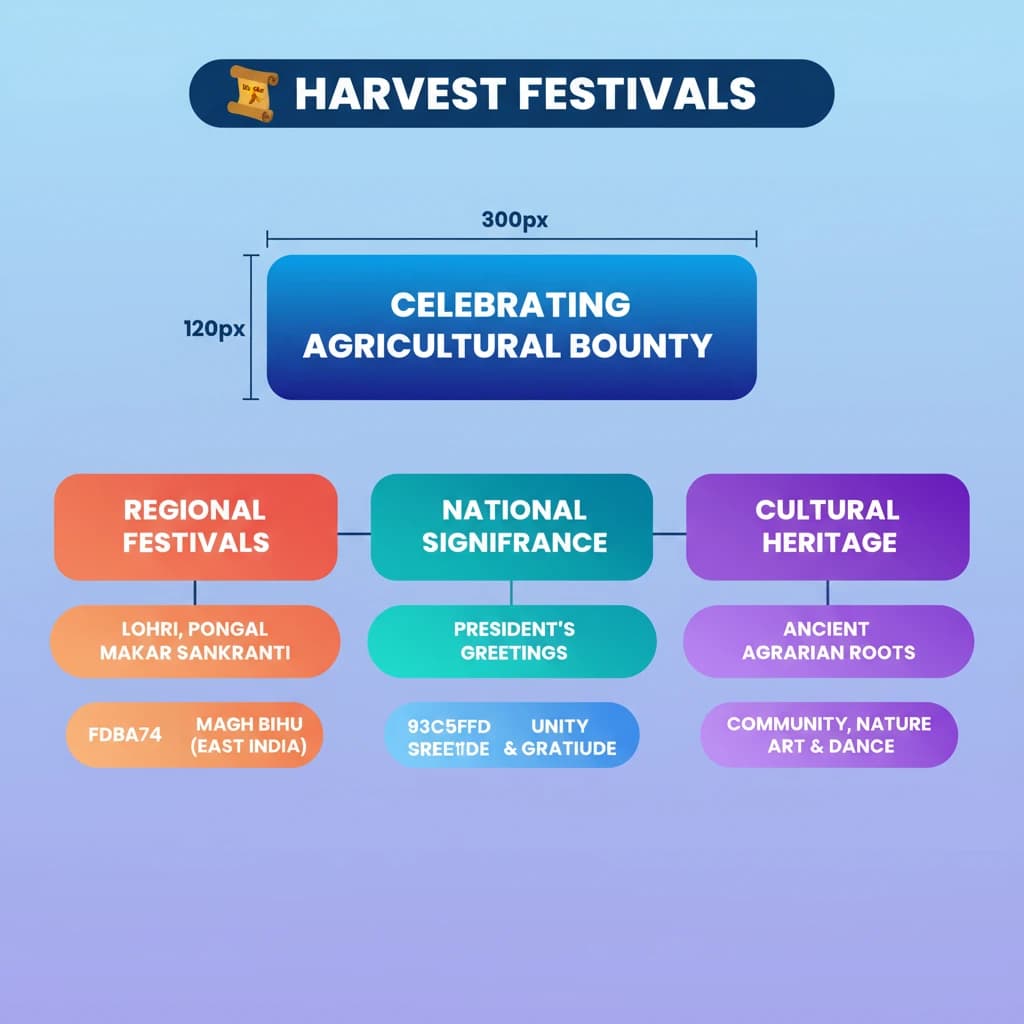
  • Harvest festivals are celebrations of agricultural bounty and gratitude across India.
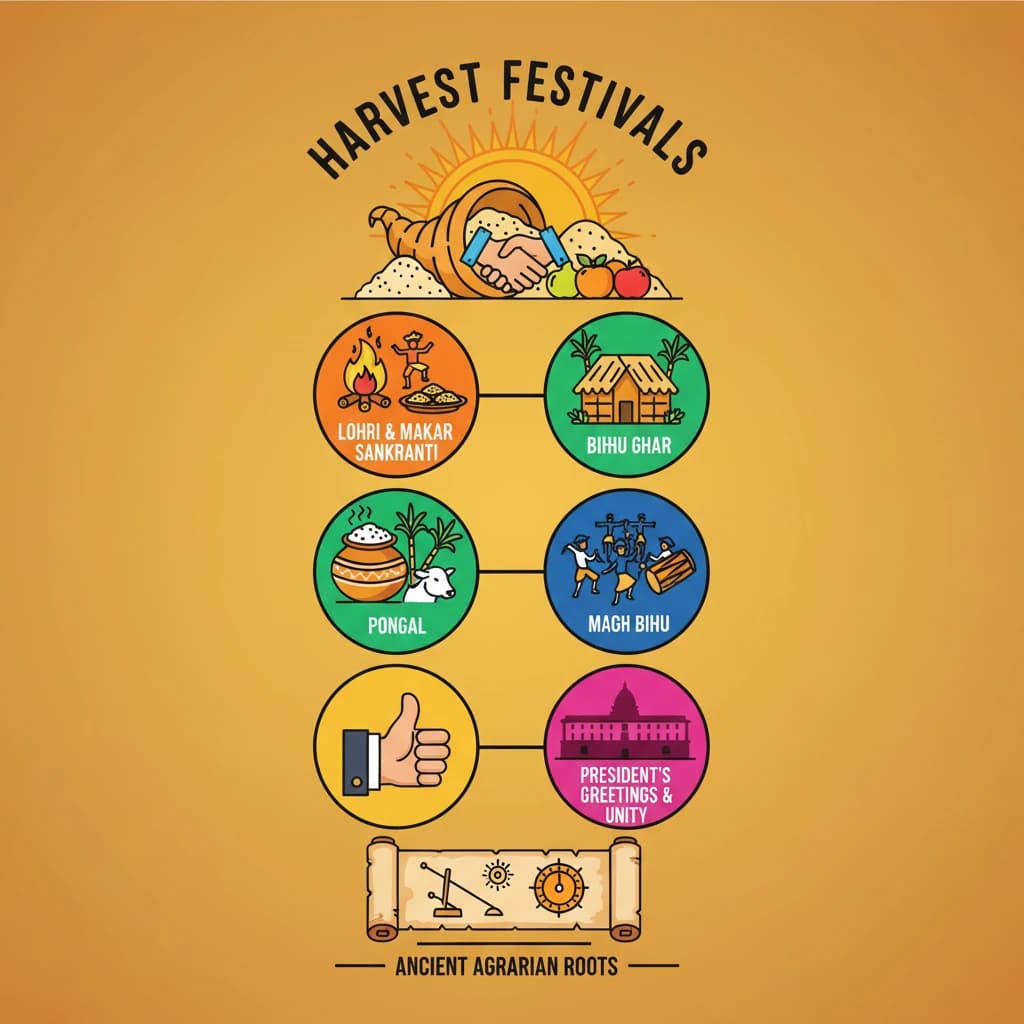
  • Lohri, Makar Sankranti, Pongal, and Magh Bihu are prominent examples, each with regional distinctiveness.
  • The President's greetings highlight their national significance and role in unity.
  • These festivals are deeply rooted in India's ancient agrarian history.
  • They promote community bonding, cultural preservation, and respect for nature.
  • Makar Sankranti is unique for its pan-Indian celebration under various names.
  • Understanding regional variations is crucial for UPSC Art and Culture.
Harvest Festivals

Harvest Festivals

Easy⏱️ 6 min read✓ 95% Verified
art and culture

📖 Introduction

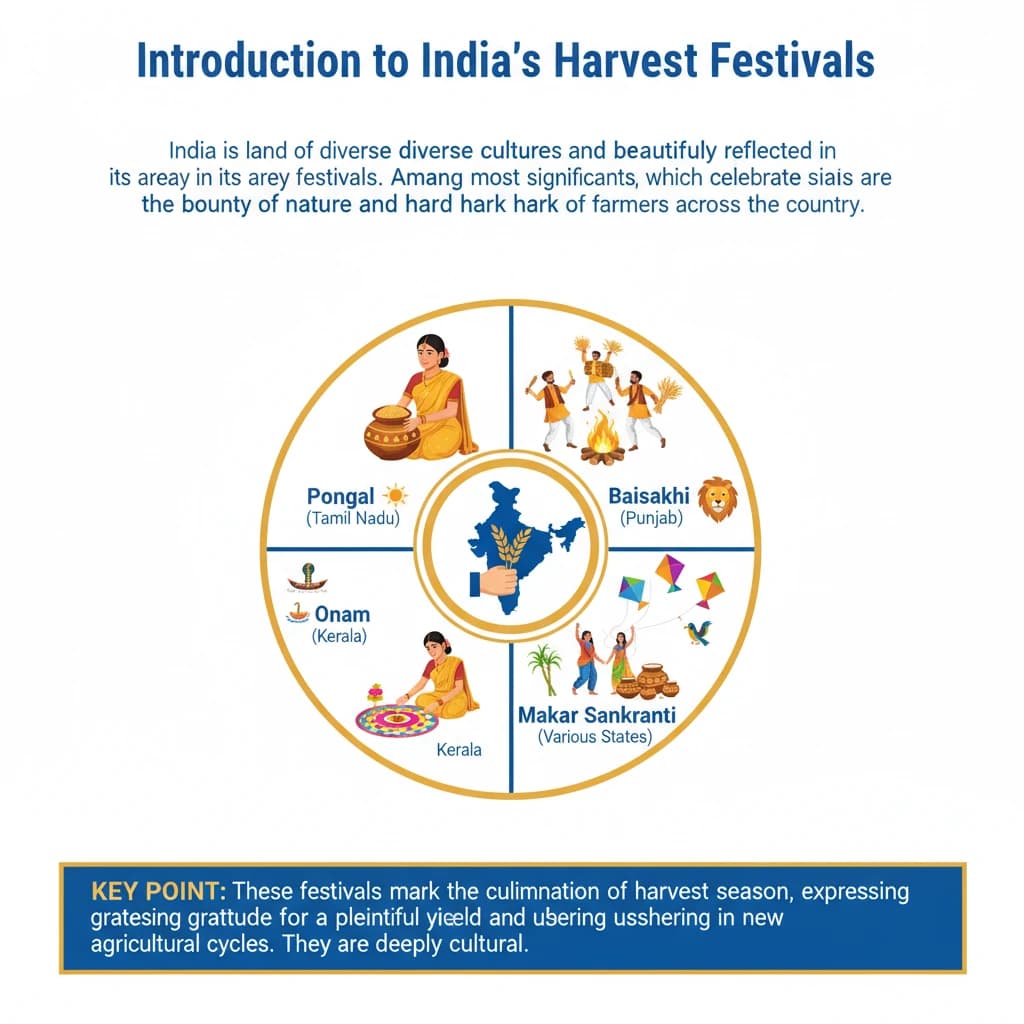
<h4>Introduction to India's Harvest Festivals</h4><p>India is a land of diverse cultures and traditions, beautifully reflected in its array of festivals. Among the most significant are the <strong>harvest festivals</strong>, which celebrate the bounty of nature and the hard work of farmers across the country.</p><div class="key-point-box">These festivals mark the culmination of the harvest season, expressing gratitude for a plentiful yield and ushering in new agricultural cycles. They are deeply intertwined with the agrarian rhythm of Indian society.</div><h4>Presidential Greetings and National Significance</h4><p>The <strong>President of India</strong> frequently extends greetings to citizens on the eve of these important festivals. This highlights their national significance and role in fostering unity amidst diversity.</p><div class="info-box"><strong>Recent Greetings:</strong> The President greeted citizens on the eve of <strong>Lohri</strong>, <strong>Makar Sankranti</strong>, <strong>Pongal</strong>, and <strong>Magh Bihu</strong>.</div><h4>Diverse Celebrations Across India</h4><p>These harvest festivals, while sharing a common theme of gratitude and celebration, are observed in distinct forms across various regions of India. Each festival carries unique rituals, customs, and cultural expressions specific to its geographical and linguistic context.</p><ul><li><strong>Lohri:</strong> Celebrated predominantly in <strong>North India</strong>, particularly <strong>Punjab</strong>, <strong>Haryana</strong>, and parts of <strong>Himachal Pradesh</strong>.</li><li><strong>Makar Sankranti:</strong> A pan-Indian festival, known by various names, observed across <strong>Northern</strong>, <strong>Western</strong>, and <strong>Central India</strong>.</li><li><strong>Pongal:</strong> A major harvest festival in <strong>South India</strong>, especially <strong>Tamil Nadu</strong>.</li><li><strong>Magh Bihu:</strong> The harvest festival of <strong>Assam</strong> and other <strong>Northeast Indian</strong> states.</li></ul><div class="exam-tip-box"><strong>UPSC Insight:</strong> Understanding the regional variations of festivals is crucial for <strong>Art and Culture (GS Paper I)</strong>. Questions often test knowledge of specific rituals, associated deities, or regional significance.</div>
Concept Diagram

💡 Key Takeaways

  • •Harvest festivals are celebrations of agricultural bounty and gratitude across India.
  • •Lohri, Makar Sankranti, Pongal, and Magh Bihu are prominent examples, each with regional distinctiveness.
  • •The President's greetings highlight their national significance and role in unity.
  • •These festivals are deeply rooted in India's ancient agrarian history.
  • •They promote community bonding, cultural preservation, and respect for nature.
  • •Makar Sankranti is unique for its pan-Indian celebration under various names.
  • •Understanding regional variations is crucial for UPSC Art and Culture.

🧠 Memory Techniques
Memory Aid
95% Verified Content

📚 Reference Sources

•General knowledge sources on Indian festivals

Related Topics

Loading related topics...
Explore:Art And Culture Topics·All Subjects·Daily Current Affairs·Editorial Analysis·Previous Year Questions·UPSC GPT
Harvest Festivals - UPSC Art And Culture