Loading page, please wait…
5 New Classical Languages and Change in Criteria - UPSC Art And Culture
What is 5 New Classical Languages and Change in Criteria in UPSC Art And Culture?
5 New Classical Languages and Change in Criteria is a key topic under Art And Culture for UPSC Civil Services Examination. Key points include: The Union Cabinet approved five new classical languages: Marathi, Pali, Prakrit, Assamese, and Bengali.. This expands India's list of classical languages beyond the original six.. Classical language status provides benefits like central funding and academic promotion.. Understanding this topic is essential for both UPSC Prelims and Mains preparation.
Why is 5 New Classical Languages and Change in Criteria important for UPSC exam?
5 New Classical Languages and Change in Criteria is a Medium-level topic in UPSC Art And Culture. It is tested in both Prelims (factual MCQs) and Mains (analytical answer writing). Previous year UPSC questions have frequently covered aspects of 5 New Classical Languages and Change in Criteria, making it essential for comprehensive IAS preparation.
How to prepare 5 New Classical Languages and Change in Criteria for UPSC?
To prepare 5 New Classical Languages and Change in Criteria for UPSC: (1) Study the comprehensive notes covering all key concepts on Vaidra. (2) Practice previous year questions on this topic. (3) Connect it with current affairs using daily updates. (4) Revise using key takeaways and mind maps available for Art And Culture. (5) Write practice answers linking 5 New Classical Languages and Change in Criteria to related GS Paper topics.
Key takeaways of 5 New Classical Languages and Change in Criteria for UPSC
- The Union Cabinet approved five new classical languages: Marathi, Pali, Prakrit, Assamese, and Bengali.
- This expands India's list of classical languages beyond the original six.
- Classical language status provides benefits like central funding and academic promotion.
- The decision implies a 'change in criteria' for language recognition.
- Pali and Prakrit are significant for ancient religious texts of Buddhism and Jainism.
- The move aims to preserve and promote India's rich linguistic and cultural heritage.
- This recognition strengthens regional cultural identities and boosts academic interest.
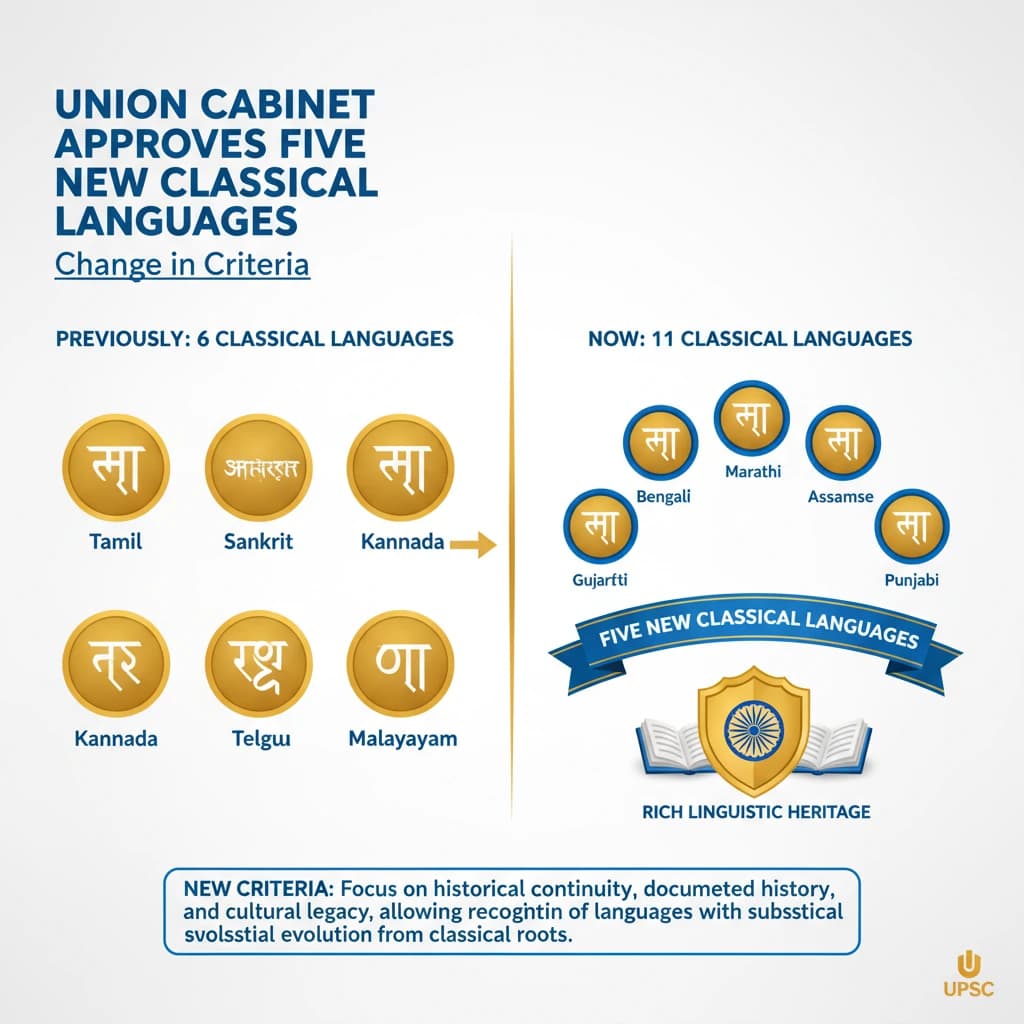
5 New Classical Languages and Change in Criteria
Medium⏱️ 8 min read
art and culture
📖 Introduction
Union Cabinet Approves Five New Classical Languages
The Union Cabinet has recently approved the recognition of five more languages as “classical” languages. This significant decision expands the nation’s prestigious list of culturally significant tongues.
Previously, six languages held this esteemed status. With the new additions, the total number of classical languages in India will increase, reflecting the country's rich linguistic diversity.
New Classical Languages Approved:
- Marathi
- Pali
- Prakrit
- Assamese
- Bengali
Expanding India's Cultural Heritage
The inclusion of these five languages underscores their profound historical depth, rich literary traditions, and significant contributions to Indian culture. This recognition is a testament to their enduring legacy.
The status of a Classical Language provides several benefits, including central government funding for studies, international promotion, and the establishment of Centres of Excellence for the study of these languages.
Change in Criteria for Recognition
The topic explicitly mentions a 'Change in Criteria' for classical language status. While the specific modifications are not detailed in the source, this indicates a potential re-evaluation or broadening of the parameters used to assess a language's eligibility for this prestigious tag.
UPSC Insight: Understanding the criteria for classical language status (even if changed) is crucial for GS Paper 1 (Art & Culture). Be prepared to discuss the implications of such policy changes on linguistic diversity and cultural preservation.
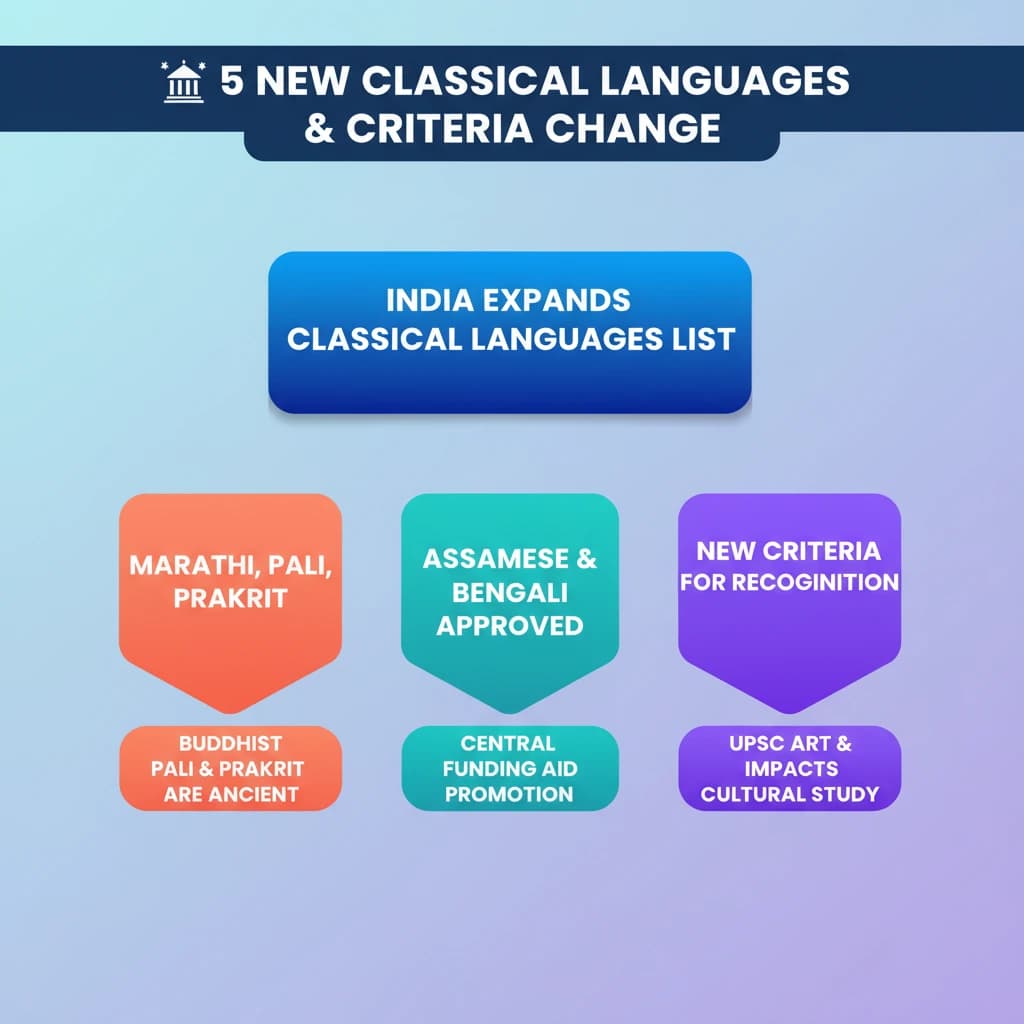
💡 Key Takeaways
- •The Union Cabinet approved five new classical languages: Marathi, Pali, Prakrit, Assamese, and Bengali.
- •This expands India's list of classical languages beyond the original six.
- •Classical language status provides benefits like central funding and academic promotion.
- •The decision implies a 'change in criteria' for language recognition.
- •Pali and Prakrit are significant for ancient religious texts of Buddhism and Jainism.
- •The move aims to preserve and promote India's rich linguistic and cultural heritage.
- •This recognition strengthens regional cultural identities and boosts academic interest.
🧠 Memory Techniques
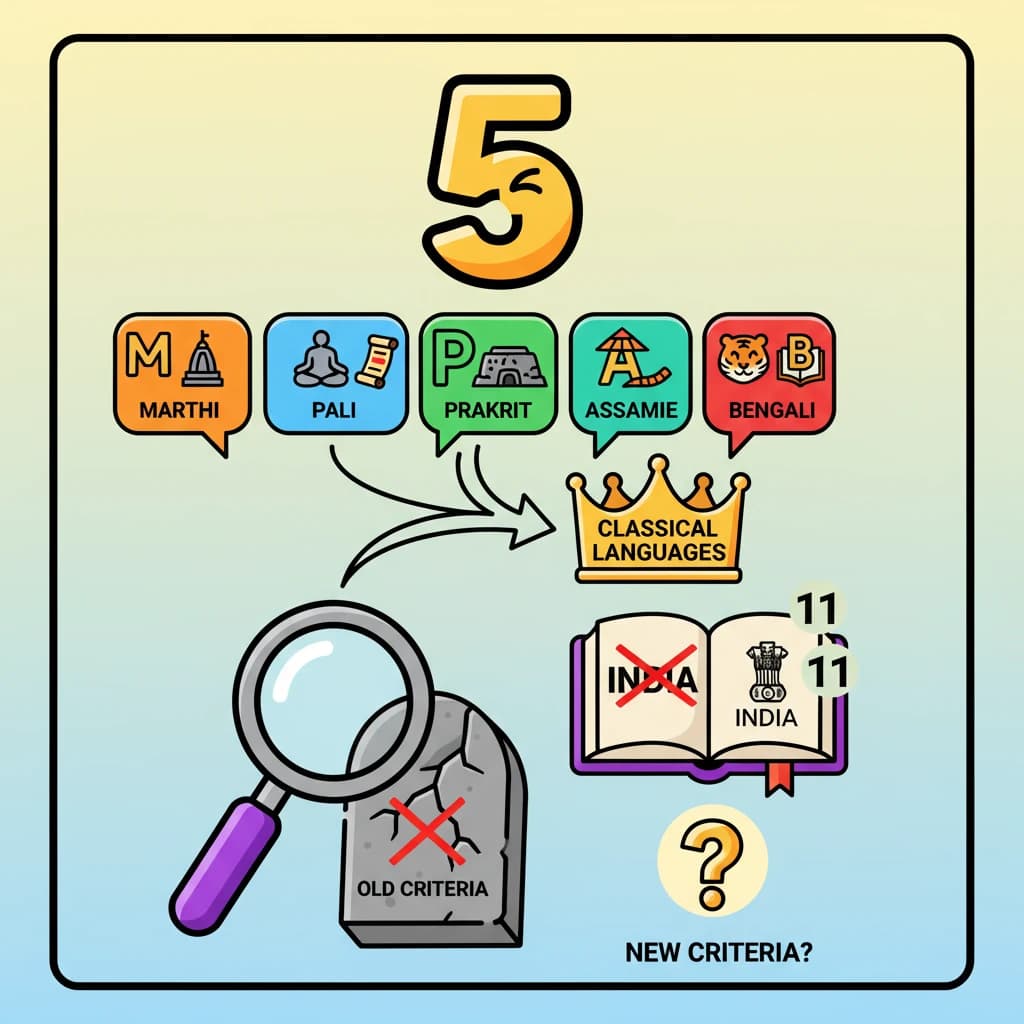
95% Verified Content
📚 Reference Sources
•Press Information Bureau (PIB) releases on Classical Languages (general knowledge)
•Ministry of Culture, Government of India (general knowledge on criteria and existing list)