Loading page, please wait…
Vaidra Logo
Vaidra

Top 4 items + smart groups

UPSC GPT
New
Current Affairs
Daily Solutions
Daily Puzzle
Mains Evaluator

Version 2.0.0 • Built with ❤️ for UPSC aspirants

Loading...
Loading...
Loading...
Loading...
Loading...
Loading...
Loading...
Loading...
Loading...
Loading...
Loading...
Loading...
Loading...
What is a Classical Language? - UPSC Art And Culture
Back
All Subjects

Topics

0 topics • 0 completed

Loading topics...
Loading...
Loading...
Loading...
Loading...
Loading...
Overall Progress0%

What is a Classical Language? - UPSC Art And Culture

What is What is a Classical Language? in UPSC Art And Culture?

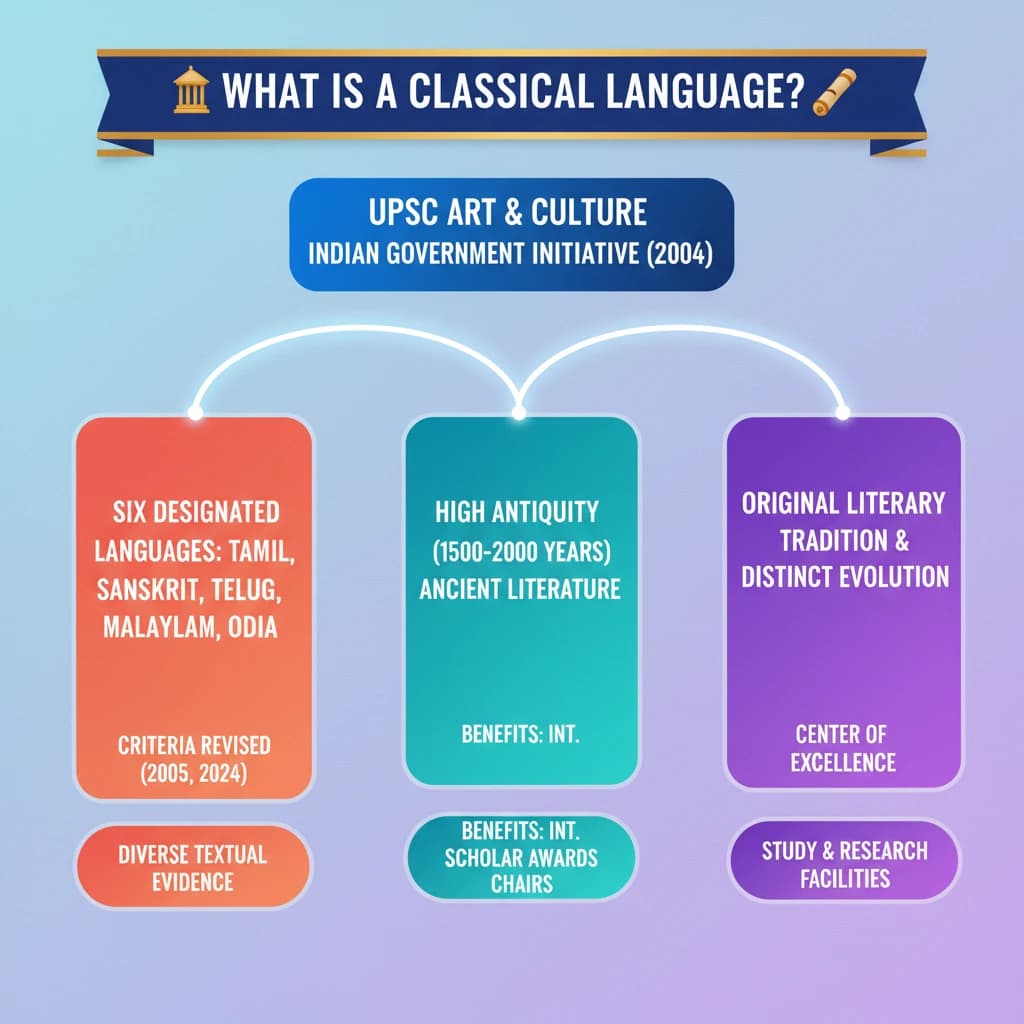
What is a Classical Language? is a key topic under Art And Culture for UPSC Civil Services Examination. Key points include: Classical Language status was introduced by the Indian government in 2004.. There are currently six designated classical languages: Tamil, Sanskrit, Kannada, Telugu, Malayalam, and Odia.. Criteria for designation include high antiquity (1500-2000 years), ancient literature, original literary tradition, and distinct evolution.. Understanding this topic is essential for both UPSC Prelims and Mains preparation.

Why is What is a Classical Language? important for UPSC exam?

What is a Classical Language? is a Medium-level topic in UPSC Art And Culture. It is tested in both Prelims (factual MCQs) and Mains (analytical answer writing). Previous year UPSC questions have frequently covered aspects of What is a Classical Language?, making it essential for comprehensive IAS preparation.

How to prepare What is a Classical Language? for UPSC?

To prepare What is a Classical Language? for UPSC: (1) Study the comprehensive notes covering all key concepts on Vaidra. (2) Practice previous year questions on this topic. (3) Connect it with current affairs using daily updates. (4) Revise using key takeaways and mind maps available for Art And Culture. (5) Write practice answers linking What is a Classical Language? to related GS Paper topics.

Key takeaways of What is a Classical Language? for UPSC

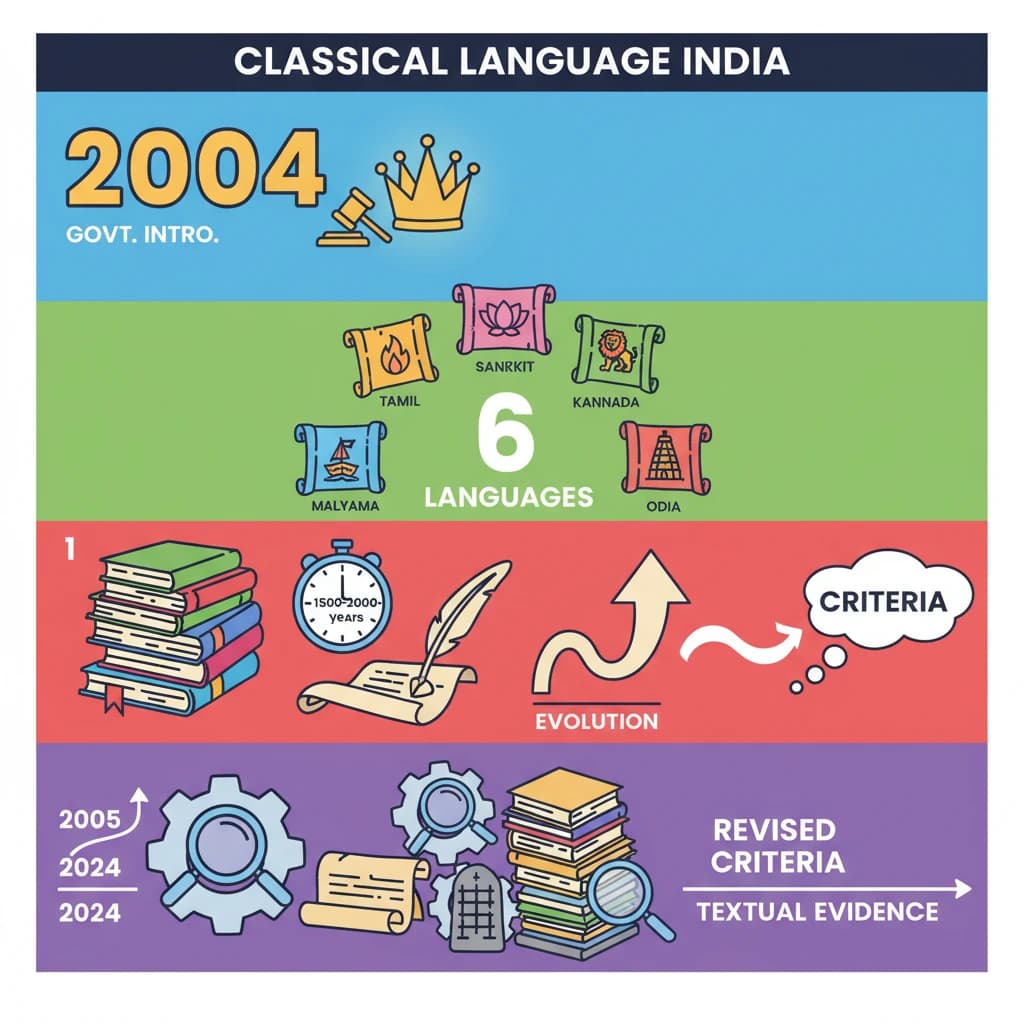
  • Classical Language status was introduced by the Indian government in 2004.
  • There are currently six designated classical languages: Tamil, Sanskrit, Kannada, Telugu, Malayalam, and Odia.
  • Criteria for designation include high antiquity (1500-2000 years), ancient literature, original literary tradition, and distinct evolution.
  • The criteria were revised in 2005 and again in 2024, emphasizing diverse textual evidence.
  • Benefits include international awards for scholars, UGC-supported chairs, and a Center of Excellence for studies.
  • These languages are vital custodians of India's rich cultural, intellectual, and philosophical heritage.
  • The status promotes the study, research, and preservation of these ancient linguistic treasures.
What is a Classical Language?

What is a Classical Language?

Medium⏱️ 8 min read✓ 98% Verified
art and culture

📖 Introduction

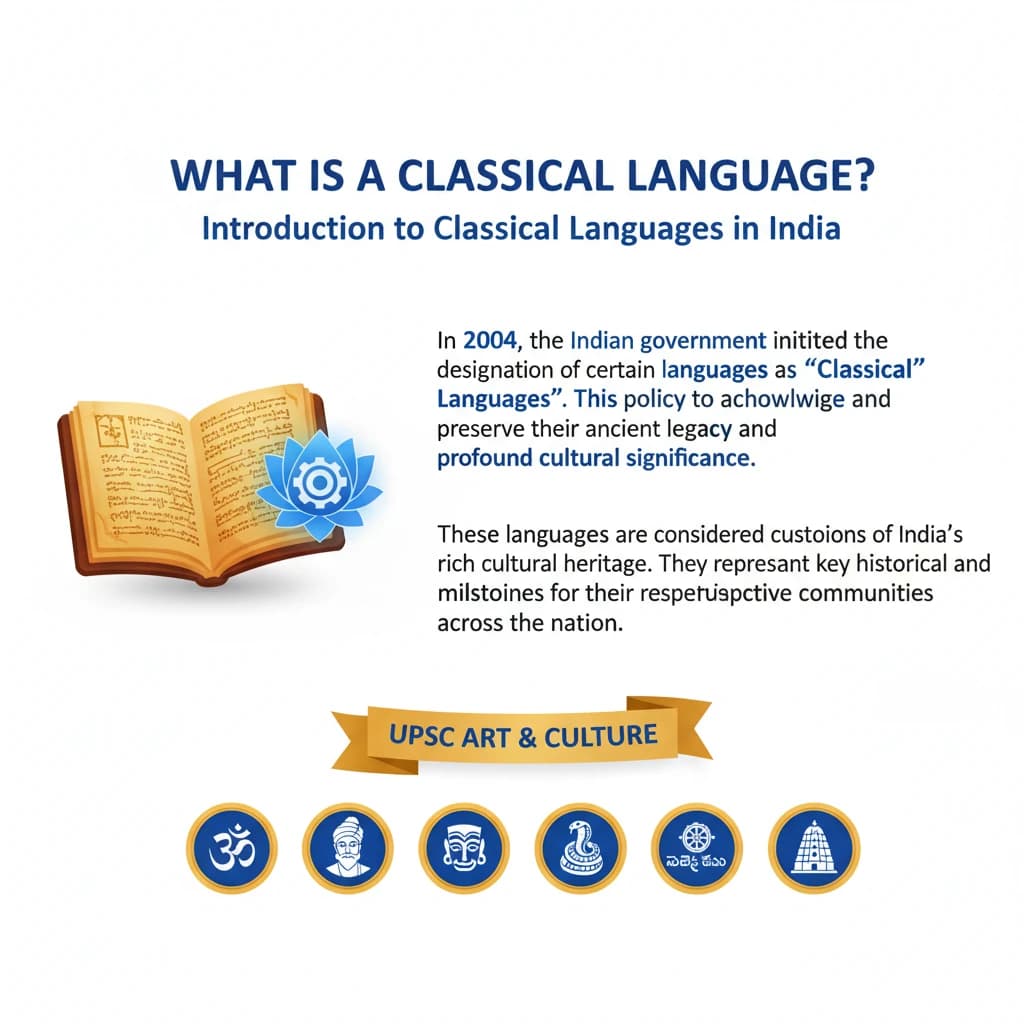
<h4>Introduction to Classical Languages in India</h4><p>In <strong>2004</strong>, the <strong>Indian government</strong> initiated the designation of certain languages as <strong>“Classical Languages”</strong>. This policy aims to acknowledge and preserve their ancient legacy and profound cultural significance.</p><p>These languages are considered custodians of India's rich cultural heritage. They represent key historical and cultural milestones for their respective communities across the nation.</p><div class="info-box"><strong>Definition:</strong> <strong>Indian classical languages</strong> (<strong>Shastriya Bhasha</strong>) are those with a rich historical legacy, profound literary traditions, and a distinctive cultural heritage.</div><h4>Significance of Classical Languages</h4><p>Classical languages have played a pivotal role in the intellectual and cultural evolution of various regions within India. Their extensive literary and textual bodies offer invaluable insights.</p><div class="key-point-box">These texts provide deep understanding into diverse fields such as <strong>literature</strong>, <strong>philosophy</strong>, and <strong>religion</strong>, reflecting centuries of intellectual development.</div><h4>Evolution of Criteria for Designation</h4><p>The criteria for designating a language as classical have been revised multiple times. Initial criteria were established, and subsequent revisions occurred in <strong>2005</strong> and <strong>2024</strong>.</p><p>These revisions were based on recommendations from <strong>Linguistic Experts Committees (LEC)</strong> operating under the aegis of the <strong>Sahitya Akademi</strong>.</p><h4>Revised Criteria in 2005</h4><p>The criteria established in <strong>2005</strong> focused on several key aspects to determine a language's classical status:</p><ul><li><strong>High Antiquity:</strong> The language must possess early texts and a recorded history spanning <strong>1,500–2,000 years</strong>.</li><li><strong>Ancient Literature:</strong> It must have a substantial body of ancient literature or texts. This literature should be considered a valuable heritage by generations of speakers.</li><li><strong>Original Literary Tradition:</strong> The language should exhibit an original literary tradition. This means its literary works should not be borrowed or derived significantly from another speech community.</li><li><strong>Distinct Evolution:</strong> The classical language and its literature must be distinct from modern forms. There can even be a discontinuity between the classical language and its later forms or offshoots.</li></ul><h4>Criteria Update in 2024</h4><p>A significant revision to the criteria for declaring a language as classical occurred in <strong>2024</strong>. This update specifically modified one of the existing points.</p><div class="info-box">The criterion regarding <strong>“Knowledge/ texts: Presence of an original literary tradition not borrowed from another speech community”</strong> was replaced.</div><p>The new criterion emphasizes a broader range of textual evidence. It now includes <strong>“Knowledge texts, especially prose texts in addition to poetry, epigraphical and inscriptional evidence”</strong>.</p><h4>Benefits of Classical Language Status</h4><p>Languages designated as 'classical' receive various government benefits. These initiatives are primarily aimed at promoting their study, research, and overall preservation.</p><ul><li><strong>International Awards:</strong> Two international awards are conferred annually. These awards recognize scholars who have made notable contributions to the research, teaching, or promotion of classical Indian languages.</li><li><strong>Prestigious Recognitions:</strong> The awards include the <strong>Presidential Award of Certificate of Honour</strong> and the <strong>Maharshi Badrayan Samman Award</strong>.</li><li><strong>UGC Support for Chairs:</strong> The <strong>University Grants Commission (UGC)</strong> actively supports the establishment of <strong>Professional Chairs</strong> in central universities and research institutions. These chairs are dedicated to focusing on classical Indian languages.</li><li><strong>Center of Excellence:</strong> To safeguard and promote these linguistic treasures, the government established the <strong>Center of Excellence for Studies in Classical Languages</strong>. This center is located at the <strong>Central Institute of Indian Languages (CIIL)</strong> in <strong>Mysore</strong>.</li></ul>
Concept Diagram

💡 Key Takeaways

  • •Classical Language status was introduced by the Indian government in 2004.
  • •There are currently six designated classical languages: Tamil, Sanskrit, Kannada, Telugu, Malayalam, and Odia.
  • •Criteria for designation include high antiquity (1500-2000 years), ancient literature, original literary tradition, and distinct evolution.
  • •The criteria were revised in 2005 and again in 2024, emphasizing diverse textual evidence.
  • •Benefits include international awards for scholars, UGC-supported chairs, and a Center of Excellence for studies.
  • •These languages are vital custodians of India's rich cultural, intellectual, and philosophical heritage.
  • •The status promotes the study, research, and preservation of these ancient linguistic treasures.

🧠 Memory Techniques
Memory Aid
98% Verified Content

📚 Reference Sources

•Ministry of Culture, Government of India (Official Website)
•Sahitya Akademi (Official Website)
•University Grants Commission (UGC) (Official Website)
•Press Information Bureau (PIB) releases regarding Classical Languages

Related Topics

Loading related topics...
Explore:Art And Culture Topics·All Subjects·Daily Current Affairs·Editorial Analysis·Previous Year Questions·UPSC GPT