Loading page, please wait…
Vaidra Logo
Vaidra

Top 4 items + smart groups

UPSC GPT
New
Current Affairs
Daily Solutions
Daily Puzzle
Mains Evaluator

Version 2.0.0 • Built with ❤️ for UPSC aspirants

Loading...
Loading...
Loading...
Loading...
Loading...
Loading...
Loading...
Loading...
Loading...
Loading...
Loading...
Loading...
Loading...
What is Vaishnavism? - UPSC Art And Culture
Back
All Subjects

Topics

0 topics • 0 completed

Loading topics...
Loading...
Loading...
Loading...
Loading...
Loading...
Overall Progress0%

What is Vaishnavism? - UPSC Art And Culture

What is What is Vaishnavism? in UPSC Art And Culture?

What is Vaishnavism? is a key topic under Art And Culture for UPSC Civil Services Examination. Key points include: Vaishnavism is a major Hindu tradition centered on the worship of Vishnu.. It is a prominent Bhakti movement emphasizing deep devotion and love.. The concept of Vishnu's avatars (incarnations) like Rama and Krishna is central.. Understanding this topic is essential for both UPSC Prelims and Mains preparation.

Why is What is Vaishnavism? important for UPSC exam?

What is Vaishnavism? is a Medium-level topic in UPSC Art And Culture. It is tested in both Prelims (factual MCQs) and Mains (analytical answer writing). Previous year UPSC questions have frequently covered aspects of What is Vaishnavism?, making it essential for comprehensive IAS preparation.

How to prepare What is Vaishnavism? for UPSC?

To prepare What is Vaishnavism? for UPSC: (1) Study the comprehensive notes covering all key concepts on Vaidra. (2) Practice previous year questions on this topic. (3) Connect it with current affairs using daily updates. (4) Revise using key takeaways and mind maps available for Art And Culture. (5) Write practice answers linking What is Vaishnavism? to related GS Paper topics.

Key takeaways of What is Vaishnavism? for UPSC

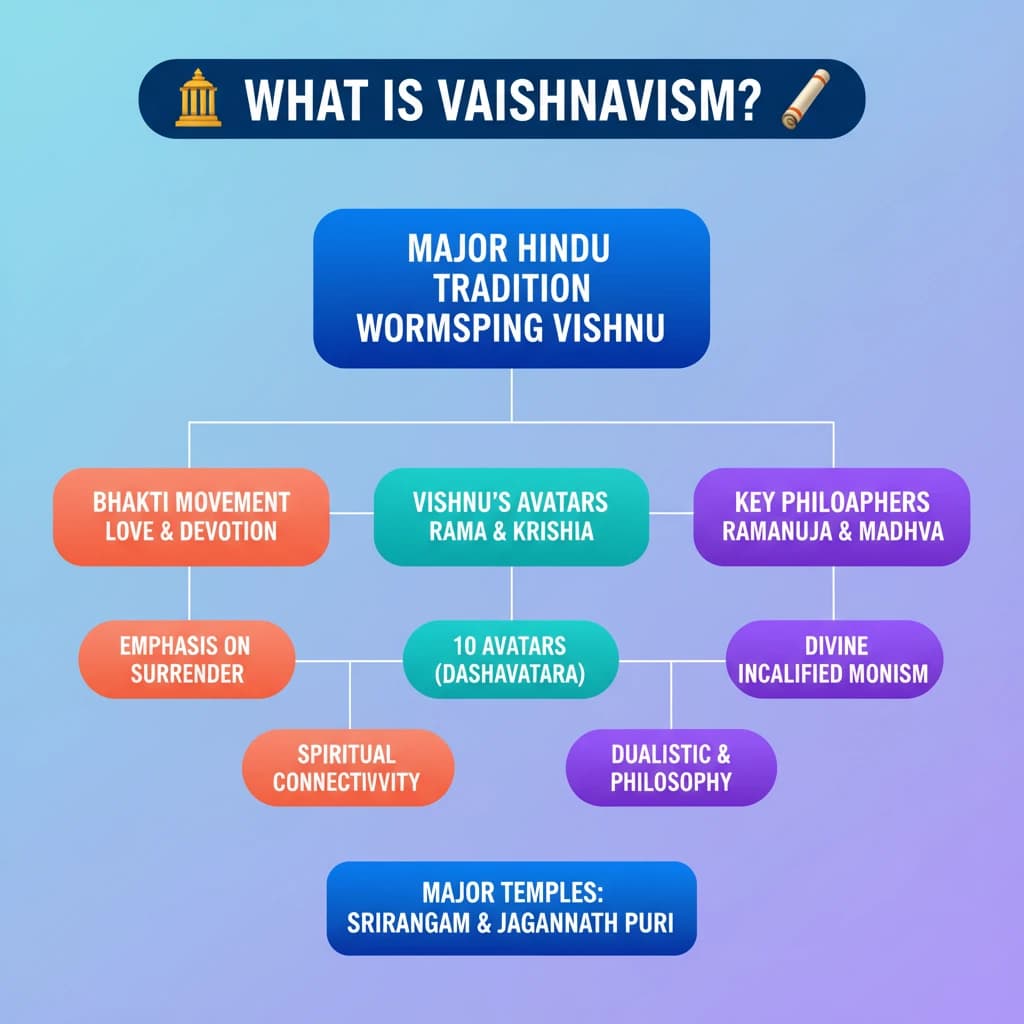
  • Vaishnavism is a major Hindu tradition centered on the worship of Vishnu.
  • It is a prominent Bhakti movement emphasizing deep devotion and love.
  • The concept of Vishnu's avatars (incarnations) like Rama and Krishna is central.
  • Key Vaishnava philosophers include Ramanuja and Madhvacharya.
  • Major Vaishnava temples include Srirangam and Jagannath Puri.
  • Gaudiya Vaishnavism, founded by Chaitanya Mahaprabhu, emphasizes Radha-Krishna devotion and chanting.
  • Vaishnavism has a rich historical background, flourishing during the Gupta and medieval Bhakti periods.
What is Vaishnavism?

What is Vaishnavism?

Medium⏱️ 8 min read✓ 95% Verified
art and culture

📖 Introduction

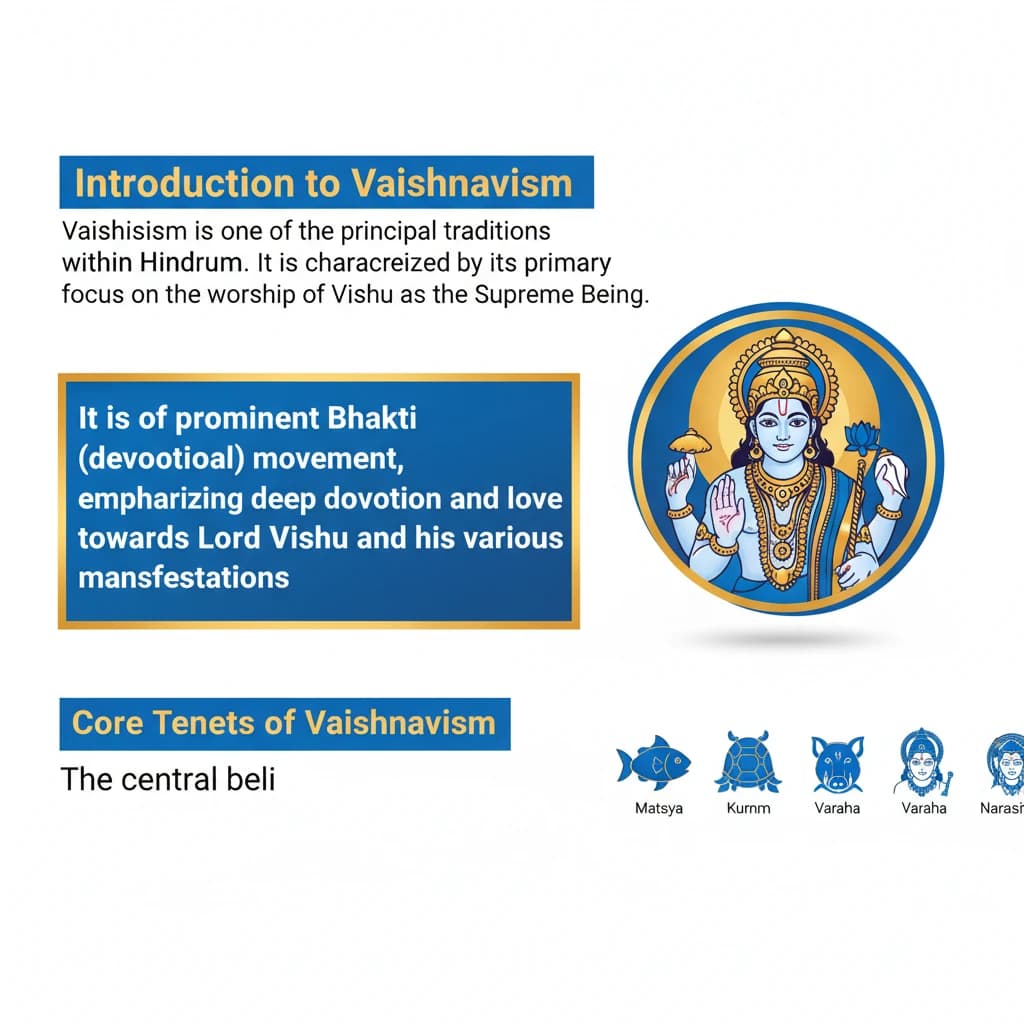
<h4>Introduction to Vaishnavism</h4><p><strong>Vaishnavism</strong> is one of the principal traditions within <strong>Hinduism</strong>. It is characterized by its primary focus on the worship of <strong>Vishnu</strong> as the Supreme Being.</p><div class="key-point-box">It is a prominent <strong>Bhakti</strong> (devotional) movement, emphasizing deep devotion and love towards <strong>Lord Vishnu</strong> and his various manifestations.</div><h4>Core Tenets of Vaishnavism</h4><p>The central belief in Vaishnavism revolves around <strong>Vishnu</strong> as the preserver and protector of the universe. Adherents believe he periodically descends to Earth in various forms to restore <strong>Dharma</strong> (righteousness) and save humanity.</p><div class="info-box"><strong>Key Concept:</strong> The concept of <strong>avatars</strong> or <strong>incarnations</strong> is fundamental. Vishnu takes on different forms to combat evil and maintain cosmic order.</div><h4>The Concept of Avatars</h4><p>Vaishnavites believe that <strong>Vishnu</strong> has manifested in numerous forms throughout cosmic history. The most famous are the <strong>Dashavatara</strong>, the ten primary incarnations.</p><ul><li><strong>Rama:</strong> The protagonist of the epic <strong>Ramayana</strong>, embodying ideal kingship and righteousness.</li><li><strong>Krishna:</strong> A central figure in the <strong>Mahabharata</strong> and the speaker of the <strong>Bhagavad Gita</strong>, revered as a divine lover, warrior, and philosopher.</li><li><strong>Buddha:</strong> Sometimes included as an avatar, signifying Vishnu's role in guiding beings towards enlightenment.</li></ul><div class="exam-tip-box">Understanding the <strong>Dashavatara</strong> is crucial for <strong>UPSC Art & Culture</strong>, as it connects to iconography, temple architecture, and philosophical developments.</div><h4>Bhakti and Devotion</h4><p><strong>Bhakti</strong>, or devotional worship, is the cornerstone of Vaishnava practice. It involves cultivating a personal relationship with <strong>Vishnu</strong> through prayer, chanting (<strong>kirtan</strong>), meditation, and ritual.</p><p>This path of devotion is seen as a direct means to attain spiritual liberation (<strong>moksha</strong>) and union with the divine.</p>
Concept Diagram

💡 Key Takeaways

  • •Vaishnavism is a major Hindu tradition centered on the worship of Vishnu.
  • •It is a prominent Bhakti movement emphasizing deep devotion and love.
  • •The concept of Vishnu's avatars (incarnations) like Rama and Krishna is central.
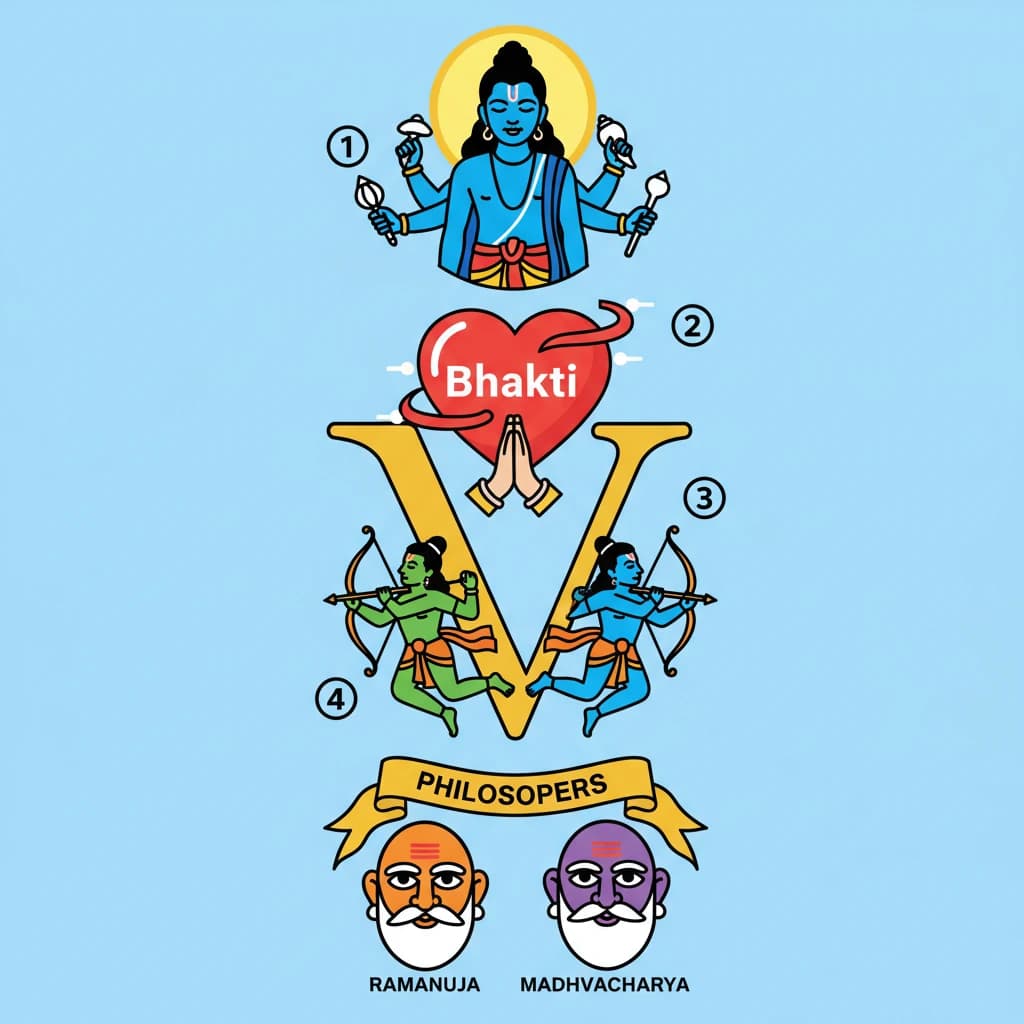
  • •Key Vaishnava philosophers include Ramanuja and Madhvacharya.
  • •Major Vaishnava temples include Srirangam and Jagannath Puri.
  • •Gaudiya Vaishnavism, founded by Chaitanya Mahaprabhu, emphasizes Radha-Krishna devotion and chanting.
  • •Vaishnavism has a rich historical background, flourishing during the Gupta and medieval Bhakti periods.

🧠 Memory Techniques
Memory Aid
95% Verified Content

📚 Reference Sources

•NCERT Textbooks (Ancient and Medieval India)
•The Wonder That Was India by A.L. Basham
•History of Indian Philosophy by Surendranath Dasgupta
•Wikipedia (for cross-referencing specific details like temple names and founders)

Related Topics

Loading related topics...
Explore:Art And Culture Topics·All Subjects·Daily Current Affairs·Editorial Analysis·Previous Year Questions·UPSC GPT