Loading page, please wait…
Vaidra Logo
Vaidra

Top 4 items + smart groups

UPSC GPT
New
Current Affairs
Daily Solutions
Daily Puzzle
Mains Evaluator

Version 2.0.0 • Built with ❤️ for UPSC aspirants

Loading...
Loading...
Loading...
Loading...
Loading...
Loading...
Loading...
Loading...
Loading...
Loading...
Loading...
Loading...
Loading...

Cultural Heritage - UPSC Art And Culture

What is Cultural Heritage in UPSC Art And Culture?

Cultural Heritage is a key topic under Art And Culture for UPSC Civil Services Examination. Key points include: Vaishnavite Satras are unique monastic institutions in Assam.. They are crucial for preserving traditional Assamese art forms, literature, and cultural practices.. Satras serve as primary centers for learning, religious studies, and spiritual activities.. Understanding this topic is essential for both UPSC Prelims and Mains preparation.

Why is Cultural Heritage important for UPSC exam?

Cultural Heritage is a Medium-level topic in UPSC Art And Culture. It is tested in both Prelims (factual MCQs) and Mains (analytical answer writing). Previous year UPSC questions have frequently covered aspects of Cultural Heritage, making it essential for comprehensive IAS preparation.

How to prepare Cultural Heritage for UPSC?

To prepare Cultural Heritage for UPSC: (1) Study the comprehensive notes covering all key concepts on Vaidra. (2) Practice previous year questions on this topic. (3) Connect it with current affairs using daily updates. (4) Revise using key takeaways and mind maps available for Art And Culture. (5) Write practice answers linking Cultural Heritage to related GS Paper topics.

Key takeaways of Cultural Heritage for UPSC

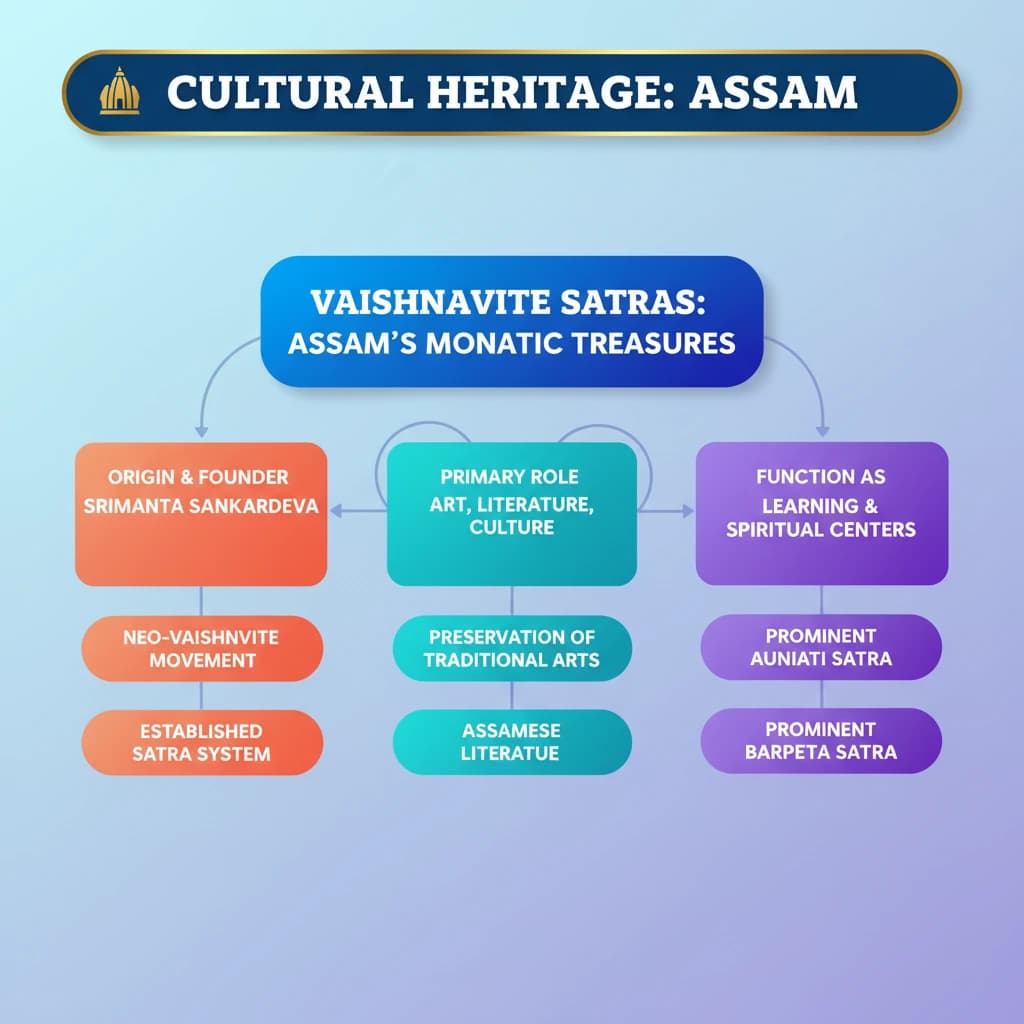
  • Vaishnavite Satras are unique monastic institutions in Assam.
  • They are crucial for preserving traditional Assamese art forms, literature, and cultural practices.
  • Satras serve as primary centers for learning, religious studies, and spiritual activities.
  • Srimanta Sankardeva founded the Neo-Vaishnavite movement and established the Satra system.
  • Prominent examples include Auniati Satra and Barpeta Satra, each with distinct features.
  • Satras emphasize community service, congregational chanting, and devotional practices.
  • They remain significant today for cultural tourism, socio-religious harmony, and heritage conservation.
Cultural Heritage

Cultural Heritage

Medium⏱️ 6 min read✓ 95% Verified
art and culture

📖 Introduction

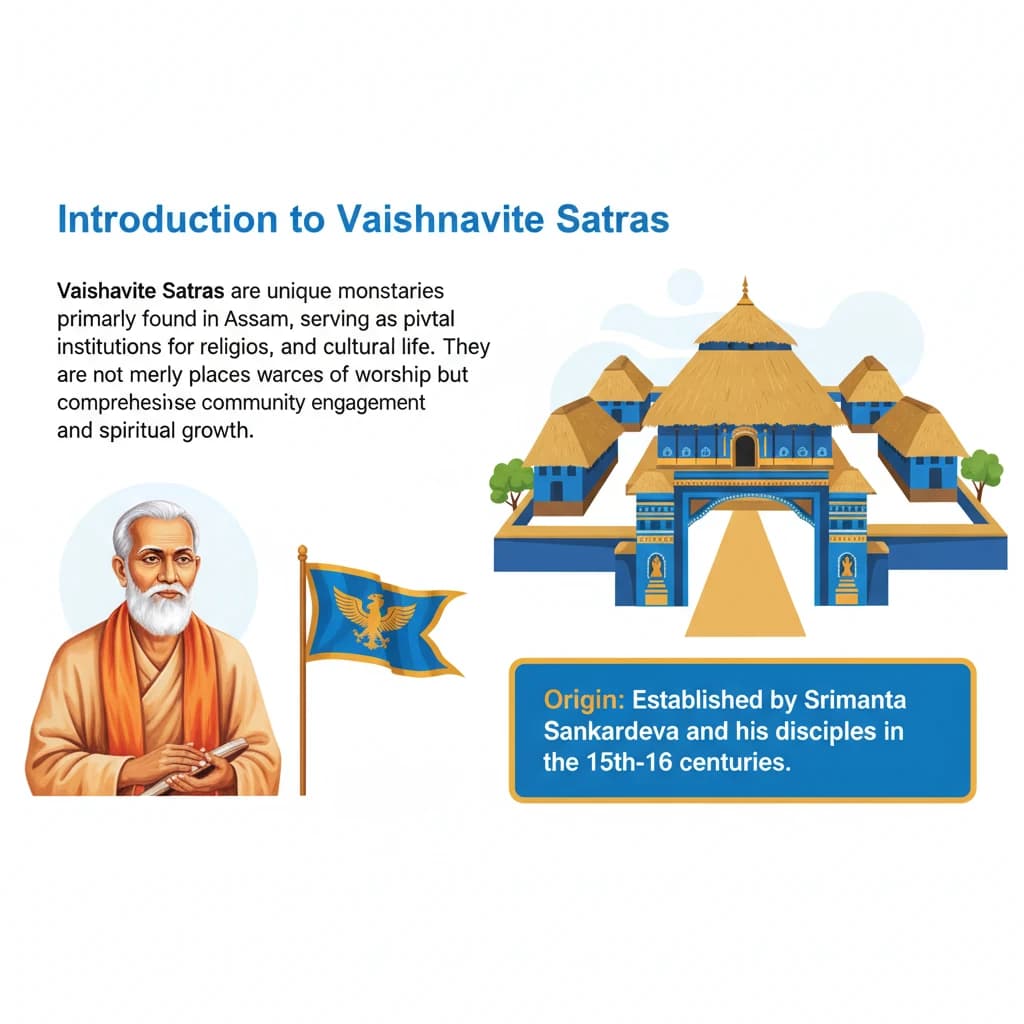
<h4>Introduction to Vaishnavite Satras</h4><p><strong>Vaishnavite Satras</strong> are unique <strong>monasteries</strong> primarily found in Assam, serving as pivotal institutions for religious, social, and cultural life. They are not merely places of worship but comprehensive centers for community engagement and spiritual growth.</p><div class="info-box"><strong>Origin:</strong> Established by <strong>Srimanta Sankardeva</strong> and his disciples in the <strong>15th-16th centuries</strong>.<br><strong>Purpose:</strong> To propagate <strong>Ekasarana Dharma</strong> (Neo-Vaishnavism) and foster community living based on devotional principles.</div><h4>Role in Cultural Preservation</h4><p>These <strong>Satras</strong> are vital custodians of <strong>traditional Assamese art forms</strong>, literature, and cultural practices. They actively work to preserve and promote the region's rich heritage, ensuring its continuity across generations.</p><ul><li><strong>Art Forms:</strong> Preservation of <strong>Bhaona</strong> (traditional theatrical performances), <strong>Ankia Naat</strong> (one-act plays), <strong>Sattriya Dance</strong> (classical dance form), and various musical traditions like <strong>Borgeet</strong>.</li><li><strong>Literature:</strong> Maintenance of ancient manuscripts, scriptures, and compositions by Vaishnavite saints, including the <strong>Kirtan Ghosha</strong>.</li><li><strong>Crafts:</strong> Promotion of indigenous crafts such as traditional mask-making (e.g., for Bhaona), weaving, and the crafting of musical instruments.</li></ul><div class="key-point-box">The <strong>Satras</strong> ensure the continuity of these art forms through regular practice, teaching, and public performances, preventing their decline in the face of modern influences.</div><h4>Centers for Learning and Spirituality</h4><p>Beyond cultural preservation, <strong>Vaishnavite Satras</strong> traditionally serve as fundamental hubs for <strong>learning and spiritual activities</strong>. They provide a structured environment for religious education, contemplation, and community service.</p><ul><li><strong>Religious Studies:</strong> Monks (<strong>Bhokots</strong>) and disciples engage in in-depth study of Vaishnavite scriptures, philosophy, and devotional texts, guided by the Satradhikar (head of the Satra).</li><li><strong>Meditation and Chanting:</strong> Regular practice of meditation, congregational chanting (<strong>Naam Kirtan</strong>), and prayers are central to their spiritual discipline and daily routine.</li><li><strong>Community Service:</strong> Satras also emphasize selfless service (<strong>Seva</strong>) to the community, fostering social harmony, mutual support, and welfare activities.</li></ul><div class="exam-tip-box">When discussing the cultural heritage of Northeast India, particularly Assam, the role of <strong>Vaishnavite Satras</strong> is indispensable for <strong>UPSC Mains GS Paper I (Art & Culture)</strong>. Highlight their multifaceted contributions across art, literature, and spirituality.</div>
Concept Diagram

💡 Key Takeaways

  • •Vaishnavite Satras are unique monastic institutions in Assam.
  • •They are crucial for preserving traditional Assamese art forms, literature, and cultural practices.
  • •Satras serve as primary centers for learning, religious studies, and spiritual activities.
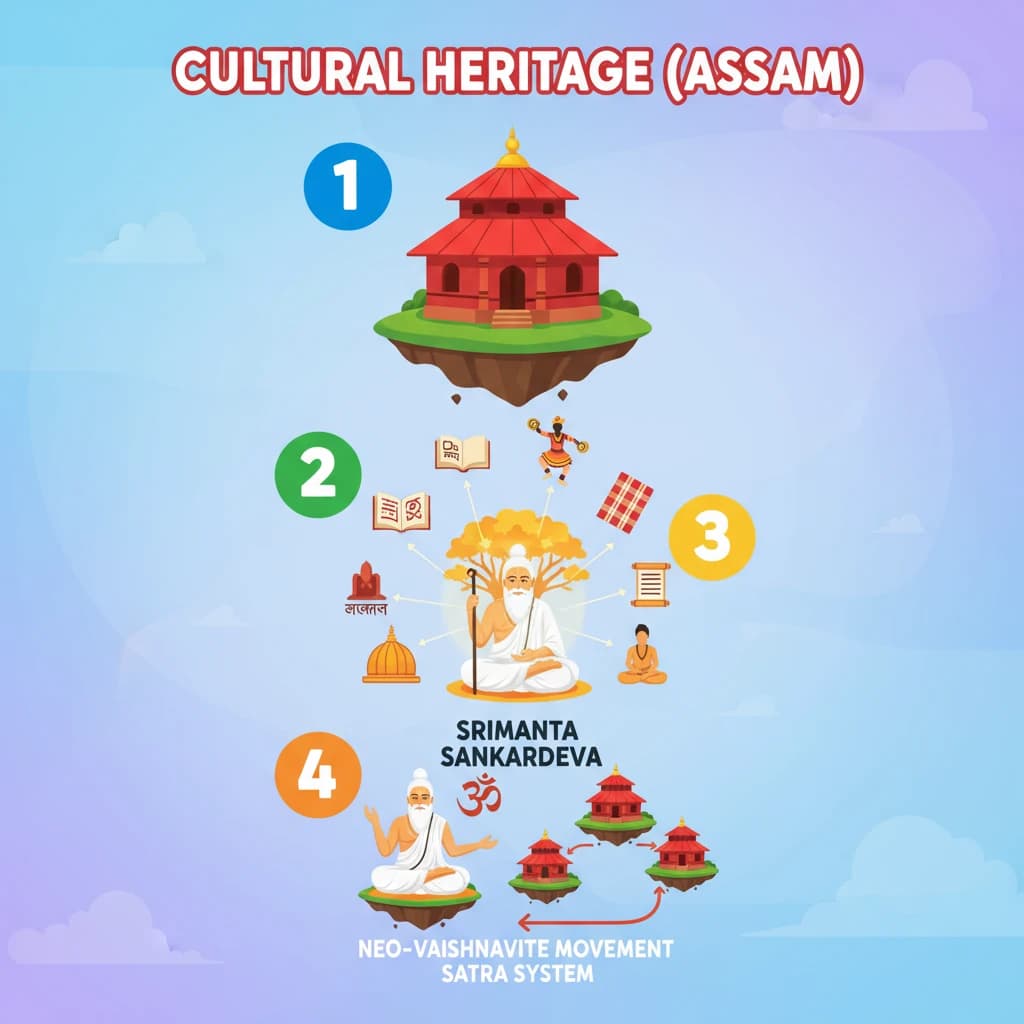
  • •Srimanta Sankardeva founded the Neo-Vaishnavite movement and established the Satra system.
  • •Prominent examples include Auniati Satra and Barpeta Satra, each with distinct features.
  • •Satras emphasize community service, congregational chanting, and devotional practices.
  • •They remain significant today for cultural tourism, socio-religious harmony, and heritage conservation.

🧠 Memory Techniques
Memory Aid
95% Verified Content

📚 Reference Sources

•General knowledge of Indian Art & Culture (specifically Assamese Satras and the Bhakti Movement)
•Cultural texts on Srimanta Sankardeva and Neo-Vaishnavism

Related Topics

Loading related topics...
Explore:Art And Culture Topics·All Subjects·Daily Current Affairs·Editorial Analysis·Previous Year Questions·UPSC GPT
Back
All Subjects

Topics

0 topics • 0 completed

Loading topics...
Loading...
Loading...
Loading...
Loading...
Loading...
Overall Progress0%
Cultural Heritage - UPSC Art And Culture