Loading page, please wait…
Vaidra Logo
Vaidra

Top 4 items + smart groups

UPSC GPT
New
Current Affairs
Daily Solutions
Daily Puzzle
Mains Evaluator

Version 2.0.0 • Built with ❤️ for UPSC aspirants

Loading...
Loading...
Loading...
Loading...
Loading...
Loading...
Loading...
Loading...
Loading...
Loading...
Loading...
Loading...
Loading...
Back
All Subjects

Topics

0 topics • 0 completed

Loading topics...
Loading...
Loading...
Loading...
Loading...
Loading...
Overall Progress0%

Mughal Emperor Akbar - UPSC Art And Culture

What is Mughal Emperor Akbar in UPSC Art And Culture?

Mughal Emperor Akbar is a key topic under Art And Culture for UPSC Civil Services Examination. Key points include: Emperor Akbar significantly promoted Kashmiri crafts, particularly commissioning shawls for the royal family.. Kashmiri carpets are renowned for Persian designs and utilize the unique Taleem coded script for instructions.. Paper Mâché in Kashmir evolved from pen cases to intricate Naqashi surface decoration.. Understanding this topic is essential for both UPSC Prelims and Mains preparation.

Why is Mughal Emperor Akbar important for UPSC exam?

Mughal Emperor Akbar is a Medium-level topic in UPSC Art And Culture. It is tested in both Prelims (factual MCQs) and Mains (analytical answer writing). Previous year UPSC questions have frequently covered aspects of Mughal Emperor Akbar, making it essential for comprehensive IAS preparation.

How to prepare Mughal Emperor Akbar for UPSC?

To prepare Mughal Emperor Akbar for UPSC: (1) Study the comprehensive notes covering all key concepts on Vaidra. (2) Practice previous year questions on this topic. (3) Connect it with current affairs using daily updates. (4) Revise using key takeaways and mind maps available for Art And Culture. (5) Write practice answers linking Mughal Emperor Akbar to related GS Paper topics.

Key takeaways of Mughal Emperor Akbar for UPSC

  • Emperor Akbar significantly promoted Kashmiri crafts, particularly commissioning shawls for the royal family.
  • Kashmiri carpets are renowned for Persian designs and utilize the unique Taleem coded script for instructions.
  • Paper Mâché in Kashmir evolved from pen cases to intricate Naqashi surface decoration.
  • Sozni and Aari work are key embroidery techniques originating from Kashmir, with Sozni meaning 'needle' in Persian.
  • Khatamband is a unique Kashmiri art of making nail-less geometric ceilings from walnut or deodar wood.
  • Srinagar was designated a UNESCO Creative City for Crafts and Folk Arts in 2021.
  • India has multiple cities in the UCCN, including Jaipur, Varanasi, Chennai, Mumbai, Hyderabad, Kozhikode, and Gwalior, across various creative fields.
Mughal Emperor Akbar

Mughal Emperor Akbar

Medium⏱️ 7 min read✓ 95% Verified
art and culture

📖 Introduction

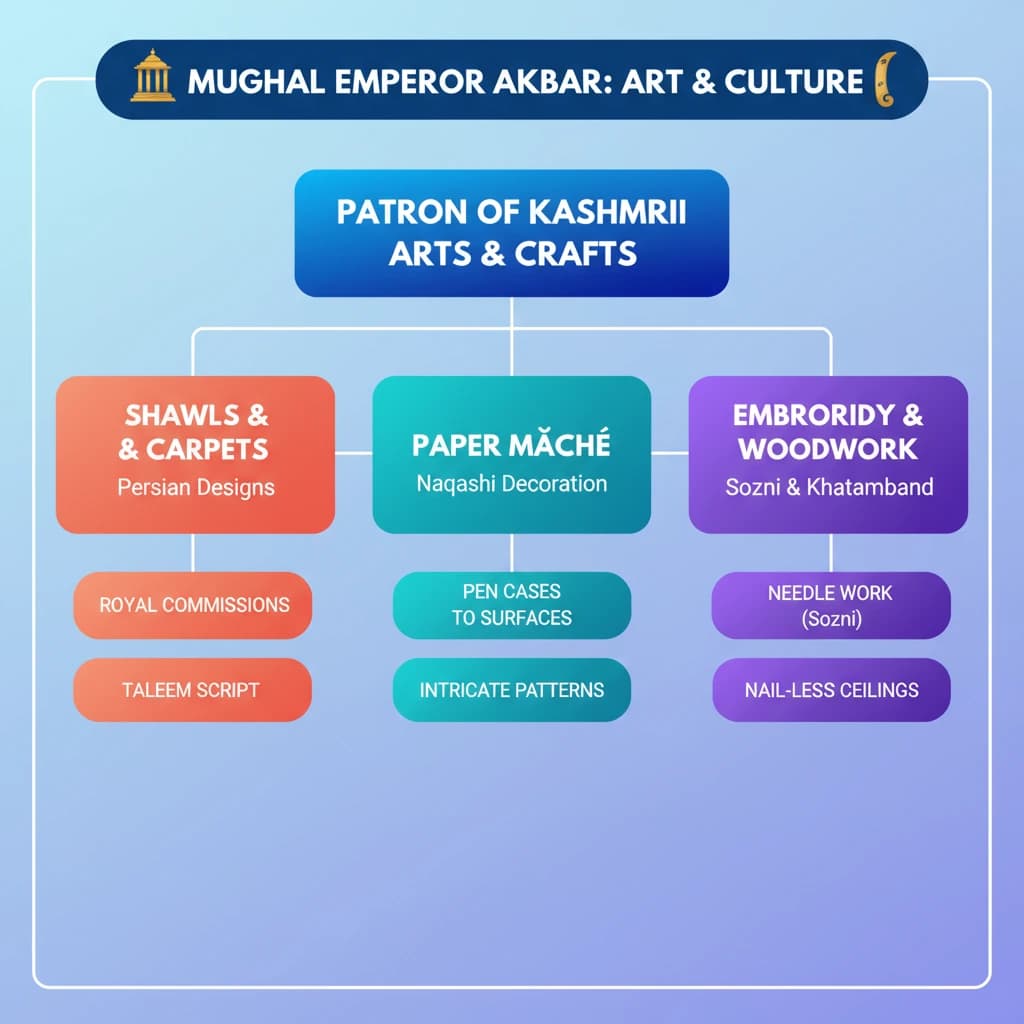
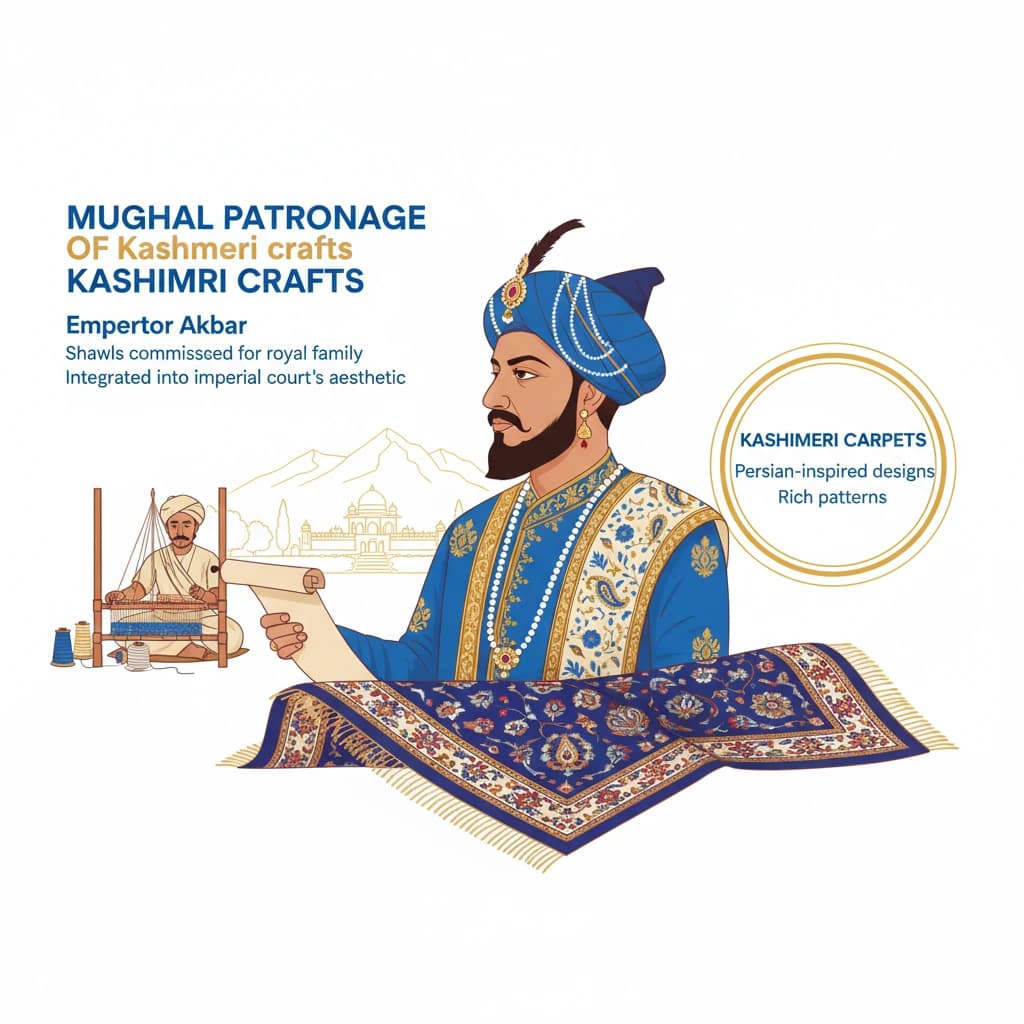
<h4>Mughal Patronage of Kashmiri Crafts</h4><p>The Mughal era saw significant promotion of <strong>Kashmiri crafts</strong>, particularly under <strong>Emperor Akbar</strong>. He actively commissioned <strong>shawls</strong> for the royal family, thereby boosting the craft sector and integrating Kashmiri artistry into the imperial court's aesthetic.</p><h4>Kashmiri Carpets</h4><p><strong>Kashmiri carpets</strong> are renowned for their rich designs, often featuring traditional <strong>Persian-style motifs</strong>. These are unique <strong>hand-knotted carpets</strong>, distinguished by their intricate craftsmanship and vibrant patterns.</p><div class="info-box"><strong>Design Instructions:</strong> A coded script called <strong>Taleem</strong> is uniquely used for design instructions.<br><strong>Motifs:</strong> Traditional oriental and floral designs are common.<br><strong>Materials:</strong> Primarily made from luxurious materials like <strong>silk</strong> and <strong>wool</strong>.</div><h4>Paper Mâché</h4><p><strong>Paper Mâché</strong> is an intricate art form where objects are created from <strong>molded paper pulp</strong>. Traditionally, these items are then meticulously painted and lacquered to achieve a glossy finish.</p><div class="info-box"><strong>Origin in Kashmir:</strong> The craft began with practical items such as <strong>pen cases</strong>.<br><strong>Evolution:</strong> It evolved into a distinct art of elaborate <strong>surface decoration</strong>, famously known as <strong>naqashi</strong>.</div><h4>Embroidered Textiles</h4><p>Kashmir is celebrated for its fine embroidery techniques used extensively in garments and accessories. Key techniques include <strong>Sozni</strong> and <strong>Aari work</strong>, known for their delicate and detailed patterns.</p><div class="info-box"><strong>Sozni Shawls:</strong> These exquisite shawls originate specifically from <strong>Kashmir</strong>.<br><strong>Meaning of Sozni:</strong> The term "Sozni" itself means <strong>needle</strong> in Persian, highlighting the intricate needlework involved.</div><h4>Wood Carving</h4><p>This craft involves creating intricate designs carved into high-quality <strong>walnut wood</strong>. It results in the production of beautiful furniture and various sophisticated home decor items, showcasing skilled artistry.</p><h4>Copperware</h4><p><strong>Copperware</strong> represents traditional <strong>Kashmiri metal crafts</strong>, where artisans demonstrate exceptional skill in metallurgy. They produce distinctive and functional items.</p><div class="info-box"><strong>Notable Items:</strong> Includes iconic <strong>copper samovars</strong> (traditional tea urns) and intricate <strong>tea sets</strong>.<br><strong>Heritage:</strong> This craft forms a significant part of Kashmir's ancient cultural heritage.</div><h4>Khatamband</h4><p><strong>Khatamband</strong> is a unique handcrafted art focused on making elaborate ceilings. It involves fitting small, precisely cut pieces of wood into complex geometric patterns.</p><div class="info-box"><strong>Materials:</strong> Primarily uses fine <strong>walnut</strong> or <strong>deodar wood</strong>.<br><strong>Technique:</strong> Notably, this intricate work is done entirely <strong>without using nails</strong>, relying on interlocking pieces.</div>
Concept Diagram

💡 Key Takeaways

  • •Emperor Akbar significantly promoted Kashmiri crafts, particularly commissioning shawls for the royal family.
  • •Kashmiri carpets are renowned for Persian designs and utilize the unique Taleem coded script for instructions.
  • •Paper Mâché in Kashmir evolved from pen cases to intricate Naqashi surface decoration.
  • •Sozni and Aari work are key embroidery techniques originating from Kashmir, with Sozni meaning 'needle' in Persian.
  • •Khatamband is a unique Kashmiri art of making nail-less geometric ceilings from walnut or deodar wood.
  • •Srinagar was designated a UNESCO Creative City for Crafts and Folk Arts in 2021.
  • •India has multiple cities in the UCCN, including Jaipur, Varanasi, Chennai, Mumbai, Hyderabad, Kozhikode, and Gwalior, across various creative fields.

🧠 Memory Techniques
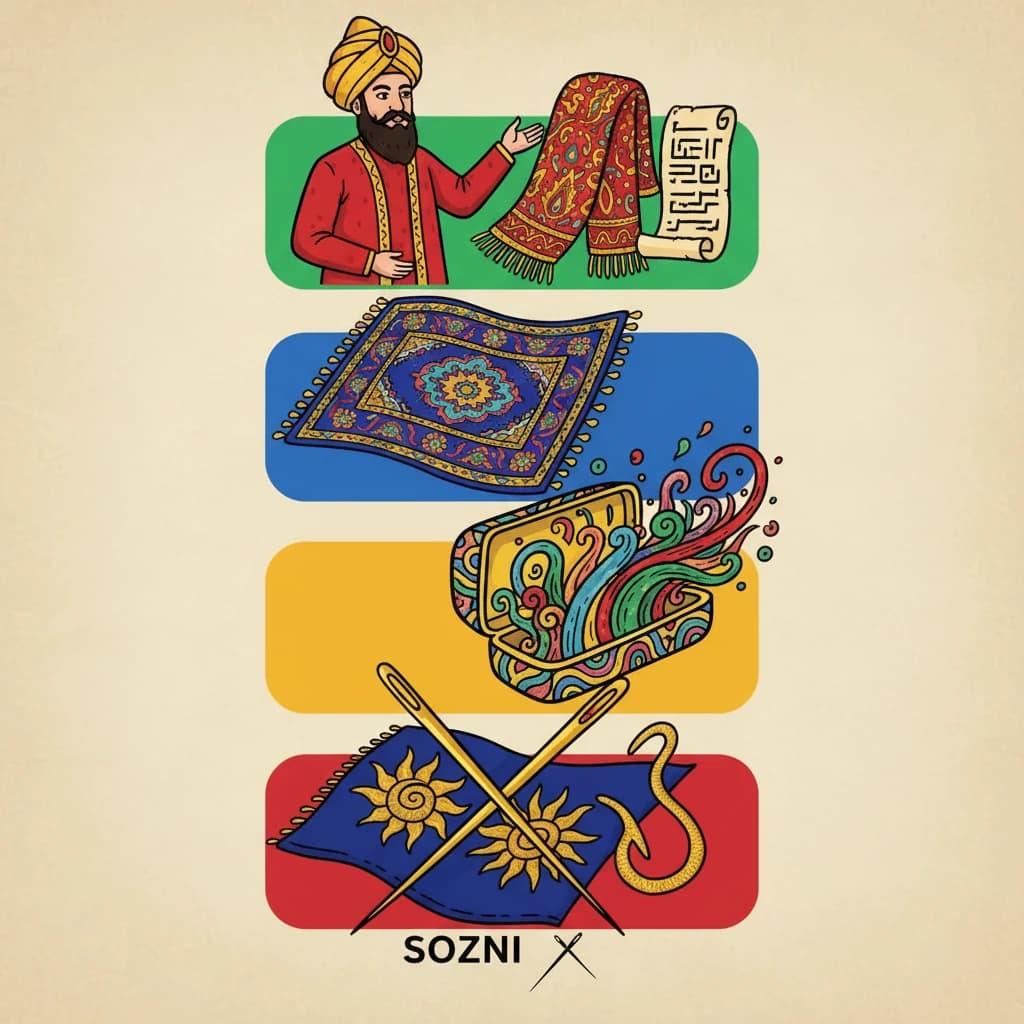
Memory Aid
95% Verified Content

📚 Reference Sources

•UNESCO Creative Cities Network official website
•NCERT Fine Arts: An Introduction to Indian Art (Class XI)

Related Topics

Loading related topics...
Explore:Art And Culture Topics·All Subjects·Daily Current Affairs·Editorial Analysis·Previous Year Questions·UPSC GPT
Mughal Emperor Akbar - UPSC Art And Culture