Loading page, please wait…
Ajrakh Craft and Bela Block Printing - UPSC Art And Culture
What is Ajrakh Craft and Bela Block Printing in UPSC Art And Culture?
Ajrakh Craft and Bela Block Printing is a key topic under Art And Culture for UPSC Civil Services Examination. Key points include: Ajrakh is a centuries-old resist-dyeing and block-printing textile craft from Kutch, Gujarat.. It is characterized by its use of natural dyes, intricate geometric and floral patterns, and application on cotton fabric.. The Ajrakh craft has received a Geographical Indication (GI) tag, providing legal protection and ensuring authenticity.. Understanding this topic is essential for both UPSC Prelims and Mains preparation.
Why is Ajrakh Craft and Bela Block Printing important for UPSC exam?
Ajrakh Craft and Bela Block Printing is a Medium-level topic in UPSC Art And Culture. It is tested in both Prelims (factual MCQs) and Mains (analytical answer writing). Previous year UPSC questions have frequently covered aspects of Ajrakh Craft and Bela Block Printing, making it essential for comprehensive IAS preparation.
How to prepare Ajrakh Craft and Bela Block Printing for UPSC?
To prepare Ajrakh Craft and Bela Block Printing for UPSC: (1) Study the comprehensive notes covering all key concepts on Vaidra. (2) Practice previous year questions on this topic. (3) Connect it with current affairs using daily updates. (4) Revise using key takeaways and mind maps available for Art And Culture. (5) Write practice answers linking Ajrakh Craft and Bela Block Printing to related GS Paper topics.
Key takeaways of Ajrakh Craft and Bela Block Printing for UPSC
- Ajrakh is a centuries-old resist-dyeing and block-printing textile craft from Kutch, Gujarat.
- It is characterized by its use of natural dyes, intricate geometric and floral patterns, and application on cotton fabric.
- The Ajrakh craft has received a Geographical Indication (GI) tag, providing legal protection and ensuring authenticity.
- GI tags are crucial for preserving traditional arts, preventing imitation, and supporting local artisan communities.
- The craft holds significant cultural and economic relevance, contributing to livelihoods and cultural identity.
- Ajrakh represents sustainable practices through its use of natural dyes and traditional methods.
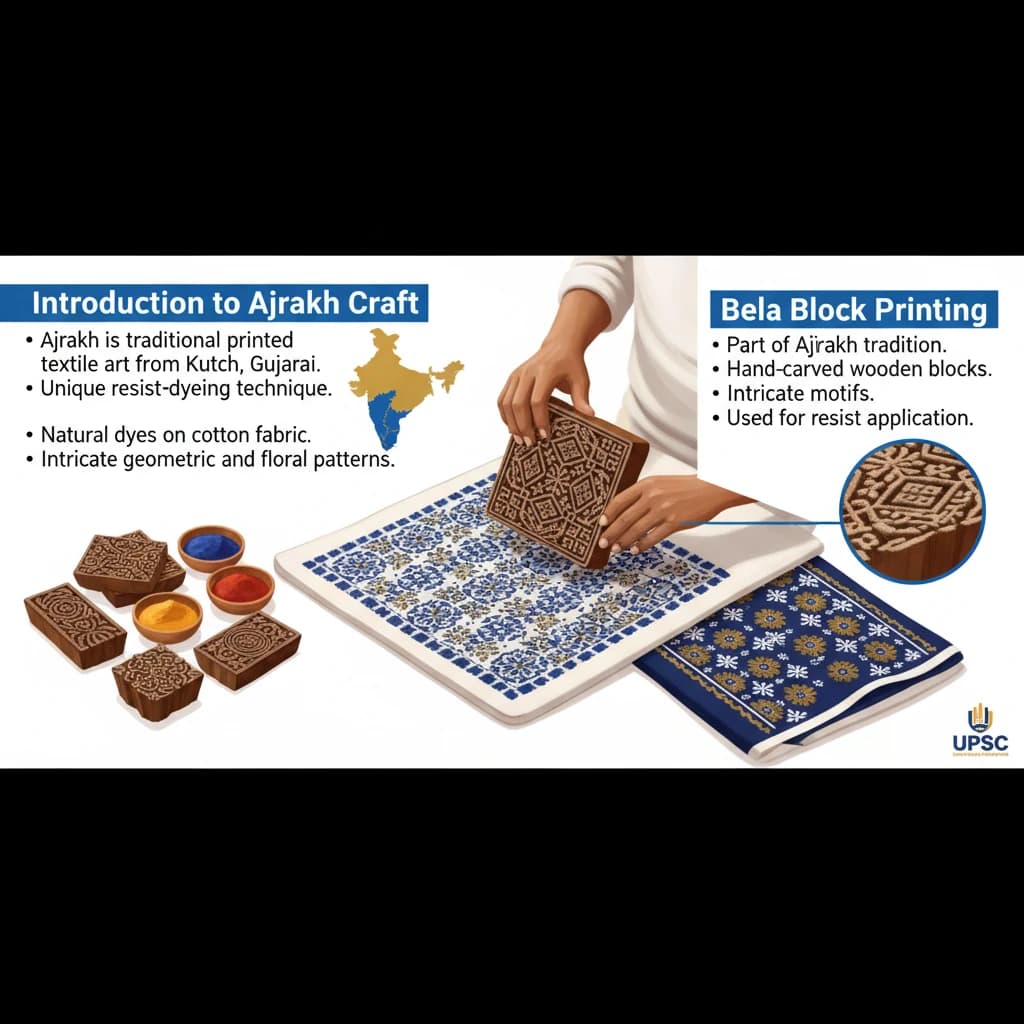
Ajrakh Craft and Bela Block Printing
Medium⏱️ 6 min read
art and culture
📖 Introduction
Introduction to Ajrakh Craft
Ajrakh is a renowned traditional block-printed textile art originating from Kutch, Gujarat. It is distinguished by its unique resist-dyeing technique, a craft perfected over centuries.
This art form is deeply embedded in the cultural fabric of the region. It primarily utilizes natural dyes and is applied to cotton fabric, often featuring intricate designs that narrate stories.
Key Characteristics of Ajrakh:
- Origin: Kutch, Gujarat, India
- Technique: Resist-dyeing, Block Printing
- Materials: Natural dyes (e.g., indigo, madder), Cotton fabric
- Features: Intricate geometric and floral designs, symmetrical patterns
- Age: Centuries-old tradition, passed down through generations
The Significance of GI Tag for Ajrakh
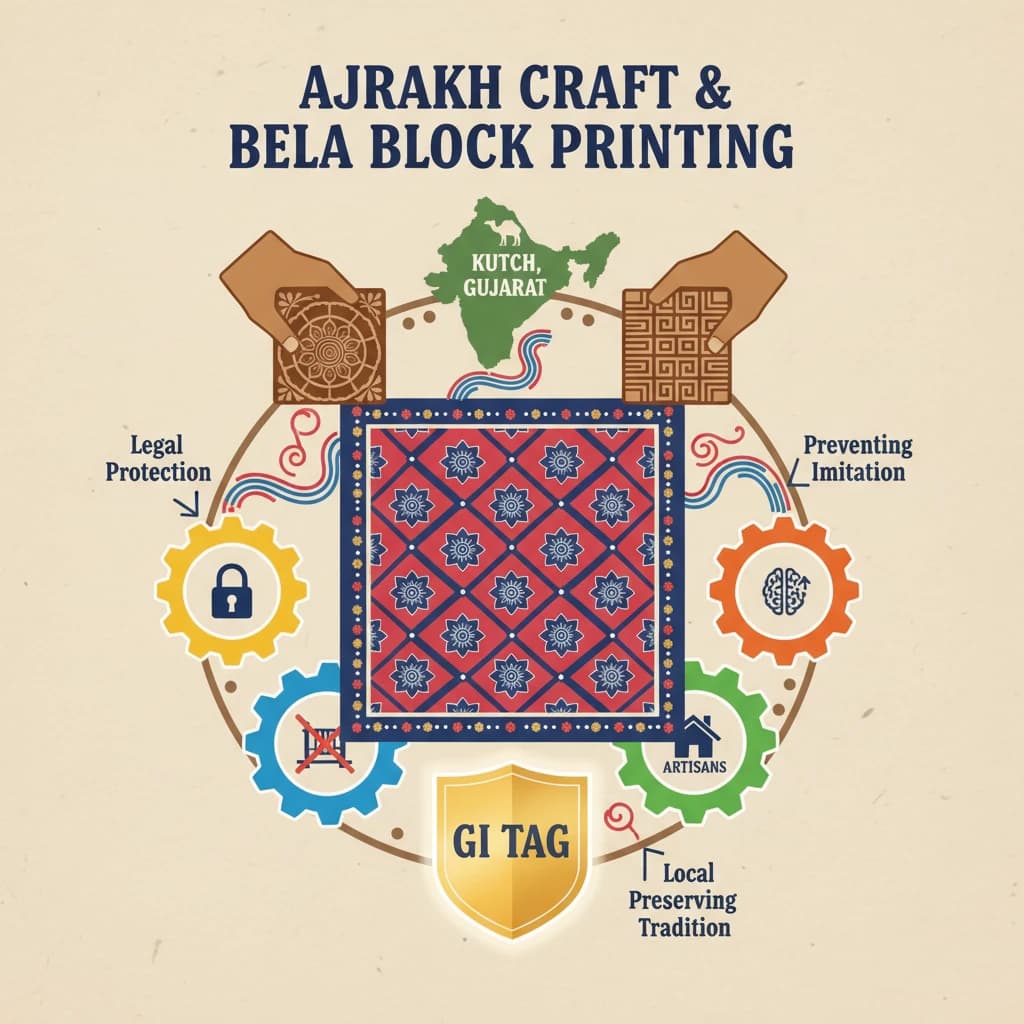
The Ajrakh craft has been granted a Geographical Indication (GI) tag. This recognition is crucial for the preservation and promotion of this traditional art form, providing it with legal protection.
A GI tag provides legal protection to products that originate from a specific geographical region and possess qualities or a reputation due to that origin. It acts as a form of intellectual property right.
For Ajrakh, the GI tag ensures that only products genuinely originating from Kutch and adhering to traditional methods can be marketed under its name. This helps prevent imitation and supports the authenticity and livelihoods of local artisans.
Understanding GI tags is vital for UPSC Art & Culture (GS Paper I) and Economy (GS Paper III). Questions often focus on their role in protecting indigenous crafts, boosting rural economies, and preserving traditional knowledge.
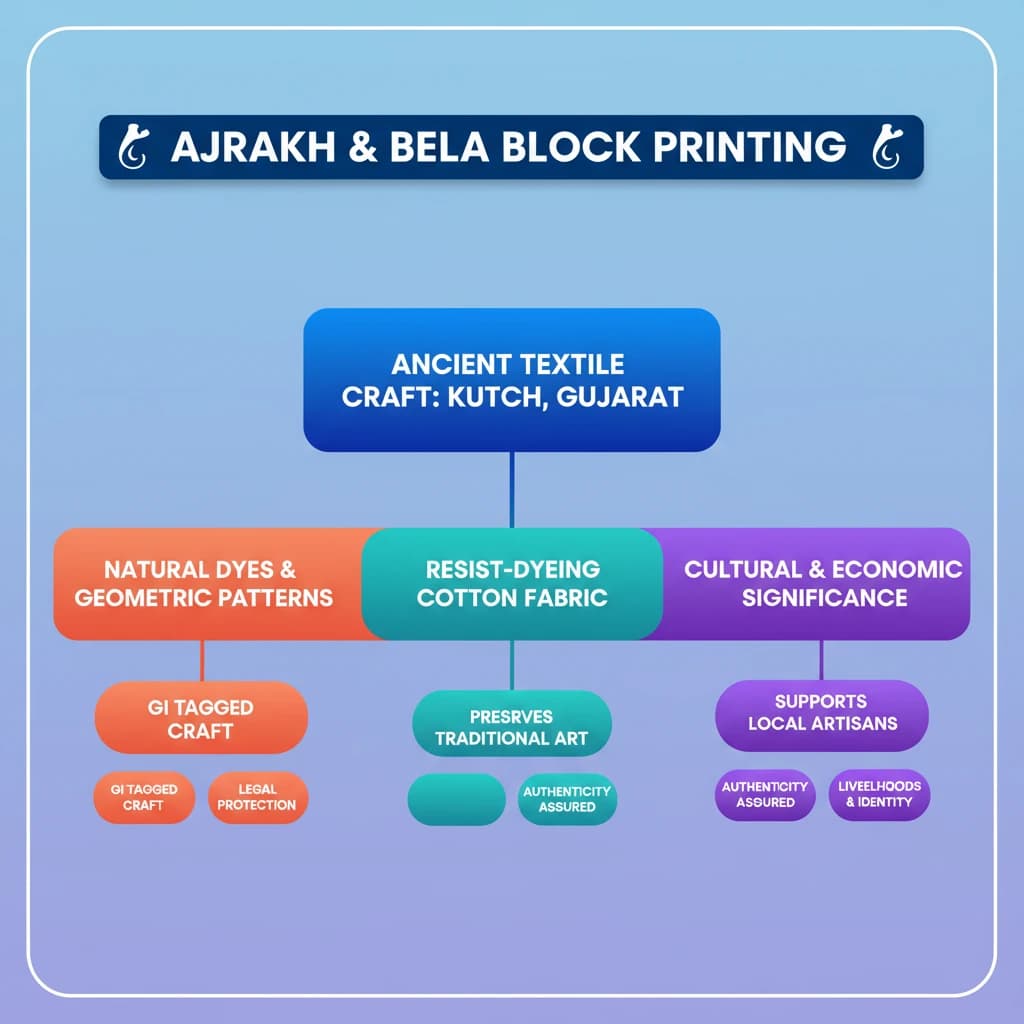
💡 Key Takeaways
- •Ajrakh is a centuries-old resist-dyeing and block-printing textile craft from Kutch, Gujarat.
- •It is characterized by its use of natural dyes, intricate geometric and floral patterns, and application on cotton fabric.
- •The Ajrakh craft has received a Geographical Indication (GI) tag, providing legal protection and ensuring authenticity.
- •GI tags are crucial for preserving traditional arts, preventing imitation, and supporting local artisan communities.
- •The craft holds significant cultural and economic relevance, contributing to livelihoods and cultural identity.
- •Ajrakh represents sustainable practices through its use of natural dyes and traditional methods.
🧠 Memory Techniques
95% Verified Content
📚 Reference Sources
•Government of India GI Registry (for GI tag information)
•Cultural research articles on Kutch textiles