Loading page, please wait…
Amravati as a Buddhist Site - UPSC Art And Culture
What is Amravati as a Buddhist Site in UPSC Art And Culture?
Amravati as a Buddhist Site is a key topic under Art And Culture for UPSC Civil Services Examination. Key points include: Amravati is a historically significant Buddhist site in Andhra Pradesh.. It is known for its Maha Stupa and the distinctive Amravati School of Art.. The site flourished under the Satavahana and Ikshvaku dynasties.. Understanding this topic is essential for both UPSC Prelims and Mains preparation.
Why is Amravati as a Buddhist Site important for UPSC exam?
Amravati as a Buddhist Site is a Medium-level topic in UPSC Art And Culture. It is tested in both Prelims (factual MCQs) and Mains (analytical answer writing). Previous year UPSC questions have frequently covered aspects of Amravati as a Buddhist Site, making it essential for comprehensive IAS preparation.
How to prepare Amravati as a Buddhist Site for UPSC?
To prepare Amravati as a Buddhist Site for UPSC: (1) Study the comprehensive notes covering all key concepts on Vaidra. (2) Practice previous year questions on this topic. (3) Connect it with current affairs using daily updates. (4) Revise using key takeaways and mind maps available for Art And Culture. (5) Write practice answers linking Amravati as a Buddhist Site to related GS Paper topics.
Key takeaways of Amravati as a Buddhist Site for UPSC
- Amravati is a historically significant Buddhist site in Andhra Pradesh.
- It is known for its Maha Stupa and the distinctive Amravati School of Art.
- The site flourished under the Satavahana and Ikshvaku dynasties.
- Amravati art is characterized by dynamic narrative panels and slender figures carved in white limestone.
- Recent financial support for the new capital city Amravati has renewed focus on its ancient heritage.
- Preservation of Amravati's Buddhist past is crucial amidst modern development.

Amravati as a Buddhist Site
Medium⏱️ 8 min read
art and culture
📖 Introduction
Recent Focus on Amravati
The Finance Minister recently announced significant financial support of Rs 15,000 crore for Andhra Pradesh. This funding is allocated for the construction of its new capital city, also named Amravati, and to stimulate other development activities across the state.
Financial Support: Rs 15,000 crore
Recipient State: Andhra Pradesh
Purpose: Capital city construction (Amravati) and state development
Recipient State: Andhra Pradesh
Purpose: Capital city construction (Amravati) and state development
Amravati: A Site of Historical and Spiritual Significance
This recent financial announcement has brought renewed attention to Amravati. It is a location of profound historical and spiritual significance within Andhra Pradesh, despite remaining relatively unrecognised by many.
Amravati's Dual Identity: The name refers both to the ancient Buddhist site and the proposed new capital city of Andhra Pradesh.
Amravati as a Prominent Buddhist Centre
Historically, Amravati was a flourishing centre of Buddhism, particularly during the reign of the Satavahanas and later the Ikshvakus. It is renowned for its magnificent Maha Stupa and a distinctive school of art.
UPSC often asks about regional art styles. Understanding the Amravati School of Art is crucial for Art and Culture (GS Paper I).
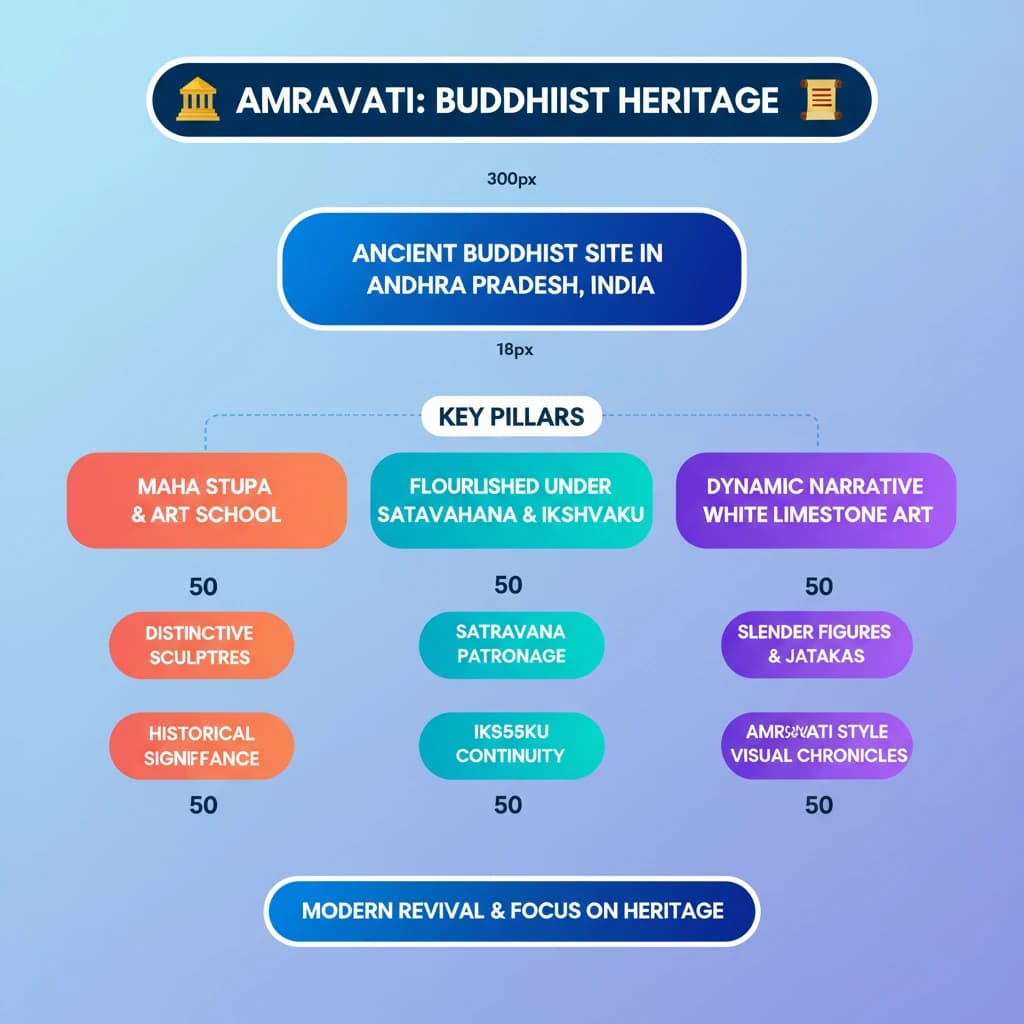
💡 Key Takeaways
- •Amravati is a historically significant Buddhist site in Andhra Pradesh.
- •It is known for its Maha Stupa and the distinctive Amravati School of Art.
- •The site flourished under the Satavahana and Ikshvaku dynasties.
- •Amravati art is characterized by dynamic narrative panels and slender figures carved in white limestone.
- •Recent financial support for the new capital city Amravati has renewed focus on its ancient heritage.
- •Preservation of Amravati's Buddhist past is crucial amidst modern development.
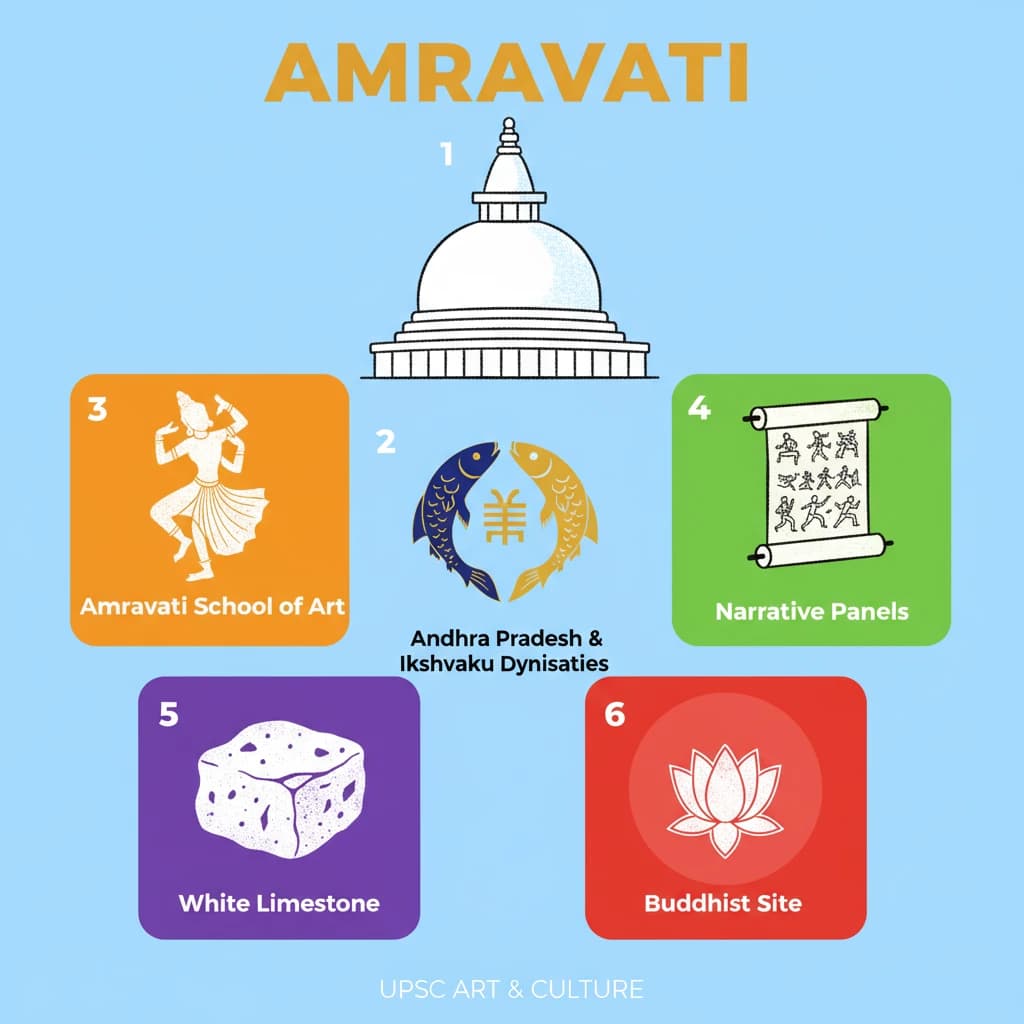
🧠 Memory Techniques
95% Verified Content
📚 Reference Sources
•Centre for Cultural Resources and Training (CCRT) - Buddhist Art and Architecture
•A History of Ancient and Early Medieval India by Upinder Singh
•Drishti IAS Art and Culture Summary (provided source)