Loading page, please wait…
Architectural Features - UPSC Art And Culture
What is Architectural Features in UPSC Art And Culture?
Architectural Features is a key topic under Art And Culture for UPSC Civil Services Examination. Key points include: Gingee Fort is a vast complex with diverse structures including temples, mosques, and civic buildings.. It features advanced water supply systems, ensuring continuous water availability even at high elevations.. Rajagiri Hills is the tallest, housing a citadel and Ranganatha temple.. Understanding this topic is essential for both UPSC Prelims and Mains preparation.
Why is Architectural Features important for UPSC exam?
Architectural Features is a Medium-level topic in UPSC Art And Culture. It is tested in both Prelims (factual MCQs) and Mains (analytical answer writing). Previous year UPSC questions have frequently covered aspects of Architectural Features, making it essential for comprehensive IAS preparation.
How to prepare Architectural Features for UPSC?
To prepare Architectural Features for UPSC: (1) Study the comprehensive notes covering all key concepts on Vaidra. (2) Practice previous year questions on this topic. (3) Connect it with current affairs using daily updates. (4) Revise using key takeaways and mind maps available for Art And Culture. (5) Write practice answers linking Architectural Features to related GS Paper topics.
Key takeaways of Architectural Features for UPSC
- Gingee Fort is a vast complex with diverse structures including temples, mosques, and civic buildings.
- It features advanced water supply systems, ensuring continuous water availability even at high elevations.
- Rajagiri Hills is the tallest, housing a citadel and Ranganatha temple.
- Krishnagiri Citadel showcases distinct Indo-Islamic architecture with a domed audience hall.
- The Venkataramana Swamy Temple is known for intricate carvings depicting Hindu epics.
- Kalyana Mahal is an eight-storeyed structure that served as the royal ladies' quarters.
Architectural Features
Medium⏱️ 8 min read
art and culture
📖 Introduction
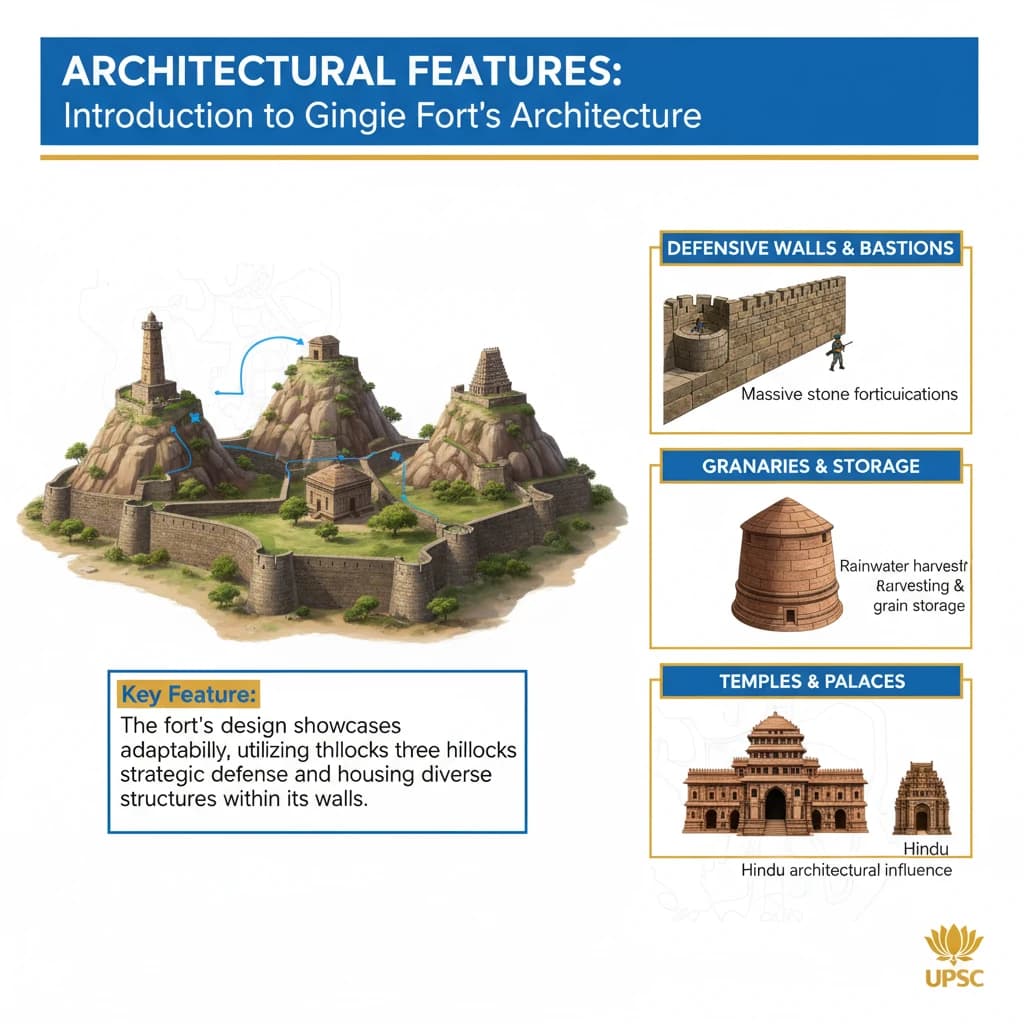
Introduction to Gingee Fort's Architecture
The Gingee Fort, a formidable hill fortress, is renowned for its diverse and robust architectural features. It is often referred to as the 'Troy of the East' due to its strategic location and extensive fortifications.
The fort complex is a significant example of medieval Indian military architecture, incorporating various religious and administrative structures within its vast perimeter.
Key Structures within the Complex
The fort complex houses a multitude of structures, reflecting its multifaceted utility as a military stronghold, administrative center, and residential area. These include several temples and shrines catering to the spiritual needs of its inhabitants.
Beyond religious edifices, the complex features essential civic and military infrastructure. These range from practical utilities to royal residences and defensive installations.
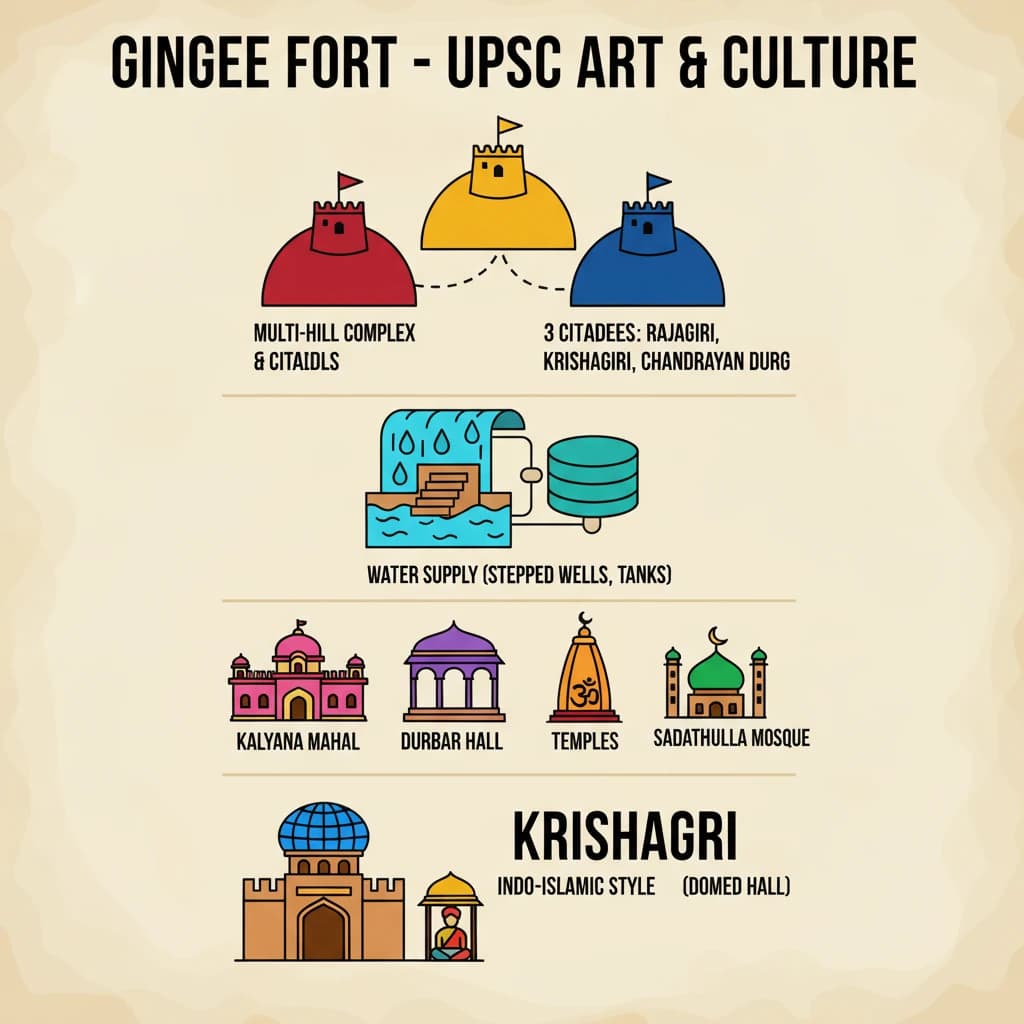
- Stepped well: An ancient system for water storage.
- Kalyana Mahal: A prominent royal residence.
- Durbar hall: For official assemblies and court proceedings.
- Cannon and Armory: Crucial for defense.
- Clock tower: Indicating timekeeping practices.
- Elephant tank, Stable, Granary, Gymnasium: Supporting daily life and military operations.
- Venkataramana temple and Sadathulla Mosque: Showcasing religious diversity.
Advanced Water Management Systems
A notable aspect of Gingee Fort's engineering is its sophisticated water supply systems. These systems were designed to ensure a continuous and reliable water supply throughout the fort.
The fort features two sophisticated water supply systems, capable of providing water even to the highest points of the fort complex. This highlights advanced hydraulic engineering for its time.
Prominent Hills and Citadels
The fort is strategically built across several hills, each featuring distinct architectural elements. These hills served as natural defenses and elevated vantage points.
- Rajagiri Hills: This is the tallest hill, standing at an impressive 800 metres. It features a formidable citadel and houses the Ranganatha temple.
- Krishnagiri Citadel: Known for its distinctive Indo-Islamic architecture. A key feature here is an audience hall, characterized by its elegant domed roof.
Individual Architectural Marvels
Specific buildings within Gingee Fort stand out for their unique design and historical significance.
Venkataramana Swamy Temple
Located in the Lower Fort complex, the Venkataramana Swamy Temple is a testament to intricate craftsmanship. It is adorned with detailed carvings that depict scenes and narratives from various Hindu epics.
When studying temples, note the architectural style, deity, and any unique sculptural depictions. This helps in identifying regional variations in temple architecture for UPSC.
Kalyana Mahal
The Kalyana Mahal is considered an architectural jewel of the fort. This impressive structure is an eight-storeyed building, designed with elegance and functionality.
The Kalyana Mahal primarily served as the royal ladies’ quarters, indicating the sophisticated living arrangements within the fort. Its multi-storeyed design is a significant architectural feature.
💡 Key Takeaways
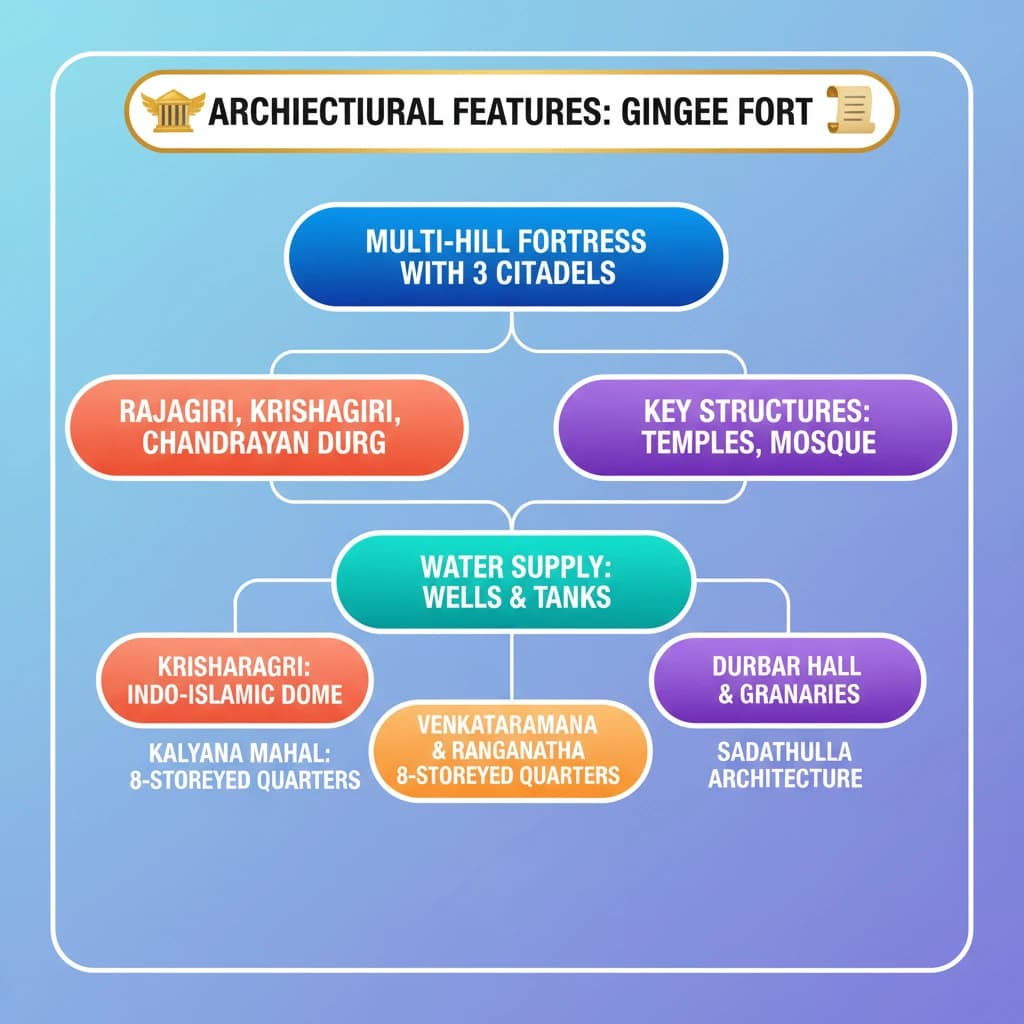
- •Gingee Fort is a vast complex with diverse structures including temples, mosques, and civic buildings.
- •It features advanced water supply systems, ensuring continuous water availability even at high elevations.
- •Rajagiri Hills is the tallest, housing a citadel and Ranganatha temple.
- •Krishnagiri Citadel showcases distinct Indo-Islamic architecture with a domed audience hall.
- •The Venkataramana Swamy Temple is known for intricate carvings depicting Hindu epics.
- •Kalyana Mahal is an eight-storeyed structure that served as the royal ladies' quarters.
🧠 Memory Techniques
95% Verified Content
📚 Reference Sources
•General UPSC Art & Culture textbooks (e.g., Nitin Singhania)
•Archaeological Survey of India (ASI) records for Gingee Fort