Loading page, please wait…
Vaidra Logo
Vaidra

Top 4 items + smart groups

UPSC GPT
New
Current Affairs
Daily Solutions
Daily Puzzle
Mains Evaluator

Version 2.0.0 • Built with ❤️ for UPSC aspirants

Loading...
Loading...
Loading...
Loading...
Loading...
Loading...
Loading...
Loading...
Loading...
Loading...
Loading...
Loading...
Loading...
Back
All Subjects

Topics

0 topics • 0 completed

Loading topics...
Loading...
Loading...
Loading...
Loading...
Loading...
Overall Progress0%

Cultural Significance - UPSC Art And Culture

What is Cultural Significance in UPSC Art And Culture?

Cultural Significance is a key topic under Art And Culture for UPSC Civil Services Examination. Key points include: Sankranti marks the Sun's entry into Capricorn, signifying Uttarayan.. Key rituals include bathing in sacred rivers, offering Naivedhya to Lord Surya, and giving charity.. Sacred rivers like Ganga, Yamuna, Godavari, Krishna, and Cauvery are important for ritualistic bathing.. Understanding this topic is essential for both UPSC Prelims and Mains preparation.

Why is Cultural Significance important for UPSC exam?

Cultural Significance is a Easy-level topic in UPSC Art And Culture. It is tested in both Prelims (factual MCQs) and Mains (analytical answer writing). Previous year UPSC questions have frequently covered aspects of Cultural Significance, making it essential for comprehensive IAS preparation.

How to prepare Cultural Significance for UPSC?

To prepare Cultural Significance for UPSC: (1) Study the comprehensive notes covering all key concepts on Vaidra. (2) Practice previous year questions on this topic. (3) Connect it with current affairs using daily updates. (4) Revise using key takeaways and mind maps available for Art And Culture. (5) Write practice answers linking Cultural Significance to related GS Paper topics.

Key takeaways of Cultural Significance for UPSC

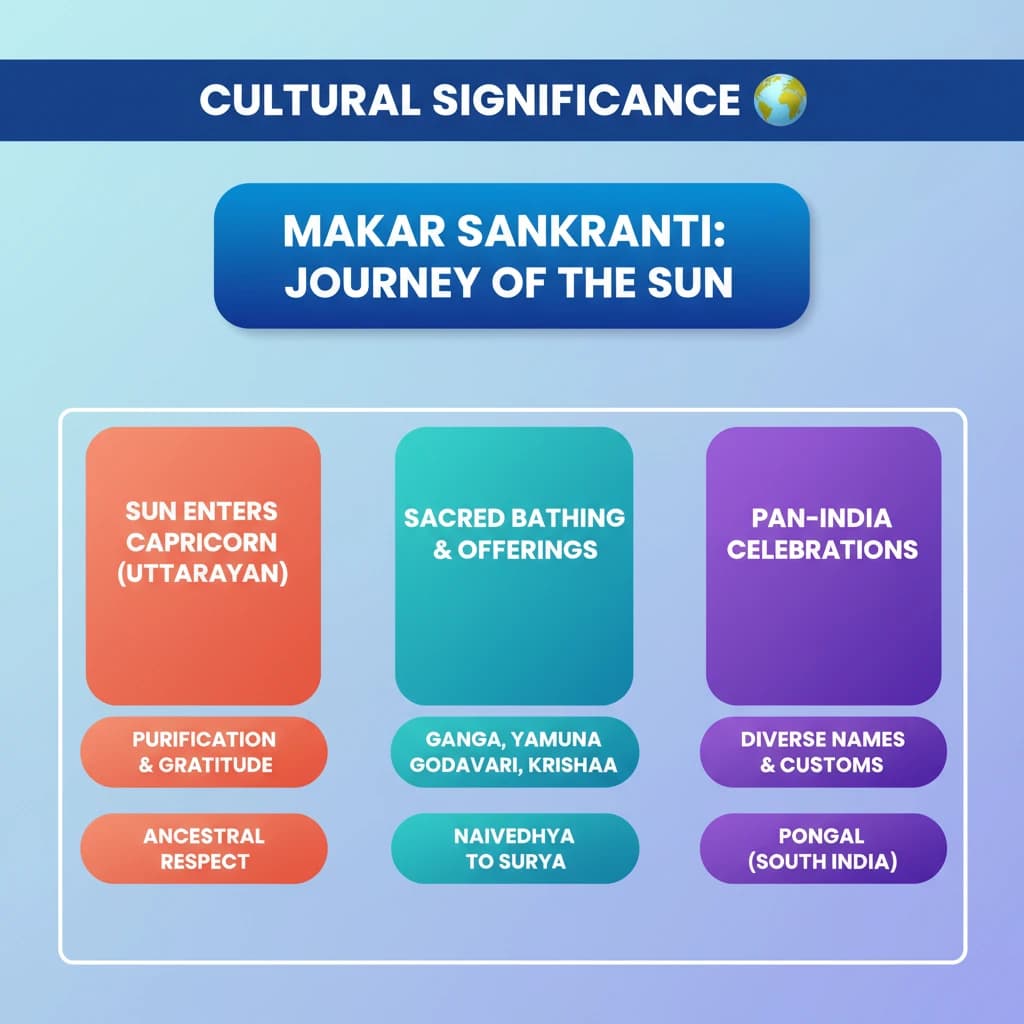
  • Sankranti marks the Sun's entry into Capricorn, signifying Uttarayan.
  • Key rituals include bathing in sacred rivers, offering Naivedhya to Lord Surya, and giving charity.
  • Sacred rivers like Ganga, Yamuna, Godavari, Krishna, and Cauvery are important for ritualistic bathing.
  • The festival emphasizes purification, gratitude, compassion, and ancestral respect.
  • Sankranti is celebrated pan-India with diverse regional names and customs, like Pongal in South India.
  • It reinforces community bonds, cultural identity, and traditional values.
  • The rituals have ancient Vedic roots, connecting to astronomical observations and agricultural cycles.
Cultural Significance

Cultural Significance

Easy⏱️ 6 min read✓ 95% Verified
art and culture

📖 Introduction

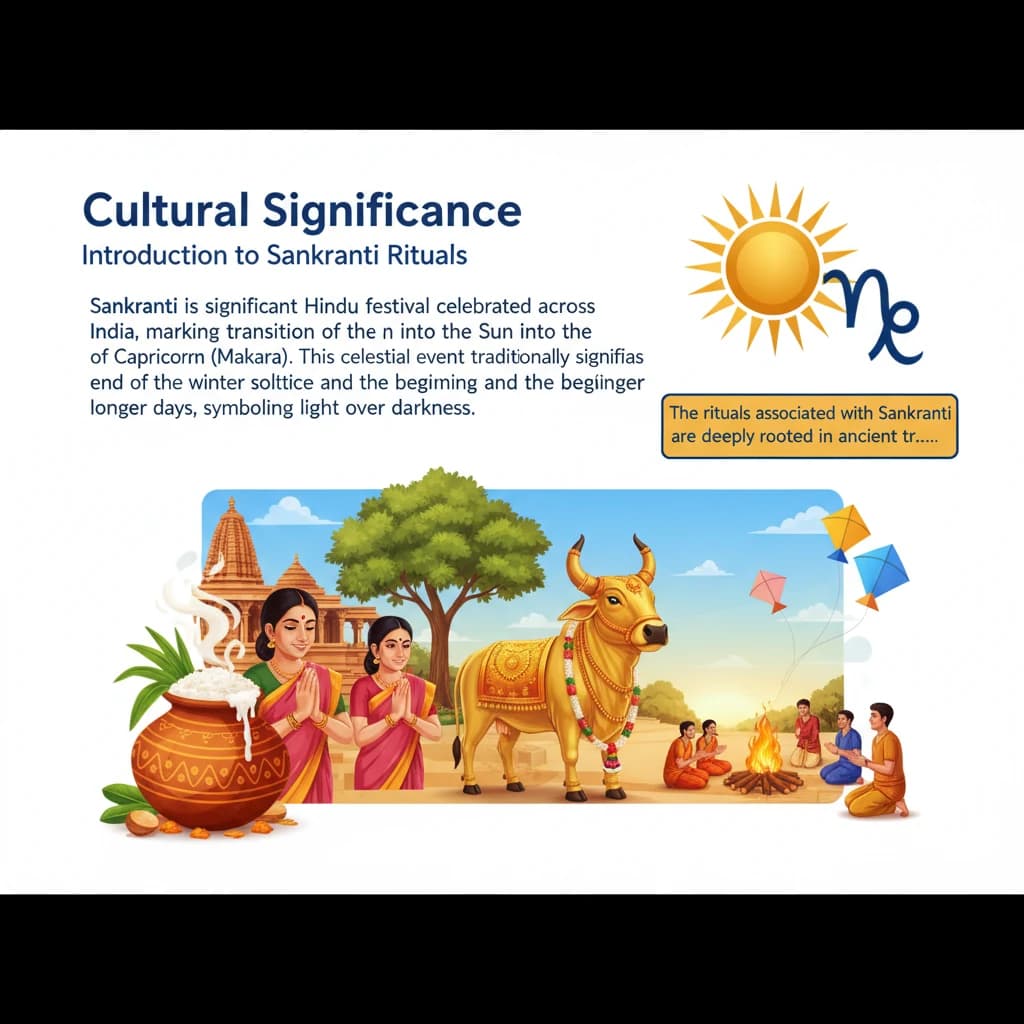
<h4>Introduction to Sankranti Rituals</h4><p><strong>Sankranti</strong> is a significant Hindu festival celebrated across India, marking the transition of the <strong>Sun</strong> into the zodiac sign of <strong>Capricorn</strong> (Makara). This celestial event traditionally signifies the end of the winter solstice and the beginning of longer days, symbolizing light over darkness.</p><div class="key-point-box">The rituals associated with <strong>Sankranti</strong> are deeply rooted in ancient traditions, emphasizing purification, devotion, and charity. They are performed during the day of the transition.</div><h4>Key Rituals and Practices</h4><p>Devotees engage in a series of sacred activities to honor <strong>Lord Surya</strong> (the Sun God) and seek blessings. These practices are believed to cleanse sins and bring prosperity.</p><ul><li><strong>Bathing:</strong> A ritualistic bath, often in sacred rivers, is considered highly auspicious for purification.</li><li><strong>Offering Naivedhya:</strong> Food offerings are made to deities, particularly <strong>Lord Surya</strong>, as a gesture of gratitude.</li><li><strong>Giving Charity (Daan):</strong> Acts of philanthropy, such as donating food, clothes, or money, are encouraged.</li><li><strong>Performing Shraddha:</strong> Ancestral rites are observed by some, honoring departed souls.</li><li><strong>Breaking Fast:</strong> Many devotees observe a fast that is broken after performing the rituals.</li></ul><h4>Significance of Sacred River Baths</h4><p>A central ritual involves bathing in holy rivers, believed to have purifying powers during this auspicious time. This practice connects devotees with nature and ancient spiritual beliefs.</p><div class="info-box"><strong>Prominent Sacred Rivers for Bathing:</strong><ul><li><strong>Ganga</strong></li><li><strong>Yamuna</strong></li><li><strong>Godavari</strong></li><li><strong>Krishna</strong></li><li><strong>Cauvery</strong></li></ul></div><div class="exam-tip-box"><strong>UPSC Insight:</strong> Understanding the cultural significance of festivals like <strong>Sankranti</strong> and their associated rituals is crucial for <strong>Art and Culture (GS Paper I)</strong>. Focus on the symbolism and regional variations.</div>
Concept Diagram

💡 Key Takeaways

  • •Sankranti marks the Sun's entry into Capricorn, signifying Uttarayan.
  • •Key rituals include bathing in sacred rivers, offering Naivedhya to Lord Surya, and giving charity.
  • •Sacred rivers like Ganga, Yamuna, Godavari, Krishna, and Cauvery are important for ritualistic bathing.
  • •The festival emphasizes purification, gratitude, compassion, and ancestral respect.
  • •Sankranti is celebrated pan-India with diverse regional names and customs, like Pongal in South India.
  • •It reinforces community bonds, cultural identity, and traditional values.
  • •The rituals have ancient Vedic roots, connecting to astronomical observations and agricultural cycles.

🧠 Memory Techniques

Memory Aid
95% Verified Content

Related Topics

Loading related topics...
Explore:Art And Culture Topics·All Subjects·Daily Current Affairs·Editorial Analysis·Previous Year Questions·UPSC GPT
Cultural Significance - UPSC Art And Culture