Loading page, please wait…
Bhojeshwar Mahadev Temple - UPSC Art And Culture
What is Bhojeshwar Mahadev Temple in UPSC Art And Culture?
Bhojeshwar Mahadev Temple is a key topic under Art And Culture for UPSC Civil Services Examination. Key points include: Bhojeshwar Mahadev Temple is dedicated to Lord Shiva.. It features a massive linga carved from a single stone.. The temple was commissioned by Raja Bhoj of the Paramara dynasty in the 11th century.. Understanding this topic is essential for both UPSC Prelims and Mains preparation.
Why is Bhojeshwar Mahadev Temple important for UPSC exam?
Bhojeshwar Mahadev Temple is a Medium-level topic in UPSC Art And Culture. It is tested in both Prelims (factual MCQs) and Mains (analytical answer writing). Previous year UPSC questions have frequently covered aspects of Bhojeshwar Mahadev Temple, making it essential for comprehensive IAS preparation.
How to prepare Bhojeshwar Mahadev Temple for UPSC?
To prepare Bhojeshwar Mahadev Temple for UPSC: (1) Study the comprehensive notes covering all key concepts on Vaidra. (2) Practice previous year questions on this topic. (3) Connect it with current affairs using daily updates. (4) Revise using key takeaways and mind maps available for Art And Culture. (5) Write practice answers linking Bhojeshwar Mahadev Temple to related GS Paper topics.
Key takeaways of Bhojeshwar Mahadev Temple for UPSC
- Bhojeshwar Mahadev Temple is dedicated to Lord Shiva.
- It features a massive linga carved from a single stone.
- The temple was commissioned by Raja Bhoj of the Paramara dynasty in the 11th century.
- Its architecture primarily follows the Bhumija style, a sub-style of Nagara architecture.
- It uniquely incorporates components influenced by the Dravidian style, showcasing a regional blend.
- Raja Bhoj was also a scholar who authored the architectural treatise Samaranganasutradhara.
Bhojeshwar Mahadev Temple
Medium⏱️ 5 min read
art and culture
📖 Introduction
Introduction to Bhojeshwar Mahadev Temple
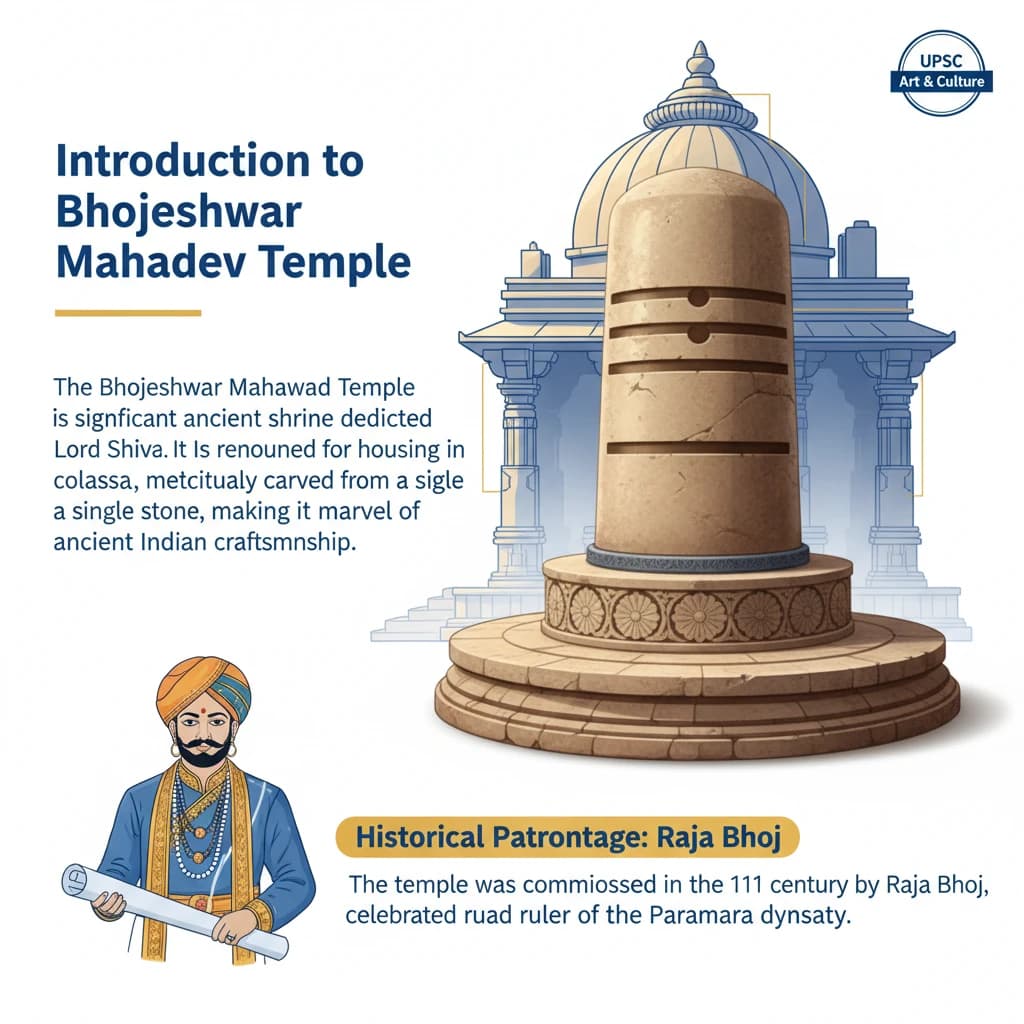
The Bhojeshwar Mahadev Temple is a significant ancient shrine dedicated to Lord Shiva.
It is renowned for housing a colossal linga, meticulously carved from a single stone, making it a marvel of ancient Indian craftsmanship.
Historical Patronage: Raja Bhoj
The temple was commissioned in the 11th century by Raja Bhoj, a celebrated ruler of the powerful Paramara dynasty.
Raja Bhoj was not only a great patron of architecture but also an accomplished scholar, known for authoring the architectural treatise Samaranganasutradhara.
Architectural Grandeur and Style
The Bhojeshwar Mahadev Temple primarily exemplifies the distinct Bhumija style of temple architecture.
This style is characterized by its impressive towering shikhara and intricate ornate carvings and sculptures that adorn the temple structure.
Notably, the main body of the temple and its shikhara also incorporate significant components influenced by the Dravidian style of temple architecture, showcasing a unique blend of regional styles.
The Enigma of 'Dhamnar'
While the name Dhamnar, often associated with the region, lacks a direct historical or literary basis.
Evidence suggests that the area might have been known as Chandanagar-mahavihara during Buddhist times.
Scholar K.C. Jain proposed that 'Dhamnar' could be derived from the Jaina term 'Dharmartha'. This term is historically linked with the Linga found in medieval Vaishnava temples, suggesting a complex religious history for the site.
💡 Key Takeaways
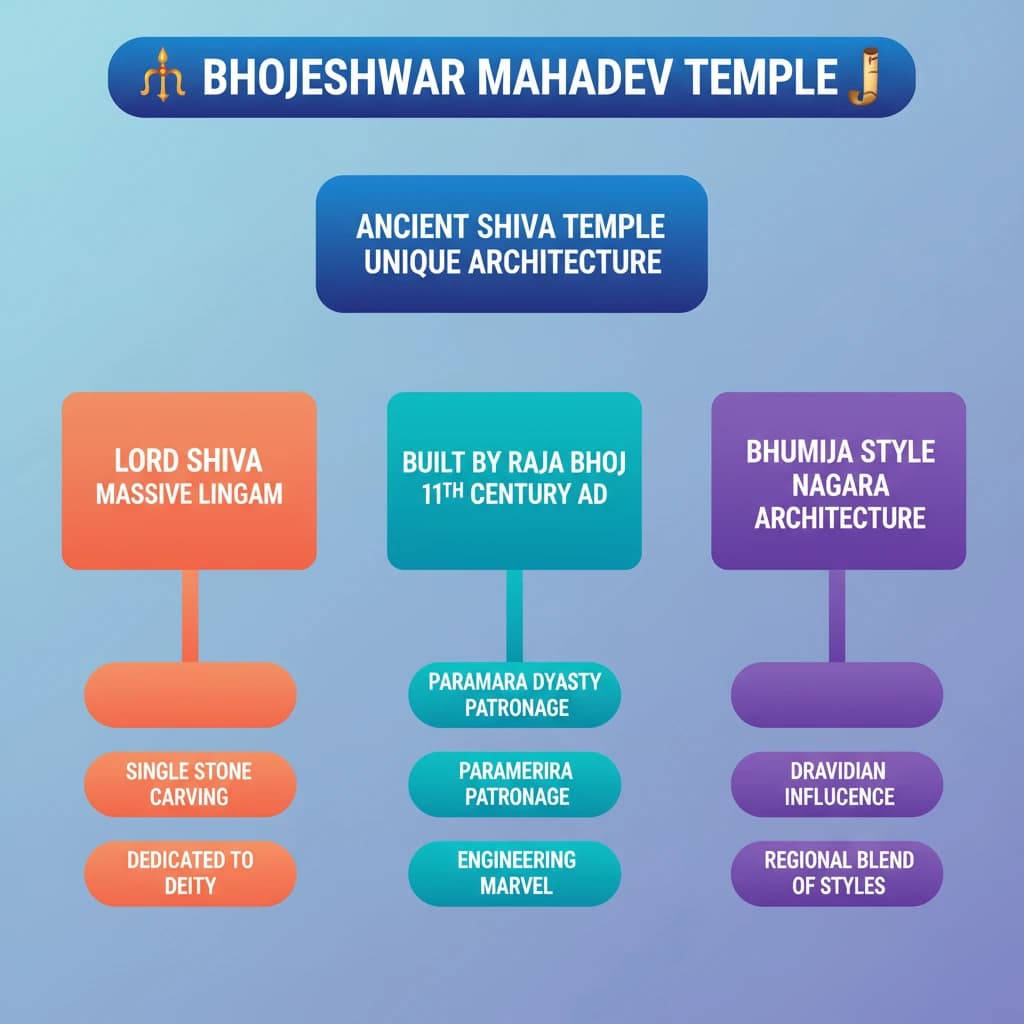
- •Bhojeshwar Mahadev Temple is dedicated to Lord Shiva.
- •It features a massive linga carved from a single stone.
- •The temple was commissioned by Raja Bhoj of the Paramara dynasty in the 11th century.
- •Its architecture primarily follows the Bhumija style, a sub-style of Nagara architecture.
- •It uniquely incorporates components influenced by the Dravidian style, showcasing a regional blend.
- •Raja Bhoj was also a scholar who authored the architectural treatise Samaranganasutradhara.
🧠 Memory Techniques

95% Verified Content