UNESCO List of Intangible Cultural Heritage of Humanity - UPSC Art And Culture
What is UNESCO List of Intangible Cultural Heritage of Humanity in UPSC Art And Culture?
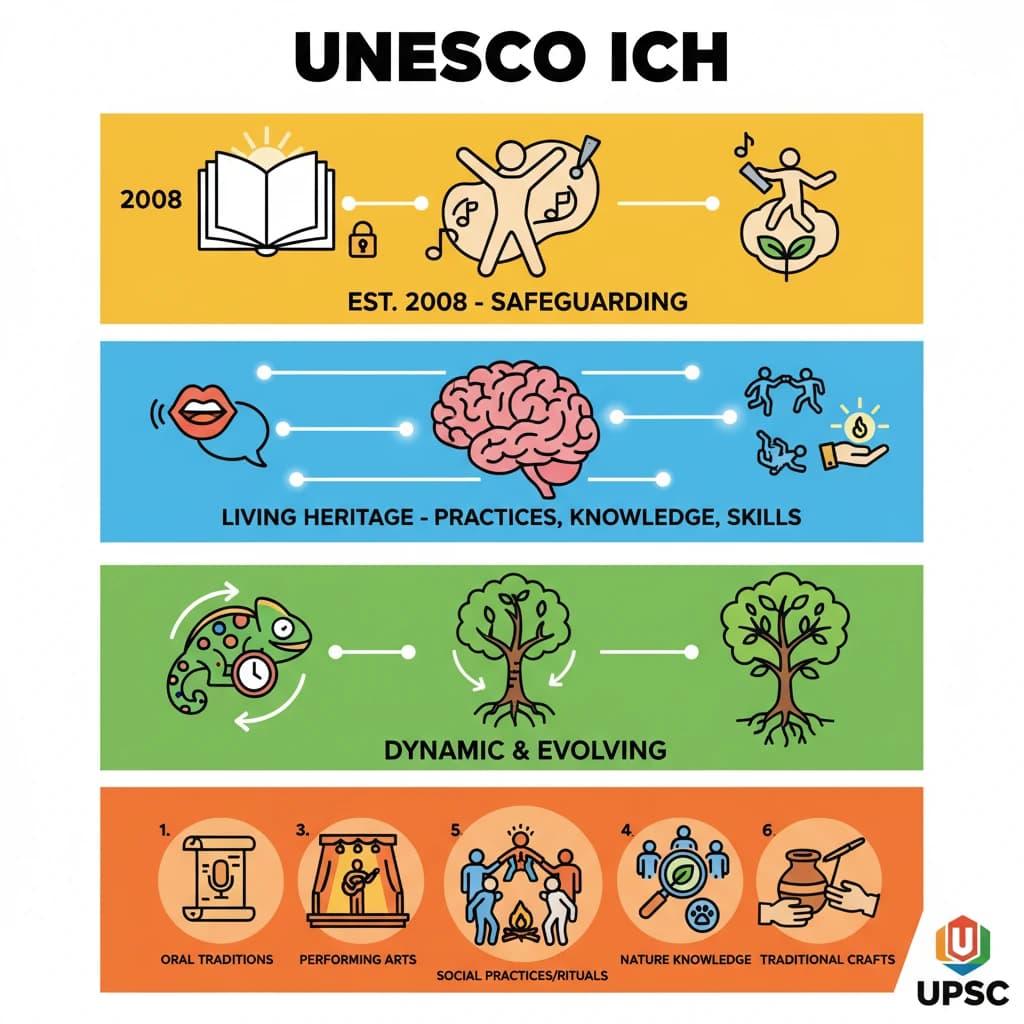
UNESCO List of Intangible Cultural Heritage of Humanity is a key topic under Art And Culture for UPSC Civil Services Examination. Key points include: The UNESCO ICH List was established in 2008 to safeguard living cultural heritage.. Intangible Cultural Heritage includes practices, expressions, knowledge, and skills recognized by communities.. It is also known as 'living cultural heritage' due to its dynamic and evolving nature.. Understanding this topic is essential for both UPSC Prelims and Mains preparation.
Why is UNESCO List of Intangible Cultural Heritage of Humanity important for UPSC exam?
UNESCO List of Intangible Cultural Heritage of Humanity is a Easy-level topic in UPSC Art And Culture. It is tested in both Prelims (factual MCQs) and Mains (analytical answer writing). Previous year UPSC questions have frequently covered aspects of UNESCO List of Intangible Cultural Heritage of Humanity, making it essential for comprehensive IAS preparation.
How to prepare UNESCO List of Intangible Cultural Heritage of Humanity for UPSC?
To prepare UNESCO List of Intangible Cultural Heritage of Humanity for UPSC: (1) Study the comprehensive notes covering all key concepts on Vaidra. (2) Practice previous year questions on this topic. (3) Connect it with current affairs using daily updates. (4) Revise using key takeaways and mind maps available for Art And Culture. (5) Write practice answers linking UNESCO List of Intangible Cultural Heritage of Humanity to related GS Paper topics.
Key takeaways of UNESCO List of Intangible Cultural Heritage of Humanity for UPSC
- The UNESCO ICH List was established in 2008 to safeguard living cultural heritage.
- Intangible Cultural Heritage includes practices, expressions, knowledge, and skills recognized by communities.
- It is also known as 'living cultural heritage' due to its dynamic and evolving nature.
- Key forms include oral traditions, performing arts, social practices, rituals, knowledge about nature, and traditional craftsmanship.
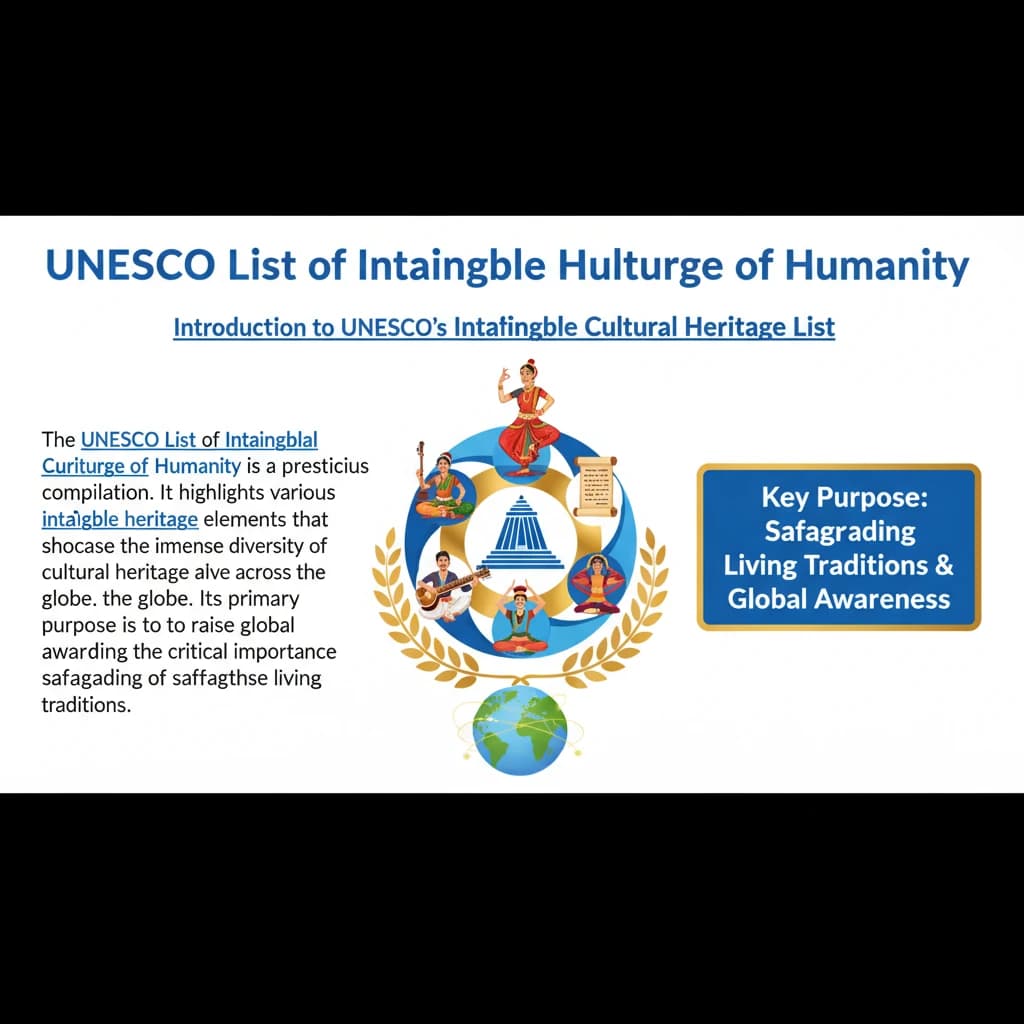
- The list aims to demonstrate cultural diversity and raise awareness about heritage importance.
- The 2003 Convention for the Safeguarding of the Intangible Cultural Heritage provides its framework.
UNESCO List of Intangible Cultural Heritage of Humanity
📖 Introduction
💡 Key Takeaways
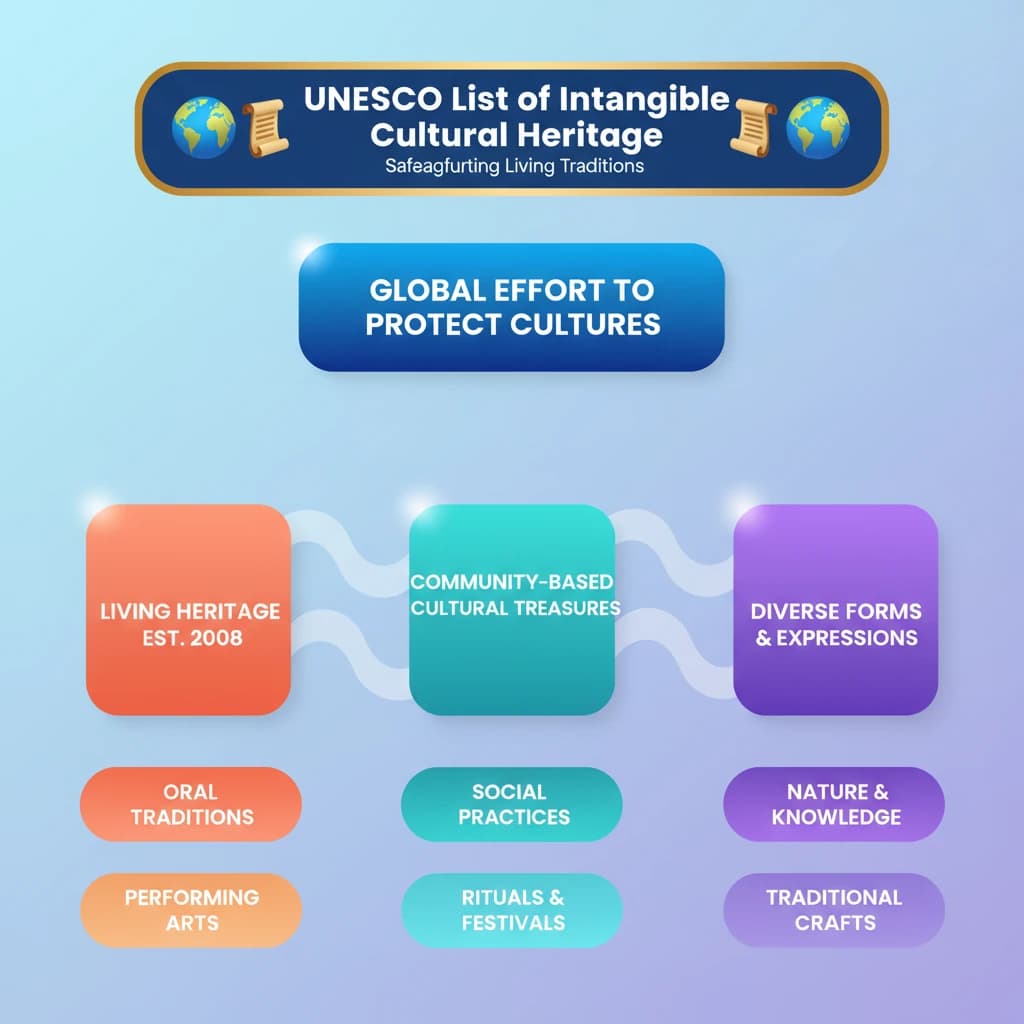
- •The UNESCO ICH List was established in 2008 to safeguard living cultural heritage.
- •Intangible Cultural Heritage includes practices, expressions, knowledge, and skills recognized by communities.
- •It is also known as 'living cultural heritage' due to its dynamic and evolving nature.
- •Key forms include oral traditions, performing arts, social practices, rituals, knowledge about nature, and traditional craftsmanship.
- •The list aims to demonstrate cultural diversity and raise awareness about heritage importance.
- •The 2003 Convention for the Safeguarding of the Intangible Cultural Heritage provides its framework.
🧠 Memory Techniques