Narasapur Lace: Challenges of Stagnant Market & Chinese Competition - UPSC Art And Culture
What is Narasapur Lace: Challenges of Stagnant Market & Chinese Competition in UPSC Art And Culture?
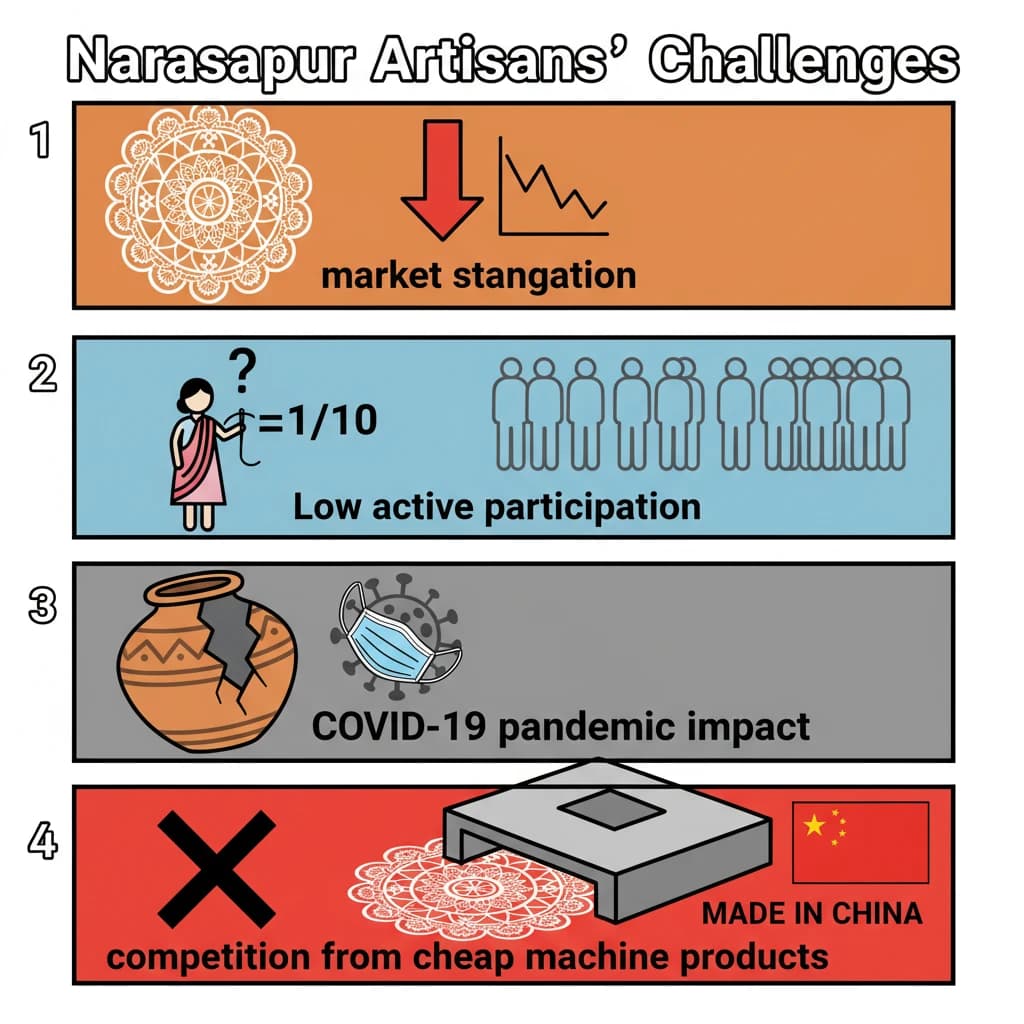
Narasapur Lace: Challenges of Stagnant Market & Chinese Competition is a key topic under Art And Culture for UPSC Civil Services Examination. Key points include: Narasapur lace artisans face market stagnation, low active participation, and competition from cheap machine products.. The Covid-19 pandemic severely impacted demand and production for traditional crafts.. Only a small fraction of associated women artisans are actively engaged in regular production.. Understanding this topic is essential for both UPSC Prelims and Mains preparation.
Why is Narasapur Lace: Challenges of Stagnant Market & Chinese Competition important for UPSC exam?
Narasapur Lace: Challenges of Stagnant Market & Chinese Competition is a Medium-level topic in UPSC Art And Culture. It is tested in both Prelims (factual MCQs) and Mains (analytical answer writing). Previous year UPSC questions have frequently covered aspects of Narasapur Lace: Challenges of Stagnant Market & Chinese Competition, making it essential for comprehensive IAS preparation.
How to prepare Narasapur Lace: Challenges of Stagnant Market & Chinese Competition for UPSC?
To prepare Narasapur Lace: Challenges of Stagnant Market & Chinese Competition for UPSC: (1) Study the comprehensive notes covering all key concepts on Vaidra. (2) Practice previous year questions on this topic. (3) Connect it with current affairs using daily updates. (4) Revise using key takeaways and mind maps available for Art And Culture. (5) Write practice answers linking Narasapur Lace: Challenges of Stagnant Market & Chinese Competition to related GS Paper topics.
Key takeaways of Narasapur Lace: Challenges of Stagnant Market & Chinese Competition for UPSC
- Narasapur lace artisans face market stagnation, low active participation, and competition from cheap machine products.
- The Covid-19 pandemic severely impacted demand and production for traditional crafts.
- Only a small fraction of associated women artisans are actively engaged in regular production.
- Inexpensive machine-made products, particularly from China, pose a significant threat to market demand.
- These challenges are common to many traditional Indian handicrafts.
- Government support, market linkages, and skill development are crucial for craft revival.
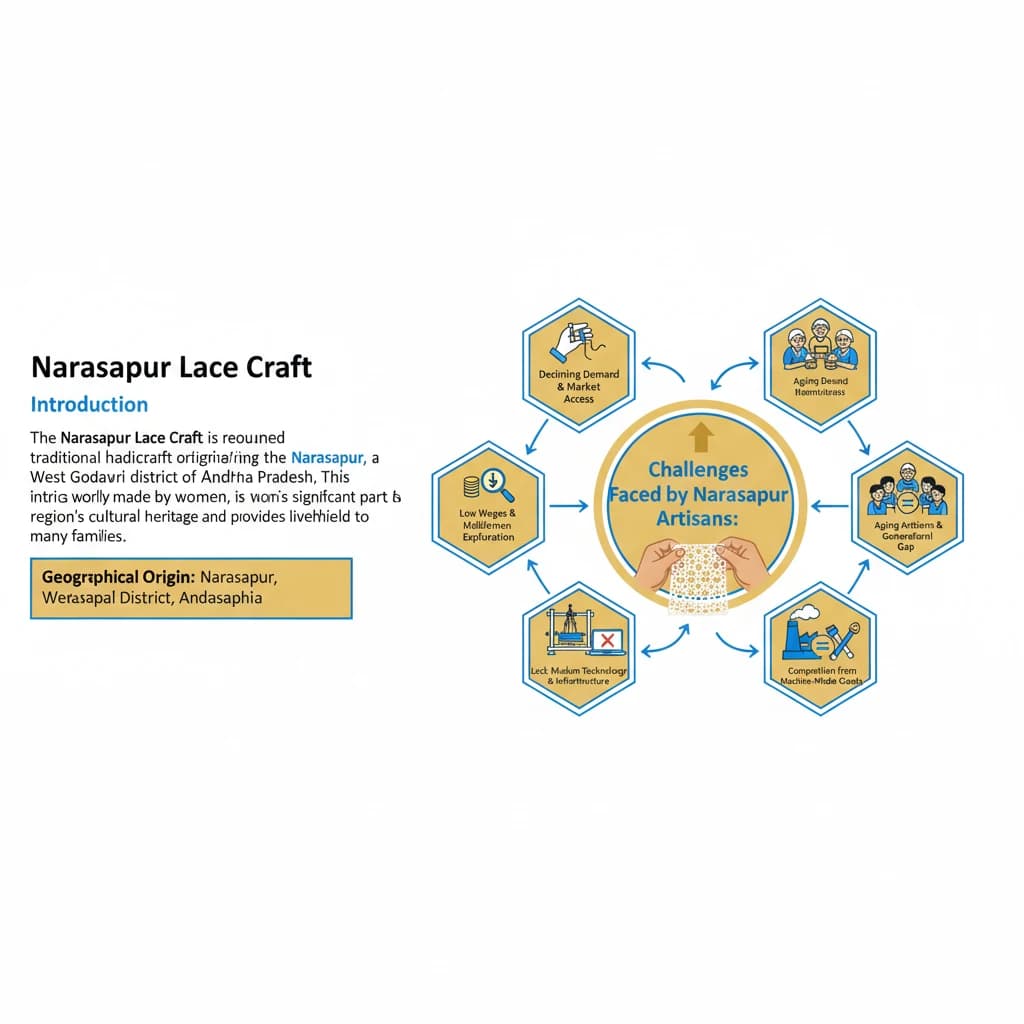
Narasapur Lace: Challenges of Stagnant Market & Chinese Competition
📖 Introduction
💡 Key Takeaways
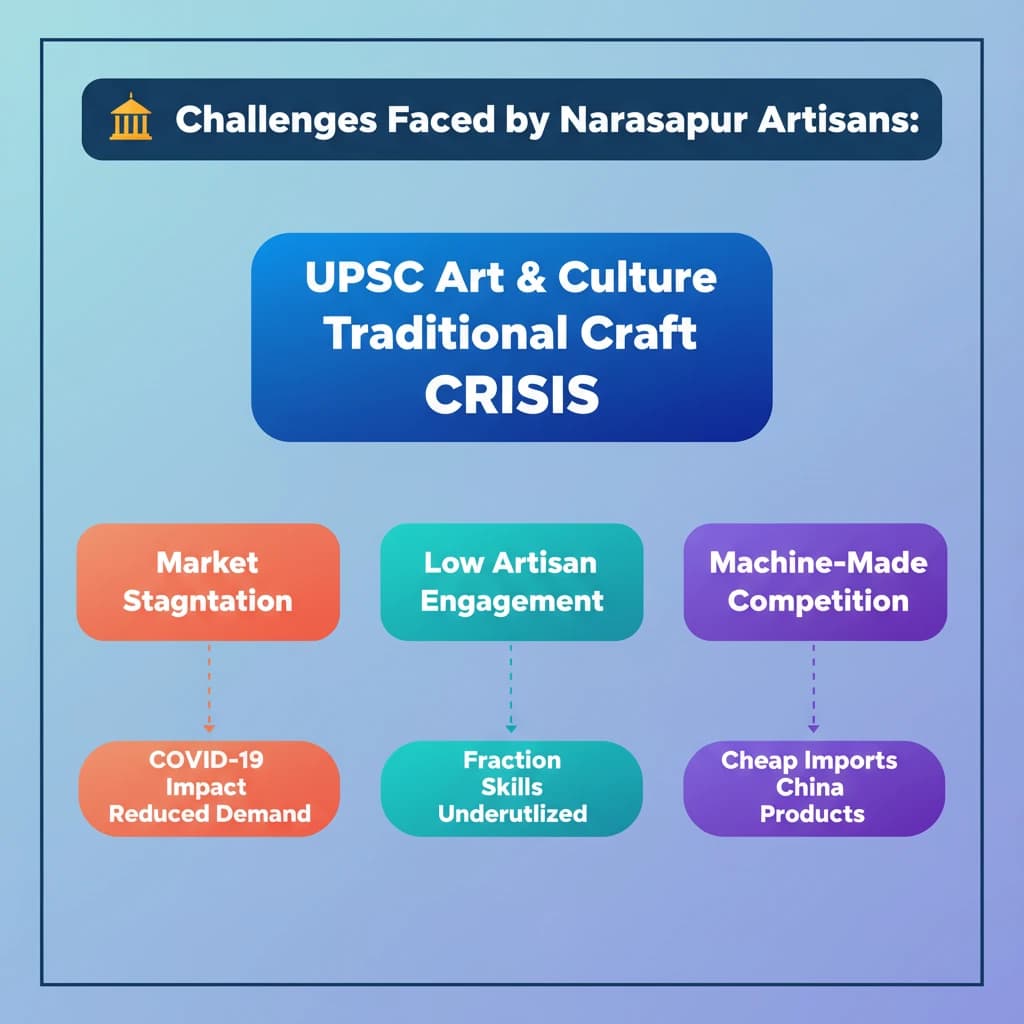
- •Narasapur lace artisans face market stagnation, low active participation, and competition from cheap machine products.
- •The Covid-19 pandemic severely impacted demand and production for traditional crafts.
- •Only a small fraction of associated women artisans are actively engaged in regular production.
- •Inexpensive machine-made products, particularly from China, pose a significant threat to market demand.
- •These challenges are common to many traditional Indian handicrafts.
- •Government support, market linkages, and skill development are crucial for craft revival.
🧠 Memory Techniques