Loading page, please wait…
Vaidra Logo
Vaidra

Top 4 items + smart groups

UPSC GPT
New
Current Affairs
Daily Solutions
Daily Puzzle
Mains Evaluator

Version 2.0.0 • Built with ❤️ for UPSC aspirants

Loading...
Loading...
Loading...
Loading...
Loading...
Loading...
Loading...
Loading...
Loading...
Loading...
Loading...
Loading...
Loading...
Religious Significance - UPSC Art And Culture
Back
All Subjects

Topics

0 topics • 0 completed

Loading topics...
Loading...
Loading...
Loading...
Loading...
Loading...
Overall Progress0%

Religious Significance - UPSC Art And Culture

What is Religious Significance in UPSC Art And Culture?

Religious Significance is a key topic under Art And Culture for UPSC Civil Services Examination. Key points include: Satras are central institutions of Assamese Vaishnavism, a distinct bhakti movement.. Assamese Vaishnavism primarily revolves around the worship of Lord Krishna.. The original Govinda idol is traditionally believed to have come from the Lord Jagannath Temple, Puri.. Understanding this topic is essential for both UPSC Prelims and Mains preparation.

Why is Religious Significance important for UPSC exam?

Religious Significance is a Medium-level topic in UPSC Art And Culture. It is tested in both Prelims (factual MCQs) and Mains (analytical answer writing). Previous year UPSC questions have frequently covered aspects of Religious Significance, making it essential for comprehensive IAS preparation.

How to prepare Religious Significance for UPSC?

To prepare Religious Significance for UPSC: (1) Study the comprehensive notes covering all key concepts on Vaidra. (2) Practice previous year questions on this topic. (3) Connect it with current affairs using daily updates. (4) Revise using key takeaways and mind maps available for Art And Culture. (5) Write practice answers linking Religious Significance to related GS Paper topics.

Key takeaways of Religious Significance for UPSC

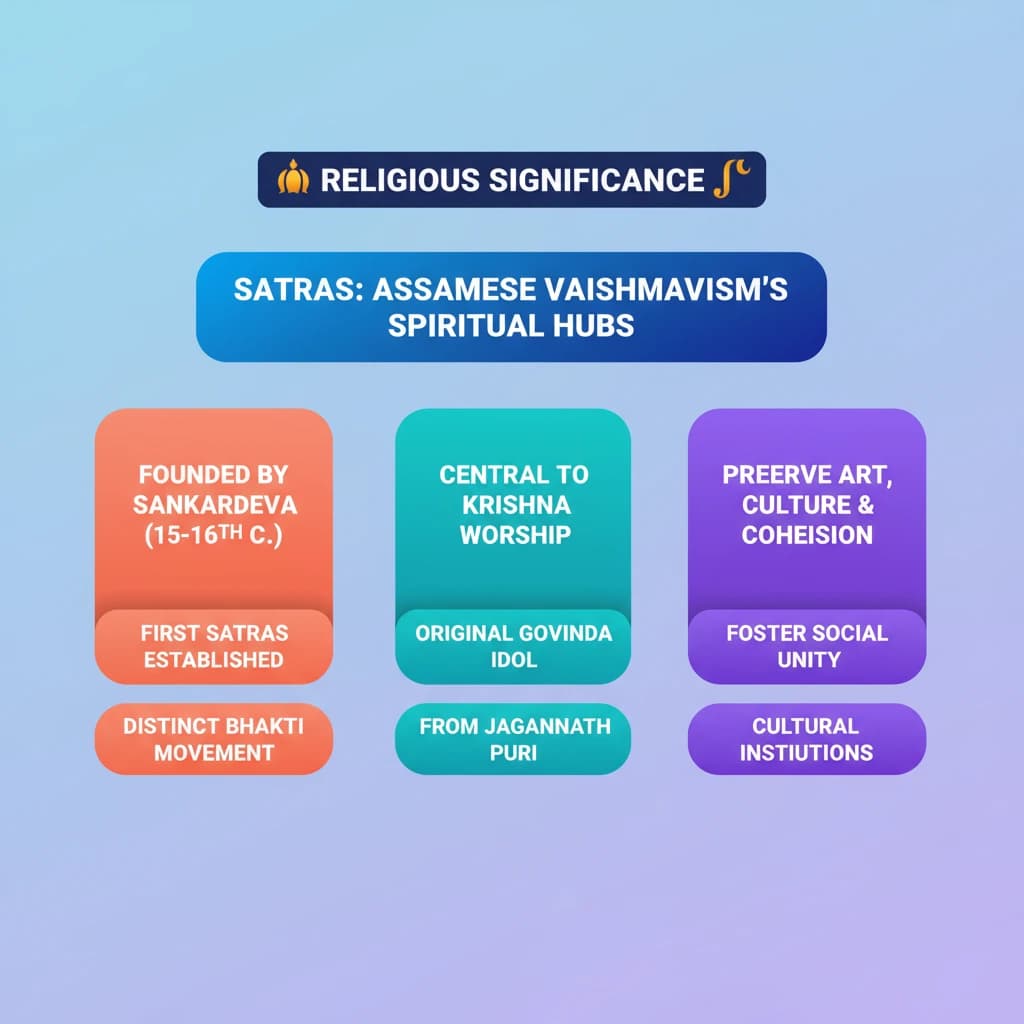
  • Satras are central institutions of Assamese Vaishnavism, a distinct bhakti movement.
  • Assamese Vaishnavism primarily revolves around the worship of Lord Krishna.
  • The original Govinda idol is traditionally believed to have come from the Lord Jagannath Temple, Puri.
  • Sankardeva founded Assamese Vaishnavism and established the first Satras in the 15th-16th centuries.
  • Satras play a vital role in preserving Assamese art, culture, and fostering social cohesion.
  • Sattriya dance, originating from Satras, is a recognized Indian classical dance form.
Religious Significance

Religious Significance

Medium⏱️ 7 min read✓ 95% Verified
art and culture

📖 Introduction

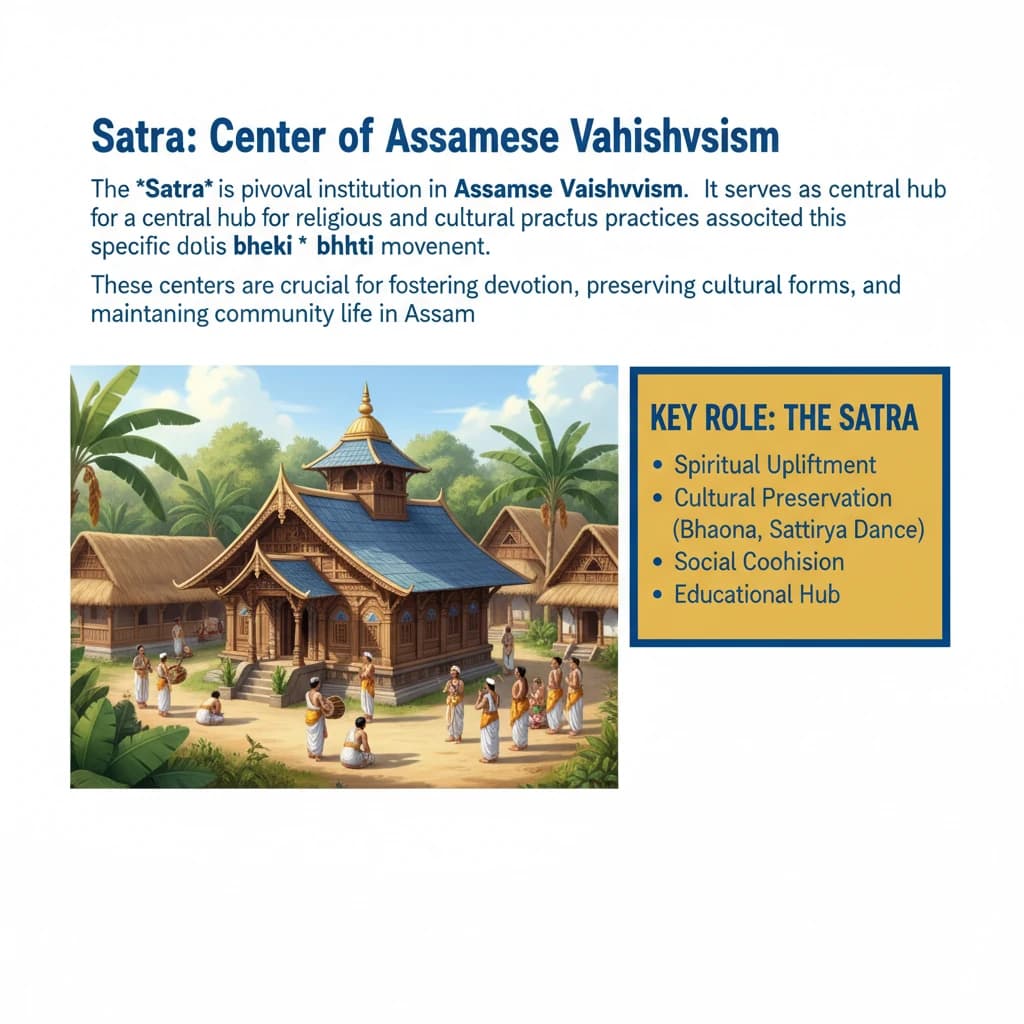
<h4>Satra: Center of Assamese Vaishnavism</h4><p>The <strong>Satra</strong> is a pivotal institution in <strong>Assamese Vaishnavism</strong>. It serves as a central hub for the religious and cultural practices associated with this specific <strong>bhakti movement</strong>.</p><p>These centers are crucial for fostering devotion, preserving cultural forms, and maintaining community life in <strong>Assam</strong>.</p><div class="key-point-box"><strong>Key Role:</strong> The <strong>Satra</strong> functions as a monastic, religious, and cultural complex, integral to the spiritual and social fabric of <strong>Assamese society</strong>.</div><h4>Assamese Vaishnavism: A Bhakti Tradition</h4><p><strong>Assamese Vaishnavism</strong>, also known as <strong>Ekasarana Dharma</strong>, is a distinct branch of the pan-Indian <strong>bhakti movement</strong>. Its core tenet revolves around the ardent worship of <strong>Lord Krishna</strong>.</p><p>This tradition, founded by <strong>Sankardeva</strong>, emphasizes devotion, communal prayer (<strong>naam kirtan</strong>), and artistic expression as pathways to spiritual realization.</p><h4>Origin of the Govinda Idol</h4><p>A significant aspect of this tradition is the origin of its principal deity. The original idol of <strong>Lord Krishna</strong>, specifically revered in the form of <strong>Govinda</strong>, holds immense spiritual value.</p><p>This revered idol is traditionally believed to have been brought from the renowned <strong>Lord Jagannath Temple</strong> at <strong>Puri</strong>, establishing a historical and spiritual link to a major pan-Indian Vaishnavite center.</p><div class="info-box"><strong>Deity:</strong> <strong>Lord Krishna</strong> (as <strong>Govinda</strong>)<br><strong>Source:</strong> <strong>Lord Jagannath Temple</strong>, <strong>Puri</strong>, <strong>Odisha</strong><br><strong>Significance:</strong> Connects <strong>Assamese Vaishnavism</strong> to broader Indian Vaishnavite traditions.</div>
Concept Diagram

💡 Key Takeaways

  • •Satras are central institutions of Assamese Vaishnavism, a distinct bhakti movement.
  • •Assamese Vaishnavism primarily revolves around the worship of Lord Krishna.
  • •The original Govinda idol is traditionally believed to have come from the Lord Jagannath Temple, Puri.
  • •Sankardeva founded Assamese Vaishnavism and established the first Satras in the 15th-16th centuries.
  • •Satras play a vital role in preserving Assamese art, culture, and fostering social cohesion.
  • •Sattriya dance, originating from Satras, is a recognized Indian classical dance form.

🧠 Memory Techniques
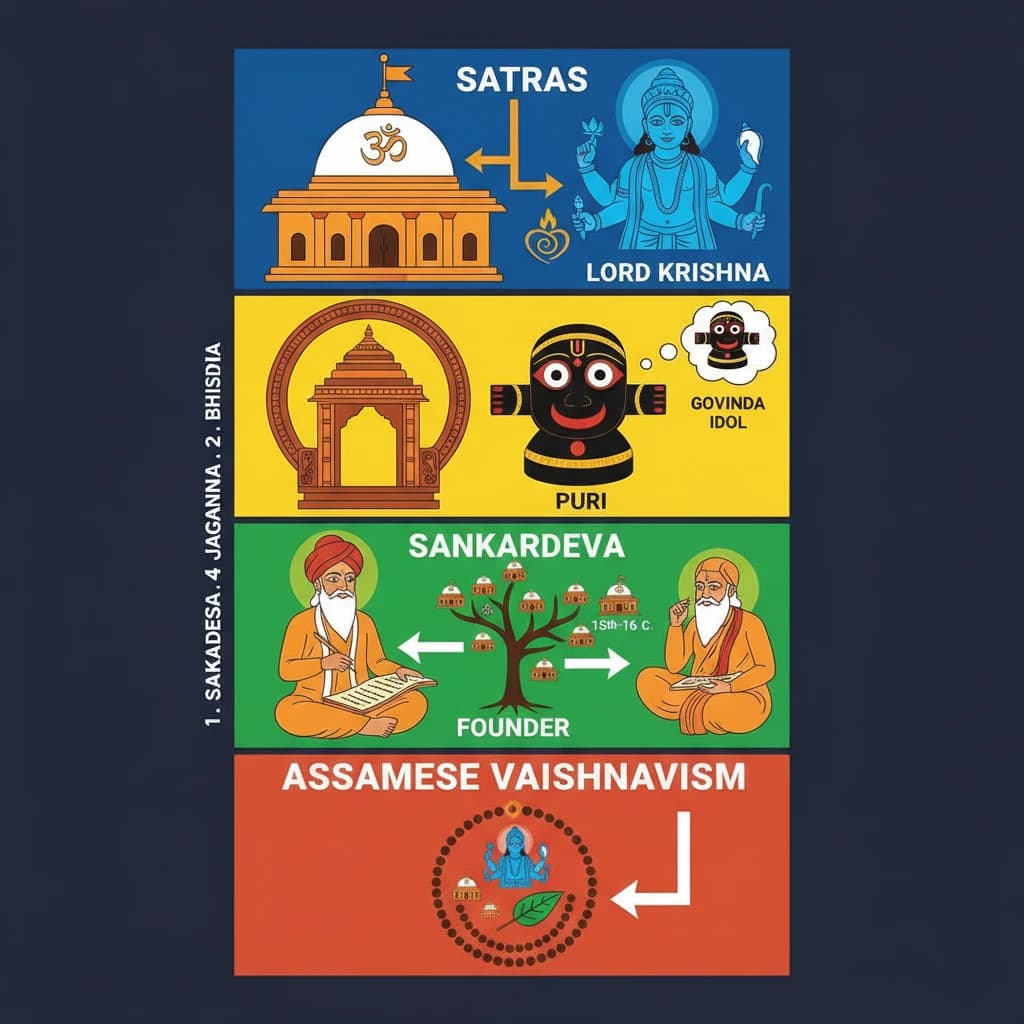
Memory Aid
95% Verified Content

📚 Reference Sources

•NCERT Class XI - An Introduction to Indian Art
•Cultural History of Assam by P.C. Choudhury
•Sangeet Natak Akademi resources on Sattriya Dance

Related Topics

Loading related topics...
Explore:Art And Culture Topics·All Subjects·Daily Current Affairs·Editorial Analysis·Previous Year Questions·UPSC GPT