What are the Key Features of Sites Added to Tentative UNESCO List of WHS? - UPSC Art And Culture
What is What are the Key Features of Sites Added to Tentative UNESCO List of WHS? in UPSC Art And Culture?
What are the Key Features of Sites Added to Tentative UNESCO List of WHS? is a key topic under Art And Culture for UPSC Civil Services Examination. Key points include: Gwalior Fort is known for its formidable walls and strategic hill-top location.. Its foundations were laid in the 6th century AD by Rajput warrior Suraj Sen.. The fort is currently on India's Tentative UNESCO List of World Heritage Sites.. Understanding this topic is essential for both UPSC Prelims and Mains preparation.
Why is What are the Key Features of Sites Added to Tentative UNESCO List of WHS? important for UPSC exam?
What are the Key Features of Sites Added to Tentative UNESCO List of WHS? is a Medium-level topic in UPSC Art And Culture. It is tested in both Prelims (factual MCQs) and Mains (analytical answer writing). Previous year UPSC questions have frequently covered aspects of What are the Key Features of Sites Added to Tentative UNESCO List of WHS?, making it essential for comprehensive IAS preparation.
How to prepare What are the Key Features of Sites Added to Tentative UNESCO List of WHS? for UPSC?
To prepare What are the Key Features of Sites Added to Tentative UNESCO List of WHS? for UPSC: (1) Study the comprehensive notes covering all key concepts on Vaidra. (2) Practice previous year questions on this topic. (3) Connect it with current affairs using daily updates. (4) Revise using key takeaways and mind maps available for Art And Culture. (5) Write practice answers linking What are the Key Features of Sites Added to Tentative UNESCO List of WHS? to related GS Paper topics.
Key takeaways of What are the Key Features of Sites Added to Tentative UNESCO List of WHS? for UPSC
- Gwalior Fort is known for its formidable walls and strategic hill-top location.
- Its foundations were laid in the 6th century AD by Rajput warrior Suraj Sen.
- The fort is currently on India's Tentative UNESCO List of World Heritage Sites.
- It exhibits a blend of Rajput, Mughal, and Maratha architectural influences.
- Key structures include Man Singh Palace, Gujari Mahal, Teli ka Mandir, and Sas-Bahu Temples.
- Inclusion on the tentative list promotes conservation and cultural tourism.
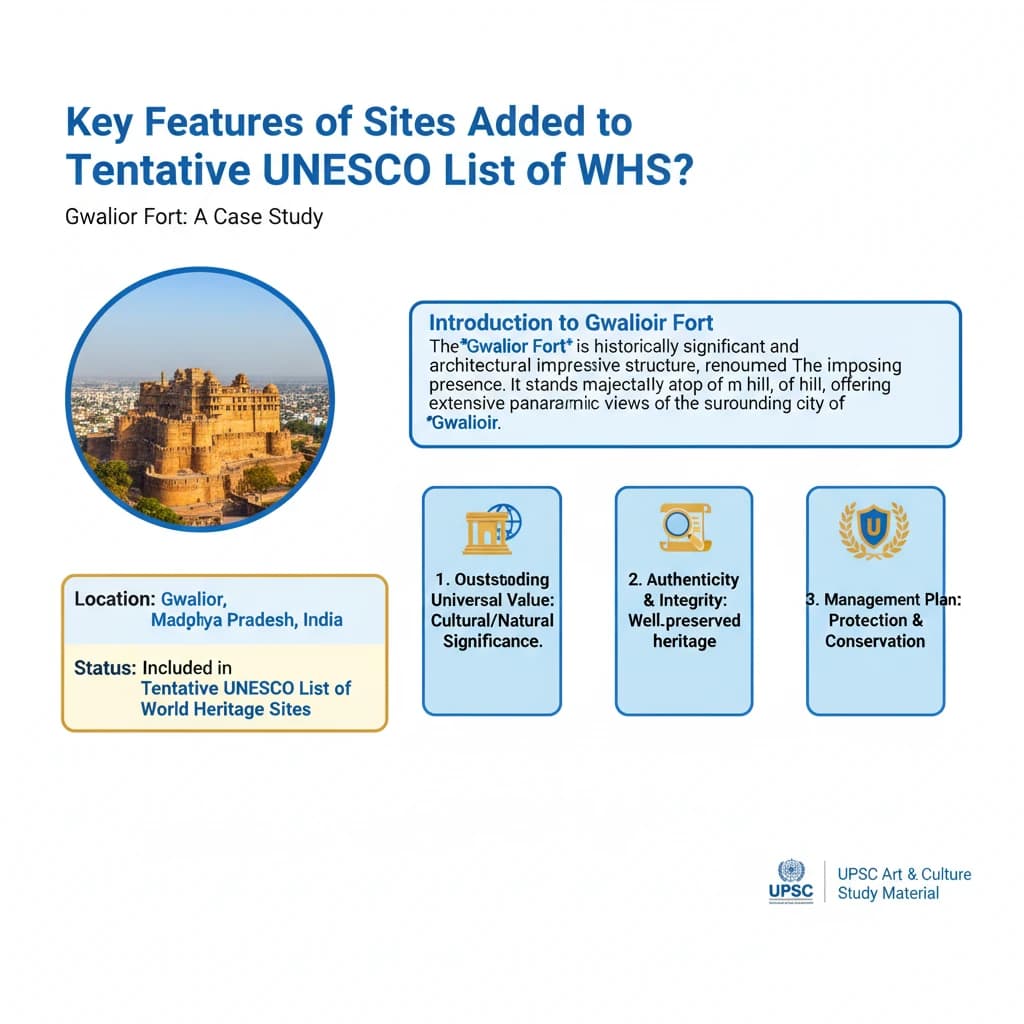
What are the Key Features of Sites Added to Tentative UNESCO List of WHS?
📖 Introduction
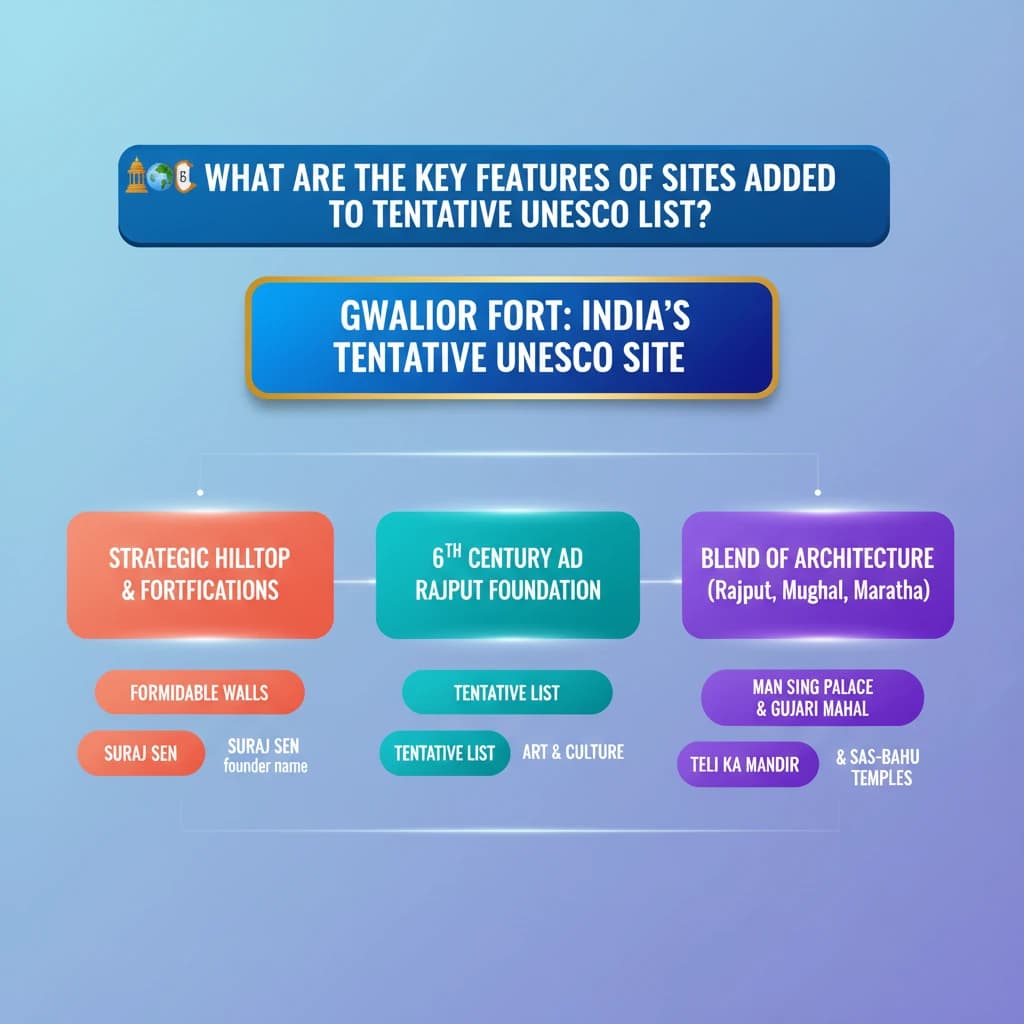
💡 Key Takeaways
- •Gwalior Fort is known for its formidable walls and strategic hill-top location.
- •Its foundations were laid in the 6th century AD by Rajput warrior Suraj Sen.
- •The fort is currently on India's Tentative UNESCO List of World Heritage Sites.
- •It exhibits a blend of Rajput, Mughal, and Maratha architectural influences.
- •Key structures include Man Singh Palace, Gujari Mahal, Teli ka Mandir, and Sas-Bahu Temples.
- •Inclusion on the tentative list promotes conservation and cultural tourism.
🧠 Memory Techniques