Loading page, please wait…
Vaidra Logo
Vaidra

Top 4 items + smart groups

UPSC GPT
New
Current Affairs
Daily Solutions
Daily Puzzle
Mains Evaluator

Version 2.0.0 • Built with ❤️ for UPSC aspirants

Loading...
Loading...
Loading...
Loading...
Loading...
Loading...
Loading...
Loading...
Loading...
Loading...
Loading...
Loading...
Loading...
Back
All Subjects

Topics

0 topics • 0 completed

Loading topics...
Loading...
Loading...
Loading...
Loading...
Loading...
Overall Progress0%
What is the Status of Linguistic Diversity in India - UPSC Art And Culture

What is the Status of Linguistic Diversity in India - UPSC Art And Culture

What is What is the Status of Linguistic Diversity in India in UPSC Art And Culture?

What is the Status of Linguistic Diversity in India is a key topic under Art And Culture for UPSC Civil Services Examination. Key points include: India possesses immense linguistic diversity, comprising several major language families.. Many indigenous languages, such as Madhika, face extinction due to social stigma and lack of documentation.. Colonial linguistic surveys and the 1991 Census of India highlight the vast number of languages and dialects.. Understanding this topic is essential for both UPSC Prelims and Mains preparation.

Why is What is the Status of Linguistic Diversity in India important for UPSC exam?

What is the Status of Linguistic Diversity in India is a Medium-level topic in UPSC Art And Culture. It is tested in both Prelims (factual MCQs) and Mains (analytical answer writing). Previous year UPSC questions have frequently covered aspects of What is the Status of Linguistic Diversity in India, making it essential for comprehensive IAS preparation.

How to prepare What is the Status of Linguistic Diversity in India for UPSC?

To prepare What is the Status of Linguistic Diversity in India for UPSC: (1) Study the comprehensive notes covering all key concepts on Vaidra. (2) Practice previous year questions on this topic. (3) Connect it with current affairs using daily updates. (4) Revise using key takeaways and mind maps available for Art And Culture. (5) Write practice answers linking What is the Status of Linguistic Diversity in India to related GS Paper topics.

Key takeaways of What is the Status of Linguistic Diversity in India for UPSC

  • India possesses immense linguistic diversity, comprising several major language families.
  • Many indigenous languages, such as Madhika, face extinction due to social stigma and lack of documentation.
  • Colonial linguistic surveys and the 1991 Census of India highlight the vast number of languages and dialects.
  • UNESCO classifies languages with fewer than 10,000 speakers as potentially endangered.
  • The People’s Linguistic Survey of India (PLSI) warns that approximately 400 Indian languages are at risk of extinction within 50 years.
  • The loss of a language signifies the irreversible loss of unique cultural heritage and traditional knowledge systems.
What is the Status of Linguistic Diversity in India

What is the Status of Linguistic Diversity in India

Medium⏱️ 7 min read✓ 95% Verified
art and culture

📖 Introduction

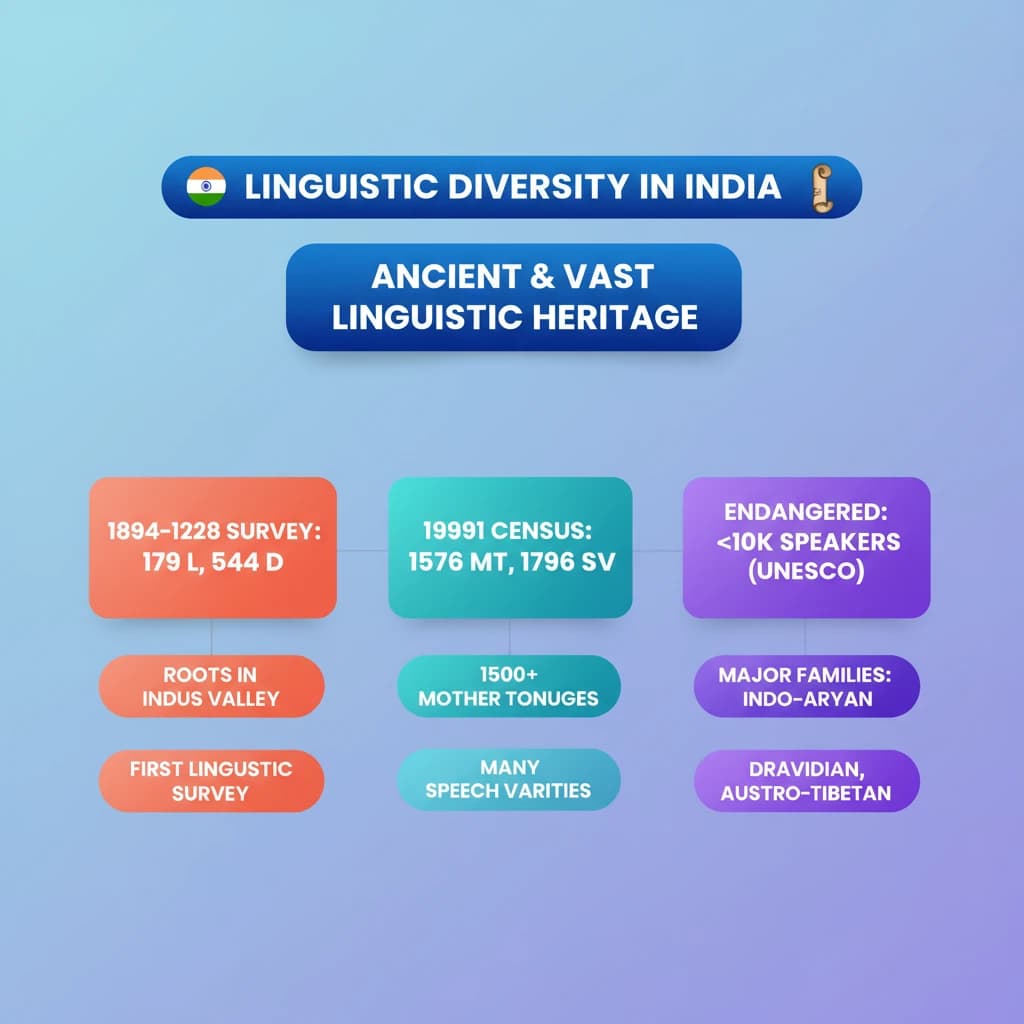
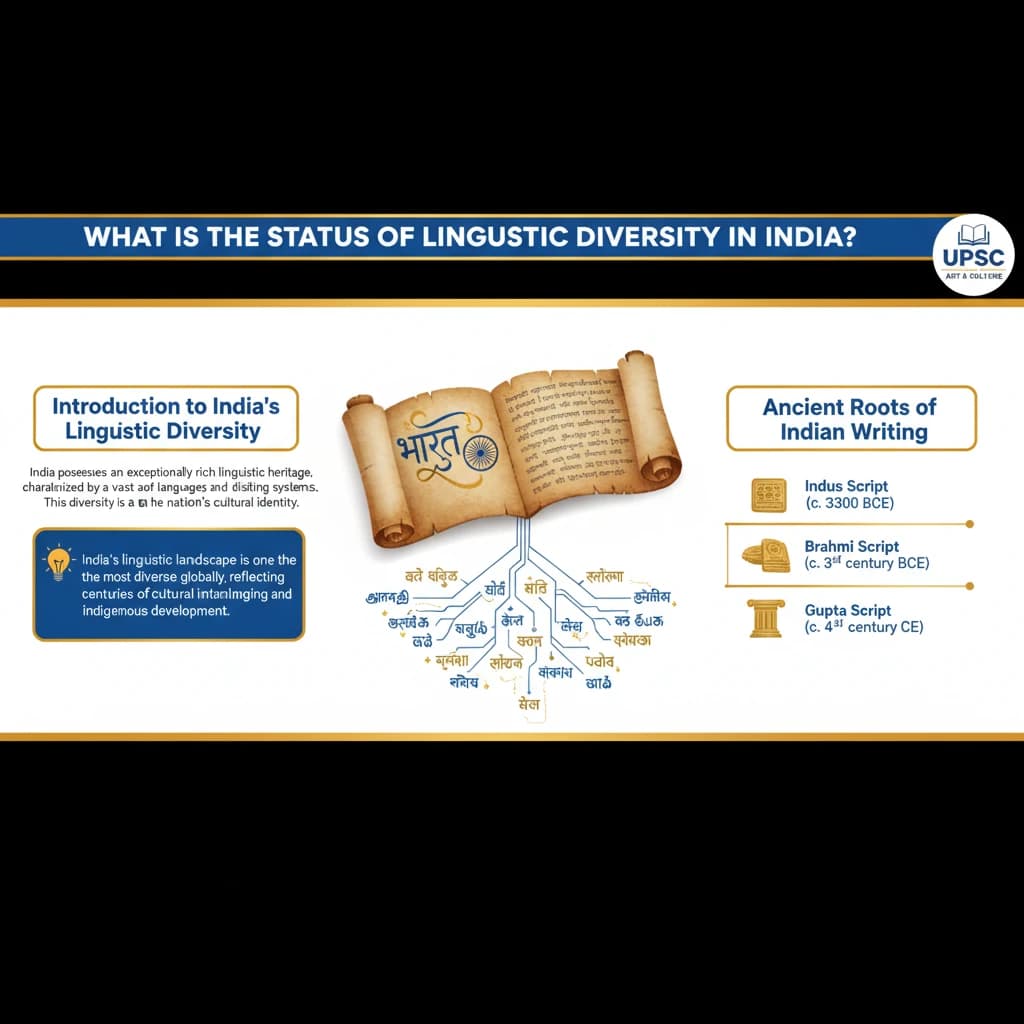
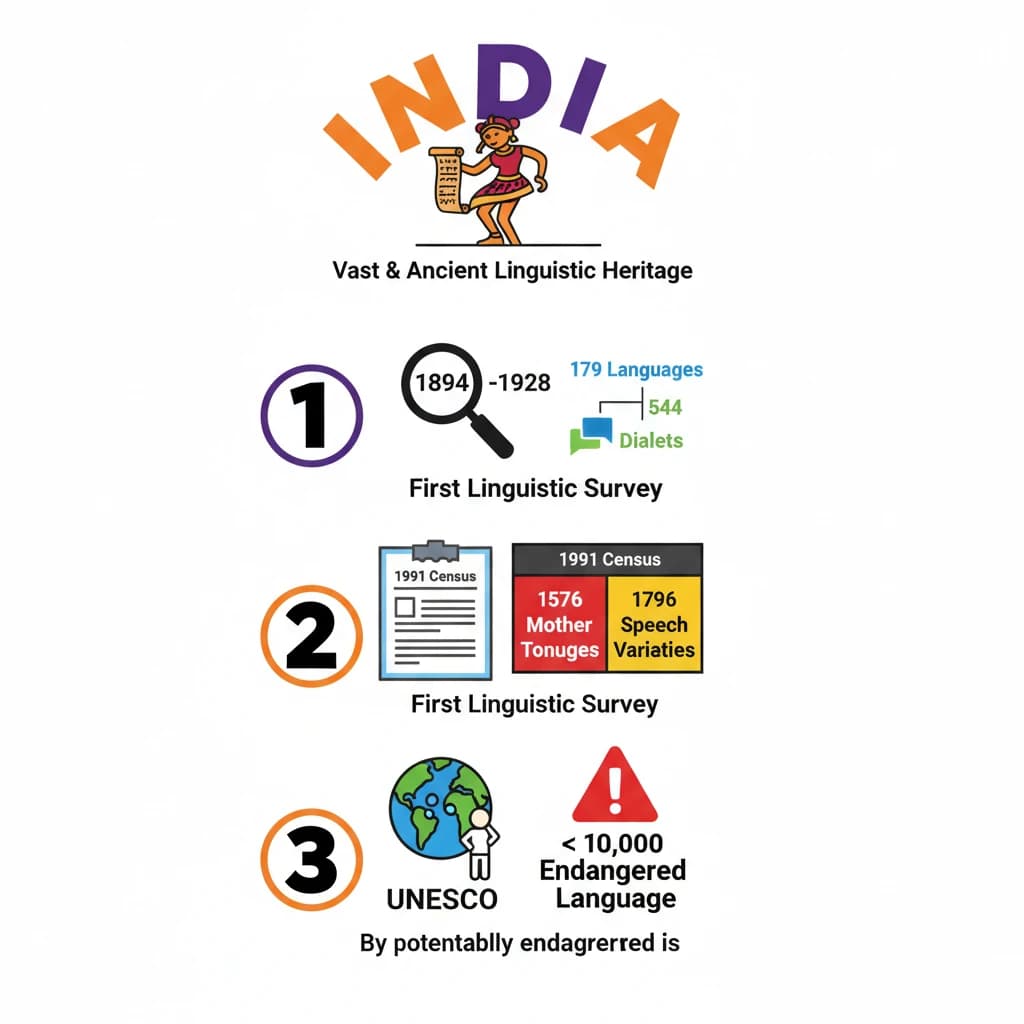
<h4>The Madhika Language and Chakaliya Community</h4><p>The <strong>Madhika language</strong> faces severe neglect, largely due to the <strong>social stigma</strong> historically associated with the <strong>Chakaliya community</strong>.</p><p>The <strong>Chakaliya community</strong> was traditionally considered <strong>untouchable</strong>, contributing to the marginalization of their language.</p><div class="key-point-box"><p><strong>Threat to Madhika:</strong> Lack of <strong>documentation</strong> (no script) and the dwindling number of <strong>older speakers</strong> put <strong>Madhika</strong> at significant risk of extinction.</p></div><h4>About the Chakaliya Community</h4><p>The <strong>Chakaliya community</strong> was originally <strong>nomadic</strong>, revering deities such as <strong>Thiruvenkatramana</strong> and <strong>Mariammana</strong>.</p><p>Centuries ago, they migrated from the <strong>hilly regions of Karnataka</strong> to <strong>northern Malabar</strong>.</p><div class="info-box"><p><strong>Categorisation Shift:</strong></p><ul><li>Initially classified as a <strong>Scheduled Tribe (ST)</strong>.</li><li>Later reclassified as a <strong>Scheduled Caste (SC)</strong> group in <strong>Kerala</strong>.</li></ul></div><h4>Overview of Linguistic Diversity in India</h4><p><strong>India</strong> boasts a remarkably <strong>rich linguistic heritage</strong>, characterized by a vast array of languages and diverse writing systems.</p><p>The history of writing in <strong>India</strong> extends back approximately <strong>four thousand years</strong>, originating from the era of the <strong>Indus Valley Civilisation</strong>.</p><h4>Linguistic Surveys and Data</h4><p>The <strong>first linguistic survey</strong> during <strong>colonial rule</strong> was conducted between <strong>1894 and 1928</strong>.</p><div class="info-box"><p><strong>Colonial Survey Findings:</strong> Identified <strong>179 languages</strong> and <strong>544 dialects</strong>.</p></div><p>The <strong>1991 Census of India</strong> provided a more comprehensive picture of linguistic variety.</p><div class="info-box"><p><strong>1991 Census Data:</strong></p><ul><li>Listed <strong>1576 'mother tongues'</strong> with distinct grammatical structures.</li><li>Classified <strong>1796 speech varieties</strong> as 'other mother tongues'.</li></ul></div><h4>Endangered Languages and UNESCO Criteria</h4><p>According to <strong>UNESCO</strong>, any language spoken by less than <strong>10,000 persons</strong> is considered <strong>“potentially endangered.”</strong></p><div class="exam-tip-box"><p><strong>UPSC Insight:</strong> Understanding <strong>UNESCO's criteria</strong> for language endangerment is crucial for questions on cultural preservation and government policies.</p></div><h4>Major Language Families of India</h4><p><strong>India's linguistic landscape</strong> is broadly categorized into several major <strong>language families</strong>.</p><ul><li><strong>Indo-Aryan</strong></li><li><strong>Dravidian</strong></li><li><strong>Austric</strong></li><li><strong>Tibeto-Burman</strong></li><li>And others.</li></ul><h4>Threat of Extinction</h4><p>The <strong>People’s Linguistic Survey of India (PLSI)</strong>, an initiative by the <strong>NGO Bhasha Research and Publication Centre</strong>, highlights a serious concern.</p><div class="key-point-box"><p><strong>PLSI Warning:</strong> Approximately <strong>400 languages</strong> in <strong>India</strong> are at risk of extinction within the next <strong>50 years</strong>.</p></div><p>This alarming statistic underscores the urgent need for robust language preservation efforts across the country.</p>
Concept Diagram

💡 Key Takeaways

  • •India possesses immense linguistic diversity, comprising several major language families.
  • •Many indigenous languages, such as Madhika, face extinction due to social stigma and lack of documentation.
  • •Colonial linguistic surveys and the 1991 Census of India highlight the vast number of languages and dialects.
  • •UNESCO classifies languages with fewer than 10,000 speakers as potentially endangered.
  • •The People’s Linguistic Survey of India (PLSI) warns that approximately 400 Indian languages are at risk of extinction within 50 years.
  • •The loss of a language signifies the irreversible loss of unique cultural heritage and traditional knowledge systems.

🧠 Memory Techniques
Memory Aid
95% Verified Content

📚 Reference Sources

•Census of India 1991
•UNESCO
•People’s Linguistic Survey of India (PLSI) / Bhasha Research and Publication Centre

Related Topics

Loading related topics...
Explore:Art And Culture Topics·All Subjects·Daily Current Affairs·Editorial Analysis·Previous Year Questions·UPSC GPT