Loading page, please wait…
GI Tag to Majuli Masks, Manuscript and Narasapur Crochet Lace Craft - UPSC Art And Culture
What is GI Tag to Majuli Masks, Manuscript and Narasapur Crochet Lace Craft in UPSC Art And Culture?
GI Tag to Majuli Masks, Manuscript and Narasapur Crochet Lace Craft is a key topic under Art And Culture for UPSC Civil Services Examination. Key points include: Prehistoric paintings used natural pigments like red ochre, white from limestone, and green from Chalcedony.. Themes included daily life, animals, hunting, war, and simple geometric designs.. Majuli Masks, Majuli Manuscript Painting, and Narasapur Crochet Lace Craft recently received GI tags.. Understanding this topic is essential for both UPSC Prelims and Mains preparation.
Why is GI Tag to Majuli Masks, Manuscript and Narasapur Crochet Lace Craft important for UPSC exam?
GI Tag to Majuli Masks, Manuscript and Narasapur Crochet Lace Craft is a Medium-level topic in UPSC Art And Culture. It is tested in both Prelims (factual MCQs) and Mains (analytical answer writing). Previous year UPSC questions have frequently covered aspects of GI Tag to Majuli Masks, Manuscript and Narasapur Crochet Lace Craft, making it essential for comprehensive IAS preparation.
How to prepare GI Tag to Majuli Masks, Manuscript and Narasapur Crochet Lace Craft for UPSC?
To prepare GI Tag to Majuli Masks, Manuscript and Narasapur Crochet Lace Craft for UPSC: (1) Study the comprehensive notes covering all key concepts on Vaidra. (2) Practice previous year questions on this topic. (3) Connect it with current affairs using daily updates. (4) Revise using key takeaways and mind maps available for Art And Culture. (5) Write practice answers linking GI Tag to Majuli Masks, Manuscript and Narasapur Crochet Lace Craft to related GS Paper topics.
Key takeaways of GI Tag to Majuli Masks, Manuscript and Narasapur Crochet Lace Craft for UPSC
- Prehistoric paintings used natural pigments like red ochre, white from limestone, and green from Chalcedony.
- Themes included daily life, animals, hunting, war, and simple geometric designs.
- Majuli Masks, Majuli Manuscript Painting, and Narasapur Crochet Lace Craft recently received GI tags.
- GI tags protect the unique identity of traditional crafts from imitation and competition.
- Narasapur Crochet Lace faced competition from machine-made lace from China.
- GI tags aim to rejuvenate, promote, and preserve India's rich cultural heritage.
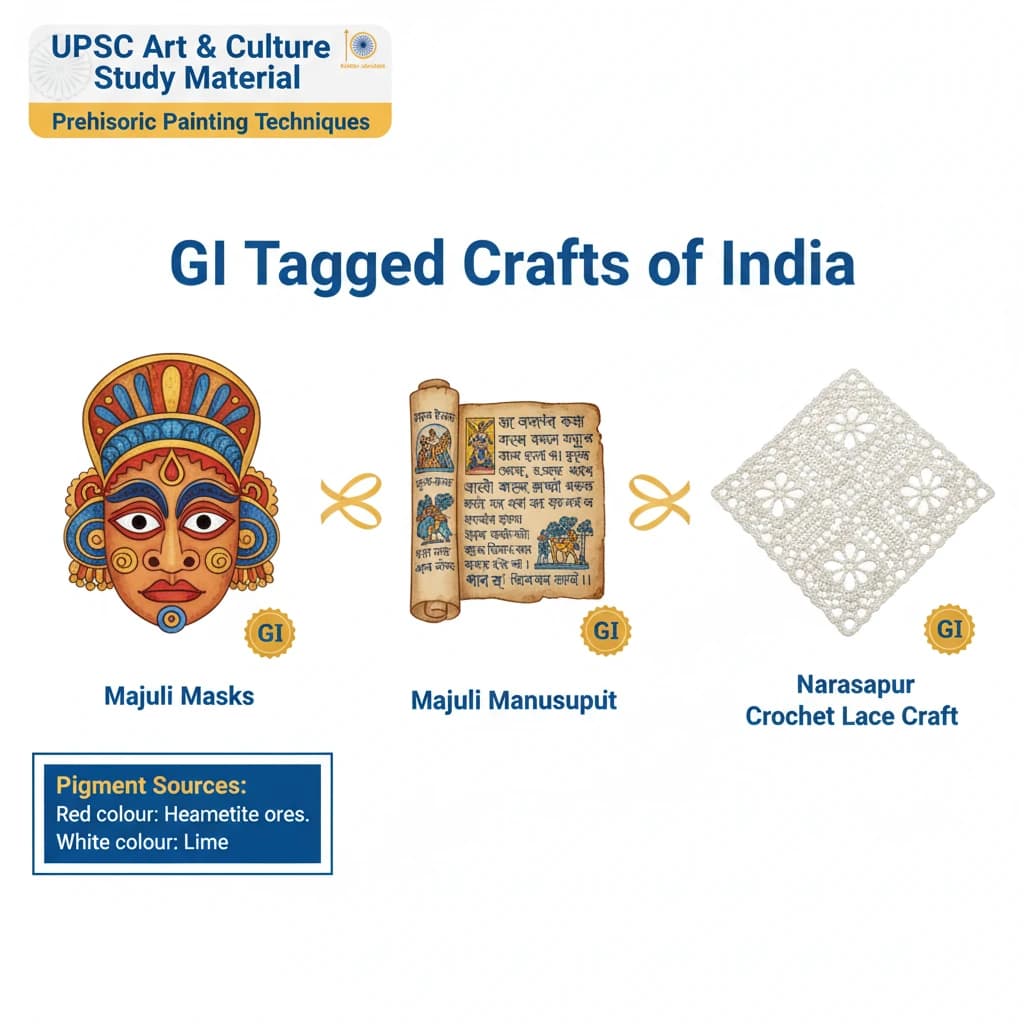
GI Tag to Majuli Masks, Manuscript and Narasapur Crochet Lace Craft
Medium⏱️ 8 min read
art and culture
📖 Introduction
Prehistoric Painting Techniques
Prehistoric paintings utilized a variety of natural pigments. These included colours like red ochre, purple, brown, white, yellow, and green.
Pigment Sources:
- Red colour: Derived from haematite ores.
- White colour: Likely obtained from limestone.
- Green colour: Prepared from a specific green rock called Chalcedony.
The brushes used by prehistoric artists were ingeniously crafted from plant fibre, showcasing early human ingenuity in tool-making.
Themes of Prehistoric Paintings
The themes of these ancient artworks predominantly depicted the everyday life of prehistoric humans. Figures were often rendered in a distinctive stick-like human form.
A wide array of animals featured prominently, including elephants, bisons, deer, peacocks, and snakes. These depictions often reflected the fauna prevalent in their environment.
Scenes of hunting and war were also common, illustrating armed men engaged in conflict or the pursuit of game. Additionally, paintings incorporated simple geometric designs and various symbols, hinting at early forms of abstract thought or communication.
Geographical Indication (GI) Tag Recognition
The Geographical Indication (GI) Tag is a crucial tool for preserving the unique identity of traditional Indian crafts. Recently, several significant crafts have received this recognition.
Newly GI-Tagged Crafts:
- Majuli Masks (Assam)
- Majuli Manuscript Painting (Assam)
- Narasapur Crochet Lace Craft (Andhra Pradesh)
Significance of GI Tags for Traditional Crafts
The traditional crochet lace craft of Narasapur in Andhra Pradesh has been granted a GI tag. This recognition is vital for safeguarding its unique identity, especially amidst intense competition from machine-made lace from China.
Similarly, the traditional arts of Majuli masks and manuscript painting from Assam have also gained GI recognition. This enhances their cultural significance and provides protection against potential decline.
These GI tags serve a dual purpose: they aim to rejuvenate and promote traditional crafts. This ensures their continued legacy and contributes significantly to heritage preservation, making them important for UPSC Art & Culture and Economy papers.
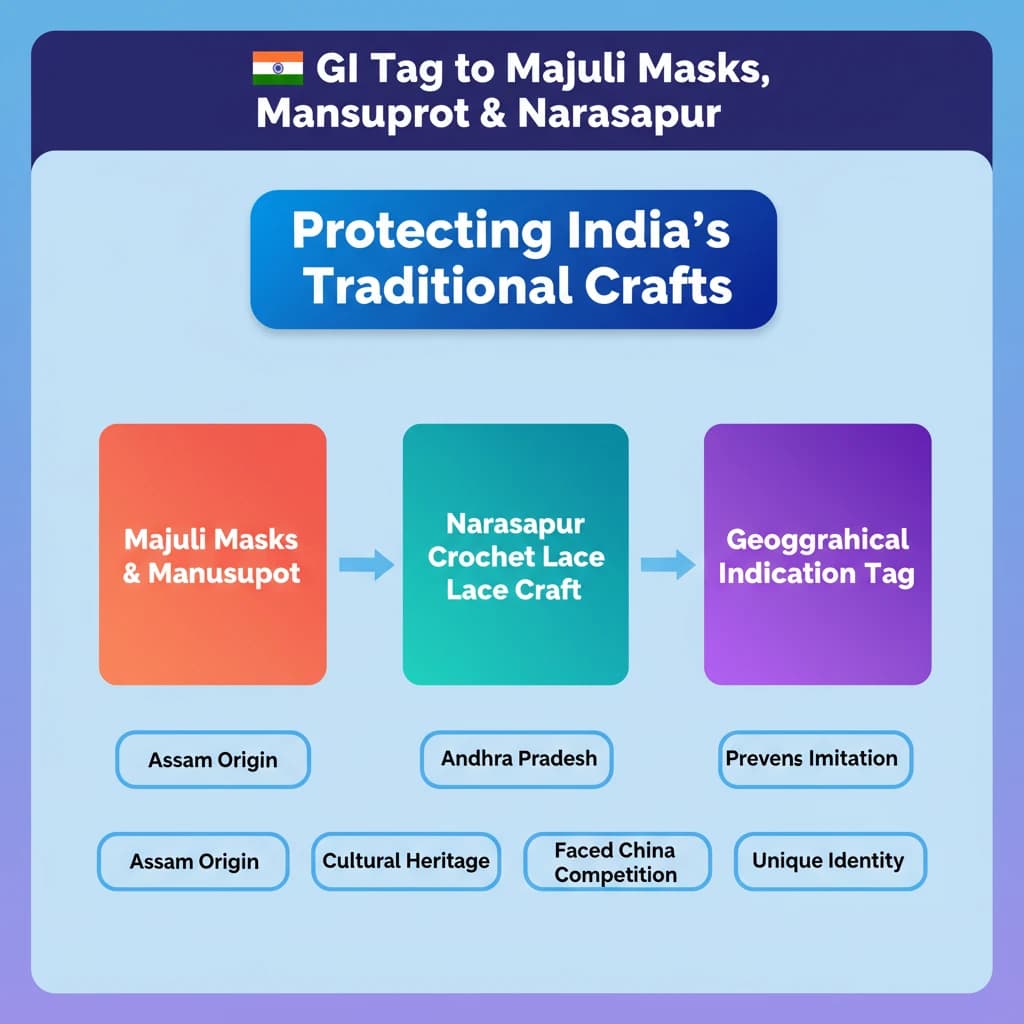
💡 Key Takeaways
- •Prehistoric paintings used natural pigments like red ochre, white from limestone, and green from Chalcedony.
- •Themes included daily life, animals, hunting, war, and simple geometric designs.
- •Majuli Masks, Majuli Manuscript Painting, and Narasapur Crochet Lace Craft recently received GI tags.
- •GI tags protect the unique identity of traditional crafts from imitation and competition.
- •Narasapur Crochet Lace faced competition from machine-made lace from China.
- •GI tags aim to rejuvenate, promote, and preserve India's rich cultural heritage.
🧠 Memory Techniques
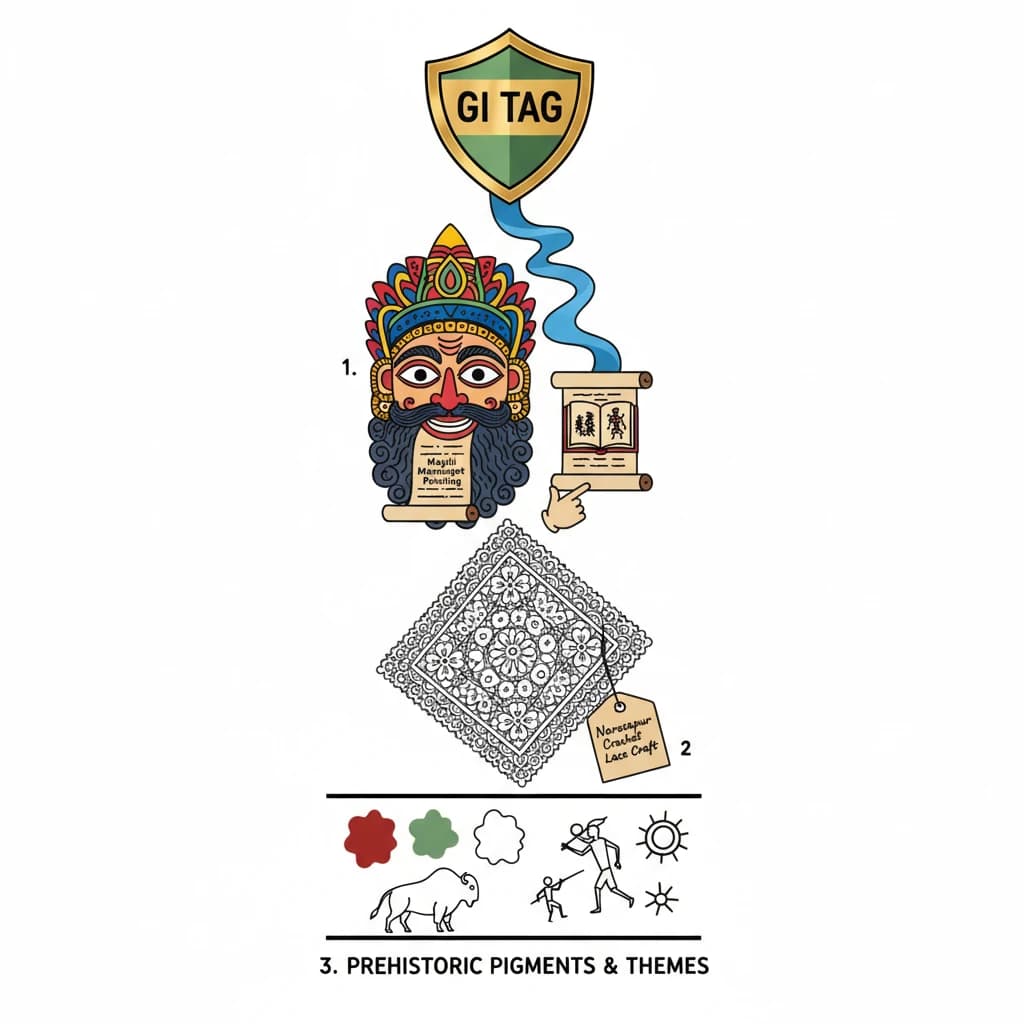
98% Verified Content
📚 Reference Sources
•Geographical Indications Registry (India)
•Ministry of Culture, Government of India
•NCERT textbooks (for prehistoric art context)