Loading page, please wait…
Gingee Fort: Architectural Features, Temples, and Water Systems - UPSC Art And Culture
What is Gingee Fort: Architectural Features, Temples, and Water Systems in UPSC Art And Culture?
Gingee Fort: Architectural Features, Temples, and Water Systems is a key topic under Art And Culture for UPSC Civil Services Examination. Key points include: Gingee Fort is a multi-hill complex with three citadels: Rajagiri, Krishnagiri, and Chandrayan Durg.. It features sophisticated water supply systems, including stepped wells and tanks, ensuring continuous supply.. Key structures include Kalyana Mahal, durbar hall, temples (Venkataramana, Ranganatha), and Sadathulla Mosque.. Understanding this topic is essential for both UPSC Prelims and Mains preparation.
Why is Gingee Fort: Architectural Features, Temples, and Water Systems important for UPSC exam?
Gingee Fort: Architectural Features, Temples, and Water Systems is a Medium-level topic in UPSC Art And Culture. It is tested in both Prelims (factual MCQs) and Mains (analytical answer writing). Previous year UPSC questions have frequently covered aspects of Gingee Fort: Architectural Features, Temples, and Water Systems, making it essential for comprehensive IAS preparation.
How to prepare Gingee Fort: Architectural Features, Temples, and Water Systems for UPSC?
To prepare Gingee Fort: Architectural Features, Temples, and Water Systems for UPSC: (1) Study the comprehensive notes covering all key concepts on Vaidra. (2) Practice previous year questions on this topic. (3) Connect it with current affairs using daily updates. (4) Revise using key takeaways and mind maps available for Art And Culture. (5) Write practice answers linking Gingee Fort: Architectural Features, Temples, and Water Systems to related GS Paper topics.
Key takeaways of Gingee Fort: Architectural Features, Temples, and Water Systems for UPSC
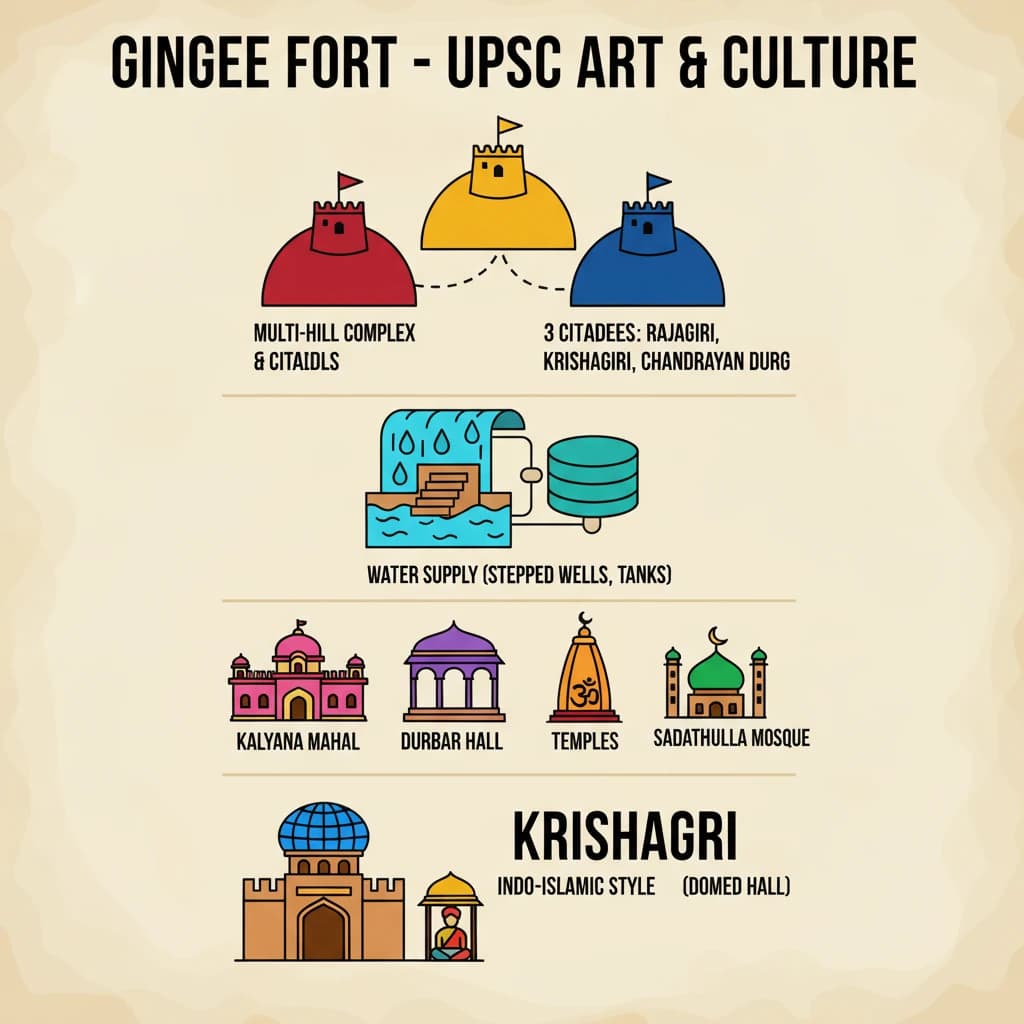
- Gingee Fort is a multi-hill complex with three citadels: Rajagiri, Krishnagiri, and Chandrayan Durg.
- It features sophisticated water supply systems, including stepped wells and tanks, ensuring continuous supply.
- Key structures include Kalyana Mahal, durbar hall, temples (Venkataramana, Ranganatha), and Sadathulla Mosque.
- Krishnagiri Citadel showcases distinct Indo-Islamic architectural elements like a domed audience hall.
- Kalyana Mahal is an eight-storeyed royal ladies' quarters, highlighting residential architecture.
- The fort's history spans Chola, Vijayanagara, Nayak, Maratha, Mughal, and European periods.
- Its architectural features reflect strategic defense, diverse cultural influences, and advanced engineering.
Gingee Fort: Architectural Features, Temples, and Water Systems
Medium⏱️ 8 min read
art and culture
📖 Introduction
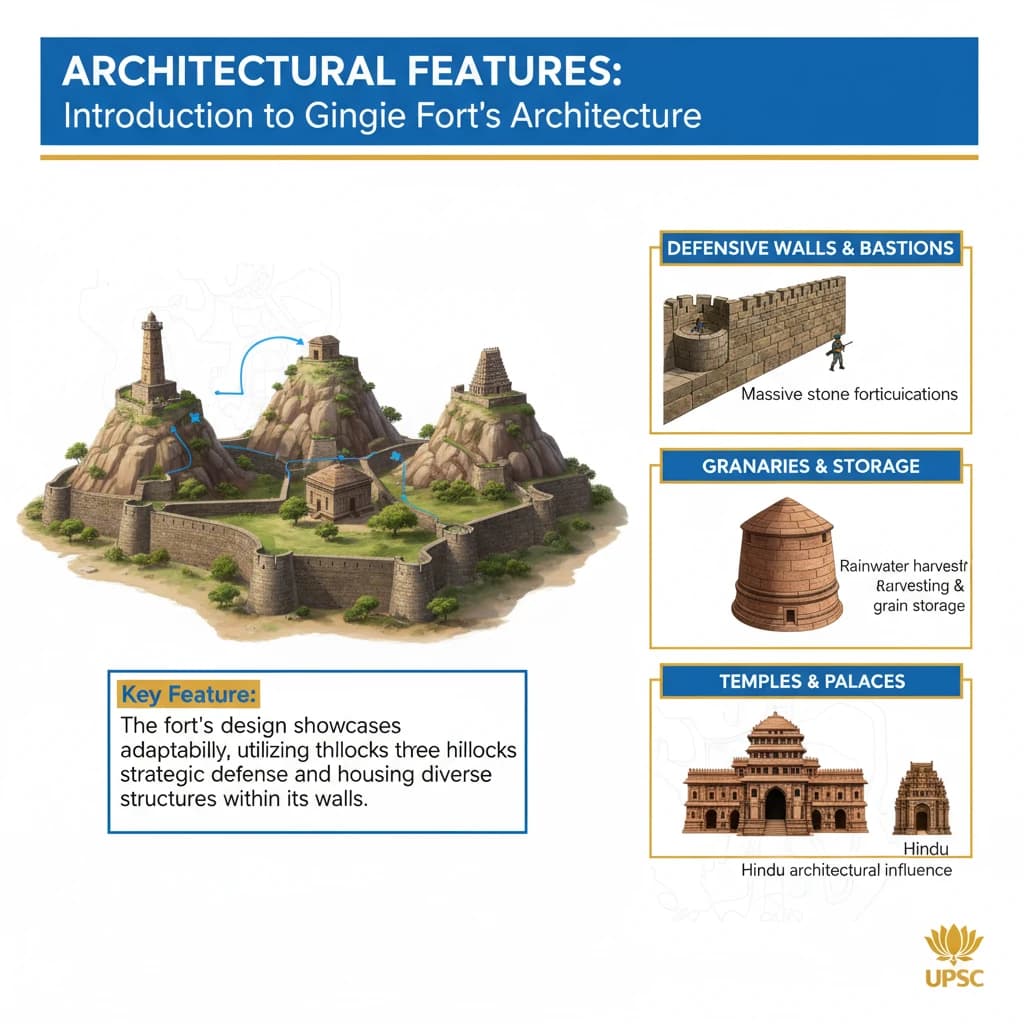
Introduction to Gingee Fort's Architecture
The Gingee Fort complex is a remarkable example of Indian military architecture, integrating natural topography with sophisticated design. It encompasses a variety of structures that served both defensive and administrative purposes.
Key Feature: The fort's design showcases adaptability, utilizing three hillocks for strategic defense and housing diverse structures within its walls.
General Structures and Amenities
The fort complex is extensive, housing numerous facilities essential for a self-sustaining stronghold. It includes several temples and shrines, reflecting the spiritual life within the fort.
- Essential Infrastructure: A stepped well for water, a granary for food storage, and a stable for animals were crucial.
- Administrative & Military: A durbar hall for assemblies, an armory, and cannons highlight its military and governance functions.
- Daily Life & Culture: Features like a clock tower, elephant tank, and gymnasium indicate a well-developed urban environment.
- Religious Diversity: The presence of both the Venkataramana temple and the Sadathulla Mosque points to the fort's diverse cultural and religious patronage.
Sophisticated Water Supply Systems
One of the most impressive architectural feats at Gingee Fort is its advanced water supply system. This engineering marvel ensured water availability even at the highest elevations.
System Details: Gingee Fort features two sophisticated water supply systems. These were designed to provide a continuous water supply, crucial for sustaining the population during sieges.
Rajagiri Hill: The Primary Citadel
Rajagiri Hill stands as the tallest and most strategically important part of the fort complex. Its elevation provided an excellent vantage point for defense.
Elevation: Rajagiri Hill is approximately 800 meters tall. It houses a primary citadel and the revered temple of Ranganatha, indicating its dual role as a defensive and religious center.
Krishnagiri Citadel: Indo-Islamic Influence
The Krishnagiri Citadel presents a distinct architectural style, reflecting the diverse cultural influences on the fort's builders over time. It is known for its unique structural elements.
Architectural Style: Krishnagiri Citadel is notable for its prominent Indo-Islamic architecture. A key feature is its audience hall with a domed roof, a characteristic element of Islamic design.
Venkataramana Swamy Temple
Located within the lower fort complex, the Venkataramana Swamy Temple is a significant religious structure known for its artistic embellishments. It showcases intricate craftsmanship.
Location: Situated in the Lower Fort complex. The temple is adorned with intricate carvings depicting scenes and narratives from various Hindu epics, reflecting rich cultural heritage.
Kalyana Mahal: Royal Ladies' Quarters
The Kalyana Mahal is a striking example of residential architecture within the fort, designed for the royal women. It is considered an architectural jewel due to its unique design and purpose.
Structure: The Kalyana Mahal is an impressive eight-storeyed building. It served as the royal ladies' quarters, combining privacy with architectural elegance.
UPSC Insight: When studying forts like Gingee, focus on how architectural features reflect the strategic needs, cultural influences, and daily life of the period. Questions often link architecture to socio-economic conditions.
💡 Key Takeaways
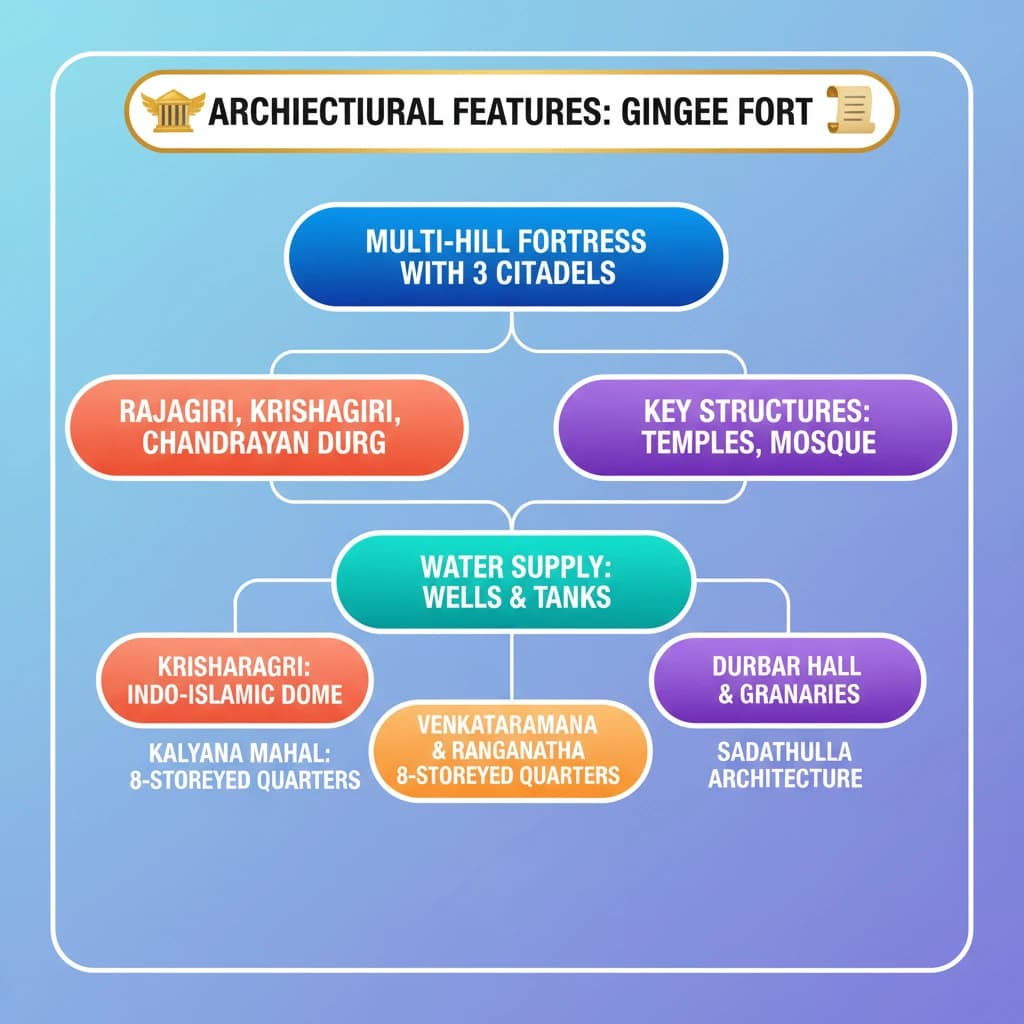
- •Gingee Fort is a multi-hill complex with three citadels: Rajagiri, Krishnagiri, and Chandrayan Durg.
- •It features sophisticated water supply systems, including stepped wells and tanks, ensuring continuous supply.
- •Key structures include Kalyana Mahal, durbar hall, temples (Venkataramana, Ranganatha), and Sadathulla Mosque.
- •Krishnagiri Citadel showcases distinct Indo-Islamic architectural elements like a domed audience hall.
- •Kalyana Mahal is an eight-storeyed royal ladies' quarters, highlighting residential architecture.
- •The fort's history spans Chola, Vijayanagara, Nayak, Maratha, Mughal, and European periods.
- •Its architectural features reflect strategic defense, diverse cultural influences, and advanced engineering.
🧠 Memory Techniques
98% Verified Content
📚 Reference Sources
•Archaeological Survey of India (ASI) publications on Gingee Fort
•NCERT Textbooks (relevant sections on Indian architecture)
•Reputable historical journals and academic articles on South Indian forts