Loading page, please wait…
Gingee Fort Nominated for UNESCO World Heritage Site - UPSC Art And Culture
What is Gingee Fort Nominated for UNESCO World Heritage Site in UPSC Art And Culture?
Gingee Fort Nominated for UNESCO World Heritage Site is a key topic under Art And Culture for UPSC Civil Services Examination. Key points include: Gingee Fort in Tamil Nadu is nominated for UNESCO World Heritage Site status.. It is part of the larger Maratha Military Landscapes proposal, including 12 other forts.. Known as the “Troy of the East” due to its impregnable nature.. Understanding this topic is essential for both UPSC Prelims and Mains preparation.
Why is Gingee Fort Nominated for UNESCO World Heritage Site important for UPSC exam?
Gingee Fort Nominated for UNESCO World Heritage Site is a Medium-level topic in UPSC Art And Culture. It is tested in both Prelims (factual MCQs) and Mains (analytical answer writing). Previous year UPSC questions have frequently covered aspects of Gingee Fort Nominated for UNESCO World Heritage Site, making it essential for comprehensive IAS preparation.
How to prepare Gingee Fort Nominated for UNESCO World Heritage Site for UPSC?
To prepare Gingee Fort Nominated for UNESCO World Heritage Site for UPSC: (1) Study the comprehensive notes covering all key concepts on Vaidra. (2) Practice previous year questions on this topic. (3) Connect it with current affairs using daily updates. (4) Revise using key takeaways and mind maps available for Art And Culture. (5) Write practice answers linking Gingee Fort Nominated for UNESCO World Heritage Site to related GS Paper topics.
Key takeaways of Gingee Fort Nominated for UNESCO World Heritage Site for UPSC
- Gingee Fort in Tamil Nadu is nominated for UNESCO World Heritage Site status.
- It is part of the larger Maratha Military Landscapes proposal, including 12 other forts.
- Known as the “Troy of the East” due to its impregnable nature.
- Strategically located atop three hillocks: Rajagiri, Krishnagiri, and Chandragiri.
- Features robust defenses, including a 60-foot-wide rampart and an 80-foot-wide moat.
- Played a vital role in the Carnatic Wars and Maratha resistance against the Mughals.
- Historically controlled by various powers: Konar Dynasty, Vijayanagar, Marathas, Mughals, Arcot Nawabs, French, and British.

Gingee Fort Nominated for UNESCO World Heritage Site
Medium⏱️ 8 min read
art and culture
📖 Introduction
Gingee Fort: UNESCO Nomination and Strategic Significance
The Gingee Fort, located in Tamil Nadu’s Villupuram district, has been nominated for UNESCO’s World Heritage Site list. This nomination is part of the broader Maratha Military Landscapes proposal.
This proposal includes 12 other forts, highlighting a significant network of historical military architecture across India. The recognition underscores the strategic and cultural importance of these sites.
Location: Villupuram district, Tamil Nadu
Nomination: UNESCO World Heritage Site list
Part of: Maratha Military Landscapes proposal (includes 12 other forts)
Nomination: UNESCO World Heritage Site list
Part of: Maratha Military Landscapes proposal (includes 12 other forts)
Geographical Features and Impregnability
Gingee Fort is highly renowned for its historical importance and its exceptionally strategic location. It is built atop three prominent hillocks, which naturally enhance its defensive capabilities.
These three hillocks are named Rajagiri, Krishnagiri, and Chandragiri. This multi-hill structure contributes significantly to its reputation as an impregnable fortress.
Known as: “Troy of the East”
Reason: One of the most impregnable fortresses in peninsular India
Key Features: Strategic location atop three hillocks (Rajagiri, Krishnagiri, Chandragiri)
Reason: One of the most impregnable fortresses in peninsular India
Key Features: Strategic location atop three hillocks (Rajagiri, Krishnagiri, Chandragiri)
Robust Defenses and Carnatic Wars
The fort's strategic location was complemented by its robust defensive structures. These included a formidable 60-foot-wide rampart and an expansive 80-foot-wide moat.
These defenses made Gingee Fort a vital stronghold during critical historical conflicts. Its strategic importance was particularly evident during the Carnatic Wars, where it played a crucial role in the struggles between the French and British forces.
UPSC Insight: The term “Troy of the East” and the fort's role in the Carnatic Wars are important for GS Paper 1 (History). Understanding the strategic significance of such forts is key.
💡 Key Takeaways
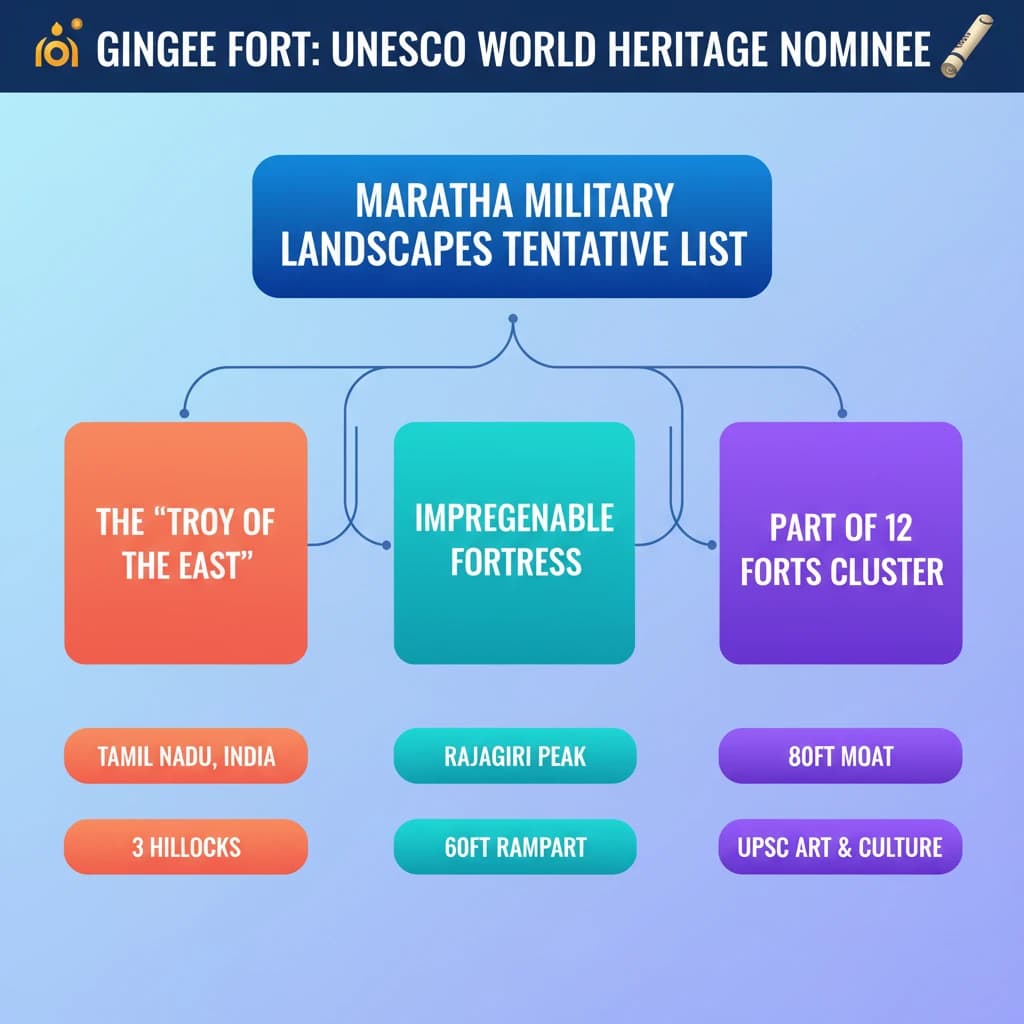
- •Gingee Fort in Tamil Nadu is nominated for UNESCO World Heritage Site status.
- •It is part of the larger Maratha Military Landscapes proposal, including 12 other forts.
- •Known as the “Troy of the East” due to its impregnable nature.
- •Strategically located atop three hillocks: Rajagiri, Krishnagiri, and Chandragiri.
- •Features robust defenses, including a 60-foot-wide rampart and an 80-foot-wide moat.
- •Played a vital role in the Carnatic Wars and Maratha resistance against the Mughals.
- •Historically controlled by various powers: Konar Dynasty, Vijayanagar, Marathas, Mughals, Arcot Nawabs, French, and British.
🧠 Memory Techniques
98% Verified Content