Loading page, please wait…
Gwalior Inscription (King Bhoja I) - UPSC Art And Culture
What is Gwalior Inscription (King Bhoja I) in UPSC Art And Culture?
Gwalior Inscription (King Bhoja I) is a key topic under Art And Culture for UPSC Civil Services Examination. Key points include: The Gwalior Inscription is linked to King Bhoja I of the Gurjara-Pratihara dynasty.. It describes grants of land, including Agraharas, to Brahmins.. The inscription offers crucial insights into socio-economic practices and administration.. Understanding this topic is essential for both UPSC Prelims and Mains preparation.
Why is Gwalior Inscription (King Bhoja I) important for UPSC exam?
Gwalior Inscription (King Bhoja I) is a Medium-level topic in UPSC Art And Culture. It is tested in both Prelims (factual MCQs) and Mains (analytical answer writing). Previous year UPSC questions have frequently covered aspects of Gwalior Inscription (King Bhoja I), making it essential for comprehensive IAS preparation.
How to prepare Gwalior Inscription (King Bhoja I) for UPSC?
To prepare Gwalior Inscription (King Bhoja I) for UPSC: (1) Study the comprehensive notes covering all key concepts on Vaidra. (2) Practice previous year questions on this topic. (3) Connect it with current affairs using daily updates. (4) Revise using key takeaways and mind maps available for Art And Culture. (5) Write practice answers linking Gwalior Inscription (King Bhoja I) to related GS Paper topics.
Key takeaways of Gwalior Inscription (King Bhoja I) for UPSC
- The Gwalior Inscription is linked to King Bhoja I of the Gurjara-Pratihara dynasty.
- It describes grants of land, including Agraharas, to Brahmins.
- The inscription offers crucial insights into socio-economic practices and administration.
- Inscriptions are primary sources for historical reconstruction, offering authentic evidence.
- Agraharas were tax-free land grants to Brahmins, fostering religious and educational centers.
- Other key inscriptions include Banskhera Copper Plate (Harshavardhana) and Deopara Prashasti (Vijaya Sena).
- These records help understand ancient Indian polity, economy, and cultural patronage.
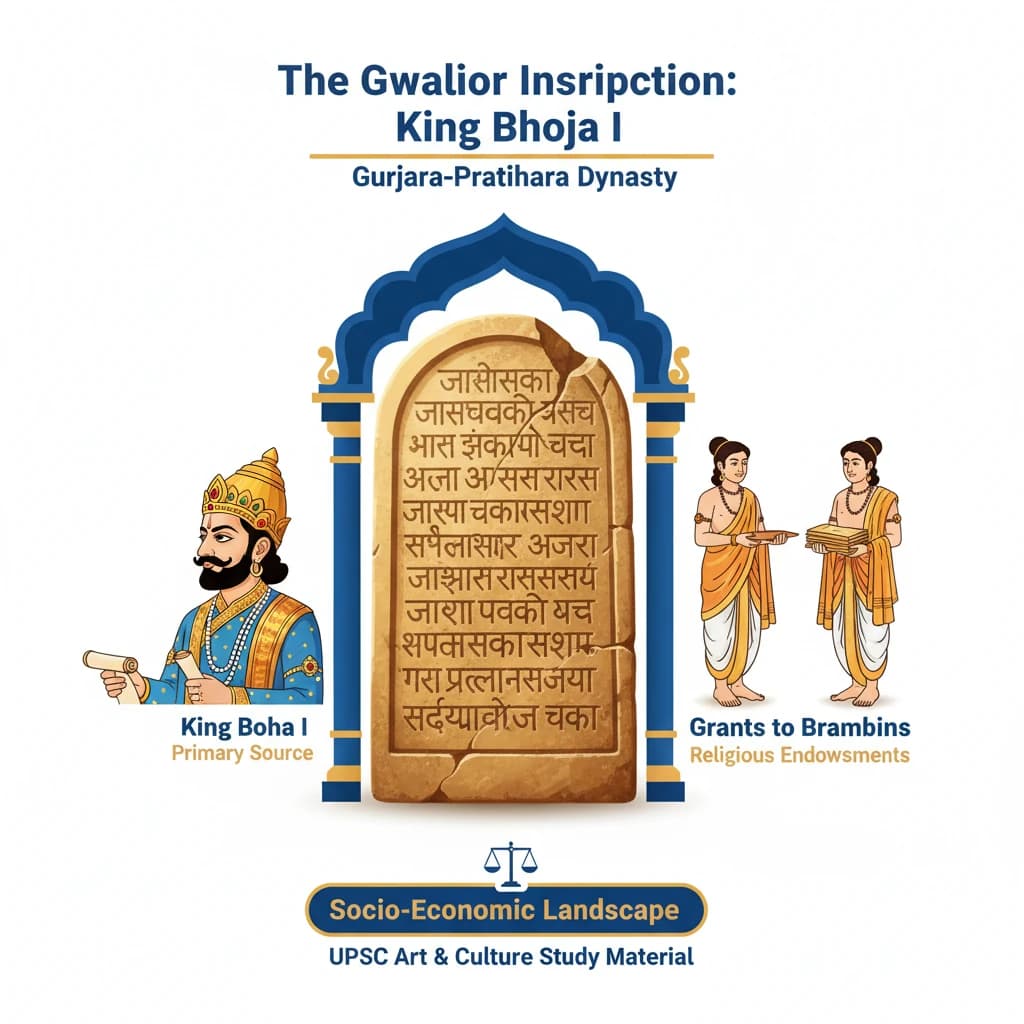
Gwalior Inscription (King Bhoja I)
Medium⏱️ 6 min read
art and culture
📖 Introduction
The Gwalior Inscription: An Overview
The Gwalior Inscription is a significant historical document primarily associated with King Bhoja I of the Gurjara-Pratihara dynasty. It serves as a crucial primary source for understanding the socio-economic landscape of the period.
Key Details and Content
This inscription specifically describes various grants to Brahmins, highlighting the prevalent practice of religious endowments during that era. Such grants often involved land or revenue assignments.
Associated Ruler: King Bhoja I
Dynasty: Gurjara-Pratihara Dynasty
Location: Gwalior, Madhya Pradesh
Primary Subject: Land grants and socio-economic practices
Dynasty: Gurjara-Pratihara Dynasty
Location: Gwalior, Madhya Pradesh
Primary Subject: Land grants and socio-economic practices
Insights into Socio-Economic Practices
A key aspect mentioned in the inscription is the reference to Agraharas. These were villages or lands granted to Brahmins, often tax-free, for their sustenance and for maintaining religious or educational institutions.
The mention of Agraharas in the Gwalior Inscription provides invaluable insights into the agrarian economy, land tenure systems, and the patronage extended to the priestly class under the Gurjara-Pratiharas.
Historical Significance
The inscription is vital for reconstructing the administrative and social structure of the Gurjara-Pratihara empire. It reflects the strong influence of religious institutions and the role of rulers in supporting them.
For UPSC Prelims, remember the ruler (King Bhoja I) and dynasty (Gurjara-Pratihara) associated with the Gwalior Inscription. For Mains, focus on its implications for understanding socio-economic conditions and land grants.
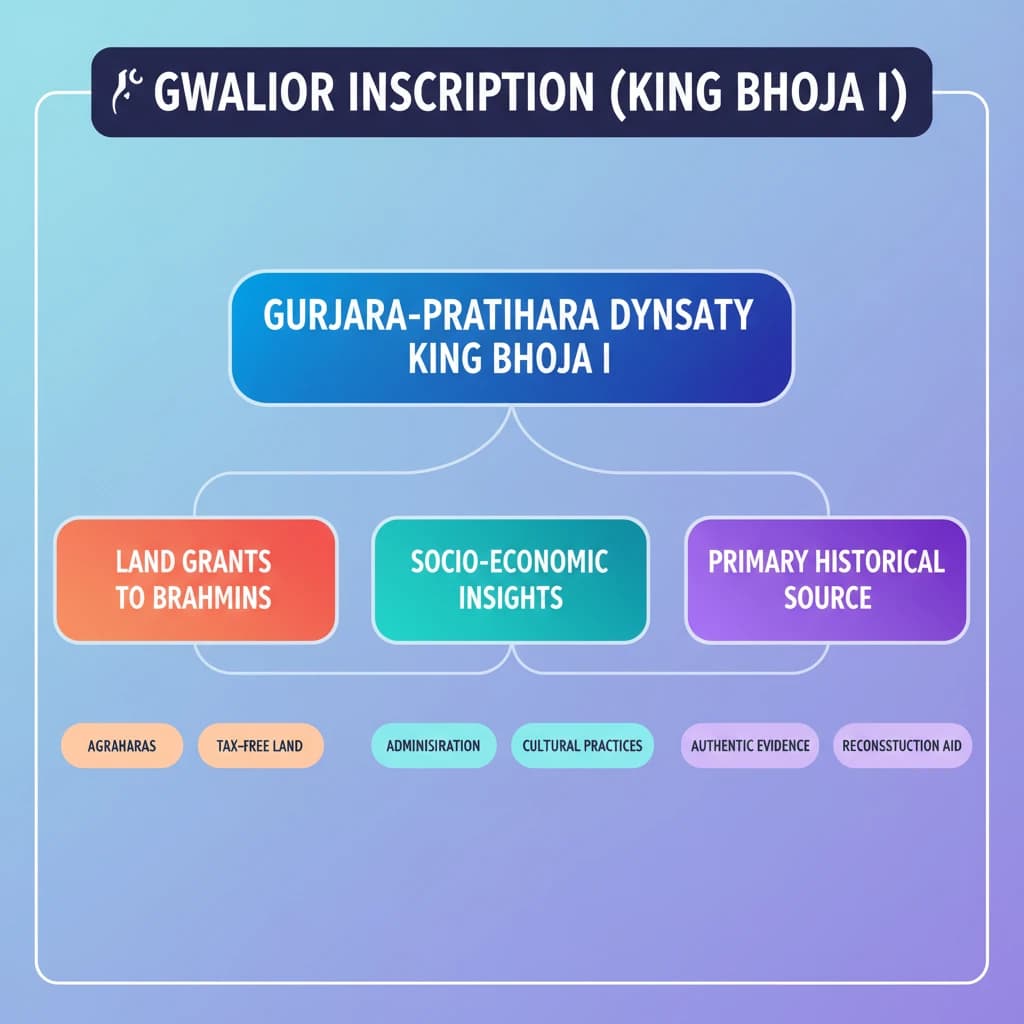
💡 Key Takeaways
- •The Gwalior Inscription is linked to King Bhoja I of the Gurjara-Pratihara dynasty.
- •It describes grants of land, including Agraharas, to Brahmins.
- •The inscription offers crucial insights into socio-economic practices and administration.
- •Inscriptions are primary sources for historical reconstruction, offering authentic evidence.
- •Agraharas were tax-free land grants to Brahmins, fostering religious and educational centers.
- •Other key inscriptions include Banskhera Copper Plate (Harshavardhana) and Deopara Prashasti (Vijaya Sena).
- •These records help understand ancient Indian polity, economy, and cultural patronage.
🧠 Memory Techniques
98% Verified Content
📚 Reference Sources
•NCERT History Textbooks (Ancient India)
•Upinder Singh, A History of Ancient and Early Medieval India: From the Stone Age to the 12th Century