Loading page, please wait…
Humayun's Era: Coins, Architecture, Cultural Figures & Conservation - UPSC Art And Culture
What is Humayun's Era: Coins, Architecture, Cultural Figures & Conservation in UPSC Art And Culture?
Humayun's Era: Coins, Architecture, Cultural Figures & Conservation is a key topic under Art And Culture for UPSC Civil Services Examination. Key points include: Humayun's Tomb, built in 1570, is the first major garden tomb in the Indian subcontinent.. It set a precedent for later Mughal architecture, including the Taj Mahal.. Commissioned by Empress Bega Begum and designed by Persian architects, it shows strong Persian influence.. Understanding this topic is essential for both UPSC Prelims and Mains preparation.
Why is Humayun's Era: Coins, Architecture, Cultural Figures & Conservation important for UPSC exam?
Humayun's Era: Coins, Architecture, Cultural Figures & Conservation is a Medium-level topic in UPSC Art And Culture. It is tested in both Prelims (factual MCQs) and Mains (analytical answer writing). Previous year UPSC questions have frequently covered aspects of Humayun's Era: Coins, Architecture, Cultural Figures & Conservation, making it essential for comprehensive IAS preparation.
How to prepare Humayun's Era: Coins, Architecture, Cultural Figures & Conservation for UPSC?
To prepare Humayun's Era: Coins, Architecture, Cultural Figures & Conservation for UPSC: (1) Study the comprehensive notes covering all key concepts on Vaidra. (2) Practice previous year questions on this topic. (3) Connect it with current affairs using daily updates. (4) Revise using key takeaways and mind maps available for Art And Culture. (5) Write practice answers linking Humayun's Era: Coins, Architecture, Cultural Figures & Conservation to related GS Paper topics.
Key takeaways of Humayun's Era: Coins, Architecture, Cultural Figures & Conservation for UPSC
- Humayun's Tomb, built in 1570, is the first major garden tomb in the Indian subcontinent.
- It set a precedent for later Mughal architecture, including the Taj Mahal.
- Commissioned by Empress Bega Begum and designed by Persian architects, it shows strong Persian influence.
- The complex is known as the 'dormitory of the Mughals,' housing over 150 Mughal family members.
- It is a UNESCO World Heritage Site since 1993, managed by ASI and Aga Khan Trust for Culture.
- The surrounding Nizamuddin area is culturally rich, associated with Sufi saint Hazrat Nizamuddin Auliya and poet Amir Khusrau.
- A museum at the site showcases Humayun's interests, administration, and coins from various Mughal emperors.
Humayun's Era: Coins, Architecture, Cultural Figures & Conservation
Medium⏱️ 7 min read
art and culture
📖 Introduction
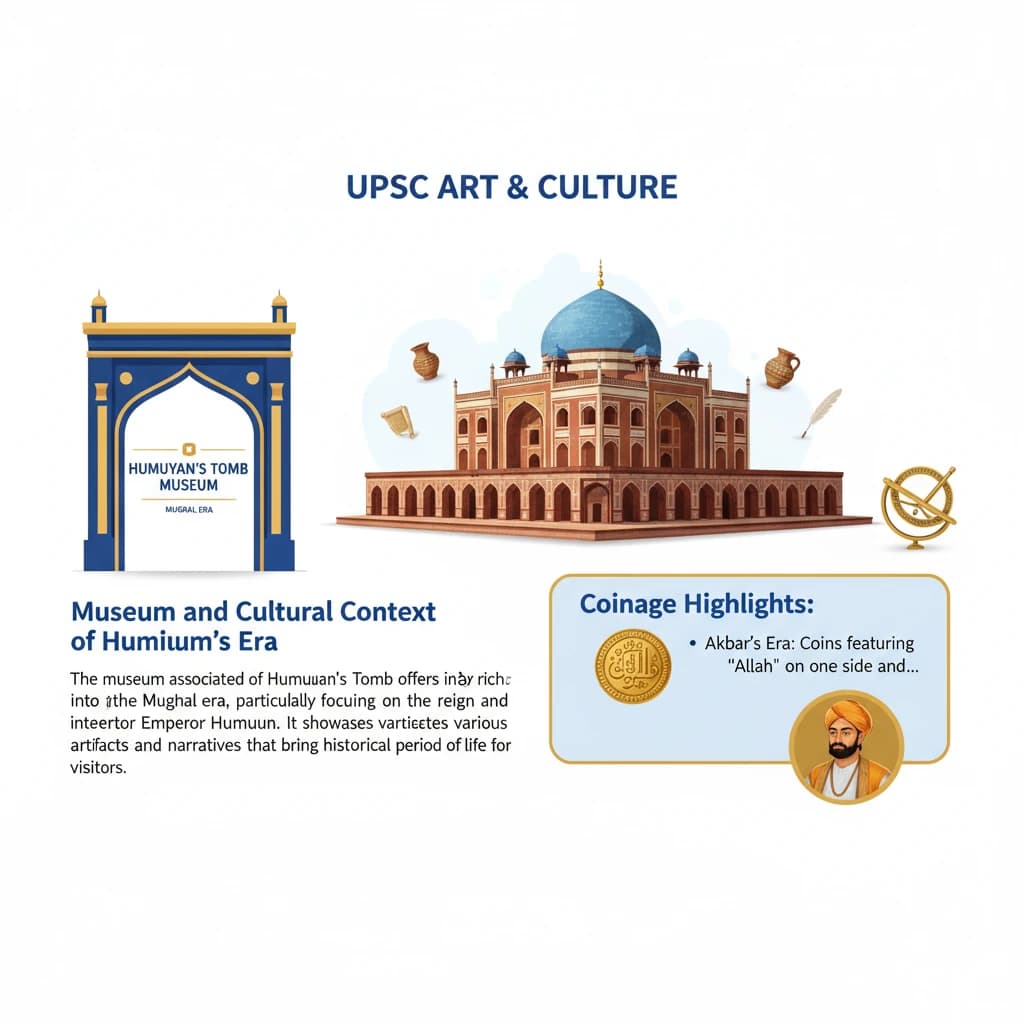
Museum and Cultural Context of Humayun's Era
The museum associated with Humayun's Tomb offers a rich glimpse into the Mughal era, particularly focusing on the reign and interests of Emperor Humayun. It showcases various artifacts and narratives that bring the historical period to life for visitors.
Coinage Highlights:
- Akbar's Era: Coins featuring 'Allah' on one side and 'Ram' on the other, reflecting religious syncretism.
- Jahangir's Era: Examples of expensive and intricately designed coins.
- Bahadur Shah Zafar: Rare coins minted by the last Mughal emperor, offering a link to later Mughal history.
Exhibits within the museum delve into the architecture of Humayun's Mausoleum itself, alongside insights into the emperor's multifaceted personality. These displays convey stories of Humayun's extensive travels, his administrative acumen, and his intellectual pursuits.
The museum highlights Humayun's keen interest in various fields, including reading, the science of astrology, and a profound appreciation for the arts. His significant patronage of architecture is also a central theme, showcasing his contributions to Mughal building traditions.
Key Cultural Figures of Nizamuddin
The Nizamuddin area, where Humayun's Tomb is located, has been a vibrant cultural hub for centuries. The museum and surrounding complex acknowledge its association with several influential figures from the 14th century onwards.
Associated Cultural Personalities:
- Sufi Saint Hazrat Nizamuddin Auliya: A revered Sufi mystic whose shrine is central to the area.
- Poet Amir Khusrau Dehalvi: A legendary poet, musician, and scholar, a disciple of Nizamuddin Auliya.
- Rahim: A commander-in-chief of Akbar's army and a celebrated poet, known for his Hindi couplets.
- Dara Shikoh: The eldest son of Shah Jahan, renowned for his scholarly pursuits, including translating the Upanishads into Persian.
Conservation Efforts for the Cultural Complex
The preservation of this significant historical and cultural landscape is a collaborative effort. The museum and the broader complex are actively managed by the Archaeological Survey of India (ASI), a primary governmental body for heritage conservation.
Integrated Conservation Area:The museum is an integral part of a larger, comprehensive conservation initiative. This effort spans a vast 300-acre area, encompassing the iconic Humayun’s Tomb, the revitalized Sunder Nursery, and the historic Nizamuddin Basti, aiming for holistic preservation.
Humayun's Tomb: Architectural Grandeur
Constructed in 1570, Humayun’s Tomb holds immense historical and architectural significance as the first major garden tomb in the Indian subcontinent. This monumental structure set a crucial precedent for the distinctive style of Mughal architecture that followed.
Architectural Legacy:Humayun's Tomb is widely recognized as a pivotal precursor, laying the foundational design principles that would later culminate in the unparalleled splendor of the Taj Mahal. Its innovative design influenced subsequent Mughal funerary architecture.
The tomb was commissioned by Humayun's first wife, Empress Bega Begum, between 1569-70. The architectural design was meticulously crafted by skilled Persian architects, reflecting the strong Persian influence on early Mughal art and construction.
The complex also houses other notable 16th-century Mughal tombs, enriching its historical tapestry. These include the distinctive Nila Gumbad and the tomb of Isa Khan Niyazi, an influential Afghan noble from the Sur dynasty period.
Distinctive Architectural Features
- Charbagh Garden: The mausoleum is set within a meticulously planned charbagh (four-part garden), a Persian-inspired layout symbolizing paradise.
- High-Terraced Platform: The main tomb stands majestically on a substantial high-terraced platform, elevating its presence and offering panoramic views.
- Marble Clad Dome: A prominent feature is its grand marble clad dome, which became a hallmark of later Mughal imperial architecture.
The mausoleum is affectionately known as the ‘dormitory of the Mughals’ due to the sheer number of burials it contains. It serves as the final resting place for over 150 Mughal family members, making it a significant dynastic burial ground.
A unique aspect of its location is its proximity to the Shrine of the 14th-century Sufi Saint, Hazrat Nizamuddin Auliya. This placement was deliberate, driven by the widespread belief that being buried near a revered saint’s grave brings good fortune and spiritual blessings.
Heritage Status and Preservation
UNESCO World Heritage Site:Humayun's Tomb was officially declared a UNESCO World Heritage Site in 1993, recognizing its outstanding universal value and cultural significance.
Following its designation, the site has undergone extensive and meticulous restoration work. These efforts have aimed to preserve its structural integrity, aesthetic beauty, and historical authenticity for future generations.
The ongoing management and protection of this invaluable heritage site are jointly overseen by the Archaeological Survey of India (ASI) and the Aga Khan Trust for Culture. These organizations work in concert to ensure its preservation under various national and international legislations.
💡 Key Takeaways
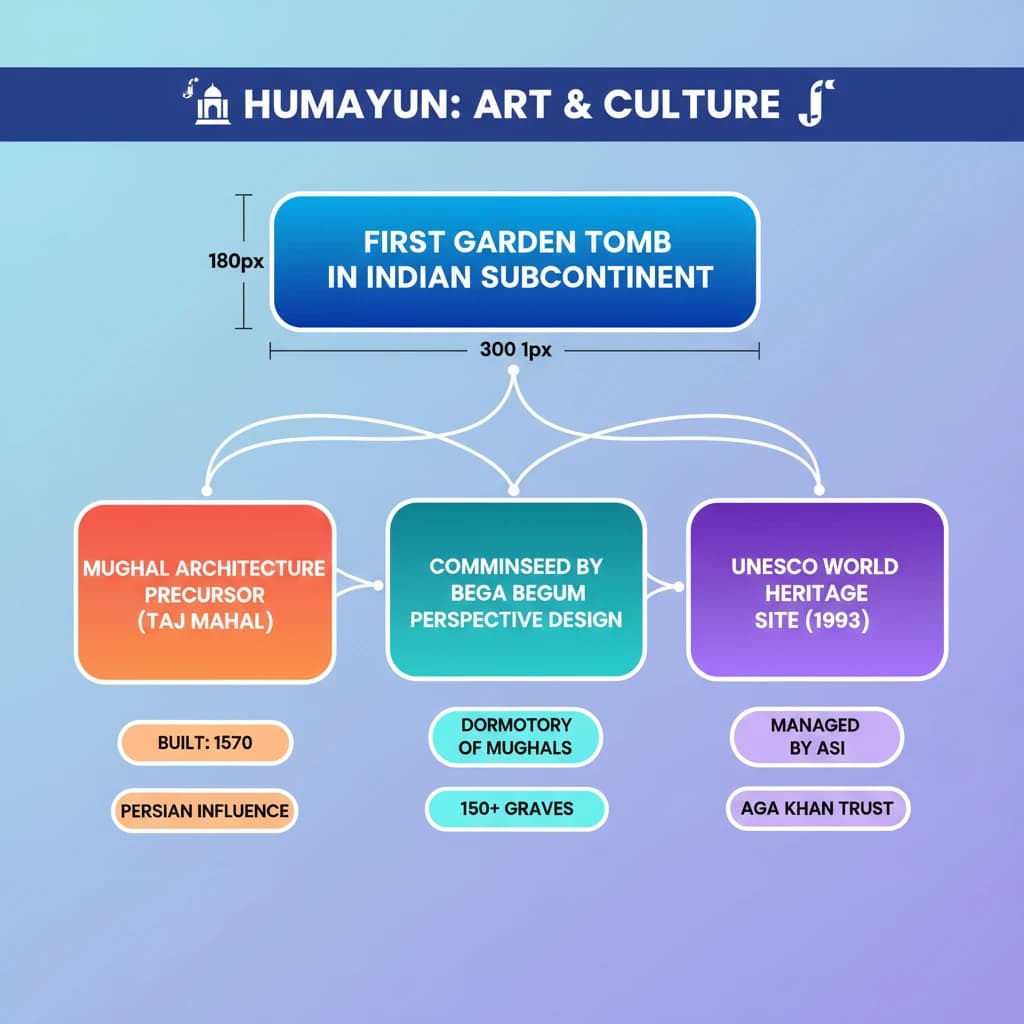
- •Humayun's Tomb, built in 1570, is the first major garden tomb in the Indian subcontinent.
- •It set a precedent for later Mughal architecture, including the Taj Mahal.
- •Commissioned by Empress Bega Begum and designed by Persian architects, it shows strong Persian influence.
- •The complex is known as the 'dormitory of the Mughals,' housing over 150 Mughal family members.
- •It is a UNESCO World Heritage Site since 1993, managed by ASI and Aga Khan Trust for Culture.
- •The surrounding Nizamuddin area is culturally rich, associated with Sufi saint Hazrat Nizamuddin Auliya and poet Amir Khusrau.
- •A museum at the site showcases Humayun's interests, administration, and coins from various Mughal emperors.
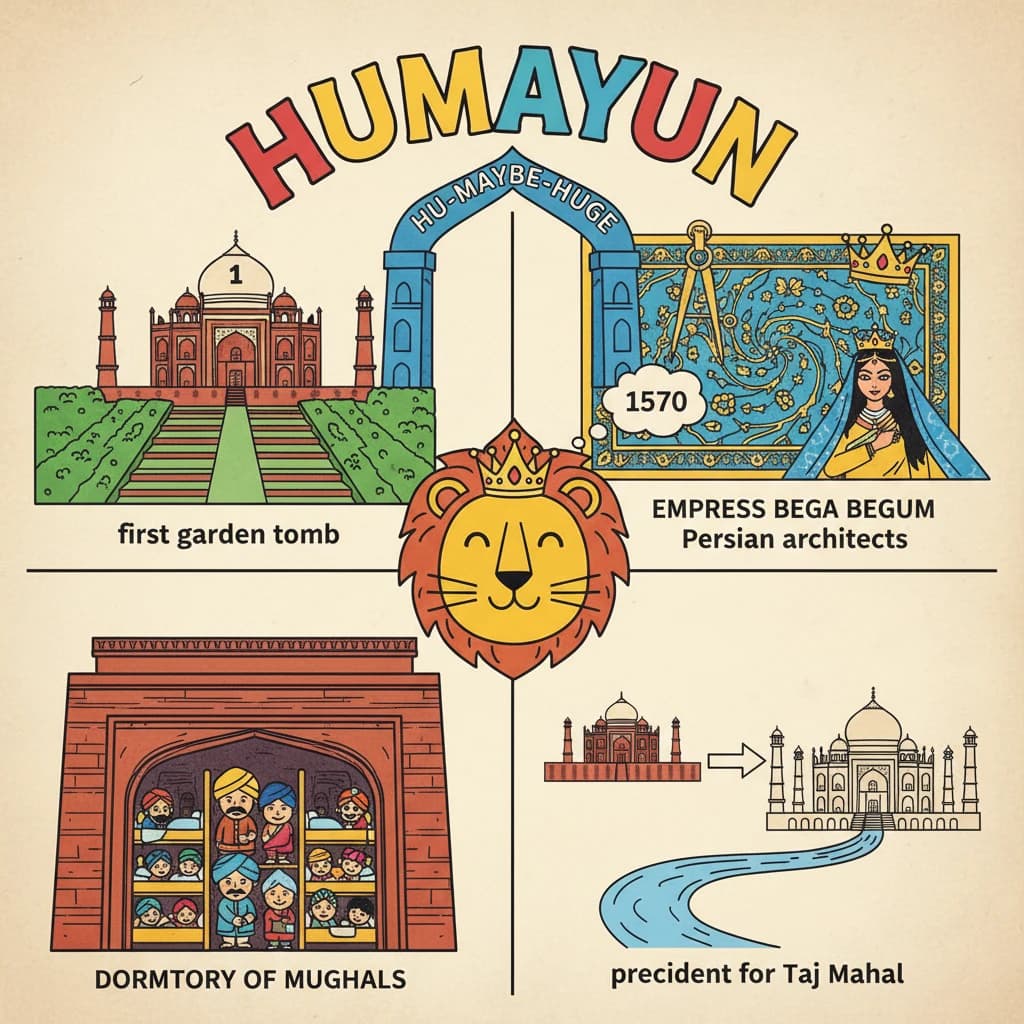
🧠 Memory Techniques
95% Verified Content