Loading page, please wait…
Kashmiri Temple Architecture - UPSC Art And Culture
What is Kashmiri Temple Architecture in UPSC Art And Culture?
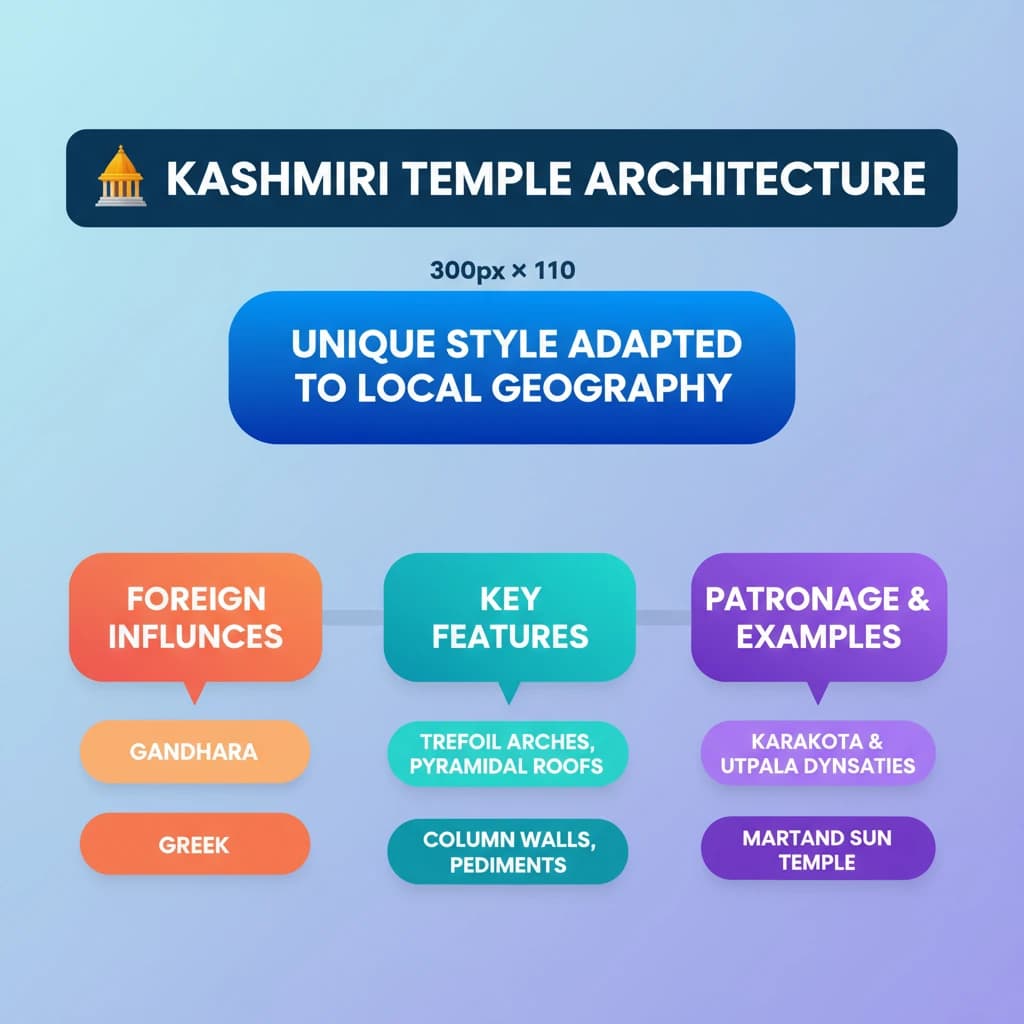
Kashmiri Temple Architecture is a key topic under Art And Culture for UPSC Civil Services Examination. Key points include: Kashmiri Temple Architecture is unique, adapted to local geography, and known for stone carving.. It shows significant foreign influences, particularly from Gandhara and Greek architectural styles.. Key features include trefoil arches, cellular layouts, pyramidal roofs, column walls, and triangular pediments.. Understanding this topic is essential for both UPSC Prelims and Mains preparation.
Why is Kashmiri Temple Architecture important for UPSC exam?
Kashmiri Temple Architecture is a Medium-level topic in UPSC Art And Culture. It is tested in both Prelims (factual MCQs) and Mains (analytical answer writing). Previous year UPSC questions have frequently covered aspects of Kashmiri Temple Architecture, making it essential for comprehensive IAS preparation.
How to prepare Kashmiri Temple Architecture for UPSC?
To prepare Kashmiri Temple Architecture for UPSC: (1) Study the comprehensive notes covering all key concepts on Vaidra. (2) Practice previous year questions on this topic. (3) Connect it with current affairs using daily updates. (4) Revise using key takeaways and mind maps available for Art And Culture. (5) Write practice answers linking Kashmiri Temple Architecture to related GS Paper topics.
Key takeaways of Kashmiri Temple Architecture for UPSC
- Kashmiri Temple Architecture is unique, adapted to local geography, and known for stone carving.
- It shows significant foreign influences, particularly from Gandhara and Greek architectural styles.
- Key features include trefoil arches, cellular layouts, pyramidal roofs, column walls, and triangular pediments.
- Temple building flourished under the Karakota and Utpala dynasties.
- The Martand Sun Temple is a prime example of this architectural style.
- Its distinctiveness lies in the synthesis of indigenous traditions with external elements.
Kashmiri Temple Architecture
Medium⏱️ 6 min read
art and culture
📖 Introduction
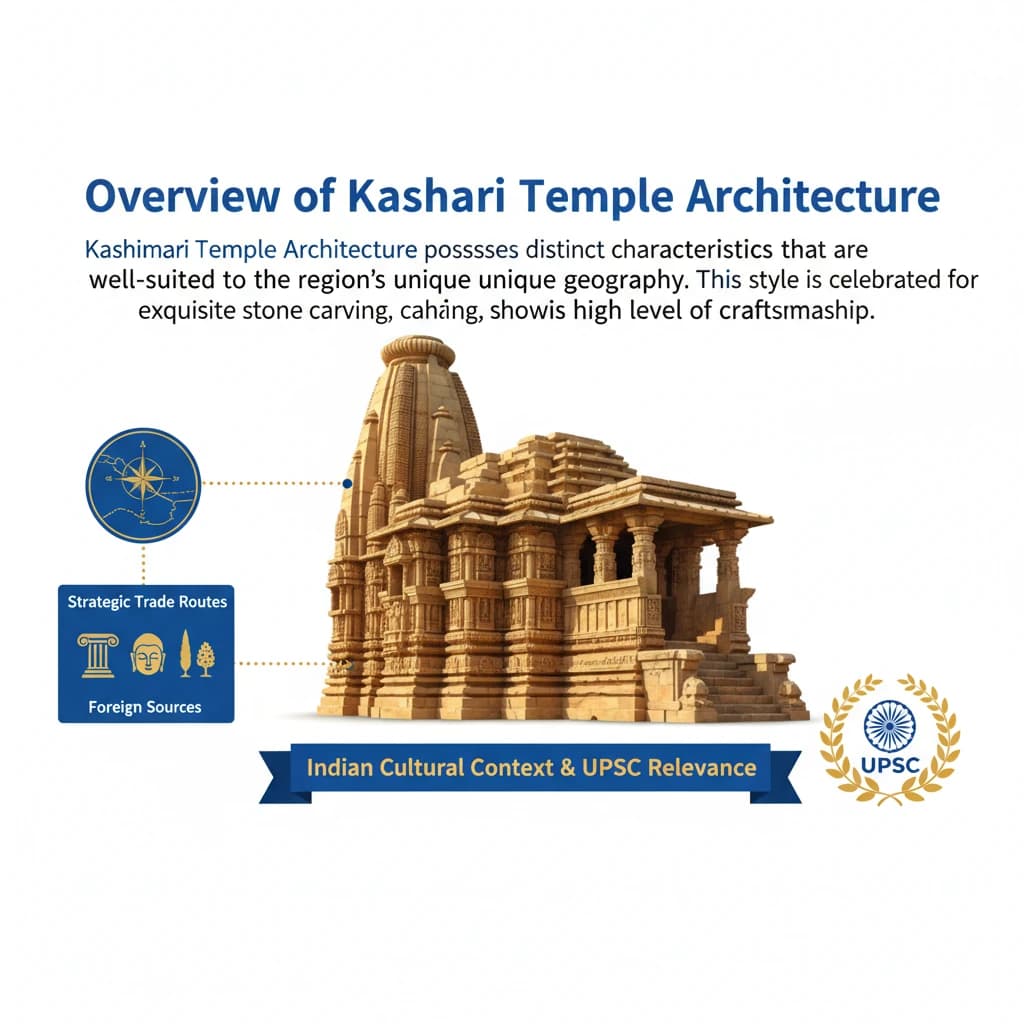
Overview of Kashmiri Temple Architecture
Kashmiri Temple Architecture possesses distinct characteristics that are well-suited to the region's unique geography. This style is celebrated for its exquisite stone carving, showcasing a high level of craftsmanship.
Its strategic location along important trade routes meant that the architectural style was significantly influenced by various foreign sources. This fusion of indigenous and external elements gives it a unique identity.
Temple-making in Kashmir reached its zenith under the patronage of two prominent dynasties: the Karakota dynasty and the Utpala dynasty. Their rule marked a golden age for architectural development in the region.
Key Features of Kashmiri Temple Architecture
The Kashmiri style of architecture is distinguished by several identifiable features:
- Trefoil arches: These arches show a clear influence from Gandhara art and architecture, characterized by their three-lobed design.
- Cellular layout and Enclosed courtyard: Temples often feature a complex internal arrangement and are typically situated within a well-defined, enclosed courtyard.
- Straight-edged Pyramidal roof: Unlike the curvilinear shikhara of many North Indian temples, Kashmiri temples often have distinctive straight-edged pyramidal roofs, adapted to the snowy climate.
- Column walls: The presence of column walls reflects an influence from Greek architectural styles, indicating cultural exchange.
- Triangular pediments: Similar to column walls, triangular pediments are another feature that points towards Greek influence in the design elements.
- Relatively more number of steps: Temples are often accessed via a greater number of steps, possibly due to their elevated positions or the terrain.
💡 Key Takeaways
- •Kashmiri Temple Architecture is unique, adapted to local geography, and known for stone carving.
- •It shows significant foreign influences, particularly from Gandhara and Greek architectural styles.
- •Key features include trefoil arches, cellular layouts, pyramidal roofs, column walls, and triangular pediments.
- •Temple building flourished under the Karakota and Utpala dynasties.
- •The Martand Sun Temple is a prime example of this architectural style.
- •Its distinctiveness lies in the synthesis of indigenous traditions with external elements.
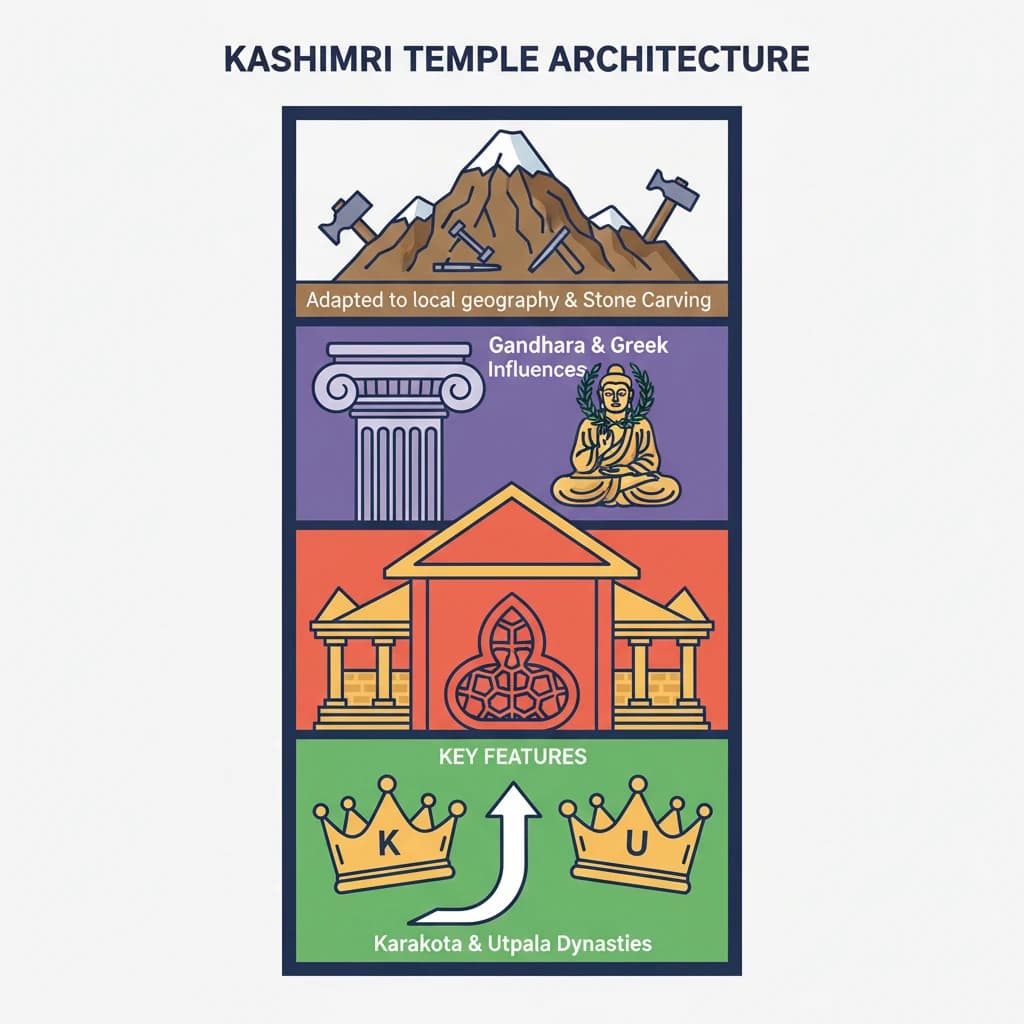
🧠 Memory Techniques
98% Verified Content
📚 Reference Sources
•NCERT Class 11 An Introduction to Indian Art Part 1
•Indian Art and Culture by Nitin Singhania