Loading page, please wait…
Kumbh 2019 Created 3 Guinness World Records - UPSC Art And Culture
What is Kumbh 2019 Created 3 Guinness World Records in UPSC Art And Culture?
Kumbh 2019 Created 3 Guinness World Records is a key topic under Art And Culture for UPSC Civil Services Examination. Key points include: Kumbh 2019 achieved three Guinness World Records in Prayagraj.. The records were for largest traffic and crowd management, biggest public painting exercise, and biggest sanitation mechanism.. The event showcased India's capability in managing mega-events efficiently.. Understanding this topic is essential for both UPSC Prelims and Mains preparation.
Why is Kumbh 2019 Created 3 Guinness World Records important for UPSC exam?
Kumbh 2019 Created 3 Guinness World Records is a Medium-level topic in UPSC Art And Culture. It is tested in both Prelims (factual MCQs) and Mains (analytical answer writing). Previous year UPSC questions have frequently covered aspects of Kumbh 2019 Created 3 Guinness World Records, making it essential for comprehensive IAS preparation.
How to prepare Kumbh 2019 Created 3 Guinness World Records for UPSC?
To prepare Kumbh 2019 Created 3 Guinness World Records for UPSC: (1) Study the comprehensive notes covering all key concepts on Vaidra. (2) Practice previous year questions on this topic. (3) Connect it with current affairs using daily updates. (4) Revise using key takeaways and mind maps available for Art And Culture. (5) Write practice answers linking Kumbh 2019 Created 3 Guinness World Records to related GS Paper topics.
Key takeaways of Kumbh 2019 Created 3 Guinness World Records for UPSC
- Kumbh 2019 achieved three Guinness World Records in Prayagraj.
- The records were for largest traffic and crowd management, biggest public painting exercise, and biggest sanitation mechanism.
- The event showcased India's capability in managing mega-events efficiently.
- The 'Paint My City' scheme beautified public spaces and engaged communities.
- Robust sanitation efforts prevented disease outbreaks among millions of pilgrims.
- Kumbh Mela is a UNESCO Intangible Cultural Heritage of Humanity.
- These achievements offer valuable lessons for governance, urban planning, and disaster management.
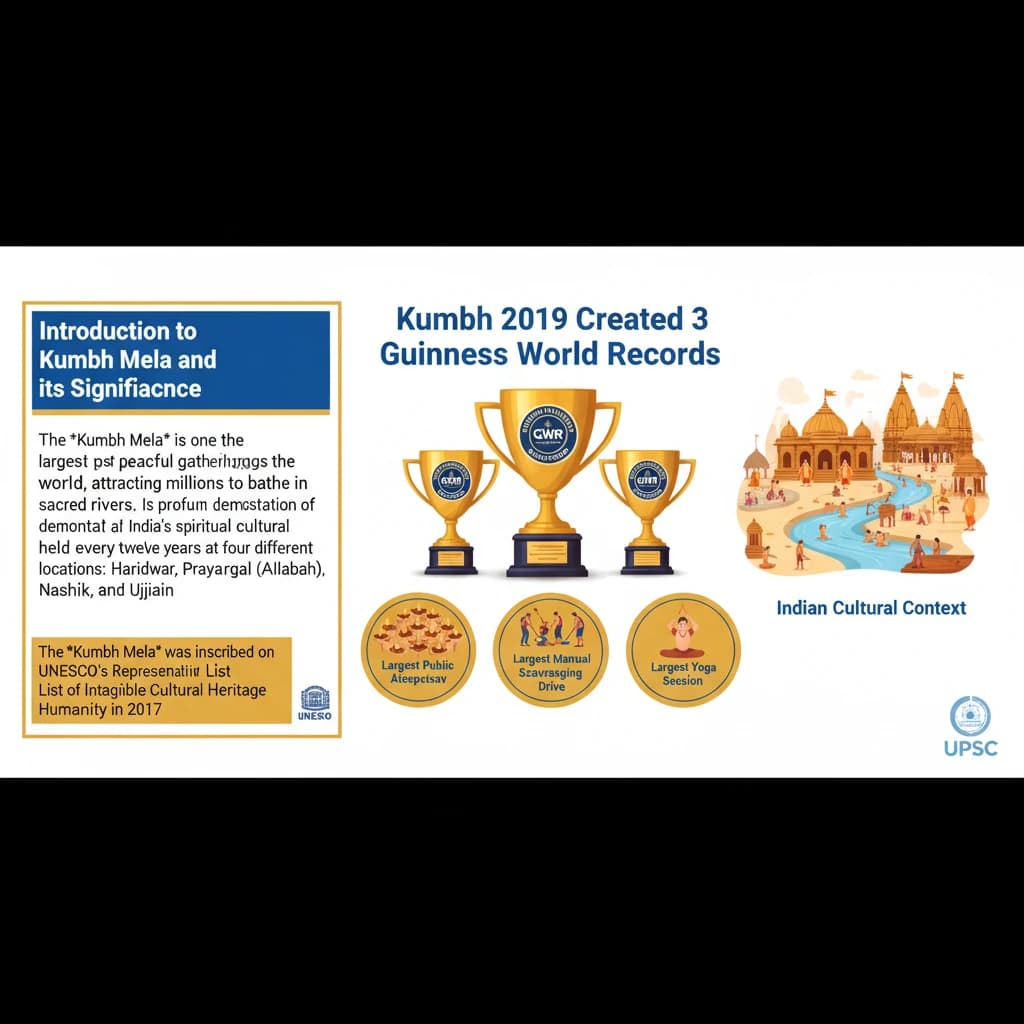
Kumbh 2019 Created 3 Guinness World Records
Medium⏱️ 7 min read
art and culture
📖 Introduction
Introduction to Kumbh Mela and its Significance
The Kumbh Mela is one of the largest peaceful gatherings in the world, attracting millions of devotees to bathe in sacred rivers. It is a profound demonstration of India's spiritual and cultural heritage, held every twelve years at four different locations: Haridwar, Prayagraj (Allahabad), Nashik, and Ujjain.
The Kumbh Mela was inscribed on UNESCO's Representative List of Intangible Cultural Heritage of Humanity in 2017, highlighting its global cultural importance.
Kumbh 2019: A Record-Breaking Event
The Kumbh Mela 2019, held in Prayagraj, achieved unprecedented success, not only in terms of spiritual participation but also in its operational scale. This edition of the ancient festival secured three Guinness World Records, showcasing India's capability in managing mega-events.
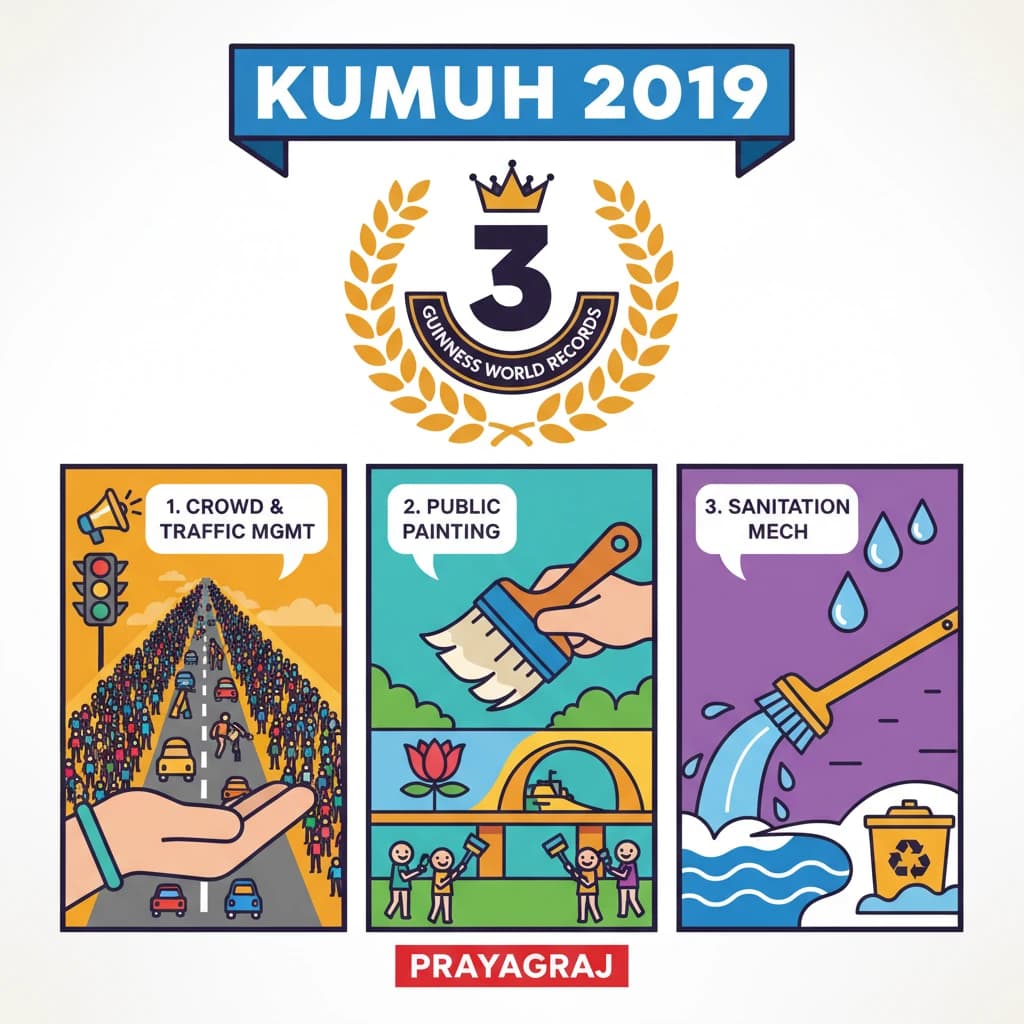
Record 1: Largest Traffic and Crowd Management Plan
The first record recognized the Kumbh 2019 for implementing the largest traffic and crowd management plan ever executed. This involved meticulous planning and coordination to ensure the smooth flow of millions of pilgrims, vehicles, and goods across a vast area.
Key Aspects: Advanced surveillance, extensive deployment of security personnel, integrated control rooms, and dynamic route management were crucial for this achievement.
Record 2: Biggest Painting Exercise of Public Sites
The second record acknowledged the biggest painting exercise of public sites under the 'Paint My City' Scheme. This initiative transformed public spaces, walls, and infrastructure with vibrant art and messages, enhancing the aesthetic appeal of the host city, Prayagraj.
The 'Paint My City' Scheme not only beautified the city but also engaged local artists and communities, fostering a sense of ownership and cultural pride.
Record 3: Biggest Sanitation and Waste Disposal Mechanism
The third significant record was for establishing the biggest sanitation and waste disposal mechanism. Managing waste for a population equivalent to a small country, gathered in a temporary city, is a monumental task that requires immense logistical prowess.
Operational Scale: This involved deploying thousands of sanitation workers, setting up numerous temporary toilets, and implementing efficient waste collection and segregation systems to maintain hygiene standards.
UPSC Insight: The achievements of Kumbh 2019 are excellent case studies for questions on governance, public administration, disaster management, urban planning, and cultural diplomacy. Focus on the innovative solutions and scale of operations.
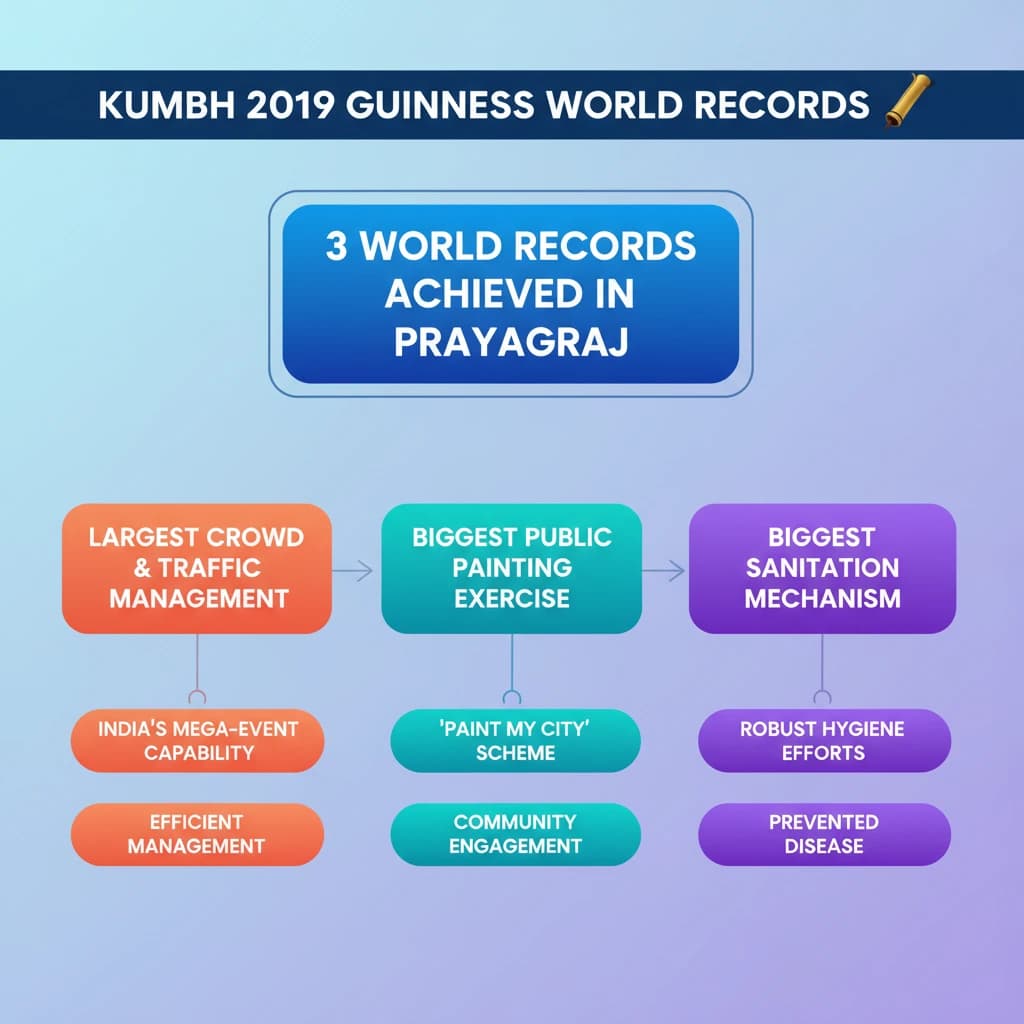
💡 Key Takeaways
- •Kumbh 2019 achieved three Guinness World Records in Prayagraj.
- •The records were for largest traffic and crowd management, biggest public painting exercise, and biggest sanitation mechanism.
- •The event showcased India's capability in managing mega-events efficiently.
- •The 'Paint My City' scheme beautified public spaces and engaged communities.
- •Robust sanitation efforts prevented disease outbreaks among millions of pilgrims.
- •Kumbh Mela is a UNESCO Intangible Cultural Heritage of Humanity.
- •These achievements offer valuable lessons for governance, urban planning, and disaster management.
🧠 Memory Techniques
98% Verified Content
📚 Reference Sources
•Press Information Bureau (PIB) releases related to Kumbh 2019
•Ministry of Culture reports on UNESCO Intangible Cultural Heritage
•News archives from reputable Indian media outlets (e.g., The Hindu, Indian Express)