Loading page, please wait…
Odisha School (Kalinga Architecture) - UPSC Art And Culture
What is Odisha School (Kalinga Architecture) in UPSC Art And Culture?
Odisha School (Kalinga Architecture) is a key topic under Art And Culture for UPSC Civil Services Examination. Key points include: Odisha School (Kalinga Architecture) is a sub-school of the Nagara style.. It flourished in the Kalinga empire, primarily under the Somavamsi and Eastern Ganga dynasties.. Exterior walls are richly carved, while interior walls are plain.. Understanding this topic is essential for both UPSC Prelims and Mains preparation.
Why is Odisha School (Kalinga Architecture) important for UPSC exam?
Odisha School (Kalinga Architecture) is a Medium-level topic in UPSC Art And Culture. It is tested in both Prelims (factual MCQs) and Mains (analytical answer writing). Previous year UPSC questions have frequently covered aspects of Odisha School (Kalinga Architecture), making it essential for comprehensive IAS preparation.
How to prepare Odisha School (Kalinga Architecture) for UPSC?
To prepare Odisha School (Kalinga Architecture) for UPSC: (1) Study the comprehensive notes covering all key concepts on Vaidra. (2) Practice previous year questions on this topic. (3) Connect it with current affairs using daily updates. (4) Revise using key takeaways and mind maps available for Art And Culture. (5) Write practice answers linking Odisha School (Kalinga Architecture) to related GS Paper topics.
Key takeaways of Odisha School (Kalinga Architecture) for UPSC
- Odisha School (Kalinga Architecture) is a sub-school of the Nagara style.
- It flourished in the Kalinga empire, primarily under the Somavamsi and Eastern Ganga dynasties.
- Exterior walls are richly carved, while interior walls are plain.
- The porch (jagamohana) typically lacks pillars, using iron girders for support.
- The shikhara is known as 'rekha deul,' characterized by a vertical ascent and sharp inward curve.
- Prominent examples include the Konark Sun Temple, Lingaraj Temple, and Jagannath Temple.
- It represents a unique blend of structural innovation and sculptural artistry.
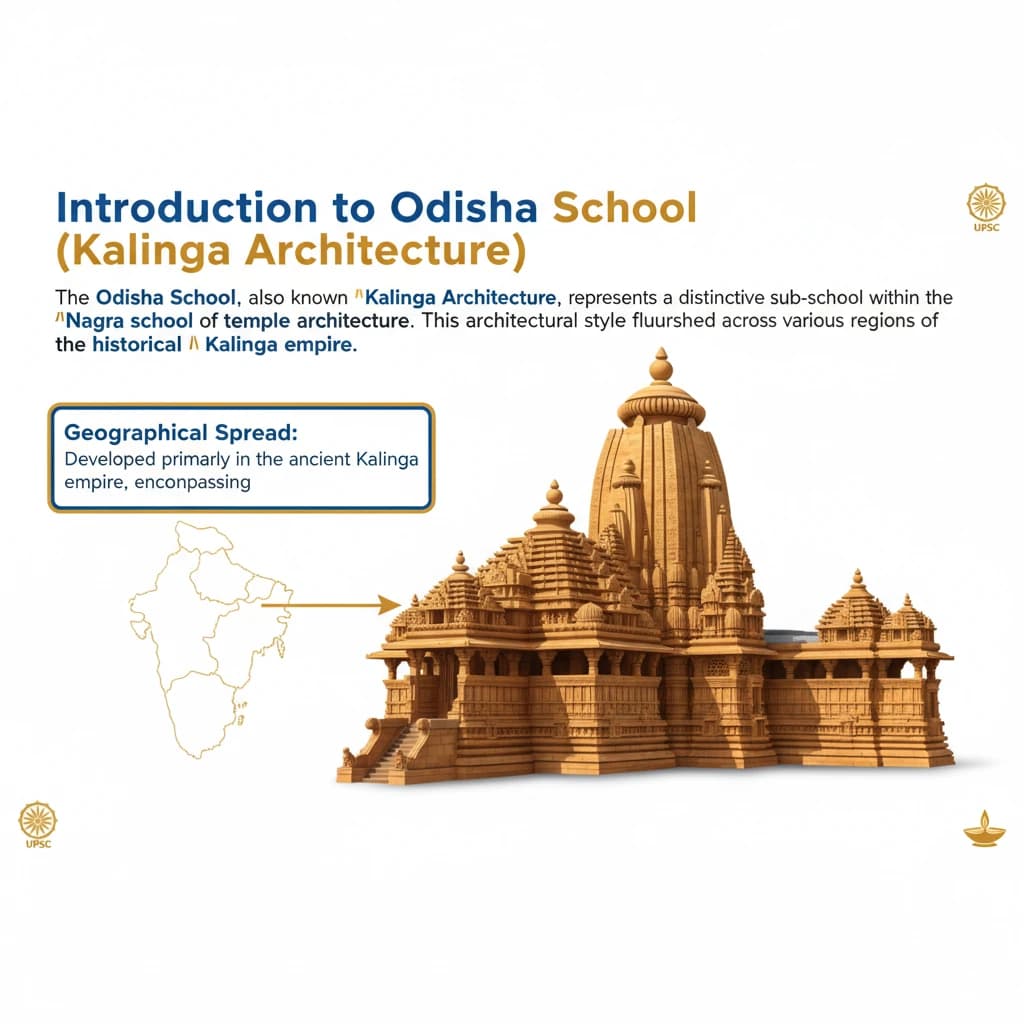
Odisha School (Kalinga Architecture)
Medium⏱️ 6 min read
art and culture
📖 Introduction
Introduction to Odisha School (Kalinga Architecture)
The Odisha School, also known as Kalinga Architecture, represents a distinctive sub-school within the broader Nagara school of temple architecture. This architectural style flourished across various regions of the historical Kalinga empire.
Geographical Spread: Developed primarily in the ancient Kalinga empire, encompassing present-day Odisha and parts of Andhra Pradesh and West Bengal.
Key Architectural Characteristics
The Kalinga architectural style is renowned for its unique set of features that differentiate it from other Nagara sub-schools. These characteristics are consistently observed in temples built under this tradition.
Defining Features: Distinctive shikhara (rekha deul), lavish exterior carvings, and a pillar-less porch.
Exterior and Interior Decoration
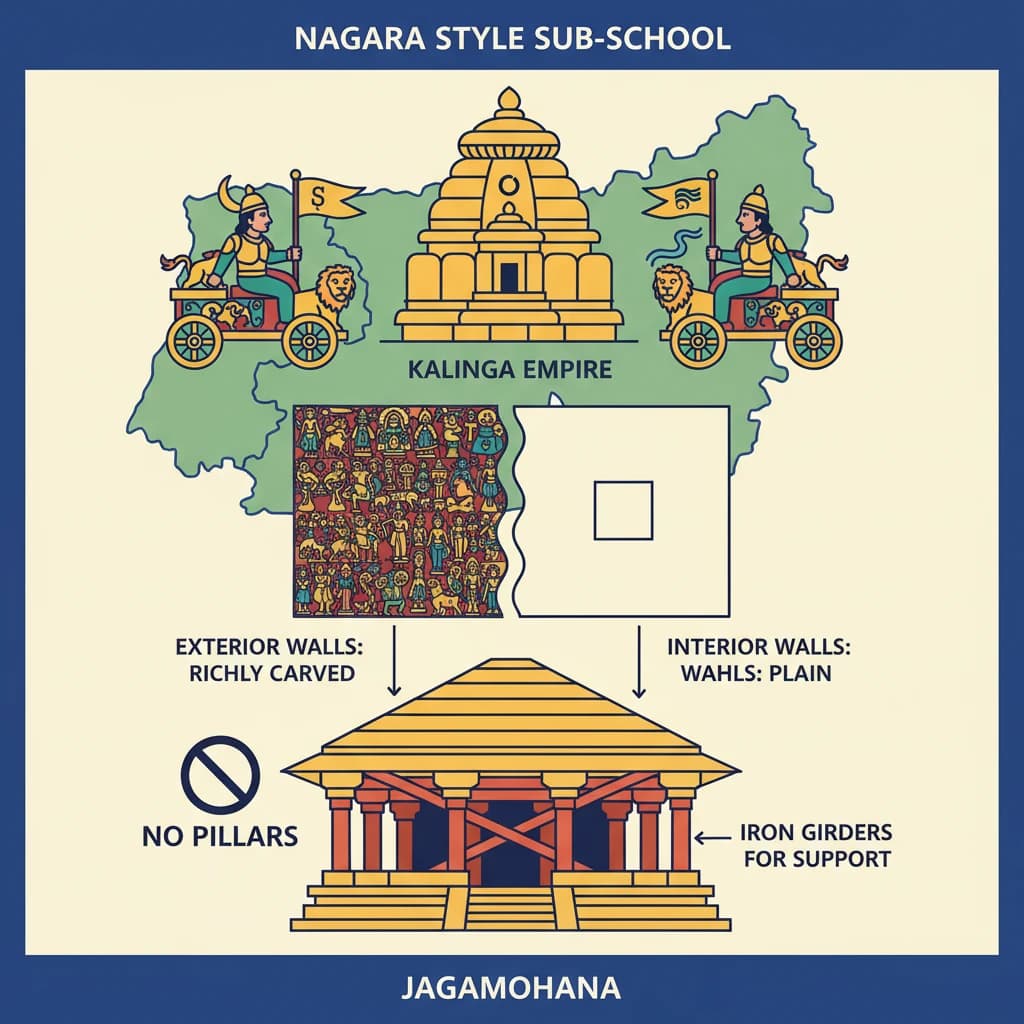
A striking feature of the Odisha School is the treatment of its walls. The exterior walls of the temples were lavishly decorated with intricate carvings, depicting deities, mythological scenes, and floral motifs.
In stark contrast, the interior walls of these temples were kept relatively plain. This design choice focused devotional attention towards the sanctum sanctorum.
Absence of Pillars in Porch
Unlike many other temple architectures, the Odisha School did not utilize pillars to support the roof of the porch (mandapa). This structural innovation is a significant identifier of the style.
Instead of traditional pillars, iron girders were ingeniously used to provide structural support for the roof. This demonstrates advanced engineering for its time.
Shikhara: The Rekha Deul
The most iconic element of the Odisha School is its unique shikhara, which is specifically known as rekha deul. This term refers to the curvilinear tower over the sanctum.
These rekha deuls are characterized by their almost vertical roofs in the lower sections. They then suddenly curved inwards sharply towards the top, culminating in a crowning element.
UPSC Insight: Differentiating the rekha deul of the Odisha School from other Nagara shikharas (e.g., Latina, Phamsana) is crucial for both Prelims (identification) and Mains (architectural analysis). Focus on the 'vertical then sharp inward curve' characteristic.

💡 Key Takeaways
- •Odisha School (Kalinga Architecture) is a sub-school of the Nagara style.
- •It flourished in the Kalinga empire, primarily under the Somavamsi and Eastern Ganga dynasties.
- •Exterior walls are richly carved, while interior walls are plain.
- •The porch (jagamohana) typically lacks pillars, using iron girders for support.
- •The shikhara is known as 'rekha deul,' characterized by a vertical ascent and sharp inward curve.
- •Prominent examples include the Konark Sun Temple, Lingaraj Temple, and Jagannath Temple.
- •It represents a unique blend of structural innovation and sculptural artistry.
🧠 Memory Techniques
95% Verified Content
📚 Reference Sources
•Centre for Cultural Resources and Training (CCRT) - Indian Temple Architecture
•Drishti IAS Art and Culture Notes
•Archaeological Survey of India (ASI) official publications