Loading page, please wait…
Regional Celebrations - UPSC Art And Culture
What is Regional Celebrations in UPSC Art And Culture?
Regional Celebrations is a key topic under Art And Culture for UPSC Civil Services Examination. Key points include: India's regional celebrations are diverse and deeply rooted in local traditions.. Many festivals are linked to agricultural cycles and harvest seasons.. Pongal in Tamil Nadu is a four-day rice harvest festival with kolam decorations.. Understanding this topic is essential for both UPSC Prelims and Mains preparation.
Why is Regional Celebrations important for UPSC exam?
Regional Celebrations is a Easy-level topic in UPSC Art And Culture. It is tested in both Prelims (factual MCQs) and Mains (analytical answer writing). Previous year UPSC questions have frequently covered aspects of Regional Celebrations, making it essential for comprehensive IAS preparation.
How to prepare Regional Celebrations for UPSC?
To prepare Regional Celebrations for UPSC: (1) Study the comprehensive notes covering all key concepts on Vaidra. (2) Practice previous year questions on this topic. (3) Connect it with current affairs using daily updates. (4) Revise using key takeaways and mind maps available for Art And Culture. (5) Write practice answers linking Regional Celebrations to related GS Paper topics.
Key takeaways of Regional Celebrations for UPSC
- India's regional celebrations are diverse and deeply rooted in local traditions.
- Many festivals are linked to agricultural cycles and harvest seasons.
- Pongal in Tamil Nadu is a four-day rice harvest festival with kolam decorations.
- Karnataka celebrates with sesame-jaggery sharing and 'Kicchu Haisodu' cattle ritual.
- Lohri in Punjab involves bonfires and offerings like groundnuts and popcorn.
- Bihar's Khichdi festival features the dish 'Khichdi' and sesame-jaggery sweets.
- Rajasthan and Gujarat are famous for kite-flying festivals, including Ahmedabad's International Kite Festival.
- Magh Bihu in Assam marks both the annual harvest and the Assamese new year.
Regional Celebrations
Easy⏱️ 8 min read
art and culture
📖 Introduction
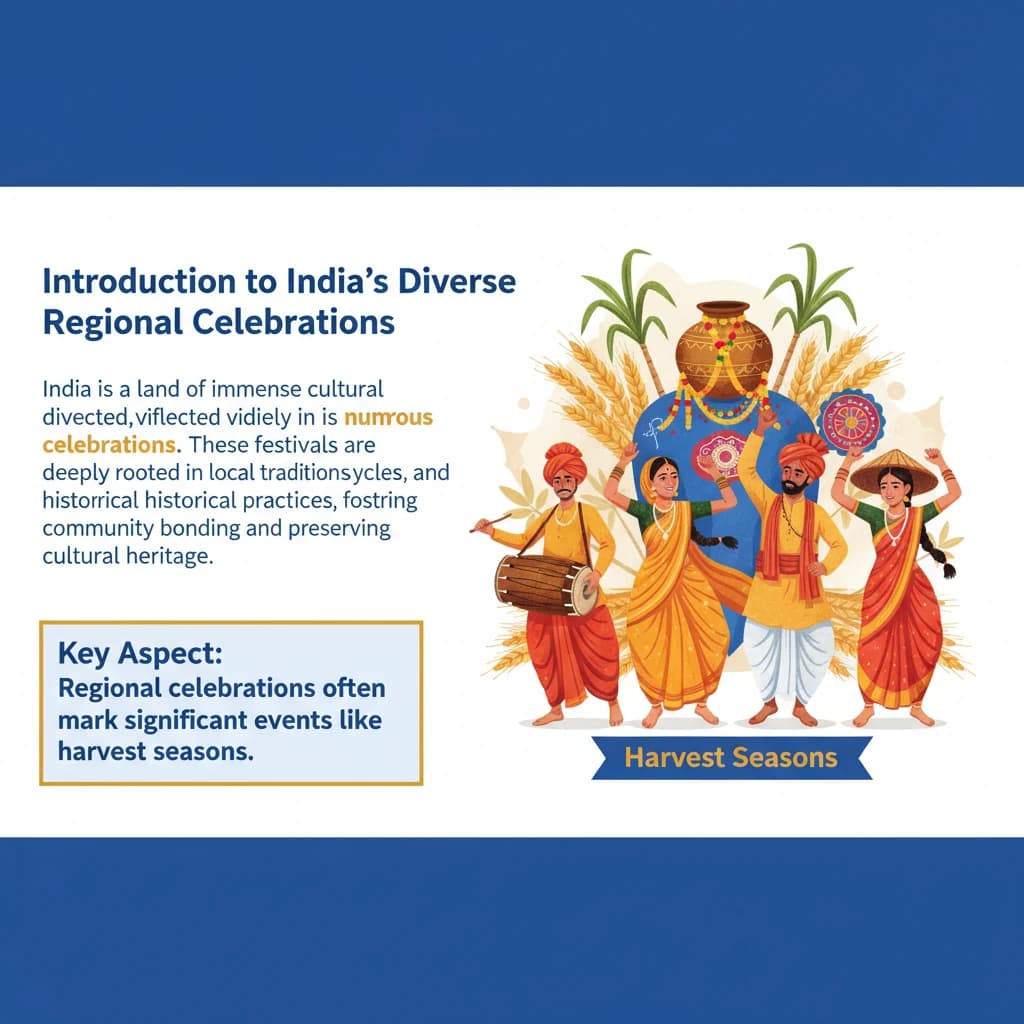
Introduction to India's Diverse Regional Celebrations
India is a land of immense cultural diversity, reflected vividly in its numerous regional celebrations. These festivals are deeply rooted in local traditions, agricultural cycles, and historical practices, fostering community bonding and preserving cultural heritage.
Key Aspect: Regional celebrations often mark significant events like harvest seasons, the beginning of a new year, or specific cultural observances unique to a state or community.
Pongal: Tamil Nadu's Harvest Festival
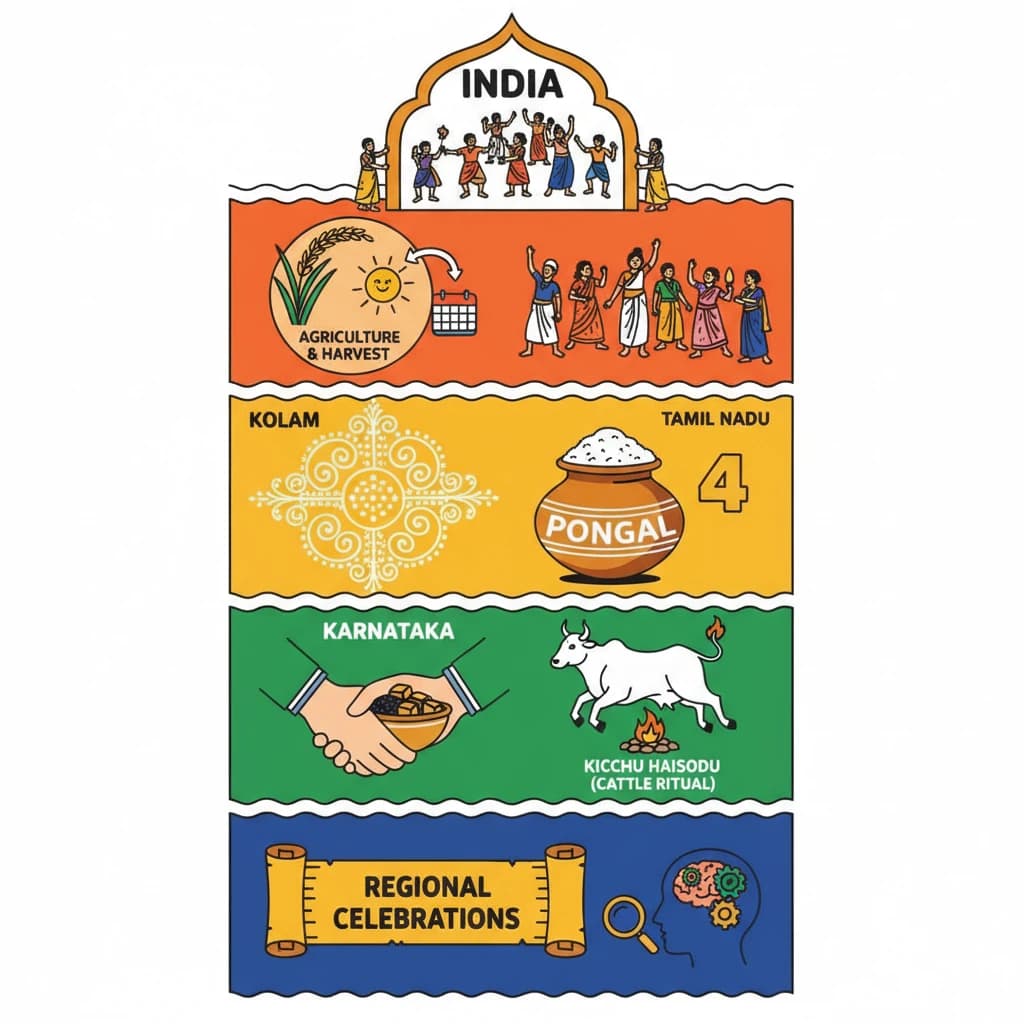
Pongal is a prominent four-day festival celebrated in Tamil Nadu. It marks the auspicious rice harvest, signifying gratitude to nature for its bounty.
During Pongal, Tamilian homes are adorned with intricate traditional kolams. These beautiful designs are typically made from rice powder at the entrance of houses, symbolizing prosperity and welcome.
State: Tamil Nadu
Festival: Pongal
Duration: Four days
Significance: Rice harvest, gratitude to nature
Tradition: Kolams made from rice powder
Festival: Pongal
Duration: Four days
Significance: Rice harvest, gratitude to nature
Tradition: Kolams made from rice powder
Karnataka's Unique Harvest Traditions
In Karnataka, locals observe a tradition of sharing a special mixture of sesame and jaggery. This act symbolizes harmony and goodwill among people, promoting sweet relations.
Farmers' communities in Karnataka engage in a distinctive ritual called 'Kicchu Haisodu'. During this, their cattle are dressed in colorful costumes and jewels, then made to jump over a fire pit, a display believed to bring good fortune.
State: Karnataka
Traditions: Sharing sesame and jaggery mixture (harmony), 'Kicchu Haisodu' (cattle jumping over fire)
Traditions: Sharing sesame and jaggery mixture (harmony), 'Kicchu Haisodu' (cattle jumping over fire)
Lohri: The Bonfire Festival of Punjab
Lohri is a vibrant festival celebrated predominantly in Punjab. It is characterized by the lighting of large bonfires, around which people gather to sing folk songs and perform traditional dances.
Offerings such as groundnuts and popcorn are traditionally thrown into the bonfire. This ritual is believed to invoke blessings and mark the end of winter, welcoming longer days.
State: Punjab
Festival: Lohri
Key Elements: Bonfires, folk songs, offerings
Offerings: Groundnuts, popcorn
Festival: Lohri
Key Elements: Bonfires, folk songs, offerings
Offerings: Groundnuts, popcorn
Bihar's Khichdi Festival
In Bihar, a festival specifically named 'Khichdi' is celebrated. As the name suggests, a dish of the same name, a wholesome preparation of rice and lentils, is central to the festivities.
Alongside the main dish, sesame and jaggery ladoos or chikkis are prepared and widely distributed among family and friends. These sweets are symbolic of warmth and togetherness during the colder months.
State: Bihar
Festival: Khichdi
Key Food: Khichdi (rice and lentils)
Sweets Distributed: Sesame and jaggery ladoos or chikkis
Festival: Khichdi
Key Food: Khichdi (rice and lentils)
Sweets Distributed: Sesame and jaggery ladoos or chikkis
Kite Festivals: Rajasthan and Gujarat
The states of Rajasthan and Gujarat are renowned for their enthusiastic celebration of kite-flying competitions and festivals. These events draw large crowds and showcase intricate kite designs and skillful flying.
Ahmedabad in Gujarat hosts the globally recognized International Kite Festival, attracting participants and spectators from across the world. In the evenings, the skies are beautifully lit up with numerous sky lanterns, creating a mesmerizing spectacle.
States: Rajasthan, Gujarat
Activity: Kite-flying competitions
Major Event: International Kite Festival (Ahmedabad)
Evening Tradition: Sky lanterns
Activity: Kite-flying competitions
Major Event: International Kite Festival (Ahmedabad)
Evening Tradition: Sky lanterns
Magh Bihu: Assam's Harvest and New Year
Magh Bihu is a significant festival celebrated in Assam. It marks the culmination of the annual harvest season, bringing joy and prosperity to the farming communities.
Beyond being a harvest festival, Magh Bihu also signifies the beginning of the Assamese new year. It is a time for feasting, traditional games, and community gatherings, celebrating new beginnings.
State: Assam
Festival: Magh Bihu
Significance: Annual harvest, beginning of Assamese new year
Festival: Magh Bihu
Significance: Annual harvest, beginning of Assamese new year
💡 Key Takeaways
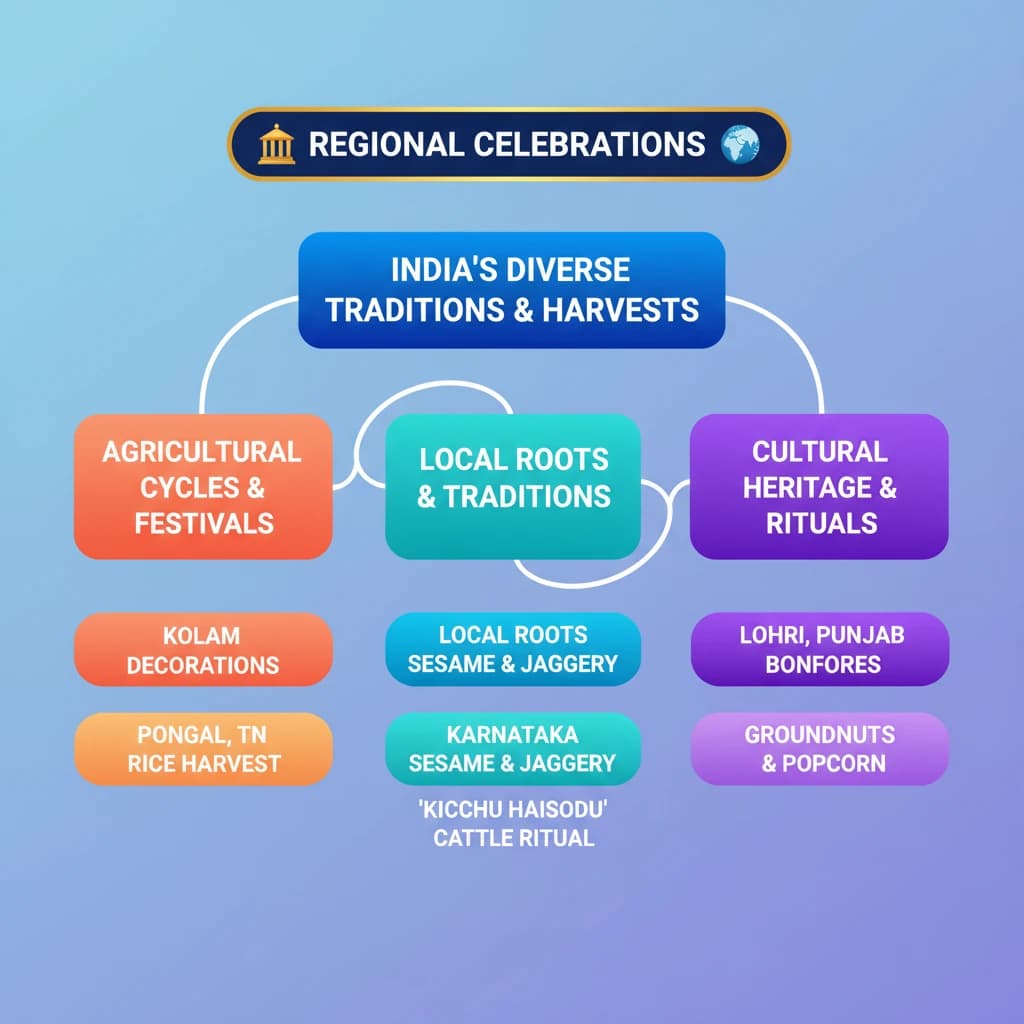
- •India's regional celebrations are diverse and deeply rooted in local traditions.
- •Many festivals are linked to agricultural cycles and harvest seasons.
- •Pongal in Tamil Nadu is a four-day rice harvest festival with kolam decorations.
- •Karnataka celebrates with sesame-jaggery sharing and 'Kicchu Haisodu' cattle ritual.
- •Lohri in Punjab involves bonfires and offerings like groundnuts and popcorn.
- •Bihar's Khichdi festival features the dish 'Khichdi' and sesame-jaggery sweets.
- •Rajasthan and Gujarat are famous for kite-flying festivals, including Ahmedabad's International Kite Festival.
- •Magh Bihu in Assam marks both the annual harvest and the Assamese new year.
🧠 Memory Techniques
98% Verified Content
📚 Reference Sources
•NCERT Class XI - An Introduction to Indian Art
•Ministry of Culture, Government of India official website
•Cultural India website (for festival details)