Loading page, please wait…
Significance of Kumbh - UPSC Art And Culture
What is Significance of Kumbh in UPSC Art And Culture?
Significance of Kumbh is a key topic under Art And Culture for UPSC Civil Services Examination. Key points include: Kumbh Mela is a mass Hindu pilgrimage for spiritual purification.. Bathing at Triveni Sangam is central to achieving Moksha.. The Mela is a vibrant showcase of Indian traditional arts and devotion.. Understanding this topic is essential for both UPSC Prelims and Mains preparation.
Why is Significance of Kumbh important for UPSC exam?
Significance of Kumbh is a Medium-level topic in UPSC Art And Culture. It is tested in both Prelims (factual MCQs) and Mains (analytical answer writing). Previous year UPSC questions have frequently covered aspects of Significance of Kumbh, making it essential for comprehensive IAS preparation.
How to prepare Significance of Kumbh for UPSC?
To prepare Significance of Kumbh for UPSC: (1) Study the comprehensive notes covering all key concepts on Vaidra. (2) Practice previous year questions on this topic. (3) Connect it with current affairs using daily updates. (4) Revise using key takeaways and mind maps available for Art And Culture. (5) Write practice answers linking Significance of Kumbh to related GS Paper topics.
Key takeaways of Significance of Kumbh for UPSC
- Kumbh Mela is a mass Hindu pilgrimage for spiritual purification.
- Bathing at Triveni Sangam is central to achieving Moksha.
- The Mela is a vibrant showcase of Indian traditional arts and devotion.
- Its timing is astrologically determined by the Sun, Moon, and Jupiter.
- Shahi Snan is a key ritual, marking the start of the Maha Kumbh.
- Akharas are spiritual orders unified by Adi Guru Shankaracharya to preserve Sanatan Dharma.
- Akharas are categorized into Shaiva and Vaishnava based on deity worship.
Significance of Kumbh
Medium⏱️ 7 min read
art and culture
📖 Introduction
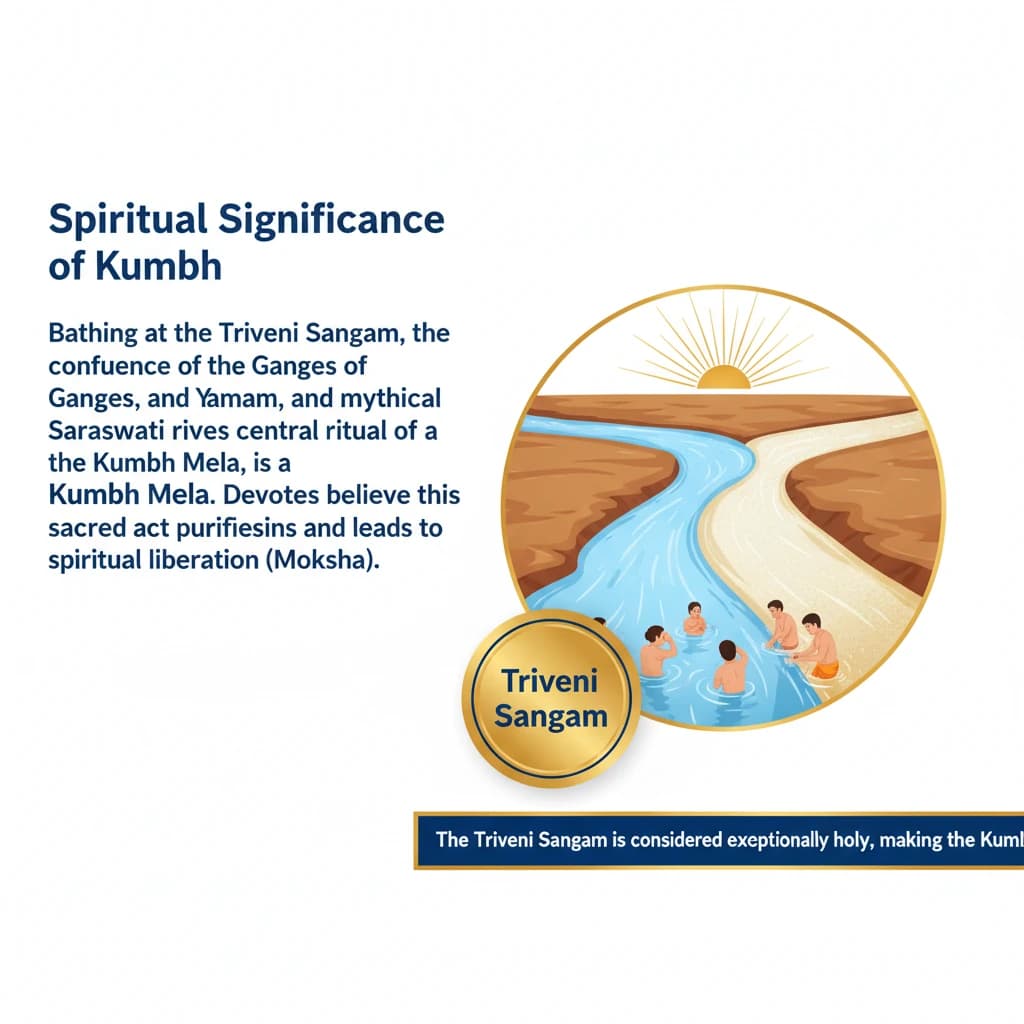
Spiritual Significance of Kumbh
Bathing at the Triveni Sangam, the confluence of the Ganges, Yamuna, and mythical Saraswati rivers, is a central ritual of the Kumbh Mela. Devotees believe this sacred act purifies sins and leads to spiritual liberation (Moksha).
The Triveni Sangam is considered exceptionally holy, making the Kumbh Mela a pivotal event for spiritual aspirants.
Cultural Showcase at Kumbh Mela
The Kumbh Mela serves as a vibrant platform for showcasing India's rich cultural heritage. Various devotional performances are a highlight of the event.
- Devotional Kirtans and Bhajans: These musical expressions are performed with great fervor, celebrating spiritual unity.
- Traditional Dances: Classical forms like Kathak, Bharatnatyam, and Kuchipudi are presented, often highlighting themes of divine love.
Astrological Timing and Auspiciousness
The timing of the Kumbh Mela is not arbitrary but is precisely determined by specific astrological alignments. This makes the event highly auspicious for spiritual activities.
Astrological Factors: The positions of the Sun, Moon, and Jupiter dictate the timing of the Kumbh Mela.
A special designation, Simhastha Kumbh, occurs in specific locations under certain planetary conditions. This term is used when the mela is held at Nashik and Ujjain when a planet is in the Leo (Zodiac) sign.
Rituals and Activities: Shahi Snan
One of the most significant rituals at the Kumbh Mela is the Shahi Snan (Royal Bath). This ceremonial bath marks a grand procession and the official commencement of the main event.
Also known as: ‘Rajyogi Snan’
Significance: It signifies the start of the Maha Kumbh Mela.
Significance: It signifies the start of the Maha Kumbh Mela.
The Shahi Snan involves a majestic procession of various Akharas and their saints, performing their ritualistic dip in the sacred waters.
The Role and Origin of Akharas
Akharas are spiritual orders or ascetic organizations that play a central role in the Kumbh Mela. The word ‘akhara’ originates from ‘akhand’, meaning indivisible, symbolizing unity and strength.
Historical Context: Adi Guru Shankaracharya sought to unify these ascetic organizations to safeguard the ‘Sanatan’ way of life.
These organizations embody social order, unity, culture, and ethics. They primarily focus on promoting spiritual and ethical values among their followers.
- Emphasized Virtues: Virtue, morality, self-restraint, compassion, and religiosity are core tenets.
- Symbolism: Akharas are powerful symbols of unity in diversity within the spiritual landscape of India.
Categorization of Akharas
Akharas can be broadly categorized based on the deity they primarily worship. This distinction reflects the diverse traditions within Hinduism.
- Shaiva Akharas: These orders worship Lord Shiva in his various forms and manifestations.
- Vaishnava Akharas: These organizations are devoted to the worship of Lord Vishnu and his numerous incarnations.
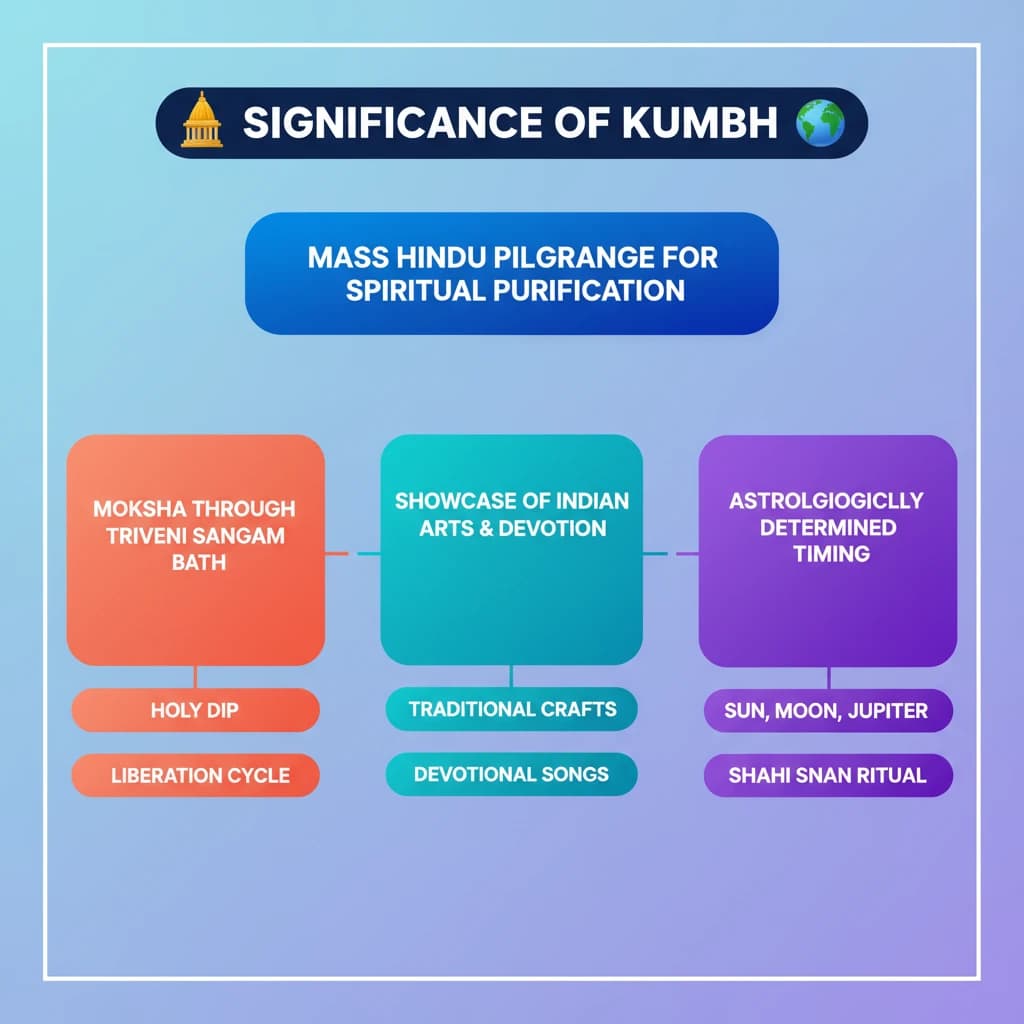
💡 Key Takeaways
- •Kumbh Mela is a mass Hindu pilgrimage for spiritual purification.
- •Bathing at Triveni Sangam is central to achieving Moksha.
- •The Mela is a vibrant showcase of Indian traditional arts and devotion.
- •Its timing is astrologically determined by the Sun, Moon, and Jupiter.
- •Shahi Snan is a key ritual, marking the start of the Maha Kumbh.
- •Akharas are spiritual orders unified by Adi Guru Shankaracharya to preserve Sanatan Dharma.
- •Akharas are categorized into Shaiva and Vaishnava based on deity worship.
🧠 Memory Techniques

100% Verified Content