Loading page, please wait…
UNESCO List of Intangible Cultural Heritage of Humanity - UPSC Art And Culture
What is UNESCO List of Intangible Cultural Heritage of Humanity in UPSC Art And Culture?
UNESCO List of Intangible Cultural Heritage of Humanity is a key topic under Art And Culture for UPSC Civil Services Examination. Key points include: The UNESCO ICH List was established in 2008 to safeguard living cultural heritage.. Intangible Cultural Heritage includes practices, expressions, knowledge, and skills recognized by communities.. It is also known as 'living cultural heritage' due to its dynamic and evolving nature.. Understanding this topic is essential for both UPSC Prelims and Mains preparation.
Why is UNESCO List of Intangible Cultural Heritage of Humanity important for UPSC exam?
UNESCO List of Intangible Cultural Heritage of Humanity is a Easy-level topic in UPSC Art And Culture. It is tested in both Prelims (factual MCQs) and Mains (analytical answer writing). Previous year UPSC questions have frequently covered aspects of UNESCO List of Intangible Cultural Heritage of Humanity, making it essential for comprehensive IAS preparation.
How to prepare UNESCO List of Intangible Cultural Heritage of Humanity for UPSC?
To prepare UNESCO List of Intangible Cultural Heritage of Humanity for UPSC: (1) Study the comprehensive notes covering all key concepts on Vaidra. (2) Practice previous year questions on this topic. (3) Connect it with current affairs using daily updates. (4) Revise using key takeaways and mind maps available for Art And Culture. (5) Write practice answers linking UNESCO List of Intangible Cultural Heritage of Humanity to related GS Paper topics.
Key takeaways of UNESCO List of Intangible Cultural Heritage of Humanity for UPSC
- The UNESCO ICH List was established in 2008 to safeguard living cultural heritage.
- Intangible Cultural Heritage includes practices, expressions, knowledge, and skills recognized by communities.
- It is also known as 'living cultural heritage' due to its dynamic and evolving nature.
- Key forms include oral traditions, performing arts, social practices, rituals, knowledge about nature, and traditional craftsmanship.
- The list aims to demonstrate cultural diversity and raise awareness about heritage importance.
- The 2003 Convention for the Safeguarding of the Intangible Cultural Heritage provides its framework.
UNESCO List of Intangible Cultural Heritage of Humanity
Easy⏱️ 6 min read
art and culture
📖 Introduction
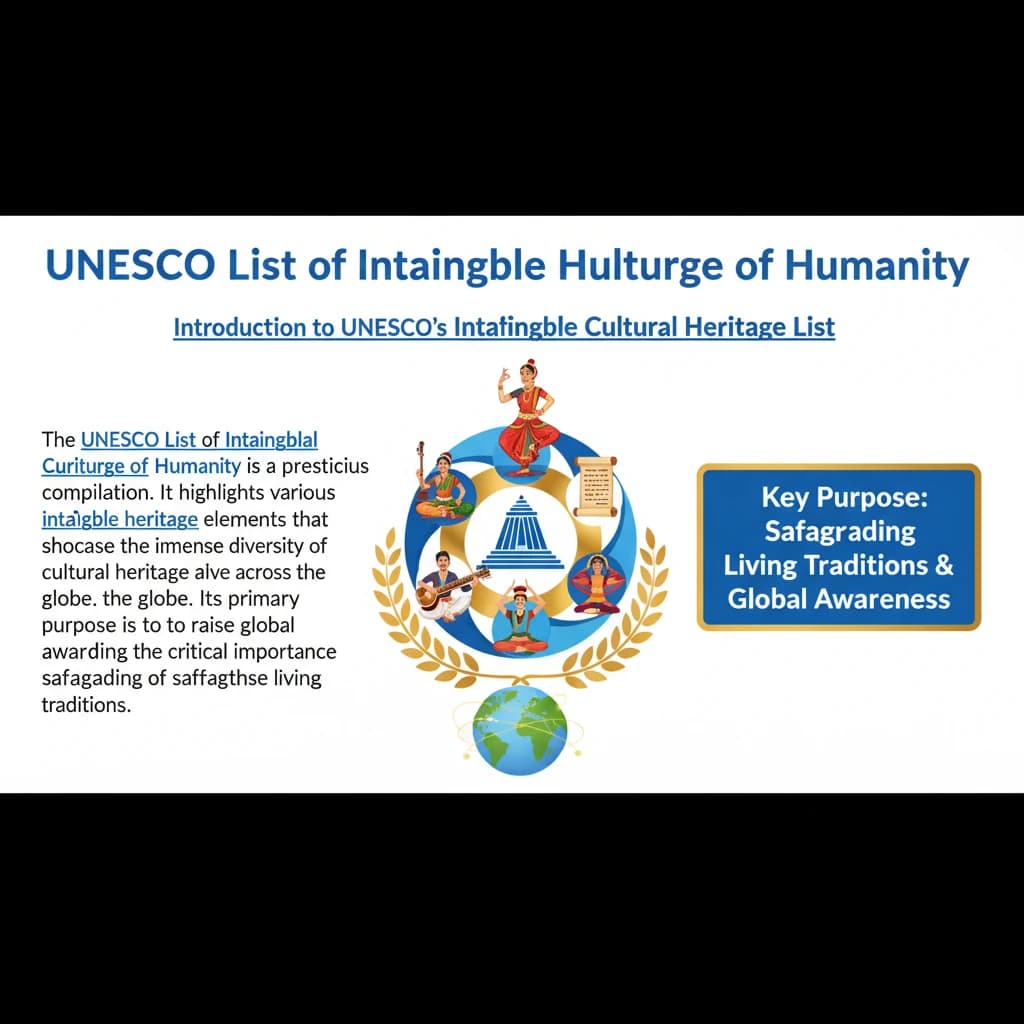
Introduction to UNESCO's Intangible Cultural Heritage List
The UNESCO List of Intangible Cultural Heritage of Humanity is a prestigious compilation. It highlights various intangible heritage elements that showcase the immense diversity of cultural heritage across the globe.
Its primary purpose is to raise global awareness regarding the critical importance of safeguarding these living traditions.
Key Purpose: To demonstrate cultural diversity and raise awareness about the importance of intangible heritage.
Establishment of the List
This significant list was formally established in 2008. Its creation coincided with the official coming into effect of the Convention for the Safeguarding of the Intangible Cultural Heritage.
Established: 2008
Under: Convention for the Safeguarding of the Intangible Cultural Heritage
Under: Convention for the Safeguarding of the Intangible Cultural Heritage
Defining Intangible Cultural Heritage (ICH)
Intangible Cultural Heritage (ICH) encompasses the practices, expressions, knowledge, and skills that communities, groups, and sometimes individuals recognize as integral to their cultural identity. It is often referred to as 'living cultural heritage'.
Definition of ICH: Practices, expressions, knowledge, and skills recognized by communities as part of their cultural heritage. Also known as living cultural heritage.
Forms of Intangible Cultural Heritage
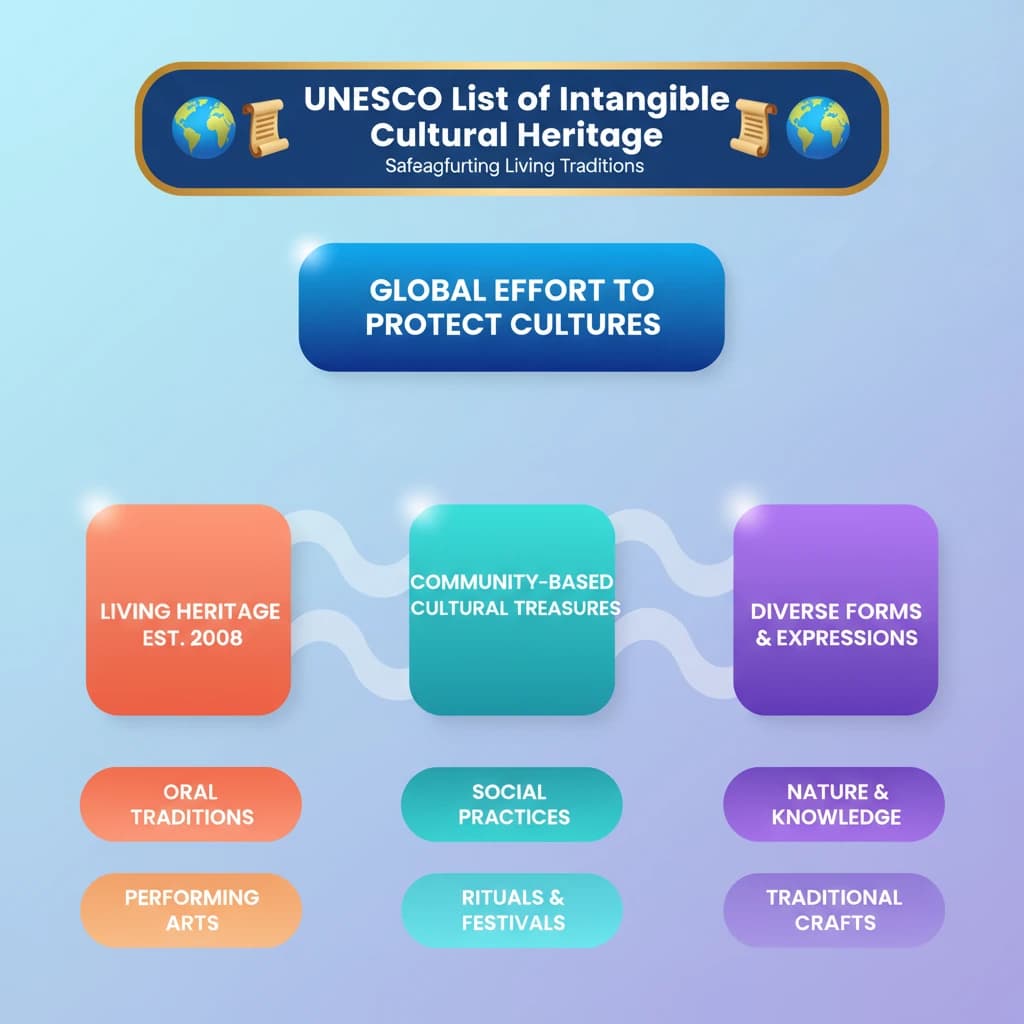
Intangible Cultural Heritage is manifested in various forms, reflecting the rich tapestry of human creativity and tradition. These forms are recognized globally and include:
- Oral traditions: Such as storytelling, epic poetry, and traditional songs.
- Performing arts: Including traditional music, dance, theatre, and puppetry.
- Social Practices: Customs, rituals, and events that structure the lives of communities.
- Rituals and Festive events: Celebrations, ceremonies, and festivals with deep cultural significance.
- Knowledge and Practices concerning nature and the universe: Traditional ecological knowledge, indigenous healing practices, and cosmologies.
- Traditional Craftsmanship: Skills involved in creating traditional tools, textiles, pottery, and other crafts.
For UPSC, understanding the definition and forms of ICH is crucial. Be prepared to provide examples for each category, especially those from India's UNESCO list.
💡 Key Takeaways
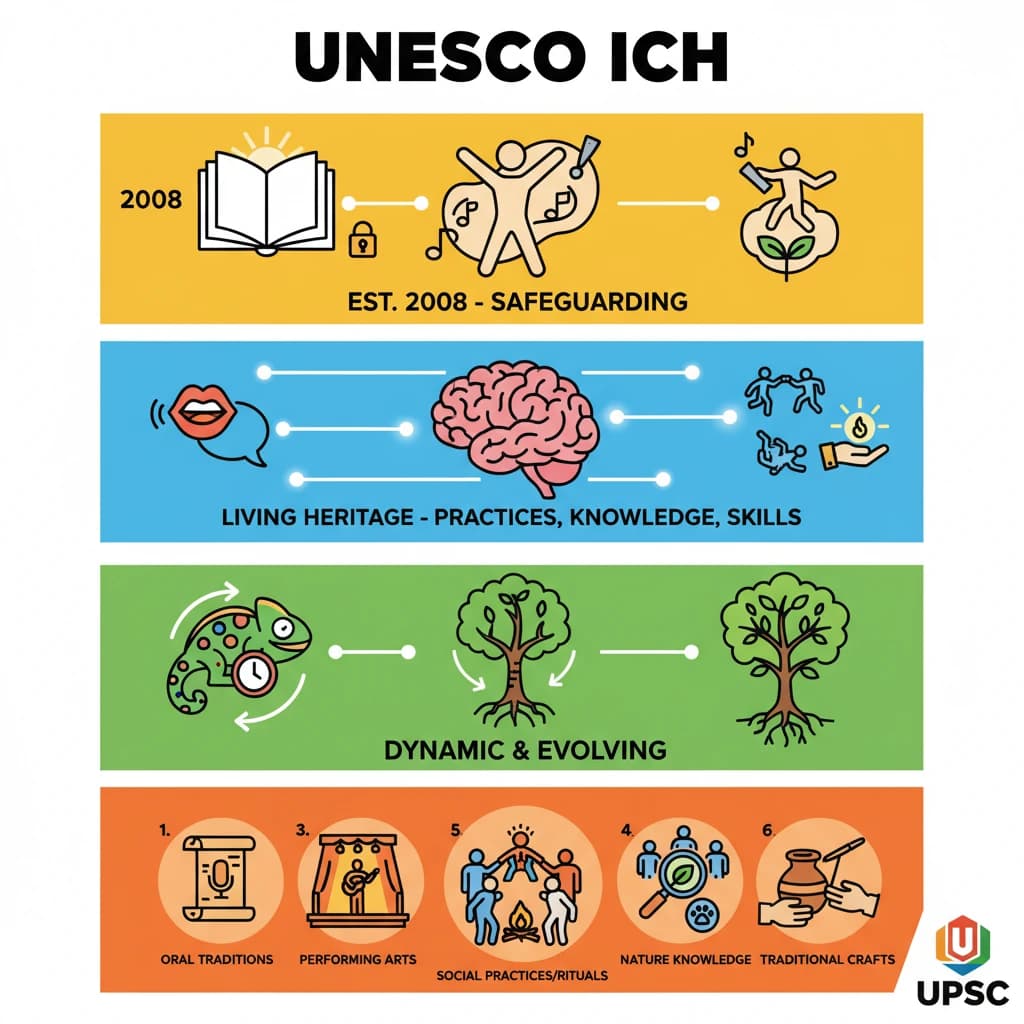
- •The UNESCO ICH List was established in 2008 to safeguard living cultural heritage.
- •Intangible Cultural Heritage includes practices, expressions, knowledge, and skills recognized by communities.
- •It is also known as 'living cultural heritage' due to its dynamic and evolving nature.
- •Key forms include oral traditions, performing arts, social practices, rituals, knowledge about nature, and traditional craftsmanship.
- •The list aims to demonstrate cultural diversity and raise awareness about heritage importance.
- •The 2003 Convention for the Safeguarding of the Intangible Cultural Heritage provides its framework.
🧠 Memory Techniques
98% Verified Content
📚 Reference Sources
•UNESCO Official Website: Intangible Cultural Heritage