Loading page, please wait…
Vaishnavism: Vishnu, Avatars, and the Dashavatara - UPSC Art And Culture
What is Vaishnavism: Vishnu, Avatars, and the Dashavatara in UPSC Art And Culture?
Vaishnavism: Vishnu, Avatars, and the Dashavatara is a key topic under Art And Culture for UPSC Civil Services Examination. Key points include: Vaishnavism focuses on devotion (bhakti) to Vishnu as the Supreme Being.. Vishnu incarnates as avatars to restore cosmic order, with Dashavatara being the ten primary forms.. Bhakti is considered the primary path to liberation (moksha) from the cycle of samsara.. Understanding this topic is essential for both UPSC Prelims and Mains preparation.
Why is Vaishnavism: Vishnu, Avatars, and the Dashavatara important for UPSC exam?
Vaishnavism: Vishnu, Avatars, and the Dashavatara is a Medium-level topic in UPSC Art And Culture. It is tested in both Prelims (factual MCQs) and Mains (analytical answer writing). Previous year UPSC questions have frequently covered aspects of Vaishnavism: Vishnu, Avatars, and the Dashavatara, making it essential for comprehensive IAS preparation.
How to prepare Vaishnavism: Vishnu, Avatars, and the Dashavatara for UPSC?
To prepare Vaishnavism: Vishnu, Avatars, and the Dashavatara for UPSC: (1) Study the comprehensive notes covering all key concepts on Vaidra. (2) Practice previous year questions on this topic. (3) Connect it with current affairs using daily updates. (4) Revise using key takeaways and mind maps available for Art And Culture. (5) Write practice answers linking Vaishnavism: Vishnu, Avatars, and the Dashavatara to related GS Paper topics.
Key takeaways of Vaishnavism: Vishnu, Avatars, and the Dashavatara for UPSC
- Vaishnavism focuses on devotion (bhakti) to Vishnu as the Supreme Being.
- Vishnu incarnates as avatars to restore cosmic order, with Dashavatara being the ten primary forms.
- Bhakti is considered the primary path to liberation (moksha) from the cycle of samsara.
- Diverse philosophical schools like Vishishtadvaita, Dvaita, and Shuddhadvaita exist within Vaishnavism.
- Prominent sects include Srivaishnava (Ramanuja), Madhva (Madhvacharya), Pushtimarg (Vallabhacharya), and Gaudiya (Chaitanya).
- The Dashavatara includes popular avatars like Rama, Krishna, and Buddha.
- Vaishnava tenets continue to influence Indian culture, festivals, and ethical thought today.
Vaishnavism: Vishnu, Avatars, and the Dashavatara
Medium⏱️ 7 min read
art and culture
📖 Introduction
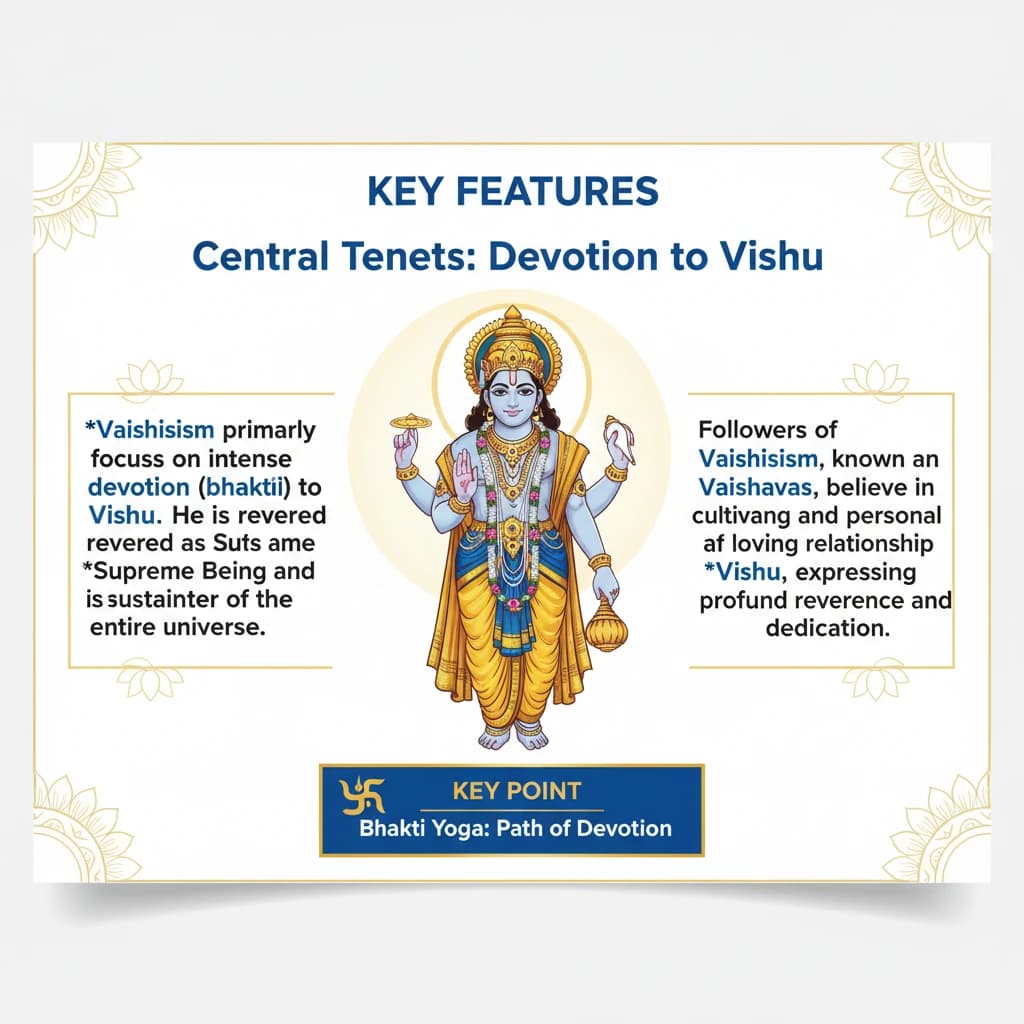
Central Tenets: Devotion to Vishnu
Vaishnavism primarily focuses on intense devotion (bhakti) to Vishnu. He is revered as the Supreme Being and the sustainer of the entire universe.
Followers of Vaishnavism, known as Vaishnavas, believe in cultivating a personal and loving relationship with Vishnu, expressing profound reverence and dedication.
Key Concept: Bhakti involves a deep emotional connection and surrender to the deity, forming the core of Vaishnava practice.
Avatars: Divine Incarnations
Vishnu is believed to manifest on Earth in various forms, known as avatars. These incarnations occur to restore cosmic order and uphold righteousness in times of crisis.
The ten primary avatars are collectively known as the Dashavatara. Among these, Rama and Krishna are particularly popular and widely worshipped incarnations.
The Dashavatara:
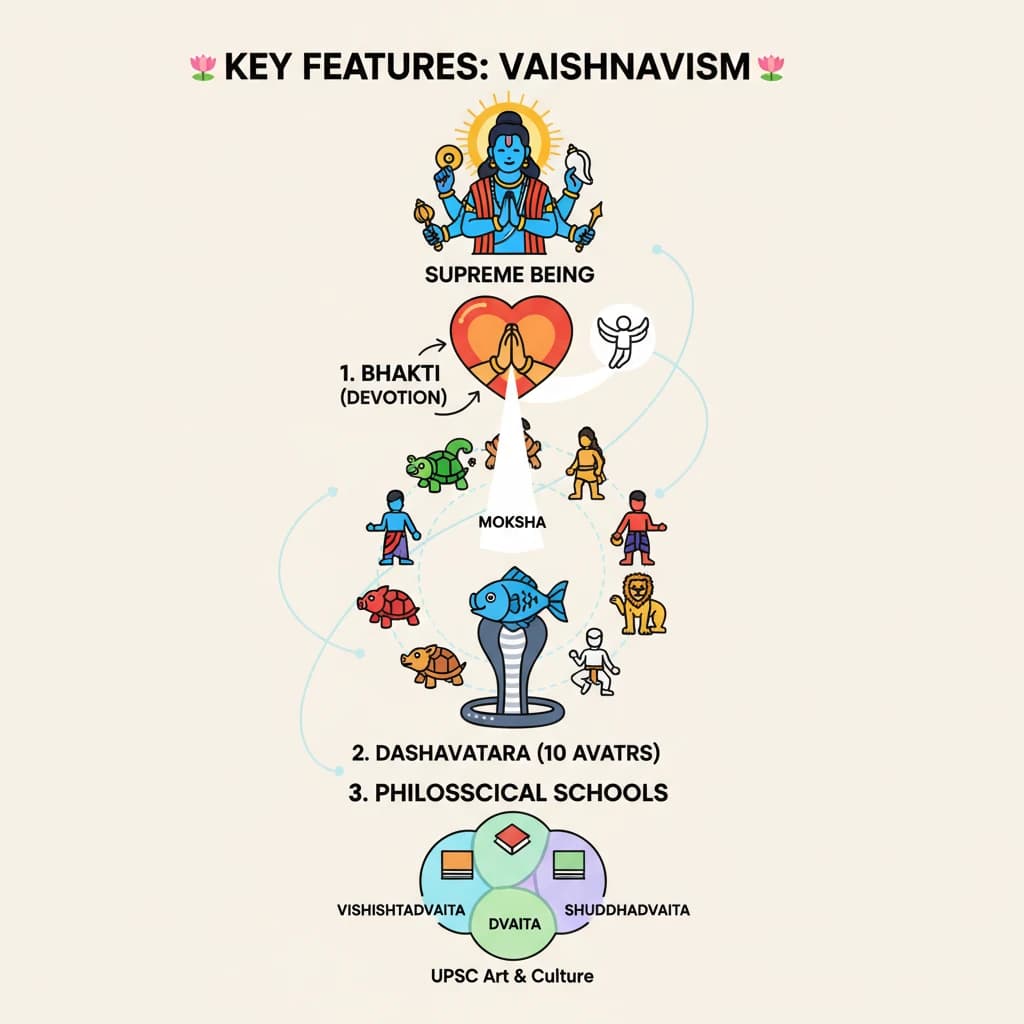
- Matsya (fish)
- Kurma (turtle)
- Varaha (boar)
- Narasimha (half-man, half-lion)
- Vamana (dwarf)
- Parashurama (warrior with an axe)
- Rama (prince of Ayodhya)
- Krishna (divine cowherd)
- Buddha (the enlightened one)
- Kalki (future warrior on a white horse)
Path to Liberation: Bhakti and Moksha
Vaishnavism places significant emphasis on the path of bhakti. This involves intense devotion and love directed towards Vishnu as the means to spiritual realization.
For many Vaishnavas, the ultimate spiritual goal is liberation (moksha). This signifies freedom from the continuous cycle of birth and death, known as samsara, and achieving union with Vishnu.
Understanding Bhakti as a path to Moksha is crucial for UPSC, especially in topics related to the Bhakti Movement and Indian philosophical traditions (GS Paper I).
Diverse Philosophical Schools (Sects)
Vaishnavism is not monolithic; it encompasses a variety of sects and groups. These groups hold different interpretations regarding the relationship between the individual soul (jiva) and God.
Some prominent philosophical stances within Vaishnavism include qualified nondualism (Vishishtadvaita), dualism (Dvaita), and pure nondualism (Shuddhadvaita).
Key Vaishnava Sects and their Philosophies:
- Srivaishnava Sect: Emphasizes qualified nondualism (Vishishtadvaita), based on the teachings of Ramanuja.
- Madhva Sect: Professes dualism (Dvaita), asserting the separate existence of God and the soul, following the philosophy of Madhvacharya.
- Pushtimarg Sect: Maintains pure nondualism (Shuddhadvaita), according to Vallabhacharya’s teachings.
- Gaudiya Sect: Founded by Chaitanya, teaches inconceivable duality and nonduality (Achintya Bheda Abheda).
💡 Key Takeaways
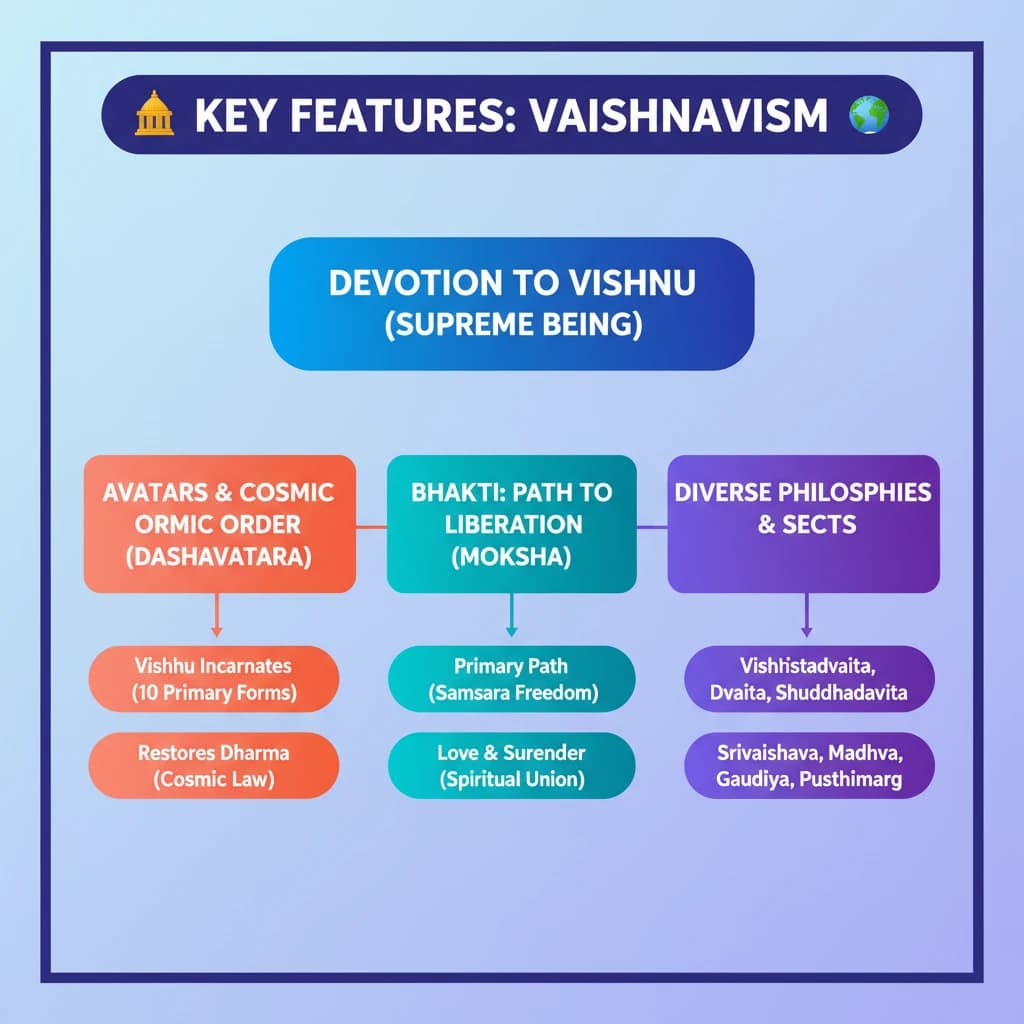
- •Vaishnavism focuses on devotion (bhakti) to Vishnu as the Supreme Being.
- •Vishnu incarnates as avatars to restore cosmic order, with Dashavatara being the ten primary forms.
- •Bhakti is considered the primary path to liberation (moksha) from the cycle of samsara.
- •Diverse philosophical schools like Vishishtadvaita, Dvaita, and Shuddhadvaita exist within Vaishnavism.
- •Prominent sects include Srivaishnava (Ramanuja), Madhva (Madhvacharya), Pushtimarg (Vallabhacharya), and Gaudiya (Chaitanya).
- •The Dashavatara includes popular avatars like Rama, Krishna, and Buddha.
- •Vaishnava tenets continue to influence Indian culture, festivals, and ethical thought today.
🧠 Memory Techniques
95% Verified Content
📚 Reference Sources
•General knowledge on Indian Philosophy and Bhakti Movement