Loading page, please wait…
What are Key Facts About Martand Sun Temple? - UPSC Art And Culture
What is What are Key Facts About Martand Sun Temple? in UPSC Art And Culture?
What are Key Facts About Martand Sun Temple? is a key topic under Art And Culture for UPSC Civil Services Examination. Key points include: Martand Sun Temple was built by King Lalitaditya Muktapida of the Karkota dynasty around 725-753 AD.. It was dedicated to the Sun god Martand and featured grand architecture.. The temple's design shows influences from Egyptian, Greek, and Gandharan styles, reflecting cultural assimilation.. Understanding this topic is essential for both UPSC Prelims and Mains preparation.
Why is What are Key Facts About Martand Sun Temple? important for UPSC exam?
What are Key Facts About Martand Sun Temple? is a Medium-level topic in UPSC Art And Culture. It is tested in both Prelims (factual MCQs) and Mains (analytical answer writing). Previous year UPSC questions have frequently covered aspects of What are Key Facts About Martand Sun Temple?, making it essential for comprehensive IAS preparation.
How to prepare What are Key Facts About Martand Sun Temple? for UPSC?
To prepare What are Key Facts About Martand Sun Temple? for UPSC: (1) Study the comprehensive notes covering all key concepts on Vaidra. (2) Practice previous year questions on this topic. (3) Connect it with current affairs using daily updates. (4) Revise using key takeaways and mind maps available for Art And Culture. (5) Write practice answers linking What are Key Facts About Martand Sun Temple? to related GS Paper topics.
Key takeaways of What are Key Facts About Martand Sun Temple? for UPSC
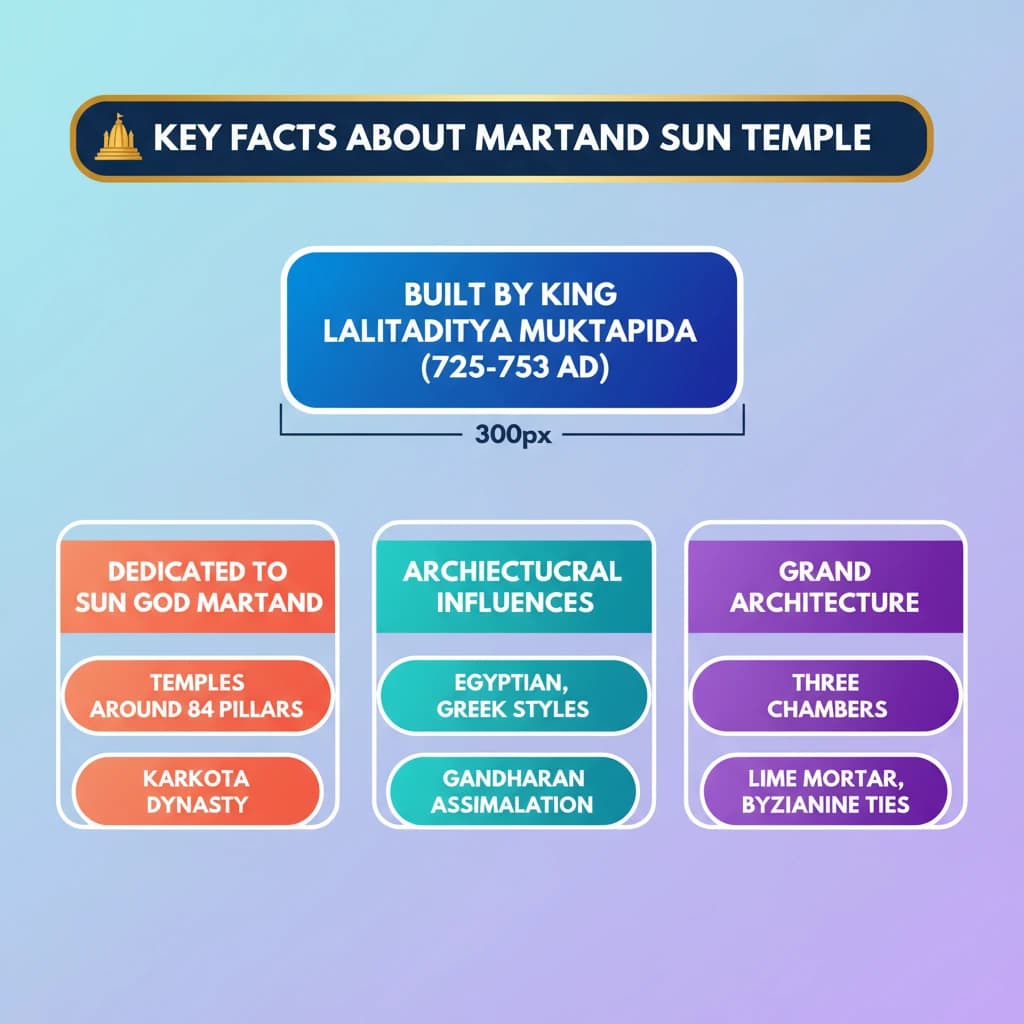
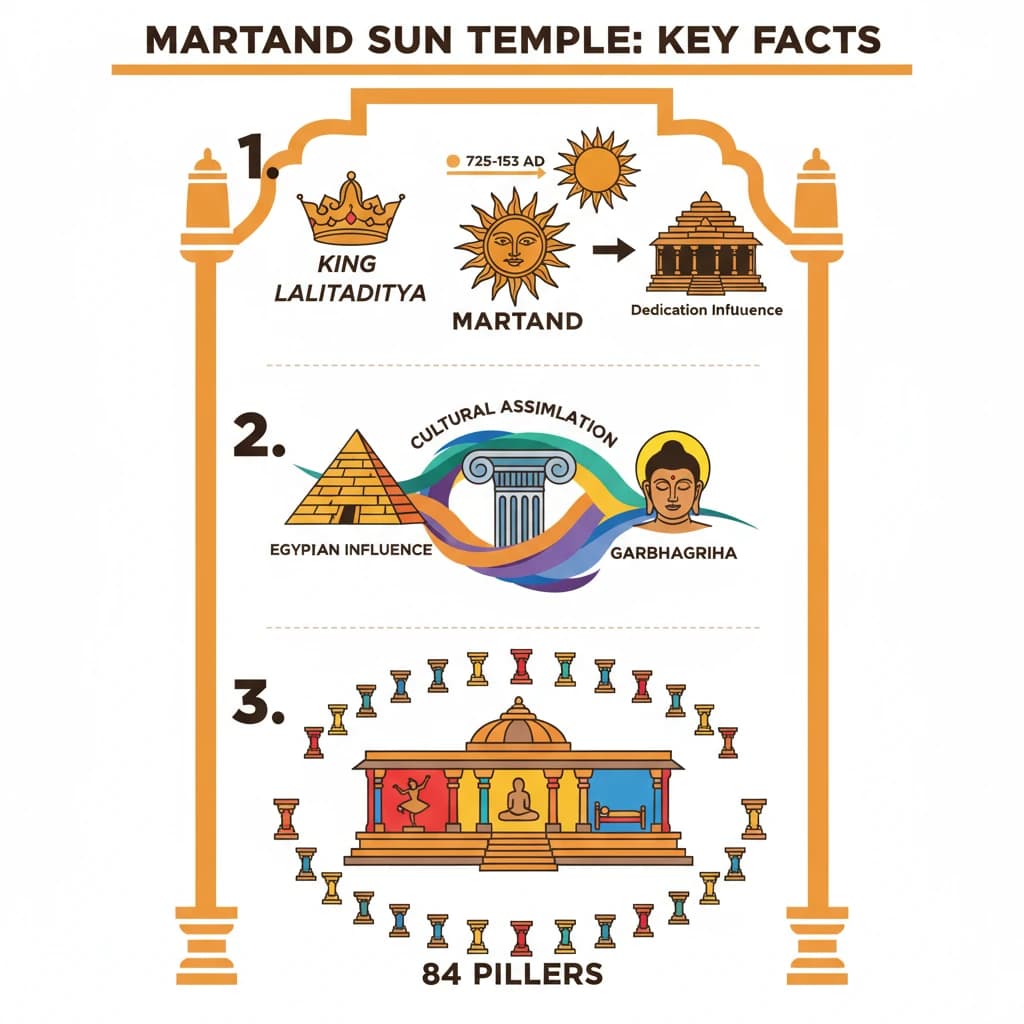
- Martand Sun Temple was built by King Lalitaditya Muktapida of the Karkota dynasty around 725-753 AD.
- It was dedicated to the Sun god Martand and featured grand architecture.
- The temple's design shows influences from Egyptian, Greek, and Gandharan styles, reflecting cultural assimilation.
- It had three distinct chambers: mandapa, garbhagriha, and antalaya, and was surrounded by 84 pillars.
- The use of lime mortar suggests advanced building techniques and possibly Byzantine architectural involvement.
- Its history is documented in Kalhana's 12th-century text, Rajatarangini.
- Martand Sun Temple is a significant example of Kashmir's rich pre-Islamic architectural heritage.
What are Key Facts About Martand Sun Temple?
Medium⏱️ 5 min read
art and culture
📖 Introduction
Introduction to Martand Sun Temple
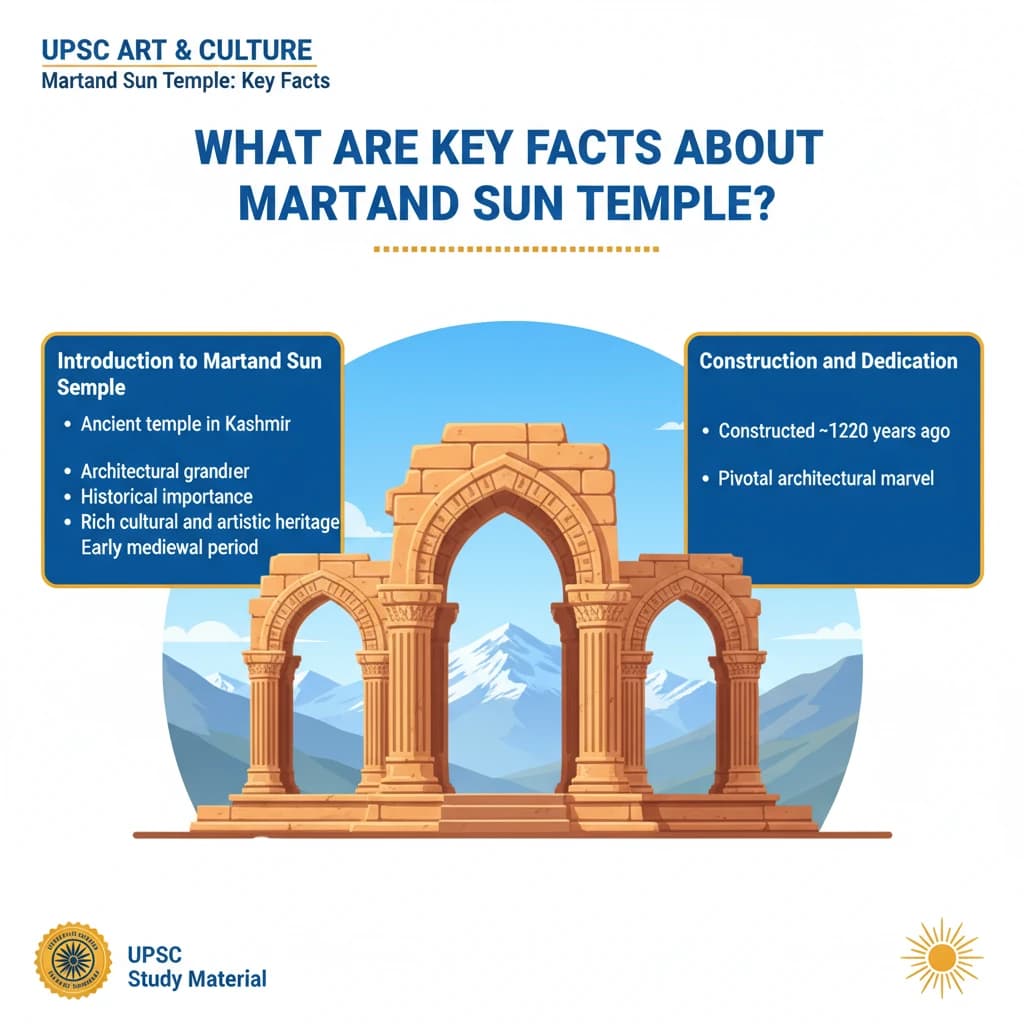
The Martand Sun Temple is a significant ancient temple located in Kashmir, renowned for its architectural grandeur and historical importance.
It stands as a testament to the rich cultural and artistic heritage of the region during the early medieval period.
Construction and Dedication
The temple was constructed approximately 1200 years ago, making it a pivotal architectural marvel of its time.
Builder: King Lalitaditya Muktapida
Dynasty: Karkota dynasty
Reign: 725 AD to 753 AD (Kashmir)
Dedication: Martand, the Sun god
Dynasty: Karkota dynasty
Reign: 725 AD to 753 AD (Kashmir)
Dedication: Martand, the Sun god
Its dedication to the Sun god reflects the prevalence of solar worship in ancient India and the syncretic nature of religious practices.
Grand Architecture and Influences
The temple featured a grand architectural style, showcasing a remarkable synthesis of various cultural influences.
Architectural Influences:
- Egyptian
- Greek
- Gandharan
The structure boasted massive grey stone walls, indicating robust construction and a majestic presence.
A notable feature was a courtyard filled with river water, symbolizing its grandeur and spiritual significance within Kashmiri architecture.
Historical Documentation
The historical existence and significance of the Martand Sun Temple are well-documented in ancient texts.
Historical Reference: Rajatarangini
Author: Kalhana
Period: 12th century
Author: Kalhana
Period: 12th century
This chronicle provides valuable insights into the temple's construction, patronage, and cultural context.
Distinct Architectural Features
The temple's design incorporated unique elements that set it apart from other temples in the region.
Unique Chamber Layout:
The temple comprised three distinct chambers, a characteristic uncommon in many Kashmiri temples:
The temple comprised three distinct chambers, a characteristic uncommon in many Kashmiri temples:
- Mandapa (assembly hall)
- Garbhagriha (sanctum sanctorum)
- Antalaya (antechamber)
The ruins suggest the temple was surrounded by a peristyle of 84 pillars, a hallmark of Kashmiri temple architecture.
An unusual construction material, lime mortar, was employed, suggesting advanced building techniques for its era.
The use of lime mortar also points towards the potential involvement of immigrant Byzantine architects, indicating international architectural exchange.
Cultural Assimilation in Design
The architecture of the Martand Temple vividly demonstrates a profound confluence of diverse cultural styles.
Confluence of Styles:
- Classical Greco-Roman
- Buddhist-Gandhara
- North Indian
This architectural syncretism reflects Kashmir's historical connections with various cultures and empires, serving as a crossroads of civilizations.
💡 Key Takeaways
- •Martand Sun Temple was built by King Lalitaditya Muktapida of the Karkota dynasty around 725-753 AD.
- •It was dedicated to the Sun god Martand and featured grand architecture.
- •The temple's design shows influences from Egyptian, Greek, and Gandharan styles, reflecting cultural assimilation.
- •It had three distinct chambers: mandapa, garbhagriha, and antalaya, and was surrounded by 84 pillars.
- •The use of lime mortar suggests advanced building techniques and possibly Byzantine architectural involvement.
- •Its history is documented in Kalhana's 12th-century text, Rajatarangini.
- •Martand Sun Temple is a significant example of Kashmir's rich pre-Islamic architectural heritage.
🧠 Memory Techniques
95% Verified Content