Loading page, please wait…
What are the Key Facts about Kumbh Mela? - UPSC Art And Culture
What is What are the Key Facts about Kumbh Mela? in UPSC Art And Culture?
What are the Key Facts about Kumbh Mela? is a key topic under Art And Culture for UPSC Civil Services Examination. Key points include: Kumbh Mela is the world's largest peaceful gathering of pilgrims.. It rotates among four sacred sites: Haridwar, Ujjain, Nashik, and Prayagraj.. Each site is associated with a specific holy river for ritual bathing.. Understanding this topic is essential for both UPSC Prelims and Mains preparation.
Why is What are the Key Facts about Kumbh Mela? important for UPSC exam?
What are the Key Facts about Kumbh Mela? is a Medium-level topic in UPSC Art And Culture. It is tested in both Prelims (factual MCQs) and Mains (analytical answer writing). Previous year UPSC questions have frequently covered aspects of What are the Key Facts about Kumbh Mela?, making it essential for comprehensive IAS preparation.
How to prepare What are the Key Facts about Kumbh Mela? for UPSC?
To prepare What are the Key Facts about Kumbh Mela? for UPSC: (1) Study the comprehensive notes covering all key concepts on Vaidra. (2) Practice previous year questions on this topic. (3) Connect it with current affairs using daily updates. (4) Revise using key takeaways and mind maps available for Art And Culture. (5) Write practice answers linking What are the Key Facts about Kumbh Mela? to related GS Paper topics.
Key takeaways of What are the Key Facts about Kumbh Mela? for UPSC
- Kumbh Mela is the world's largest peaceful gathering of pilgrims.
- It rotates among four sacred sites: Haridwar, Ujjain, Nashik, and Prayagraj.
- Each site is associated with a specific holy river for ritual bathing.
- The Mela's timing is determined by specific astrological alignments.
- It holds mythological origins linked to the Samudra Manthan.
- Historically documented by Hiuen Tsang during King Harshavardhana's reign.
- Recognized as UNESCO Intangible Cultural Heritage in 2017.
What are the Key Facts about Kumbh Mela?
Medium⏱️ 8 min read
art and culture
📖 Introduction
Introduction to Kumbh Mela
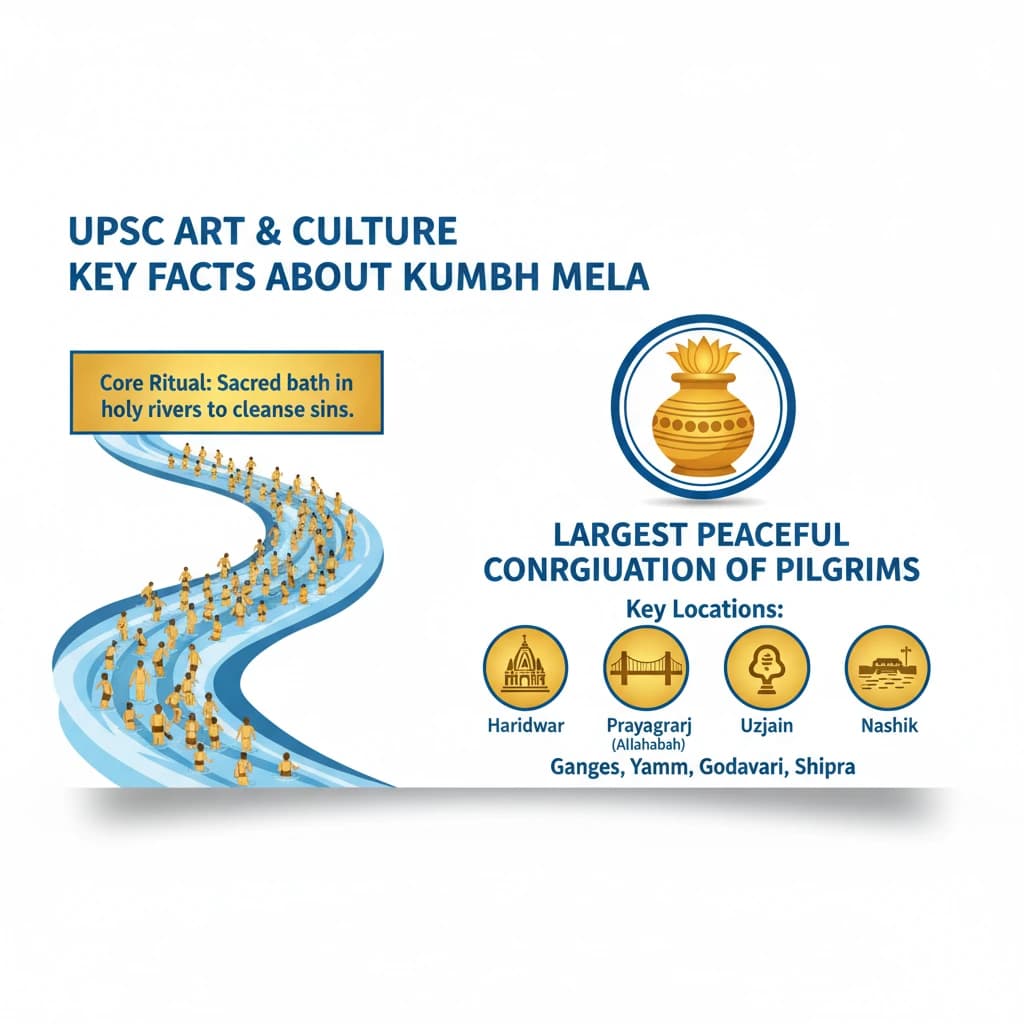
The Kumbh Mela is renowned globally as the largest peaceful congregation of pilgrims on Earth. This ancient Hindu pilgrimage attracts millions of devotees from across the world.
Core Ritual: Participants undertake a sacred bath or dip in holy rivers, believed to cleanse sins and attain spiritual merit.
Key Locations of Kumbh Mela
The gathering rotates among four sacred sites in India. Each location holds unique spiritual significance and is associated with a specific holy river.
- Haridwar: Located on the banks of the sacred River Ganges in Uttarakhand.
- Ujjain: Situated on the banks of the holy River Shipra in Madhya Pradesh.
- Nashik: Found on the banks of the River Godavari (also known as Dakshin Ganga) in Maharashtra.
- Prayagraj (Allahabad): Held at the auspicious Triveni Sangam, the confluence of the River Ganges, River Yamuna, and the mythical invisible River Saraswati in Uttar Pradesh.
For UPSC, remember the four locations and their associated rivers. Questions often test direct factual recall or the cultural significance of these sites.
💡 Key Takeaways
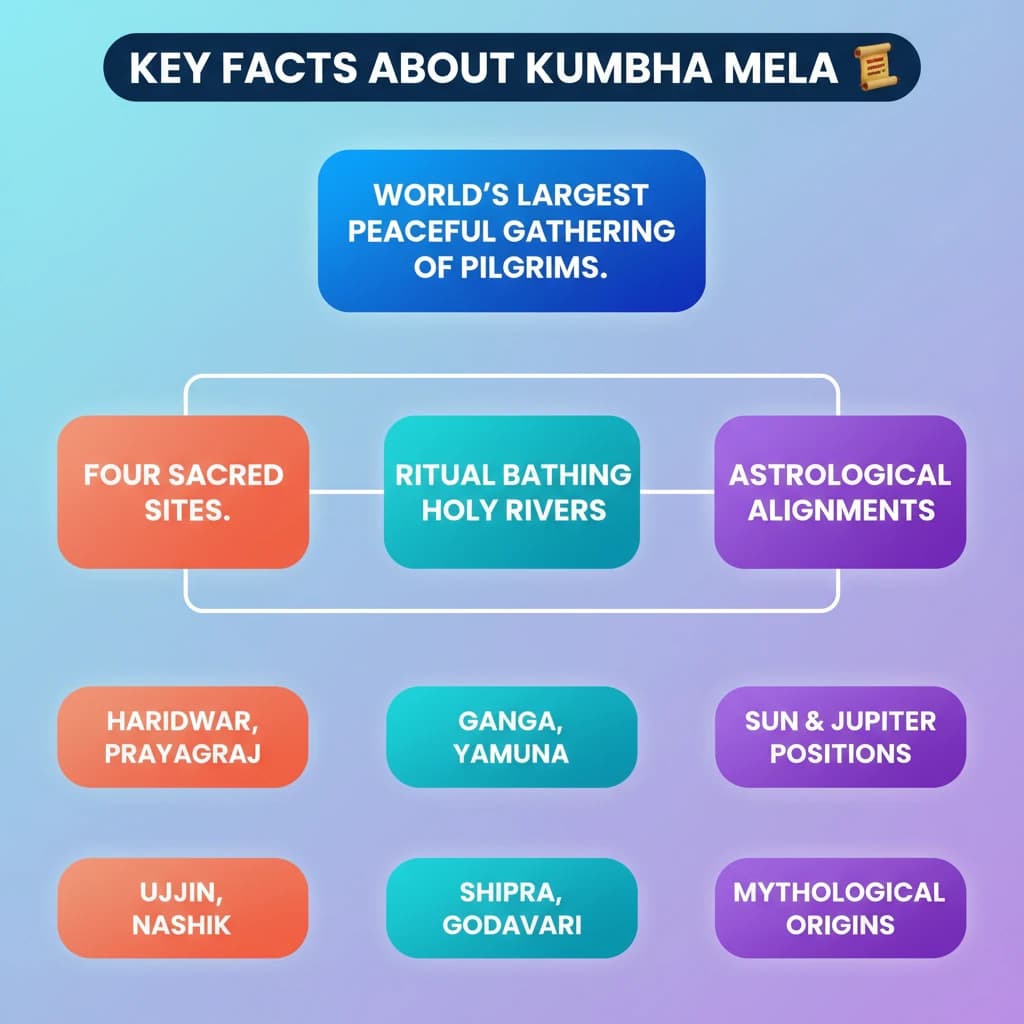
- •Kumbh Mela is the world's largest peaceful gathering of pilgrims.
- •It rotates among four sacred sites: Haridwar, Ujjain, Nashik, and Prayagraj.
- •Each site is associated with a specific holy river for ritual bathing.
- •The Mela's timing is determined by specific astrological alignments.
- •It holds mythological origins linked to the Samudra Manthan.
- •Historically documented by Hiuen Tsang during King Harshavardhana's reign.
- •Recognized as UNESCO Intangible Cultural Heritage in 2017.
🧠 Memory Techniques

98% Verified Content
📚 Reference Sources
•UNESCO Intangible Cultural Heritage website
•Ministry of Culture, Government of India publications
•Academic articles on Kumbh Mela and Indian pilgrimages