Loading page, please wait…
What are the Key Facts about the Hoysala Dynasty? - UPSC Art And Culture
What is What are the Key Facts about the Hoysala Dynasty? in UPSC Art And Culture?
What are the Key Facts about the Hoysala Dynasty? is a key topic under Art And Culture for UPSC Civil Services Examination. Key points include: The Hoysalas were initially feudatories of the Western Chalukyas before establishing their independent rule.. Their capital was Dorasamudra, known today as Halebid.. Vishnuvardhana was the greatest Hoysala king, known for his military victories and patronage of art.. Understanding this topic is essential for both UPSC Prelims and Mains preparation.
Why is What are the Key Facts about the Hoysala Dynasty? important for UPSC exam?
What are the Key Facts about the Hoysala Dynasty? is a Medium-level topic in UPSC Art And Culture. It is tested in both Prelims (factual MCQs) and Mains (analytical answer writing). Previous year UPSC questions have frequently covered aspects of What are the Key Facts about the Hoysala Dynasty?, making it essential for comprehensive IAS preparation.
How to prepare What are the Key Facts about the Hoysala Dynasty? for UPSC?
To prepare What are the Key Facts about the Hoysala Dynasty? for UPSC: (1) Study the comprehensive notes covering all key concepts on Vaidra. (2) Practice previous year questions on this topic. (3) Connect it with current affairs using daily updates. (4) Revise using key takeaways and mind maps available for Art And Culture. (5) Write practice answers linking What are the Key Facts about the Hoysala Dynasty? to related GS Paper topics.
Key takeaways of What are the Key Facts about the Hoysala Dynasty? for UPSC
- The Hoysalas were initially feudatories of the Western Chalukyas before establishing their independent rule.
- Their capital was Dorasamudra, known today as Halebid.
- Vishnuvardhana was the greatest Hoysala king, known for his military victories and patronage of art.
- The dynasty patronized Hinduism, Jainism, and Buddhism, showcasing religious tolerance.
- Hoysala temples exemplify the unique Vesara style of architecture, known for intricate carvings.
- Key temples like Chennakeshava (Belur), Hoyaleshwara (Halebid), and Keshava (Somnathpura) are UNESCO World Heritage Sites.
- The Vijayanagar dynasty succeeded the Hoysalas in the Kaveri river valley region.
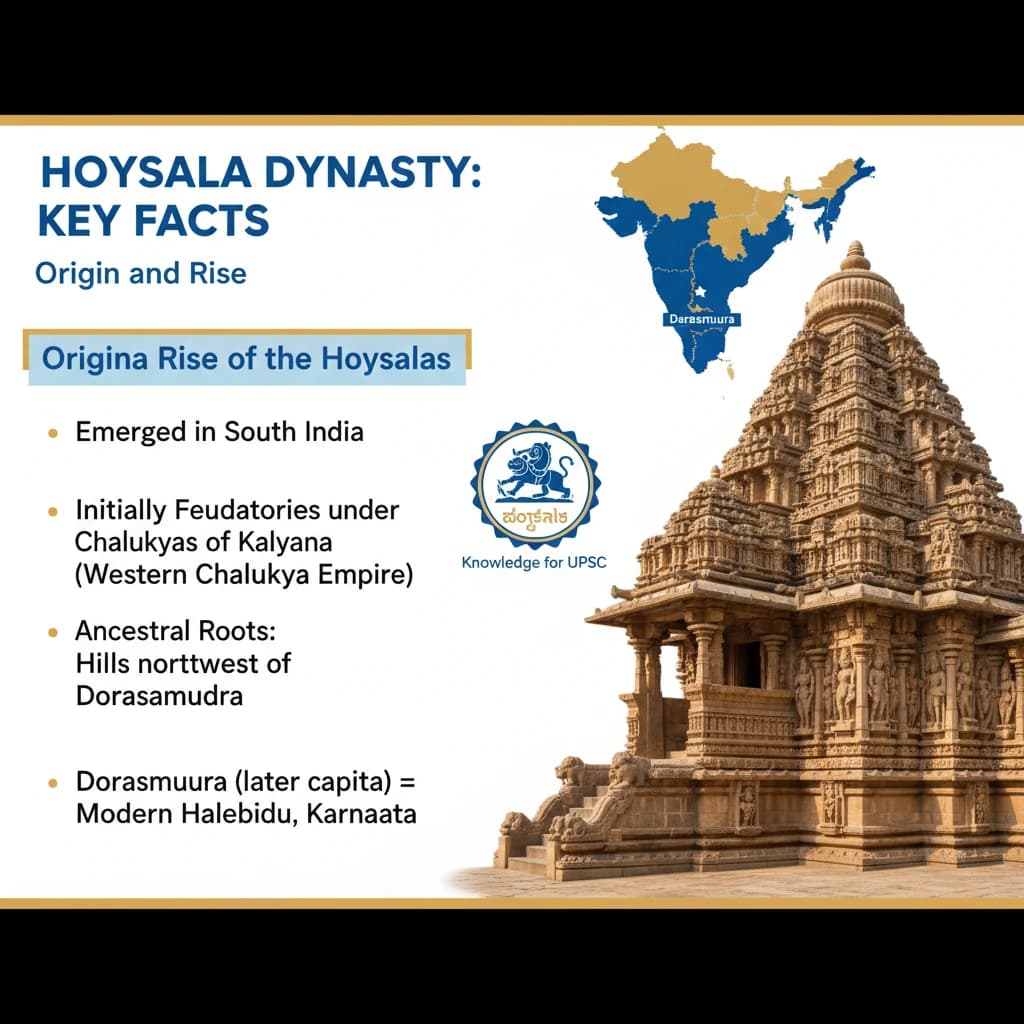
What are the Key Facts about the Hoysala Dynasty?
Medium⏱️ 8 min read
art and culture
📖 Introduction
Origin and Rise of the Hoysalas
The Hoysalas emerged as significant rulers in South India, initially serving as feudatories under the powerful Chalukyas of Kalyana, also known as the Western Chalukya Empire.
Their ancestral roots trace back to the hills located northwest of Dorasamudra, which later became their capital. The city of Dorasamudra is presently identified as Halebid.
Capital Established: Dorasamudra (modern Halebid) in 1060 AD
The Hoysala dynasty's influence spanned across regions of Karnataka and Tamil Nadu, particularly in the fertile Kaveri (Cauvery) river valley. Their reign extended from the 11th to the 14th century.
Notable Hoysala Rulers
Several rulers left an indelible mark on the Hoysala dynasty, shaping its political and cultural landscape. Among the most prominent were Vishnuvardhana, Veera Ballala II, and Veera Ballala III.
Greatest Hoysala King: Vishnuvardhana (also known as Bittideva) is widely regarded as the most influential ruler of the dynasty.
Succession and Decline
Following the decline of the Hoysala dynasty, their territories and legacy were eventually succeeded by the powerful Vijayanagar dynasty, marking a transition in South Indian political history.
Religion and Cultural Patronage
The Hoysala dynasty was notable for its broad religious tolerance and patronage. They actively supported various faiths, fostering a rich cultural environment.
- Patronised Religions: Hinduism, Jainism, and Buddhism.
A significant religious transformation occurred with King Vishnuvardhana. Initially, he adhered to Jainism, a faith prevalent in the region.
Religious Conversion: King Vishnuvardhana converted to Vaishnavism under the profound influence of the revered Saint Ramanuja.
Hoysala Temple Architecture
The architectural prowess of the Hoysalas is best exemplified in their temples, constructed primarily during the 12th and 13th centuries CE. These structures are celebrated for their distinctive style.
Architectural Style: Hoysala temples showcase the unique artistic brilliance of the Vesara style, a hybrid architectural tradition.
Many Hoysala temples are not only architectural marvels but also hold international recognition for their cultural significance.
- Chennakeshava Temple in Belur
- Hoyaleshwara Temple in Halebid
- Keshava Temple of Somnathpura
UNESCO World Heritage Sites: The above-mentioned Hoysala temples are recognized as UNESCO World Heritage Sites and are protected by the Archaeological Survey of India (ASI).
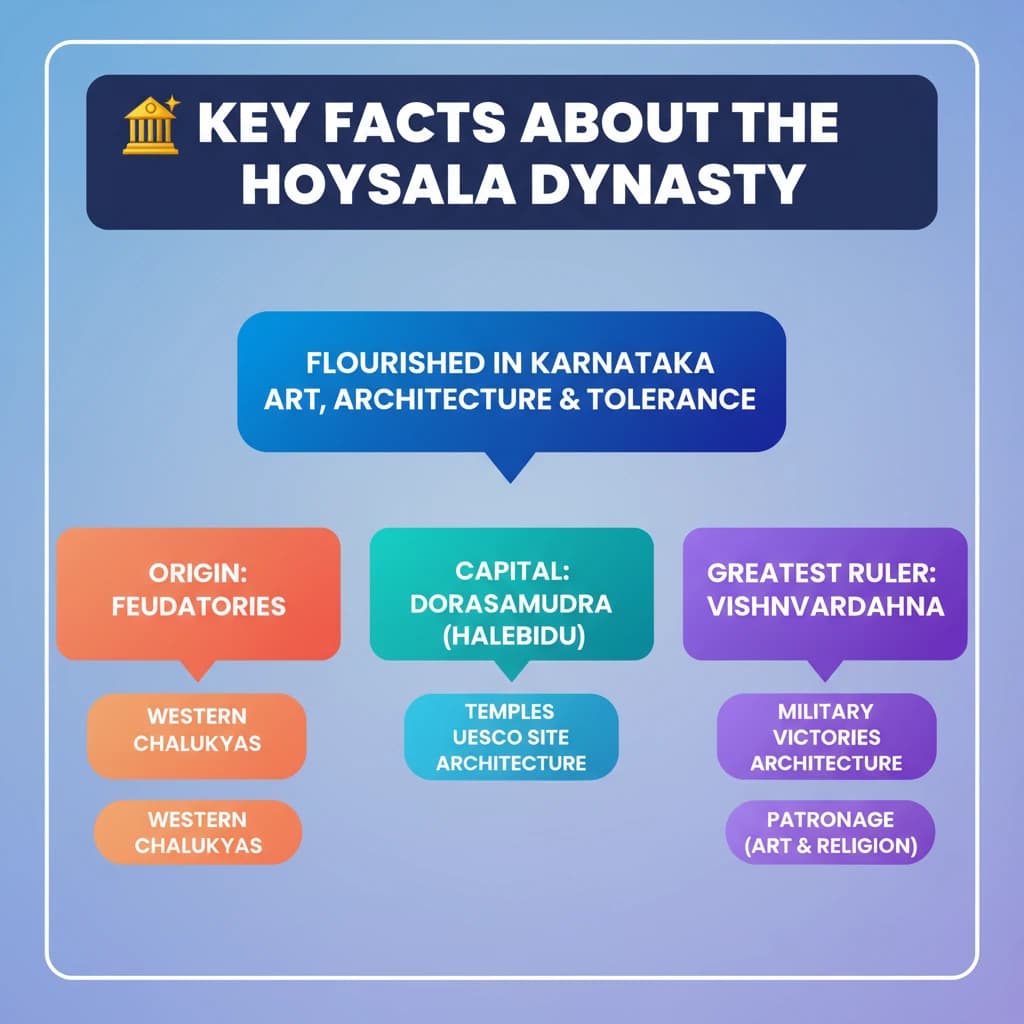
💡 Key Takeaways
- •The Hoysalas were initially feudatories of the Western Chalukyas before establishing their independent rule.
- •Their capital was Dorasamudra, known today as Halebid.
- •Vishnuvardhana was the greatest Hoysala king, known for his military victories and patronage of art.
- •The dynasty patronized Hinduism, Jainism, and Buddhism, showcasing religious tolerance.
- •Hoysala temples exemplify the unique Vesara style of architecture, known for intricate carvings.
- •Key temples like Chennakeshava (Belur), Hoyaleshwara (Halebid), and Keshava (Somnathpura) are UNESCO World Heritage Sites.
- •The Vijayanagar dynasty succeeded the Hoysalas in the Kaveri river valley region.
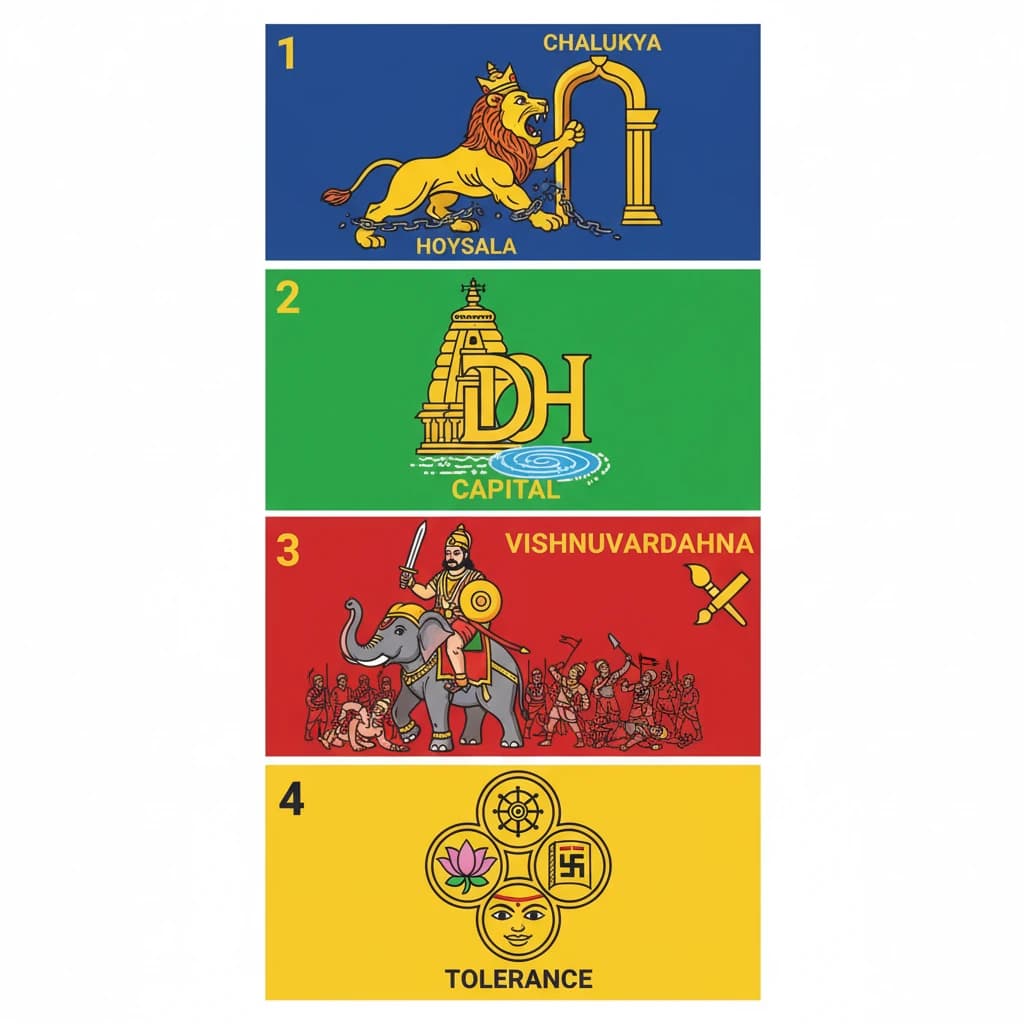
🧠 Memory Techniques
98% Verified Content
📚 Reference Sources
•UNESCO World Heritage Centre: Sacred Ensembles of the Hoysalas
•Archaeological Survey of India (ASI) records