Loading page, please wait…
What is Abhidhamma Pitaka? - UPSC Art And Culture
What is What is Abhidhamma Pitaka? in UPSC Art And Culture?
What is Abhidhamma Pitaka? is a key topic under Art And Culture for UPSC Civil Services Examination. Key points include: Abhidhamma Pitaka is the third and last part of the Pali Canon in Theravada Buddhism.. It provides a detailed scholastic analysis of the Buddha's teachings from the Suttas.. Its content covers Buddhist philosophy, doctrine, psychology, metaphysics, ethics, and epistemology.. Understanding this topic is essential for both UPSC Prelims and Mains preparation.
Why is What is Abhidhamma Pitaka? important for UPSC exam?
What is Abhidhamma Pitaka? is a Medium-level topic in UPSC Art And Culture. It is tested in both Prelims (factual MCQs) and Mains (analytical answer writing). Previous year UPSC questions have frequently covered aspects of What is Abhidhamma Pitaka?, making it essential for comprehensive IAS preparation.
How to prepare What is Abhidhamma Pitaka? for UPSC?
To prepare What is Abhidhamma Pitaka? for UPSC: (1) Study the comprehensive notes covering all key concepts on Vaidra. (2) Practice previous year questions on this topic. (3) Connect it with current affairs using daily updates. (4) Revise using key takeaways and mind maps available for Art And Culture. (5) Write practice answers linking What is Abhidhamma Pitaka? to related GS Paper topics.
Key takeaways of What is Abhidhamma Pitaka? for UPSC
- Abhidhamma Pitaka is the third and last part of the Pali Canon in Theravada Buddhism.
- It provides a detailed scholastic analysis of the Buddha's teachings from the Suttas.
- Its content covers Buddhist philosophy, doctrine, psychology, metaphysics, ethics, and epistemology.
- It differs from Vinaya Pitaka (monastic rules) and Sutta Pitaka (discourses).
- The Abhidhamma Pitaka consists of seven distinct books, each with a specific focus.
- It systematically categorizes phenomena (dharmas) and explains complex causal relations.
- The Kathavatthu book addresses and refutes various doctrinal controversies within early Buddhism.
What is Abhidhamma Pitaka?
Medium⏱️ 10 min read
art and culture
📖 Introduction
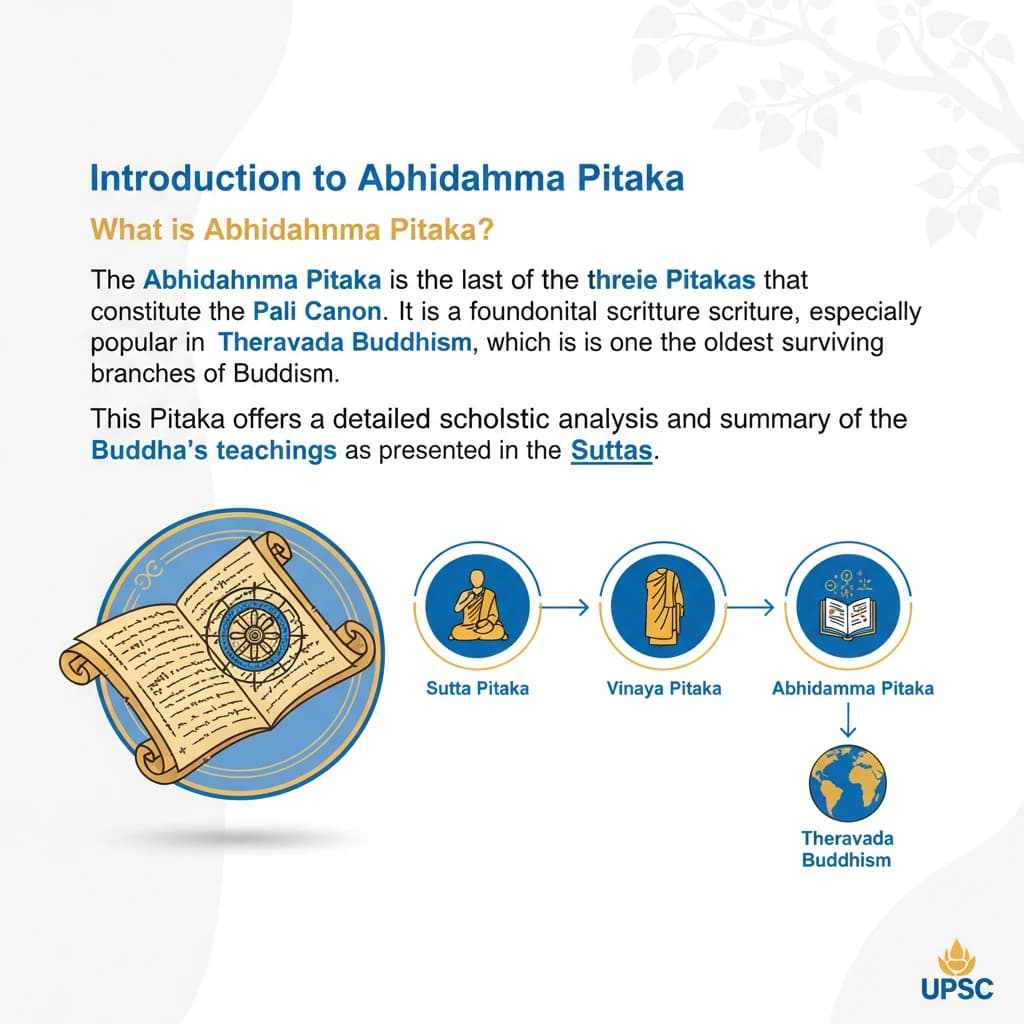
Introduction to Abhidhamma Pitaka
The Abhidhamma Pitaka is the last of the three Pitakas that constitute the Pali Canon. It is a foundational scripture, especially popular in Theravada Buddhism, which is one of the oldest surviving branches of Buddhism.
This Pitaka offers a detailed scholastic analysis and summary of the Buddha’s teachings as presented in the Suttas. It moves beyond simple discourses to a more systematic and abstract examination of Buddhist doctrines.
The Abhidhamma Pitaka delves into the core philosophy, doctrine, psychology, metaphysics, ethics, and epistemology of Buddhism. It provides a highly structured framework for understanding reality according to Buddhist principles.
Abhidhamma Pitaka within the Tipitaka
The Tipitaka, also known as the Pali Canon, is the traditional collection of scriptures of Theravada Buddhism. It is divided into three main baskets or 'Pitakas', each serving a distinct purpose.
The other two Pitakas are the Vinaya Pitaka and the Sutta Pitaka. Understanding their roles helps contextualize the unique contribution of the Abhidhamma Pitaka.
- Vinaya Pitaka: Contains the monastic rules of conduct and discipline for monks and nuns (the Sangha). It governs the daily life and organization of the monastic community.
- Sutta Pitaka: Comprises the main body of teachings and discourses delivered by the Buddha and his close disciples. These are often presented in a narrative or conversational style.
For UPSC, remember the distinction: Vinaya is about discipline, Sutta is about discourses, and Abhidhamma is about philosophical analysis. This differentiation is crucial for questions on Buddhist literature.
Books of the Abhidhamma Pitaka
The Abhidhamma Pitaka is further divided into seven distinct books. Each book explores different aspects of Buddhist philosophy and psychology, often categorizing and analyzing phenomena in great detail.
- Dhammasangani (Enumeration of Phenomena): Categorizes and defines mental states, elements, and other phenomena.
- Vibhanga (Book of Treaties): Analyzes the concepts introduced in Dhammasangani from different perspectives.
- Dhatukatha (Discussion with Reference to the Elements): Explores the relationships between various elements (dhatus) and mental states.
- Puggalapanatti (Description of Personality): Discusses different types of individuals and their characteristics based on their spiritual development.
- Kathavatthu (Points of Controversy): Addresses and refutes various philosophical views and doctrines that were controversial at the time of its compilation.
- Yamaka (Book of Pairs): Uses a question-and-answer format to clarify terms and concepts, often presenting them in pairs (e.g., what is X and what is not X?).
- Patthana (Book of Relations): The longest and most complex book, it details the 24 types of conditional relations (paccaya) that govern all phenomena, explaining the intricate web of causality.
💡 Key Takeaways
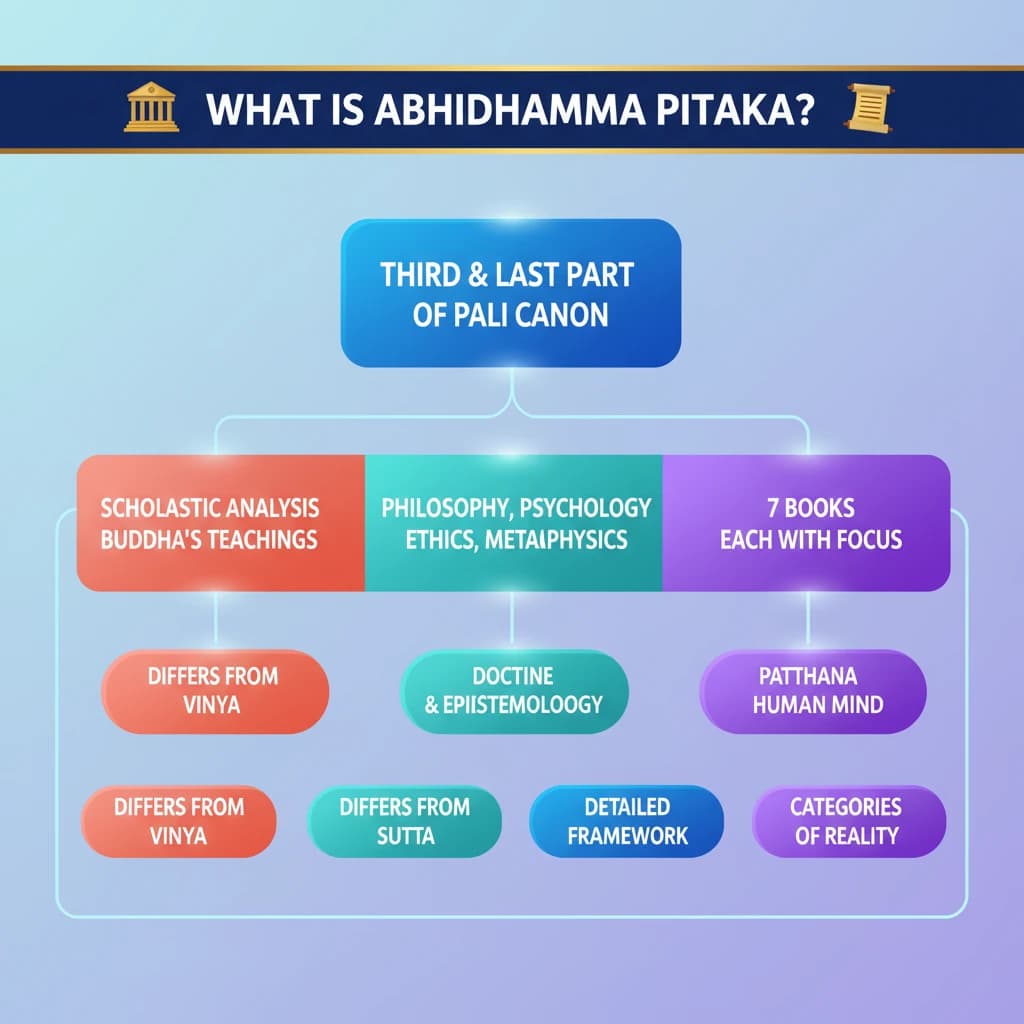
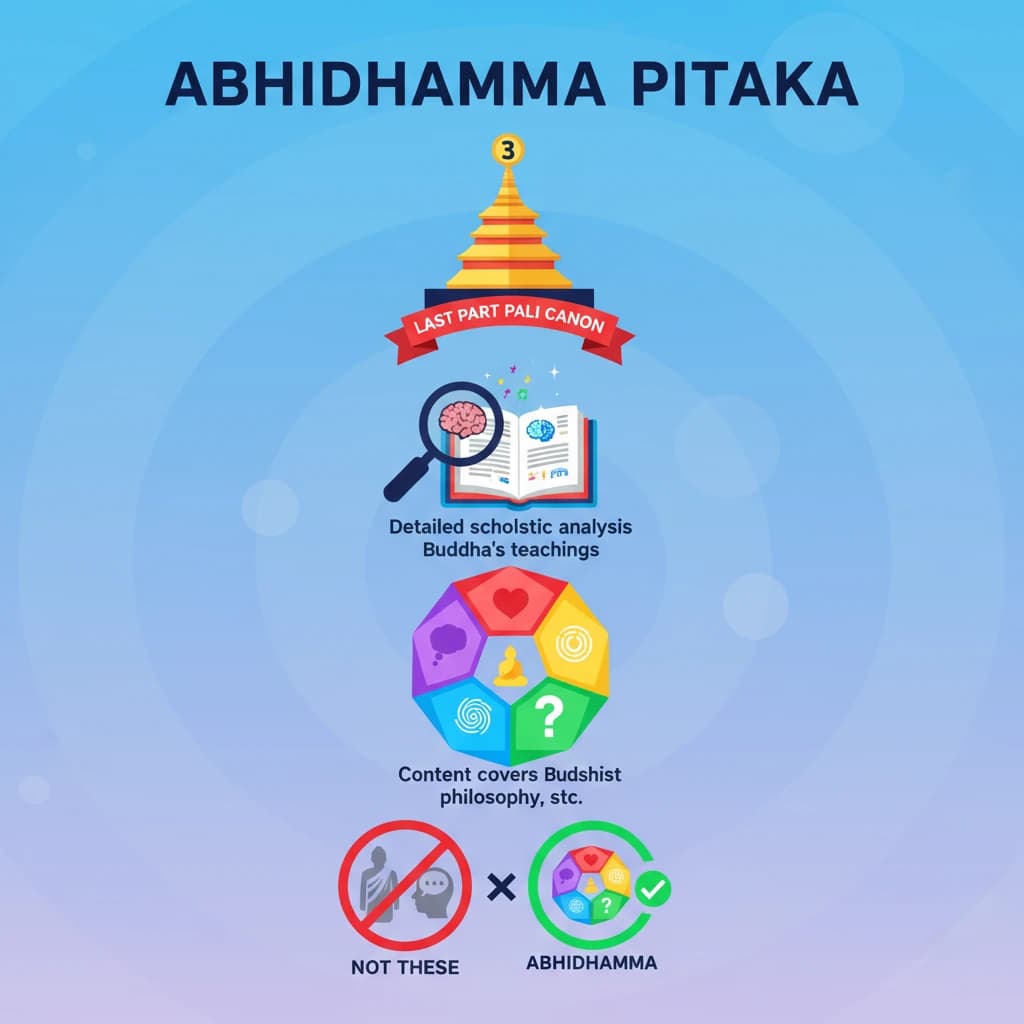
- •Abhidhamma Pitaka is the third and last part of the Pali Canon in Theravada Buddhism.
- •It provides a detailed scholastic analysis of the Buddha's teachings from the Suttas.
- •Its content covers Buddhist philosophy, doctrine, psychology, metaphysics, ethics, and epistemology.
- •It differs from Vinaya Pitaka (monastic rules) and Sutta Pitaka (discourses).
- •The Abhidhamma Pitaka consists of seven distinct books, each with a specific focus.
- •It systematically categorizes phenomena (dharmas) and explains complex causal relations.
- •The Kathavatthu book addresses and refutes various doctrinal controversies within early Buddhism.
🧠 Memory Techniques
98% Verified Content
📚 Reference Sources
•Pali Text Society (PTS) publications on Abhidhamma
•Buddhist dictionary and encyclopedic entries on Abhidhamma Pitaka
•Academic texts on Theravada Buddhist philosophy