Minilateral Groupings: QUAD, AUKUS & Other Partnerships for UPSC - UPSC Defence And Security
What is Minilateral Groupings: QUAD, AUKUS & Other Partnerships for UPSC in UPSC Defence And Security?
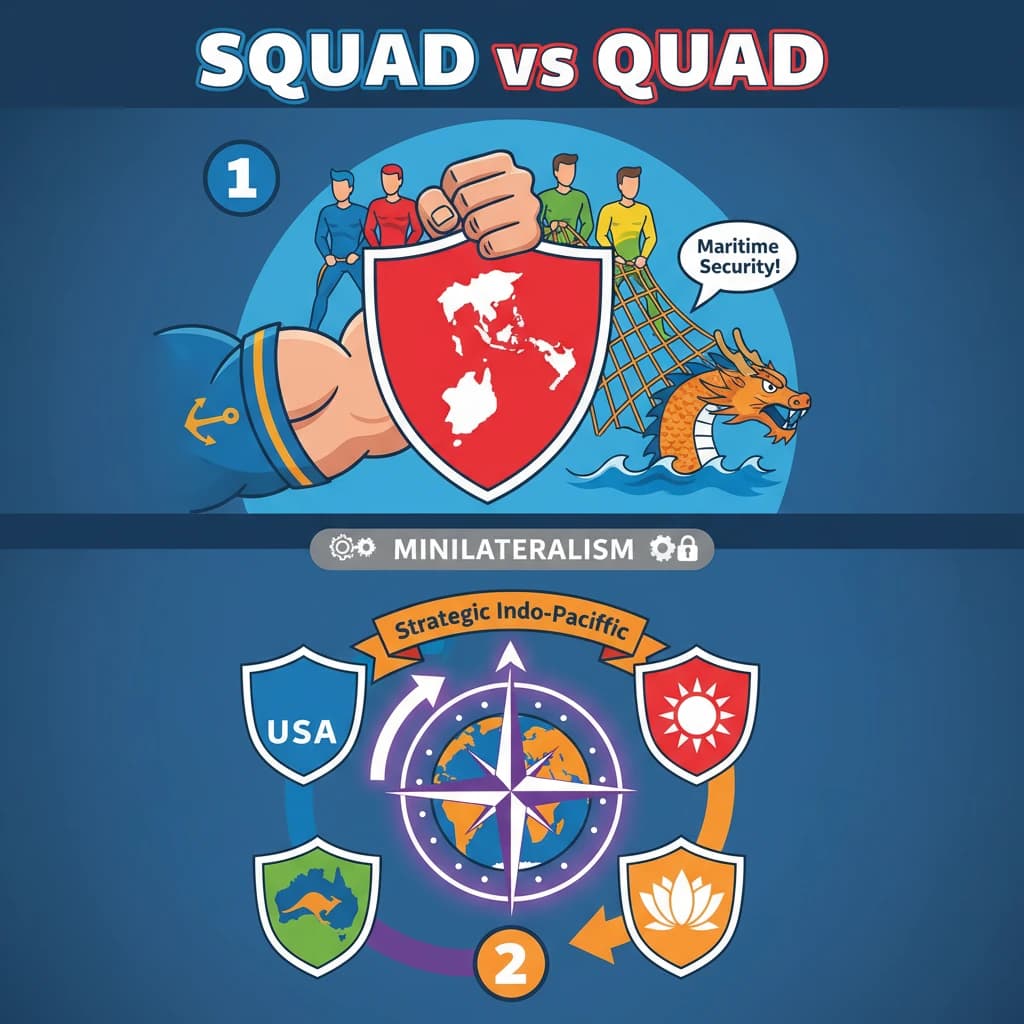
Minilateral Groupings: QUAD, AUKUS & Other Partnerships for UPSC is a key topic under Defence And Security for UPSC Civil Services Examination. Key points include: Minilateralism involves small, voluntary, and non-binding state groupings focused on specific issues or regions.. The 'Squad' (US, Japan, Australia, Philippines) is an informal grouping aimed at enhancing Philippines' maritime security and countering Chinese aggression in the South China Sea.. The Quad (US, Japan, Australia, India) is a strategic forum focused on ensuring a secure and stable Indo-Pacific broadly.. Understanding this topic is essential for both UPSC Prelims and Mains preparation.
Why is Minilateral Groupings: QUAD, AUKUS & Other Partnerships for UPSC important for UPSC exam?
Minilateral Groupings: QUAD, AUKUS & Other Partnerships for UPSC is a Medium-level topic in UPSC Defence And Security. It is tested in both Prelims (factual MCQs) and Mains (analytical answer writing). Previous year UPSC questions have frequently covered aspects of Minilateral Groupings: QUAD, AUKUS & Other Partnerships for UPSC, making it essential for comprehensive IAS preparation.
How to prepare Minilateral Groupings: QUAD, AUKUS & Other Partnerships for UPSC for UPSC?
To prepare Minilateral Groupings: QUAD, AUKUS & Other Partnerships for UPSC for UPSC: (1) Study the comprehensive notes covering all key concepts on Vaidra. (2) Practice previous year questions on this topic. (3) Connect it with current affairs using daily updates. (4) Revise using key takeaways and mind maps available for Defence And Security. (5) Write practice answers linking Minilateral Groupings: QUAD, AUKUS & Other Partnerships for UPSC to related GS Paper topics.
Key takeaways of Minilateral Groupings: QUAD, AUKUS & Other Partnerships for UPSC for UPSC
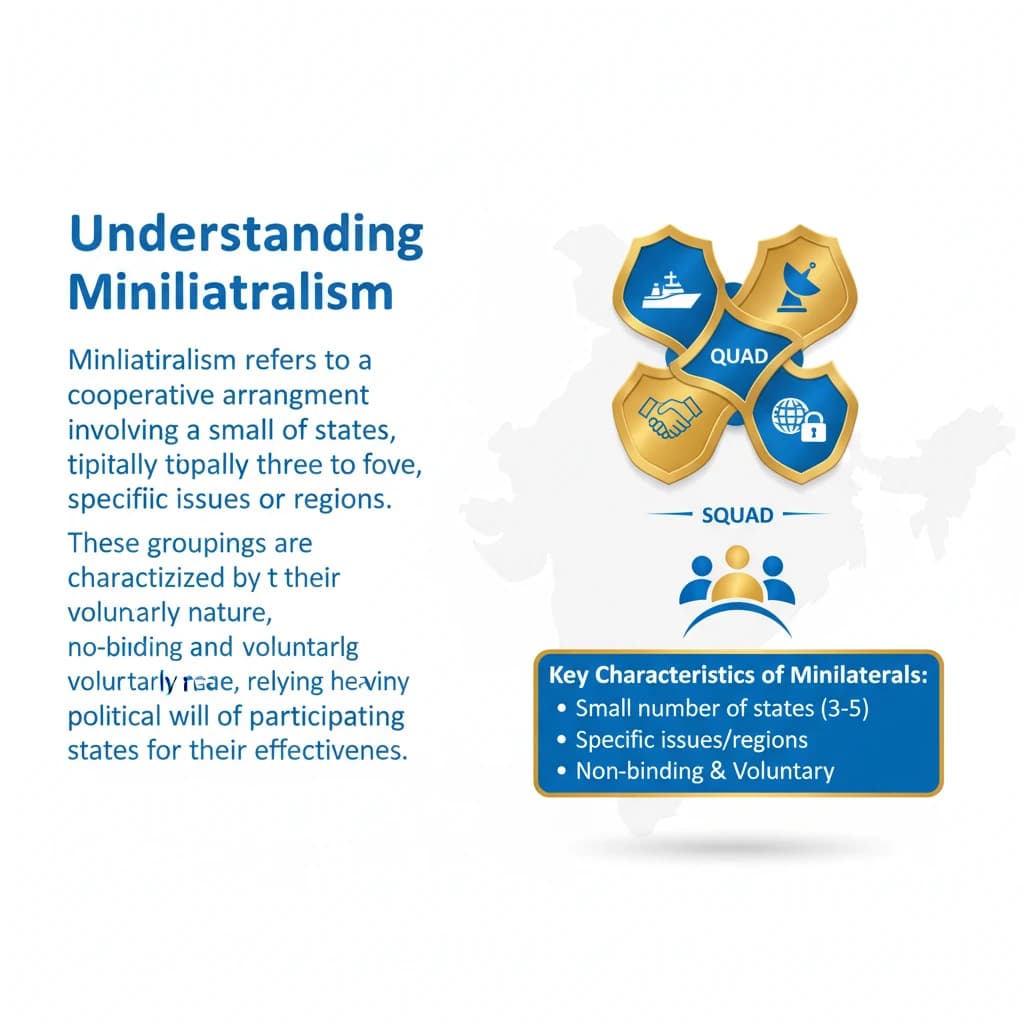
- Minilateralism involves small, voluntary, and non-binding state groupings focused on specific issues or regions.
- The 'Squad' (US, Japan, Australia, Philippines) is an informal grouping aimed at enhancing Philippines' maritime security and countering Chinese aggression in the South China Sea.
- The Quad (US, Japan, Australia, India) is a strategic forum focused on ensuring a secure and stable Indo-Pacific broadly.
- The 'Squad' has a specific geographic and issue-based focus (SCS security), while the Quad has a wider, more strategic Indo-Pacific mandate.
- Minilaterals offer agility, efficiency, and targeted responses to complex global challenges, complementing larger multilateral efforts.
Minilateral Groupings: QUAD, AUKUS & Other Partnerships for UPSC
📖 Introduction
💡 Key Takeaways
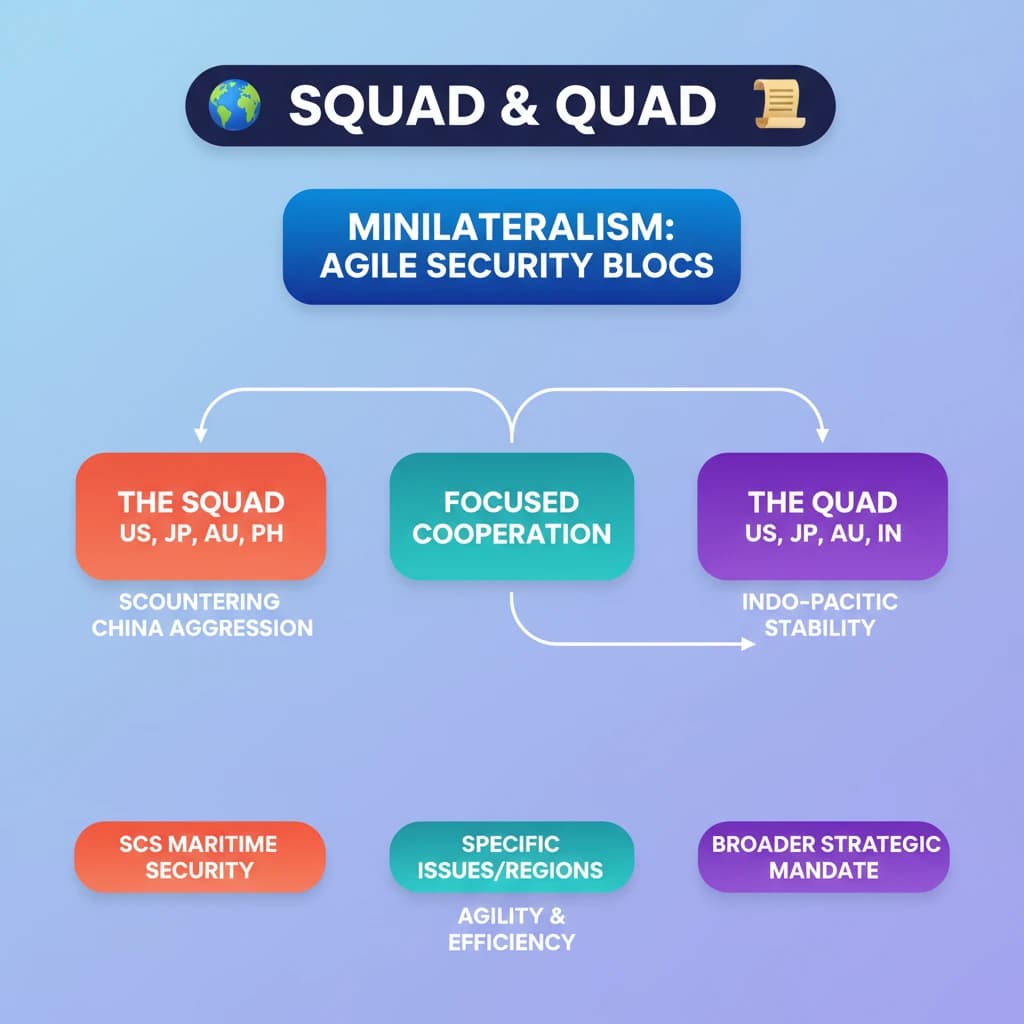
- •Minilateralism involves small, voluntary, and non-binding state groupings focused on specific issues or regions.
- •The 'Squad' (US, Japan, Australia, Philippines) is an informal grouping aimed at enhancing Philippines' maritime security and countering Chinese aggression in the South China Sea.
- •The Quad (US, Japan, Australia, India) is a strategic forum focused on ensuring a secure and stable Indo-Pacific broadly.
- •The 'Squad' has a specific geographic and issue-based focus (SCS security), while the Quad has a wider, more strategic Indo-Pacific mandate.
- •Minilaterals offer agility, efficiency, and targeted responses to complex global challenges, complementing larger multilateral efforts.
🧠 Memory Techniques