📖 Introduction
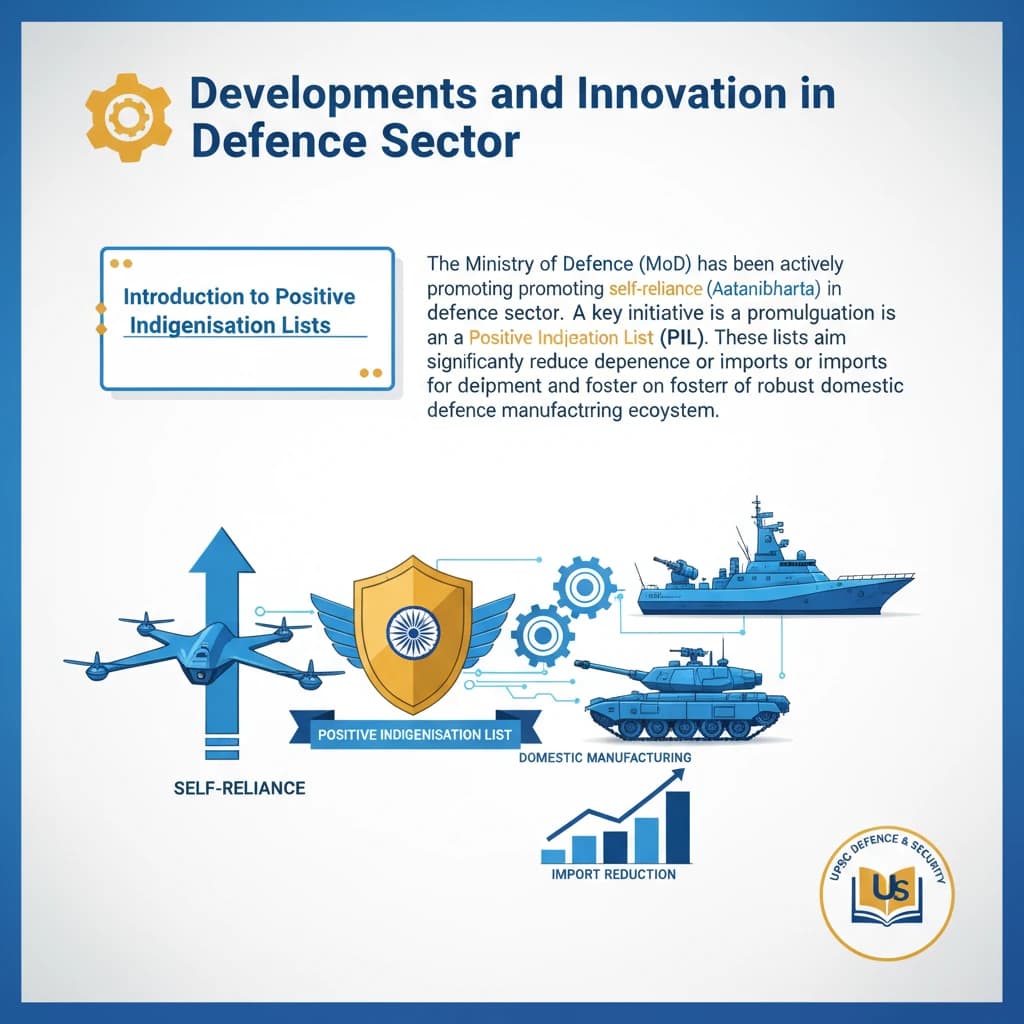
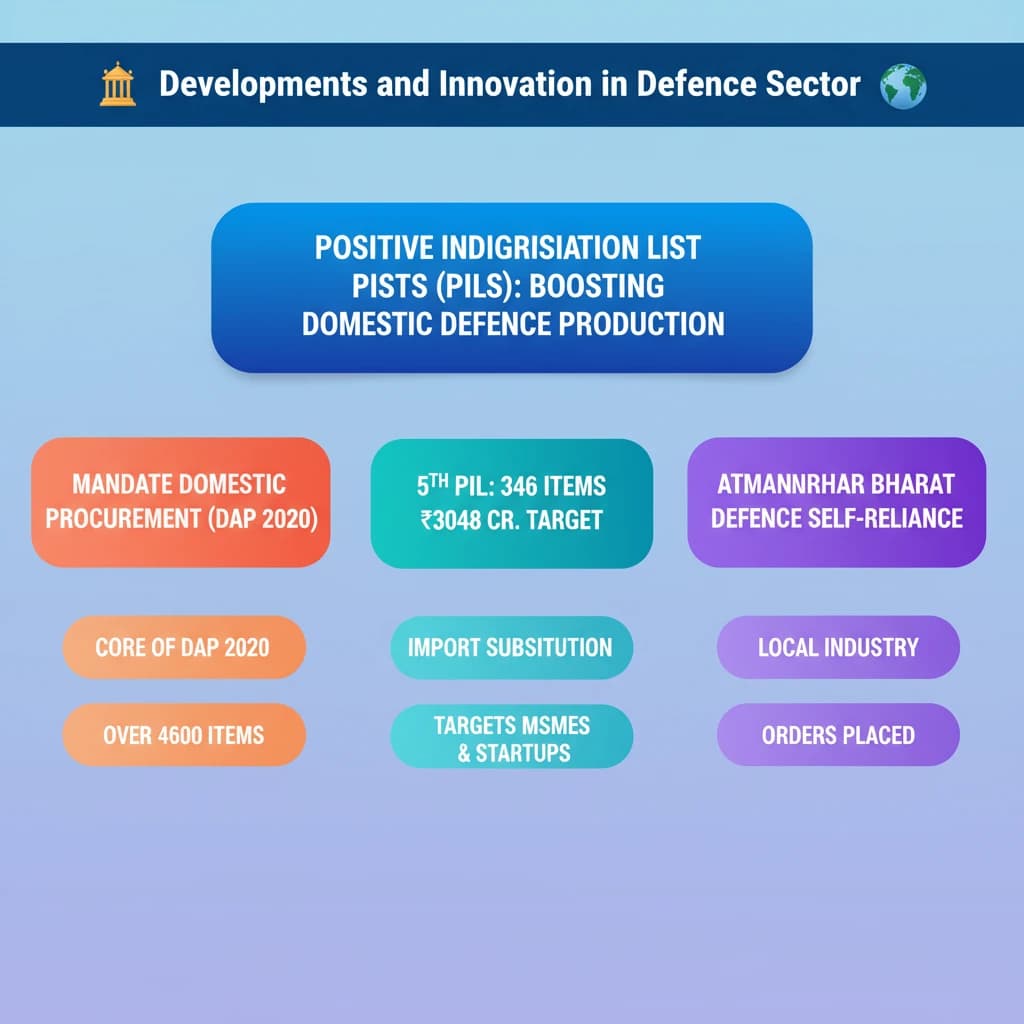
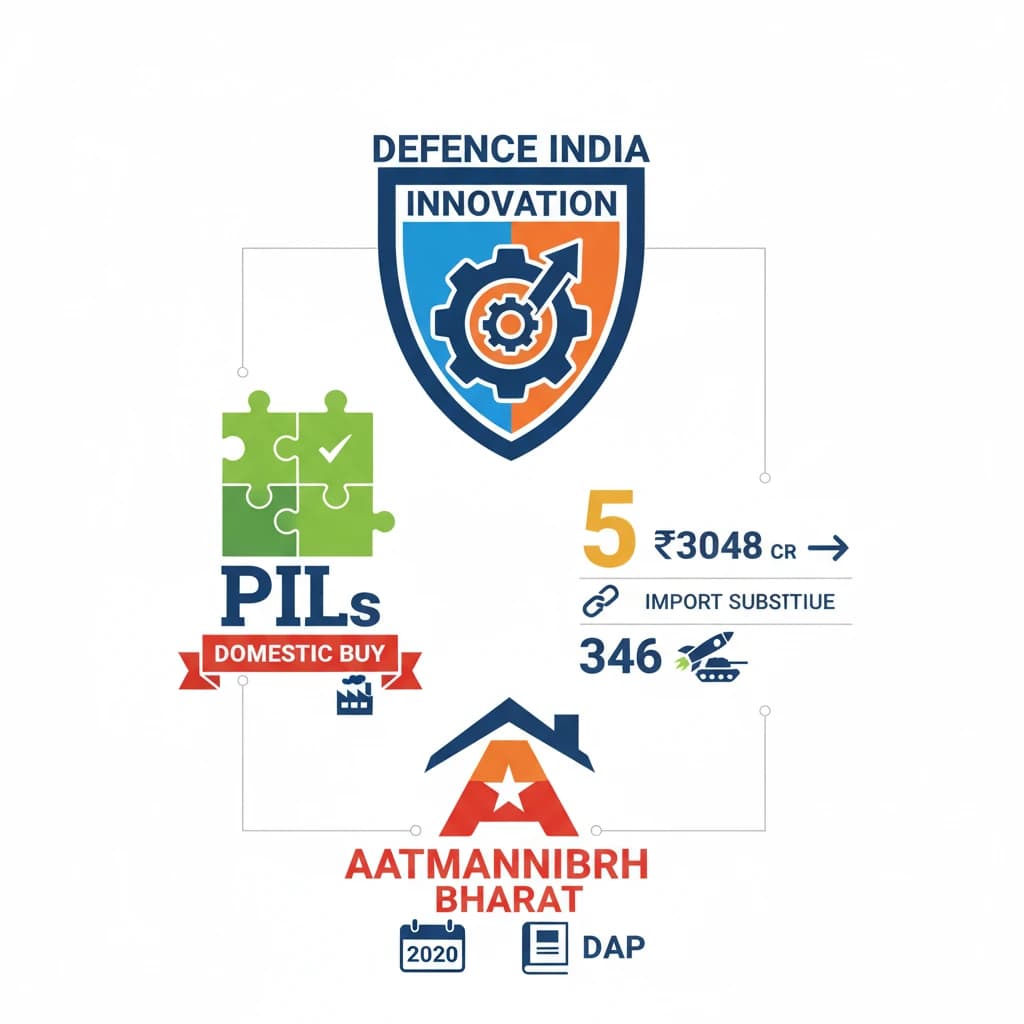
<h4>Introduction to Positive Indigenisation Lists</h4><p>The <strong>Ministry of Defence (MoD)</strong> has been actively promoting <strong>self-reliance (Aatmanirbharta)</strong> in the defence sector. A key initiative in this direction is the promulgation of the <strong>Positive Indigenisation List (PIL)</strong>.</p><p>These lists aim to significantly reduce dependence on imports for defence equipment and foster a robust domestic defence manufacturing ecosystem.</p><div class='key-point-box'><p>The <strong>Positive Indigenisation List (PIL)</strong> specifies defence items that can only be procured from <strong>domestic manufacturers</strong>, including both <strong>private sector entities</strong> and <strong>Defence Public Sector Undertakings (DPSUs)</strong>.</p></div><h4>The Fifth Positive Indigenisation List</h4><p>The <strong>MoD</strong> recently released its <strong>fifth Positive Indigenisation List</strong>, comprising a significant number of defence items. This move reinforces the government's commitment to boosting indigenous defence production.</p><div class='info-box'><p>The <strong>fifth PIL</strong> includes <strong>346 items</strong>, specifically chosen to enhance <strong>Aatmanirbharta</strong> and strengthen India's defence export capabilities through <strong>DPSUs</strong>.</p></div><p>The primary objective is to ensure that these items are sourced exclusively from the <strong>Indian industry</strong>. This includes vital contributions from <strong>Micro, Small, and Medium Enterprises (MSMEs)</strong> and innovative <strong>startups</strong>.</p><h4>Scope of Items in the Fifth PIL</h4><p>The items on the list are strategically important and cover a broad spectrum of defence requirements. They are crucial for maintaining and upgrading India's military readiness.</p><ul><li><strong>Line Replacement Units (LRUs)</strong></li><li><strong>Systems and Sub-systems</strong></li><li><strong>Assemblies and Sub-assemblies</strong></li><li><strong>Spares and Components</strong></li><li><strong>Raw Materials</strong></li></ul><h4>Implementation and Monitoring</h4><p>The implementation of the <strong>PIL</strong> is facilitated through dedicated platforms and processes. This ensures transparency and active participation from the domestic industry.</p><div class='info-box'><p>The list is accessible on the <strong>MoD’s Srijan portal</strong>. This portal serves as a critical interface, allowing <strong>DPSUs</strong> and <strong>Service Headquarters (SHQs)</strong> to offer defence items for indigenisation to private industries.</p></div><p>Leading <strong>DPSUs</strong> such as <strong>Hindustan Aeronautics Limited (HAL)</strong>, <strong>Bharat Electronics Ltd (BEL)</strong>, and <strong>Bharat Dynamics Ltd (BDL)</strong> have already initiated procedures. These include issuing <strong>Expressions of Interest (EoIs)</strong> and <strong>Requests For Tender or Proposals (RFPs)</strong> to engage domestic manufacturers.</p><h4>Expected Impact of the Fifth PIL</h4><p>The indigenisation efforts outlined in the <strong>fifth PIL</strong> are projected to yield substantial economic and strategic benefits for India.</p><div class='info-box'><p>The indigenisation of these <strong>346 items</strong> is expected to generate an <strong>import substitution value</strong> worth approximately <strong>Rs 3,048 crore</strong>.</p></div><p>This initiative provides a crucial assurance to the <strong>domestic defence industry</strong>. It encourages them to invest in developing advanced defence products without the competitive threat of imports, fostering long-term growth and innovation.</p><h4>Future Goals and Incremental Approach</h4><p>The <strong>MoD</strong> has a clear long-term vision for the <strong>Positive Indigenisation Lists</strong>. This involves a sustained and expanding effort to achieve greater self-reliance.</p><div class='info-box'><p>The <strong>MoD</strong> aims to continuously expand the <strong>PIL</strong> annually, with a target to increase the number of indigenised items up to <strong>2025</strong>.</p></div><p>This incremental strategy is designed to support the overarching goal of achieving comprehensive <strong>self-reliance</strong> in India's defence production capabilities over time.</p><h4>Understanding the Positive Indigenisation List (PIL)</h4><p>The <strong>PIL</strong> is a fundamental policy tool introduced to transform India's defence procurement landscape. It mandates domestic sourcing for specific items.</p><div class='key-point-box'><p>The concept of the <strong>PIL</strong> was formally introduced within the <strong>Defence Acquisition Procedure (DAP) 2020</strong>. It focuses on replacing imports for major systems, platforms, weapon systems, sensors, and munitions.</p></div><p>The lists encompass a diverse range of items essential for strengthening India's defence capabilities and promoting a self-reliant defence sector.</p><h4>Evolution and Progress of PILs</h4><p>The journey of <strong>Positive Indigenisation Lists</strong> began a few years ago and has shown consistent progress in reducing import dependency.</p><ol><li>The <strong>first PIL</strong> was promulgated in <strong>August 2020</strong>.</li><li>Successive lists have been released, bringing the cumulative total to <strong>4,666 items</strong> across various categories.</li><li>So far, <strong>2,972 items</strong> have been successfully indigenised, resulting in an <strong>import substitution value</strong> of <strong>Rs 3,400 crore</strong>.</li></ol><p>These initial lists for <strong>DPSUs</strong> are in addition to the <strong>five positive indigenisation lists</strong> of <strong>509 items</strong> notified by the <strong>Department of Military Affairs (DMA)</strong>. These DMA lists include highly complex systems, sensors, weapons, and ammunition.</p><div class='info-box'><p>More than <strong>36,000 defence items</strong> have been offered to the industry for indigenisation. Over <strong>12,300 items</strong> have been indigenised in the last three years alone.</p></div><p>As a direct result of these efforts, <strong>DPSUs</strong> have placed orders with domestic vendors amounting to approximately <strong>Rs 7,572 crore</strong>, significantly boosting the local economy and manufacturing base.</p><div class='exam-tip-box'><p><strong>UPSC Insight:</strong> The <strong>Positive Indigenisation List</strong> is a recurring topic in <strong>GS-III (Internal Security & Economy)</strong>. Understand its mechanism, impact, and connection to <strong>'Aatmanirbhar Bharat'</strong> for Mains answers. Prelims might test the number of lists, key items, or associated portals like <strong>Srijan</strong>.</p></div>